


Open the cupboard under your kitchen sink and take an honest look. If you are like most of us, you will find a crowded shelf of half-used bottles, a spray for the bathroom, another for the kitchen, one for glass, one for limescale, one for wood, and at least three you cannot quite remember buying. Minimalist cleaning supplies are not about lowering your standards or living with a dusty home. They are about choosing a small set of products that genuinely work, learning how to use them well, and letting everything else go.
This guide gives you that same simplicity. You will get a ten-product list that covers almost every everyday cleaning job, a clear list of things to stop buying, simple recipes you can make in minutes, and a practical plan for clearing out the stash you already own. No perfection required, and no expensive system to buy first.
Why Fewer Minimalist Cleaning Supplies Clean Better
More products do not mean a cleaner home. They usually mean more decisions, more clutter, and more chemicals sitting unused until they expire. Most everyday messes are the same few things: dust, grease, soap scum, crumbs, fingerprints, and the odd spill. You do not need a different chemical for each one. You need a good all-purpose cleaner, something mildly abrasive for stuck-on grime, something to disinfect when it matters, and the right cloths and tools to apply them.
A smaller kit also makes cleaning a habit rather than a project. When everything fits in one caddy, you can carry it from room to room and tidy as you go. You are far more likely to wipe the bathroom sink after brushing your teeth or clean the hob while dinner simmers if you do not have to hunt for the right bottle first. That is the real secret behind a consistently clean home: it is not a marathon deep clean once a month, it is small, easy actions repeated often.
The Only 10 Minimalist Cleaning Supplies You Need
Here is the complete list. If a product is not on it, you probably do not need it for normal weekly cleaning. Keep the list on your phone for your next shop, and resist the urge to add just one more bottle.
1. All-purpose cleaner. This is your workhorse. Choose one good spray for worktops, sinks, tiles, light switches, and door handles. Look for a formula that works on most sealed surfaces, and keep one bottle in your caddy rather than one in every room. A quick spray and wipe after cooking keeps grease from building up into a weekend job.
2. White vinegar. Vinegar cuts limescale, dissolves soap scum, and freshens the kettle and the shower head. Use it diluted for taps and shower screens, and never on natural stone such as marble or granite. A small bottle lasts for months because you only need a splash at a time.
3. Bicarbonate of soda. This gentle abrasive lifts burnt food from pans, freshens the fridge, deodorises carpets before vacuuming, and scrubs sinks without scratching. Sprinkle it on a damp cloth, rub gently, and rinse. It is cheap, effective, and one of the most versatile items in a minimalist home.
4. Washing-up liquid. A drop in warm water cleans floors, wipes down cupboard fronts, and washes dishes by hand. It is also brilliant for spot-cleaning upholstery and for washing reusable cloths. You do not need a separate floor cleaner for most hard floors when you already have this.
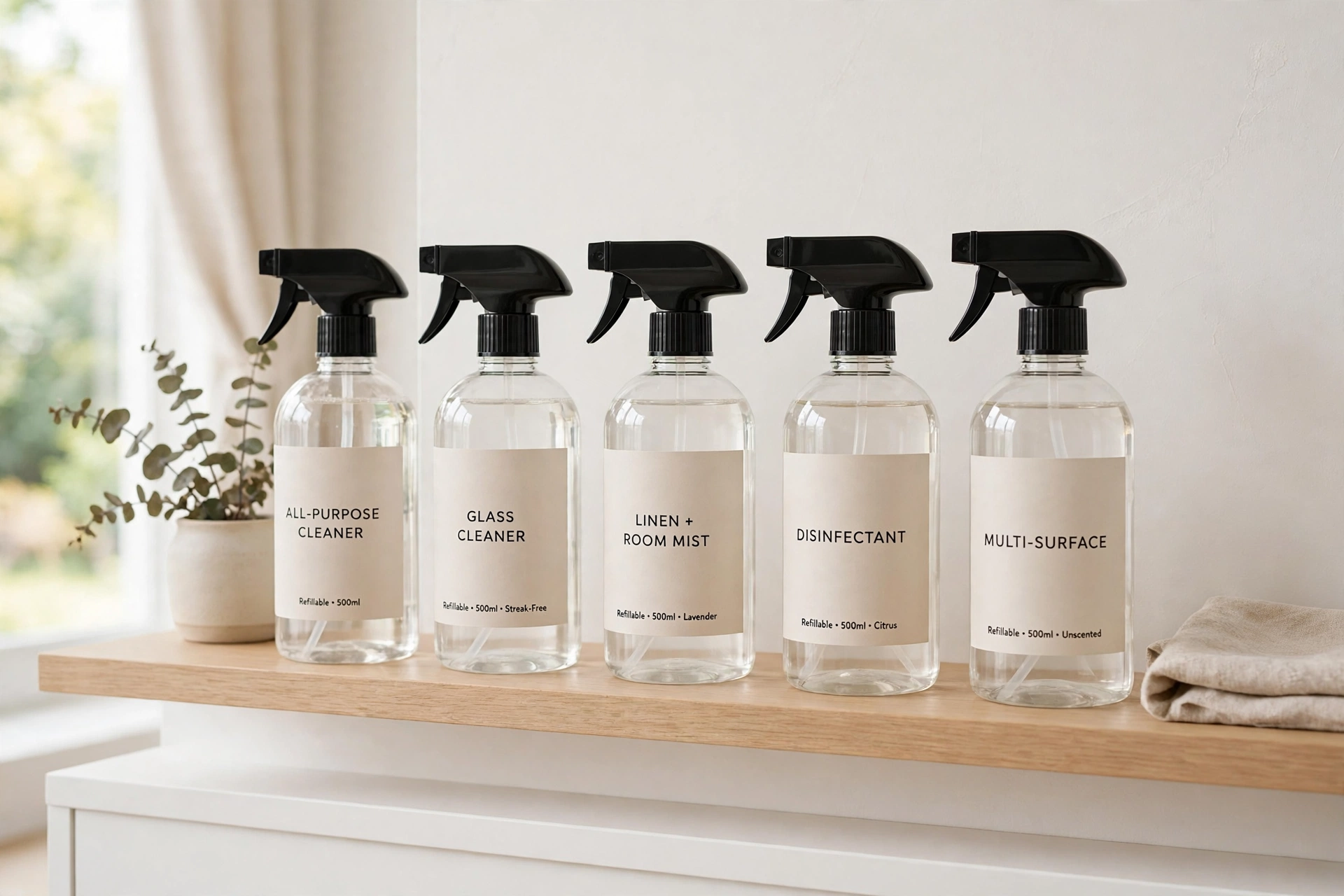
5. A disinfectant for when it counts. You do not need to disinfect every surface every day, but after handling raw meat, when someone in the house is ill, or for toilet seats and chopping boards, a proper disinfectant matters. Pick one product, follow its contact time on the label, and keep it out of reach of children and pets.
6. Microfibre cloths. Buy six to eight good cloths in two colours: one colour for the kitchen, one for the bathroom. They pick up dust and grease with just water, they are washable, and they replace rolls of paper towels and disposable wipes. Wash them at 40 degrees without fabric softener so they keep working well.
7. A glass and mirror cloth. A single flat-weave cloth gives you streak-free mirrors and windows without a separate glass spray. Dampen it lightly, wipe, and buff dry. It is a small luxury that saves you a whole bottle and a lot of frustration on sunny days when every smear shows.
8. A good scrub brush and an old toothbrush. A stiff brush handles grout, sinks, and shower trays, while a toothbrush reaches taps, hinges, and the seal around the washing machine. Tools matter as much as liquids. The right brush can do in two minutes what a harsh chemical cannot do in twenty.
9. A spray bottle and refillable bottles. Decant your all-purpose cleaner and diluted vinegar into labelled refillable bottles. You will save money, reduce plastic, and always know what you are spraying. Label every bottle clearly, especially if children visit your home, and never store cleaning mixtures in old food or drink containers.
10. A dusting tool and a broom or vacuum you actually use. The best tool is the one you reach for. A washable duster for shelves and skirting boards, plus a lightweight vacuum or broom for daily crumbs, keeps dust under control without a cupboard full of gadgets. If your vacuum lives in an awkward cupboard, move it somewhere easier to grab.
That is it. Ten products, one caddy, and a home that stays clean with far less effort. If you want a rhythm to go with this kit, a simple weekly pattern helps enormously, and you can build one around the ideas in this dust-free home cleaning routine without adding a single extra product.
What to Stop Buying: Single-Use Specialty Cleaners
Walk down the cleaning aisle and you will see a bottle for almost every surface in your home. Most of them are unnecessary. Here is what to stop buying once your ten essentials are in place.
- Separate sprays for every room. Kitchen spray, bathroom spray, and multi-surface spray are usually near-identical formulas. One all-purpose cleaner does the same job.
- Disposable wipes for daily cleaning. They are expensive, they dry out, and they create constant waste. Washable microfibre cloths clean better and cost pennies per use.
- Oven, hob, and microwave specials. Bicarbonate of soda paste, left for twenty minutes and wiped away, handles most burnt-on food. Save the heavy-duty product for a rare, truly stubborn job.
- Air fresheners and scent boosters. A clean home smells fresh on its own. Open a window, take out the rubbish, and wash the cloths that smell musty. Scent is not cleanliness.
- One-off gadgets. If a tool only does one tiny job and lives in a drawer for eleven months of the year, let it go. Your brush, cloths, and vacuum cover the rest.
Stopping these purchases is not about being strict. It is about noticing how much money and shelf space you save. The next time a new miracle spray tempts you, ask what it does that your all-purpose cleaner, vinegar, or bicarbonate of soda cannot already do. Most of the time, the answer is nothing.
One-Caddy Storage That Actually Stays Tidy
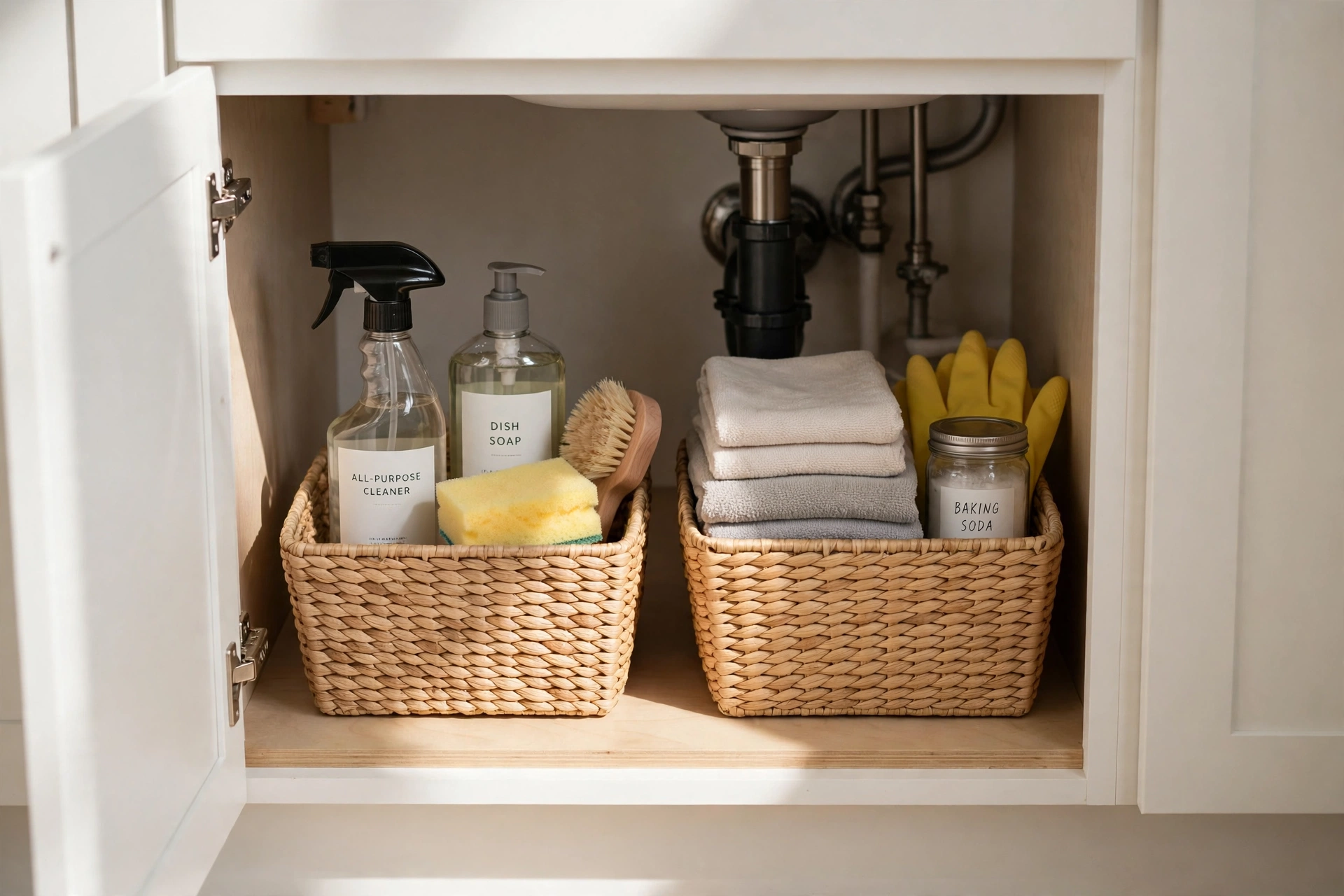
Buy one sturdy caddy with a handle, big enough for your sprays, cloths, and brush, but small enough to carry comfortably. Everything in your ten-product list should fit inside it, except the vacuum and the larger bottles of vinegar and bicarbonate of soda, which can live beside it on the shelf.
Keep the caddy in one place, ideally under the kitchen sink or in a utility cupboard, and return it there after every clean. That single habit prevents the slow spread of bottles to the bathroom shelf, the laundry room, and the top of the washing machine. Label the refill bottles, stand cloths upright in a small basket so they dry, and keep the disinfectant at the back where little hands cannot reach it easily.
Simple Recipes and Everyday Uses
You do not need to become a home chemist to use a minimalist kit well. A few simple mixtures cover most jobs, and they take less than a minute to prepare.
- Everyday surface spray: Fill a spray bottle with warm water and a small squirt of washing-up liquid, or use your ready-made all-purpose cleaner. Spray, leave for a minute, and wipe with a damp microfibre cloth.
- Limescale and soap scum: Mix equal parts water and white vinegar, spray the shower screen or taps, leave for ten minutes, and rinse. For a shower head, soak it in the same mixture for an hour, then rinse and polish.
- Stubborn sink and hob grime: Make a paste of three parts bicarbonate of soda to one part water, spread it on the stain, leave for twenty minutes, scrub gently, and rinse. It works on stainless steel sinks, enamel hobs, and stained mugs.
- Fridge and bin freshening: Wipe shelves with warm water and a little washing-up liquid, then leave an open box of bicarbonate of soda at the back of the fridge to absorb odours. Sprinkle a spoonful in the bottom of a clean bin before replacing the bag.
Always test a new mixture on a small hidden area first, especially on wood, stone, and coloured grout. Never mix vinegar with bleach or with your disinfectant, and never mix different cleaning chemicals together hoping for a stronger result. Simple is safer, and it works.
How to Declutter the Supply Stash You Already Own
Now for the satisfying part: clearing out what you already have. Set aside thirty minutes, take everything out of the cleaning cupboard, and sort it into three groups. This one session makes the minimalist system possible, because a tidy caddy cannot compete with a cupboard still full of old bottles.
Keep: the ten essentials, in good condition and within their use-by dates, plus any product you genuinely use weekly. Use up: half-full bottles you do not love but can finish safely, such as a bathroom spray you can use for the next two weeks before switching to your all-purpose cleaner. Let go: empty bottles, expired products, duplicates, and anything you have not touched in six months. Dispose of chemicals responsibly, following your local guidance, and recycle the empty containers.
Once the cupboard is empty, clean the shelf itself, then put back only the caddy and its backup bottles. Step back and enjoy the empty space. That space is not wasted. It is the visual proof that you no longer need a stockpile to feel prepared. From now on, buy one replacement only when a product runs out, and keep a short shopping list on the fridge so you never bulk-buy out of habit.
Decluttering your supplies often sparks a wider change. Many people find that once the cleaning cupboard is calm, the laundry cupboard is next, and a minimalist laundry system follows naturally. The same principle applies everywhere: fewer, better things, used well, beat a cupboard full of almost-right ones.
A Calmer Cupboard, a Calmer Home
Start today with one small step. Take everything out of the cupboard, keep your ten essentials, and let the rest go. Make one simple spray, wipe one room with your caddy, and notice how much lighter the job feels when you are not choosing between twelve bottles. A minimalist kit forgives imperfect weeks too: you simply pick up the caddy, clean what matters most, and put it back. Pair it with a few simple living habits that keep a minimalist home effortless, and with a seasonal deep clean from this kitchen deep cleaning checklist, and your home will stay calm without taking over your weekends. Less really can be more, especially when what remains is exactly what you need.