
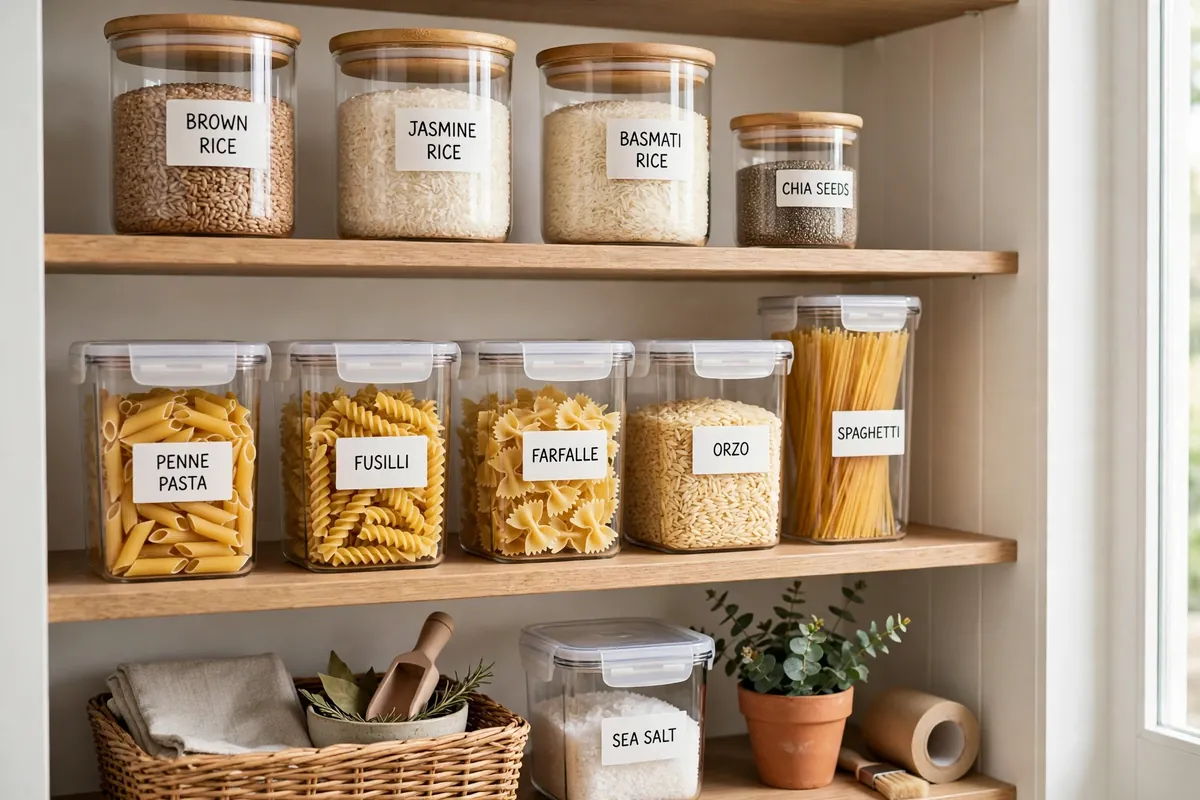

Good rice and pasta storage starts with one honest look inside your pantry. Most of us tear open a bag of basmati, use half of it for dinner, then fold the top over with a clip and push it to the back of the shelf. A month later, the rice smells faintly stale, the spaghetti box has gone soft, and a few tiny pantry moths may have moved in. It is a small frustration, but it adds up — wasted food, wasted money, and dinners that never taste quite as good as they should.
The truth is that rice and pasta are wonderfully forgiving foods, but only when they are stored well. Both are sensitive to air, moisture, heat, and light. A bag left open to the air slowly loses flavour. A box stored above the stove absorbs steam every time you cook. A container that is not quite sealed invites pests. You do not need an expensive system or a pantry makeover — just a few good containers, a simple routine, and a little knowledge about what each grain actually needs.
In this guide, we will walk through practical rice and pasta storage ideas that work in real kitchens — big pantries, tiny apartment cupboards, and everything in between. You will learn which containers genuinely keep food fresh, how to organise them so you can see what you have at a glance, and the small mistakes that quietly shorten shelf life.
Why Rice and Pasta Deserve Better Than the Bag They Came In
The Enemies of Freshness: Air, Moisture, Heat, and Light
Before you buy a single container, it helps to understand what you are protecting your food from. Air is the biggest culprit. Oxygen slowly oxidises the natural oils in brown rice and whole wheat pasta, which is why they go rancid faster than white rice or refined pasta. Every time you open a bag and leave it loosely folded, more air gets in and the clock ticks faster.
Heat and light finish the job. Pantries above ovens or in sunny corners age dry goods faster than cool, dark shelves. Brown rice in a warm kitchen may turn in three to six months, while the same rice in a cool cupboard can last well over a year. White rice can last two years or more when stored properly, and dried pasta typically keeps for one to two years — but only if it stays dry, sealed, and cool.
There is one more visitor worth mentioning: pantry moths and weevils. These tiny insects can arrive inside a bag from the shop, or sneak in through a poorly sealed box. Once they settle in an open bag, they spread fast. Airtight containers are the single best defence.
The Best Containers for Rice and Pasta Storage
Not all containers are equal, and the best choice depends on what you store and how much space you have. Here is what actually works:
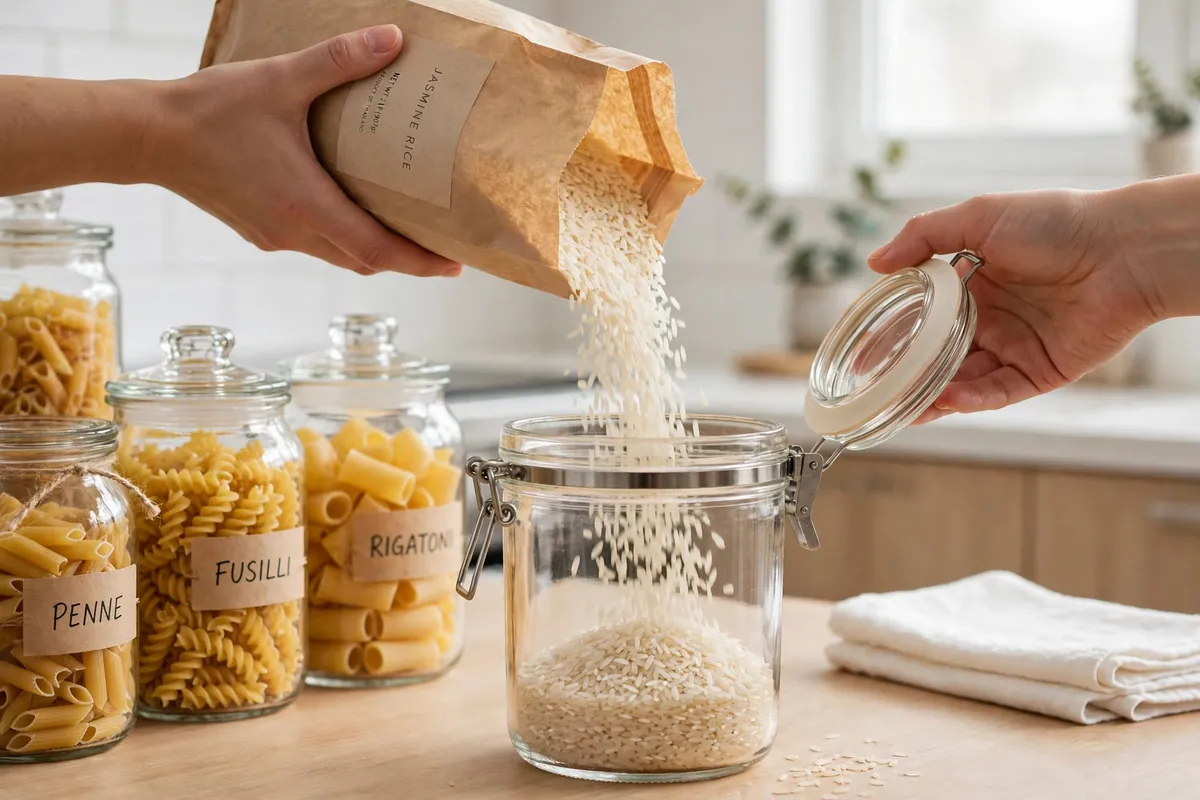
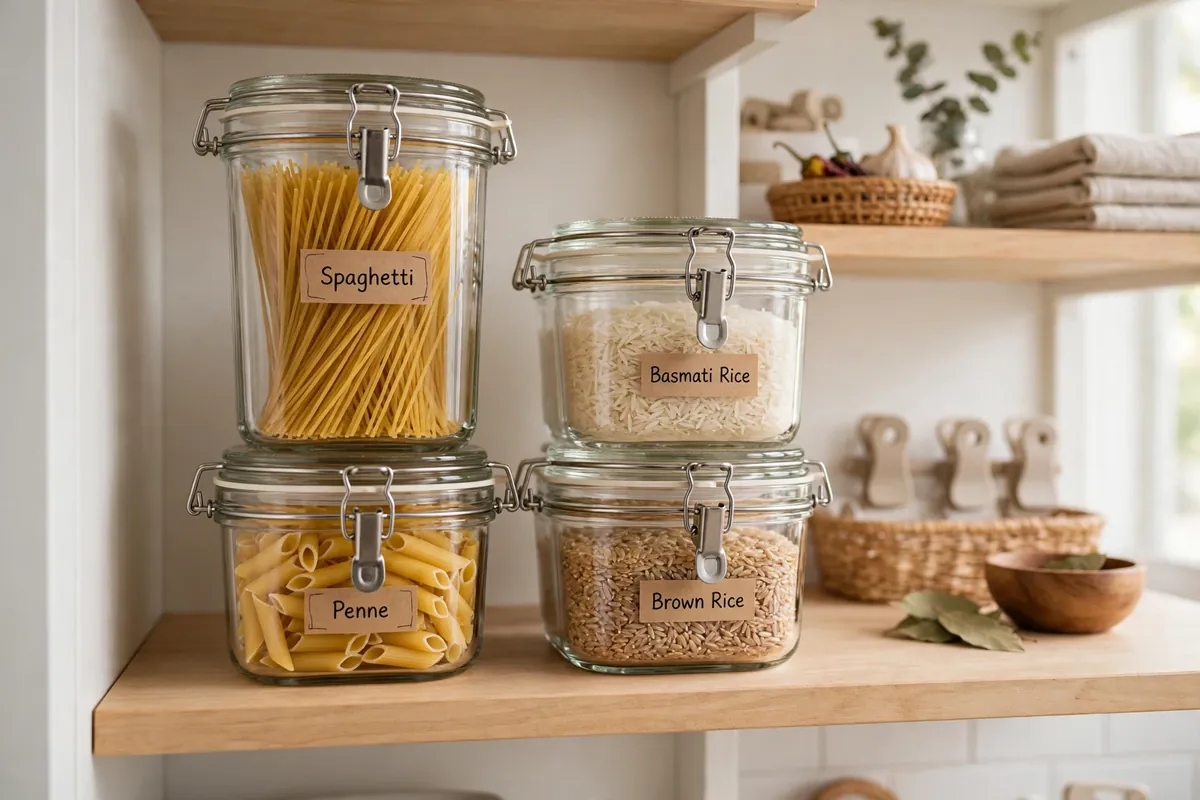
- Glass jars with clamp lids or screw tops: Glass does not absorb smells or stain, and you can see exactly how much is left. Wide-mouth jars are best for rice because scooping is easy. Keep glass on lower shelves if you have small children in the house.
- Clear BPA-free plastic canisters with silicone seals: Light, stackable, and easier to fit into awkward cupboards. Look for a seal that clicks or locks firmly — a lid that simply rests on top is not airtight. Tall, slim canisters are perfect for spaghetti and linguine.
- Cereal dispensers with pour spouts: Brilliant for the rice you use every week. A dispenser keeps the grain sealed but lets you pour a measured amount with one hand, which is a small joy on busy evenings.
- Square and rectangular containers over round ones: Squares waste far less shelf space. Rectangular canisters lined up in a row hold noticeably more than the same number of round jars, and they will not roll when you reach for the one at the back.
Whatever you choose, pick one style and stick with it. Mixed containers in ten different shapes create wasted gaps on a real shelf. A uniform set stacks neatly, lines up cleanly, and makes it obvious when something is running low. If you are starting from scratch, buy a set that includes tall containers for long pasta, medium ones for short pasta shapes, and wide ones for rice.
Labels matter more than most people expect. A small label with the contents and the date you decanted it saves you from opening three jars to find the arborio. Write the cooking time on the label too. If you keep several types of rice, label them clearly: basmati, jasmine, arborio, and brown rice can look surprisingly alike in a jar.
How to Organise Your Rice and Pasta So You Actually Use Them
Storage is only half the story; organisation is what stops food from being forgotten. Start by taking everything out and grouping it: all the rice together, all the pasta together, and everything else somewhere else. Throw away anything stale or past its best, and wipe the shelves before you put anything back. It takes twenty minutes, and it changes how the whole cupboard feels.
Next, put the foods you use most at eye level and within easy reach. Your everyday rice and your favourite pasta shape should be the first things your hand finds. Special occasion ingredients — wild rice, orzo for a particular soup, or the fancy imported pasta you save for guests — can live on a higher or lower shelf. This alone prevents the classic problem of buying a third bag of penne because you could not see the two you already had.
Use the “first in, first out” rule the way shops do. When you buy a new bag, finish the old supply before opening the new one, or keep the new bag behind the old one if you use separate jars. A small piece of masking tape with the purchase date on the bottom of the container makes this effortless.
If your pantry itself needs a broader reset, look at pantry door organization ideas for ways to use the inside of the door for small packets, freeing shelf space for your bigger rice and pasta containers.
Rice and Pasta Storage in Small Pantries and Tiny Kitchens
Small kitchens demand smarter storage, not less food. If your pantry is a single cupboard or a couple of shelves, tall slim containers are your best friends. For more ideas that squeeze function from a tiny footprint, see these small pantry organization ideas.
Consider decanting rice into stackable containers rather than keeping it in bags that slump and slide. A bag of rice on a narrow shelf is a small avalanche waiting to happen; a sealed rectangular container stays put and lets you stack another on top. If shelf height is tight, wide, flat containers slide neatly under a shelf riser, and a small riser can double your usable space by creating a second tier for shorter jars.
If you have a walk-in pantry, the same principles scale up: dedicate one shelf to grains and pasta, group them by type, and keep a small scoop in each rice container. A full guide to walk-in pantry organization ideas can help you zone the whole space so your grains never drift into the baking supplies again.
Freezing, Bulk Buying, and Long-Term Storage
Bulk buying saves money, but only if the extra food stays fresh until you need it. If you buy a large sack of rice, decant what you will use in the next month or two into your everyday container, and store the rest sealed in a cool, dark place. For very long storage, the freezer is excellent: portion the rice into freezer bags, press out the air, and freeze it. Frozen rice keeps almost indefinitely, and you can cook it straight from frozen — just allow a few extra minutes in the pot.
A useful trick when you bring a new bag home is to freeze it for 48 hours before decanting. This kills any weevil eggs that may have arrived with the grain. After freezing, let the bag come fully back to room temperature before you open it, so condensation does not dampen the grains.
Dried pasta freezes well too, although it rarely needs to — a sealed container in a cool cupboard is plenty for a year or more. What matters most is keeping it dry, so never store pasta above the stove or beside the kettle, where steam reaches it daily.
Bulk buying pairs naturally with keeping track of what you own. A simple list on the inside of the cupboard door stops duplicate purchases. If you want a fuller system, a pantry inventory system that stops food waste helps you log what comes in and what runs out, so nothing quietly expires.
Mistakes That Quietly Ruin Good Rice and Pasta
Most storage mistakes are small and easy to fix once you spot them. Here are the ones to watch for:
- Leaving bags half-open: A folded bag with a clip is better than nothing, but it is not airtight. Decant into a sealed container the day you open a bag.
- Storing near heat or steam: The cupboard above the oven feels convenient, but it is the warmest spot in the kitchen. Move grains to a cooler shelf.
- Mixing old and new supplies: Pouring fresh rice on top of old rice means the old grains sit at the bottom for months. Finish the old supply first.
- Using damp scoops or wet hands: Even a little moisture introduced into a container can cause clumping or mould. Keep a dry scoop in each jar.
- Skipping labels: Unlabelled jars lead to guesswork, and guesswork leads to the wrong rice in the risotto. Label everything, including the date.
- Buying more than you can store: A bargain sack is only a bargain if you have a cool, sealed place for it. Buy what fits your containers.
Another common mistake is storing rice and pasta in their original cardboard boxes for months. Cardboard absorbs moisture, tears easily, and offers no protection from pests. The box is fine for the journey home; after that, your food deserves a proper container.
A Simple Routine That Keeps Every Grain Fresh
The best storage system is the one you will actually maintain, so keep the routine short. Once a month, take two minutes to check your containers: seals still tight, nothing damp, nothing past its best. Every time you open a new bag, freeze it for 48 hours if you can, decant it, label it, and put it behind the older supply. When a container runs low, add it to the shopping list straight away.
Once a season, give the whole grain shelf a quick wipe and a check. Pull everything out, discard anything stale, wipe the shelf, and put it all back in order. It takes less time than a single grocery trip, and it keeps the pantry feeling calm rather than slowly chaotic.
Good storage is not about perfection; it is about small, kind habits. A sealed jar, a clear label, and a cool shelf are all it takes to keep your rice fragrant, your pasta firm, and your dinners tasting the way they should.
Conclusion: Fresh Grains, Less Waste, Calmer Cooking
Rice and pasta are the quiet heroes of the kitchen — inexpensive, versatile, and always there when you need a comforting meal. They ask for very little in return: a dry place, a sealed container, and a little attention to what you already have. Give them that, and they will reward you with fresher flavour, less waste, and a pantry that feels organised every time you open the door.