

Living with a dog or a cat in a small apartment is mostly wonderful and occasionally chaotic, especially when the leash is tangled around the umbrella stand, the kibble bag is leaking onto the kitchen floor, and a squeaky toy has somehow ended up under your pillow. Good pet supply storage is not about buying a dozen matching containers or turning your home into a pet store. It is about giving everything your animal needs one sensible home, close to where you actually use it, so the daily routine feels calm instead of cluttered. When each item has a place, you stop tripping over bowls at midnight and buying a second brush because you cannot find the first one.
The trick in a small space is to think in zones rather than rooms. You do not need a whole cupboard for pet things. You need a feeding spot, a food store, a door zone, a toy spot, and a litter or toileting solution, each as compact as possible. Most of these zones can share space with things you already own. A basket on a shelf, a hook behind a door, or an ottoman that opens up can quietly absorb a surprising amount of furry chaos. The ideas below are built for renters, studios, and one-bedroom flats.
Start With One Feeding Station That Actually Stays Put
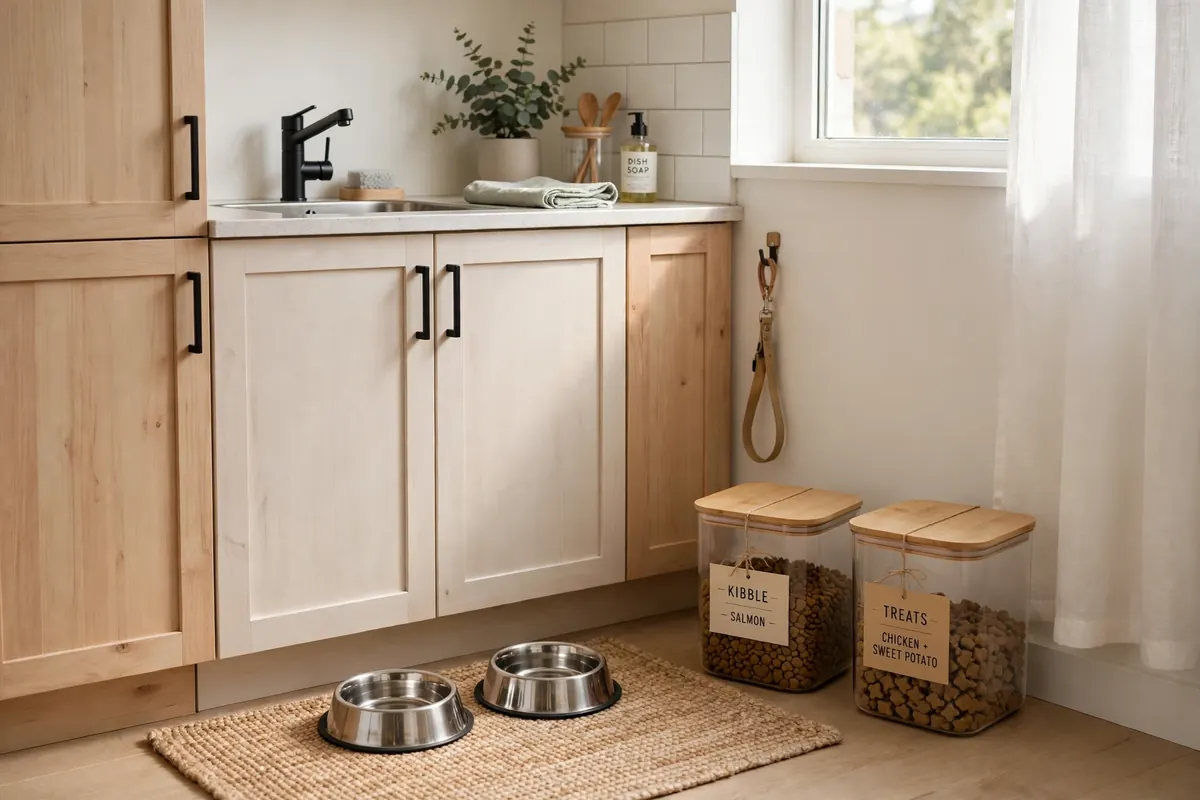
The feeding corner is where pet clutter usually begins, because bowls slide, water splashes, and kibble scatters every time an enthusiastic eater dives in. Choose one spot and commit to it: a corner of the kitchen, the end of a counter run, or a quiet stretch of wall near the sink, as long as it is not in the main walkway. Put a washable, non-slip mat underneath the bowls. A silicone mat with a raised edge catches spills before they reach your floorboards.
For dogs that inhale their dinner, a slow-feeder bowl or a lick mat can live right on that same mat, and for cats, a slightly raised bowl can be kinder on whiskers and necks. Keep a small scoop clipped to the food bin nearby, so measuring takes five seconds. If you have two pets on different food, feed them a few feet apart, even in a studio. A little distance at mealtimes prevents food stealing, reduces stress, and stops one pet from hovering while the other eats. Keep a spare towel in the feeding zone too, so wet paws and dribbled water are a quick wipe, not a hunt through the linen cupboard. Wash the bowls daily and clean the mat once a week, and the whole corner stays fresh.
Pet Supply Storage That Keeps Food Fresh and Floors Clear
An open bag of kibble is the enemy of a small apartment. It smells, it spills, it attracts pantry moths, and a determined dog will nose it open given half a chance. Decant food into a sealed, airtight bin the day you bring it home. A tall, narrow bin slides neatly between the fridge and the counter, inside a lower kitchen cupboard, or under a console table in the hallway. Choose a bin with a secure lid and a scoop that fits inside, and keep the original bag folded nearby if you need the feeding guide or batch details for the vet.
Wet food needs a different plan. A small lidded container in the fridge holds an opened tin without stinking out your leftovers, and a spare lid or two in a drawer stops the nightly cling-film wrestling match. Treats deserve their own small jar, preferably one your pet cannot open, kept inside a cupboard or on a high shelf. If your dog gets through treats quickly, buy smaller bags more often rather than storing a giant sack that goes stale. Keep dental chews, supplements, and medication together in one small lidded box or zip pouch in a kitchen drawer, so you can grab the whole box at once for a vet visit. When food lives in sealed, labelled homes, the kitchen floor stays clear and the food stays fresh.
A Grab-and-Go Zone by the Door for Leashes and Grooming
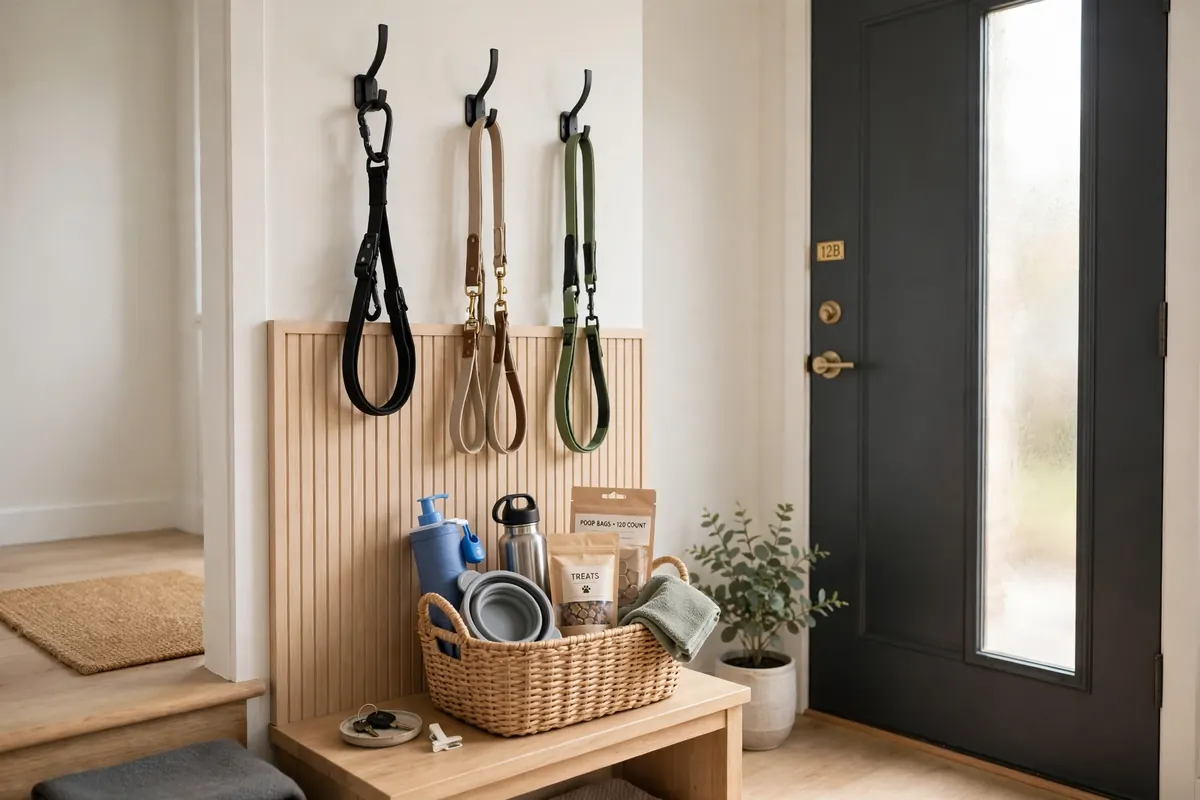
The five minutes before a walk are when small apartments feel smallest. You are looking for the leash, the poo bags, and the keys, while the dog spins in circles by the door. A grab-and-go zone fixes that. All you need is a row of hooks, a small basket or wall pocket, and a place for a towel. Mount two or three sturdy adhesive or screw-in hooks at a comfortable height. One holds the everyday leash, another holds a harness or long lead, and a third can hold a spare lead or a bag holder.
Below the hooks, keep a small lidded basket for the walk kit:
- Poo bags in a roll holder clipped to the leash, plus a spare roll in the basket
- A pocket-sized towel or a pack of pet wipes for muddy paws and rainy days
- A brush or grooming mitt for a quick once-over before you head out
- A treat pouch for training walks, refilled once a week
- A small torch or reflective tag if you walk after dark
Grooming supplies scatter because they are used in different places: the brush in the living room, the nail clippers in the bathroom, the shampoo under the sink. Pull the everyday items into one small caddy that lives in the door zone or the bathroom cabinet: a brush, a grooming mitt, a small bottle of dry shampoo, and nail clippers fit easily in a caddy the size of a lunchbox. Keep bath shampoo in the bathroom. The goal is simple: when it is time to go out, you grab one thing from one place and you are gone.
Toy Rotation and a Litter Box That Does Not Take Over
Toys multiply fast, and in a small flat they end up everywhere: under the sofa, behind the curtains, inside the laundry basket. Toy rotation is the kindest trick for both you and your pet. Keep most toys in a lidded basket on a shelf or in a cupboard, and leave out only four or five at a time. Swap them every week or so, and suddenly an old ball feels brand new again. Your pet stays interested without you buying more, and your floor stays clear enough to walk across. Choose a basket with a lid if your dog helps themselves, or an open basket if your cat prefers to fish toys out independently. Wash soft toys regularly, check rope toys for fraying, and retire anything broken before it becomes a risk.
Litter boxes are the hardest pet item to hide in a tight layout, but a little privacy makes a big difference for cats and humans alike. A top-entry or covered box contains scatter and smell better than an open tray, and a litter mat outside the entrance catches tracked granules before they reach your rug. Good spots include a bathroom corner or a quiet hallway end, away from noisy appliances. If space is truly tight, a ventilated cabinet with a cat-sized entrance can hide the box inside furniture, but keep the entrance clear and clean the box daily, because a hidden box that smells will simply be avoided. Scoop into a small lidded bin beside the box, so the job takes thirty seconds and the smell never lingers.
Furniture That Hides the Pet Stuff in Plain Sight
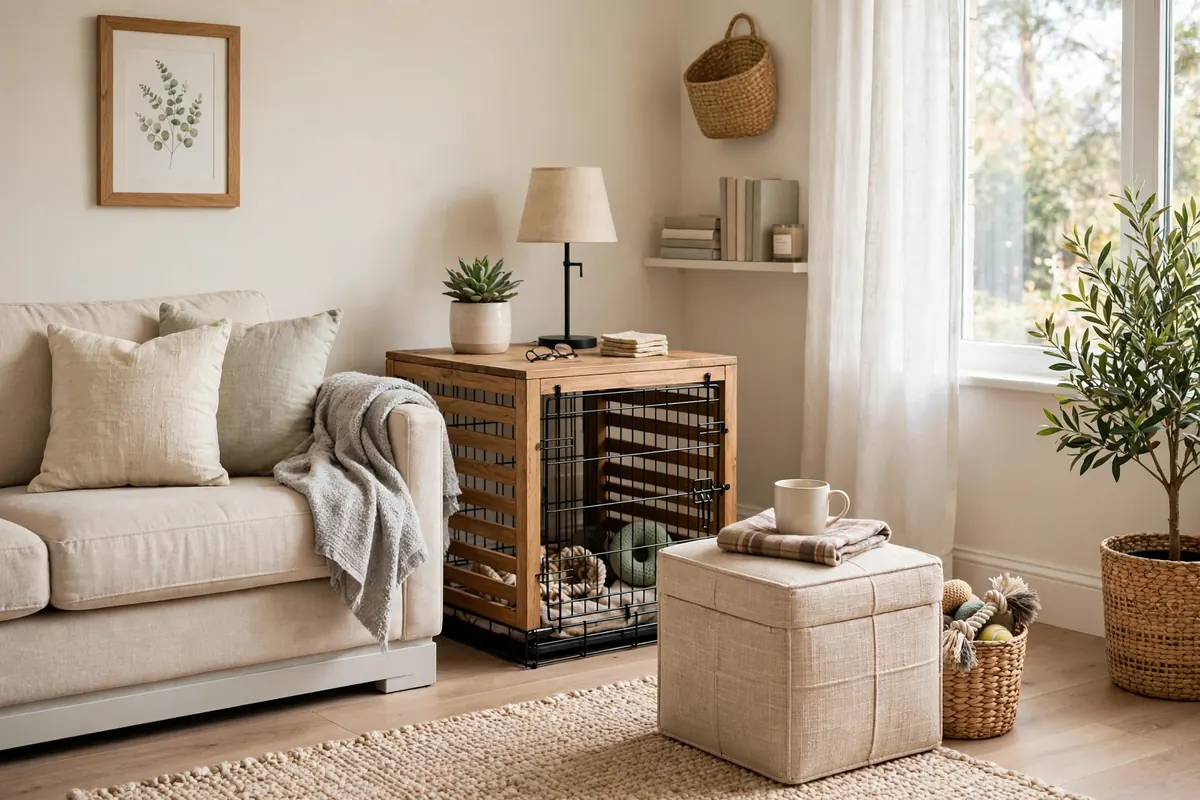
In a small apartment, the best storage is furniture you were going to own anyway. A storage ottoman by the sofa holds spare toys, a spare blanket, and a lint roller, and it doubles as a footrest or an extra seat when friends visit. A lidded bench in the hallway holds leads, harnesses, and a towel, while giving you somewhere to sit and put your shoes on. A crate, if your dog uses one, does not have to look like a cage in the corner. Put a sturdy wooden top on it, add a cushion, and it becomes a side table next to the sofa or a nightstand in the bedroom. Your dog keeps a safe den, and you gain a surface instead of losing floor space.
Look for other double-duty spots too. The space under the sofa is ideal for flat, lidded boxes holding spare blankets or seasonal pet bedding, keeping bulky items out of your main cupboards, as this guide to under-sofa storage ideas shows. A console table by the door with a drawer can hold poo bags, treats, and a spare key, while the shelf below holds the food bin. Even a bed with drawers or a lift-up base can swallow a whole basket of pet supplies, from spare leads to a folded travel bed, without a single extra piece of furniture entering the room. Choose washable fabrics and lids that close softly, so curious paws stay safe.
Go Vertical With Renter-Friendly Storage
When floor space runs out, look up. Walls and doors hold an enormous amount of pet gear without taking a single square foot of floor. A narrow floating shelf above the feeding station can hold treat jars and supplements out of chewing reach. A row of hooks on the back of a door holds leads, harnesses, and a grooming apron. An over-door organiser with clear pockets can hold poo bags, spare collars, and a brush, all visible at a glance.
Renters can do almost all of this without drilling. Adhesive hooks rated for a few kilos hold most leads and harnesses, and they peel off cleanly when you move out if you follow the packet instructions. Tension rods inside a cupboard create a hanging rail for a small caddy, and magnetic hooks on the fridge hold a poo-bag holder or feeding instructions for a pet sitter. A small wall-mounted rail by the door, if screws are allowed, is a cheap, high-impact upgrade. A narrow hallway can work surprisingly hard when every hook and shelf earns its keep, and these narrow hallway storage ideas show how to keep a passage clear while still storing what you need.
The same thinking applies to the other bulky gear competing with pet things for space. If you cycle as well as walk a dog, these small apartment bike storage ideas are worth a look before you give up a whole wall to one hobby. And in the living room, where most play happens, a tidy toy basket and a storage ottoman pair beautifully with the broader tricks in this guide to small living room storage ideas that make a tiny space feel twice as big. Finally, build a tiny weekly reset into your routine: ten minutes to put stray toys back in the basket, wipe the feeding mat, refill the treat jar, and check the door basket. Small apartments reward systems more than square footage, and pets thrive on routine even more than humans do.
With one feeding station, sealed food bins, a door zone you can grab in seconds, a rotating toy basket, a private litter spot, and furniture that does double duty, furry chaos stops running the flat. Your pet still gets everything they need, you still get a home that feels calm and welcoming, and the only thing left on the floor is a happy dog or cat, stretched out right where they belong.