

For years, laundry was the one chore that always beat me. It was never just a basket of dirty clothes — it was a slow-motion avalanche. I’d wash a load, forget it in the machine, re-wash it because it smelled musty, then dump the whole warm heap onto the spare bed, where it would sit for three days slowly turning back into “dirty.” Sound familiar? That’s exactly why I built a minimalist laundry routine — and it changed not just my laundry, but the way my whole week feels.
Here’s the truth most laundry tips skip: the problem usually isn’t your system. It’s the volume. Too many clothes means too many decisions, too many loads, and a folding mountain that never quite disappears. Minimalism fixes laundry at the source. When you own fewer, better-fitting clothes, every part of the process — washing, drying, folding, putting away — shrinks to something manageable. This isn’t about owning five shirts and wearing the same gray tee forever (unless you want to). It’s about designing a wardrobe and a rhythm that work together, so laundry stops running your life.
Why a Minimalist Laundry Routine Changes Everything
Think of laundry as a pipeline: clothes come in dirty, and they need to flow out clean, dry, folded, and put away. Every extra item in your wardrobe is another thing waiting in that pipeline. A typical American closet holds around 100 items per person, and research on household clutter has linked messy, overstuffed homes to higher stress — that “background hum” of unfinished tasks that follows you from room to room. Laundry is one of the loudest hums there is, because it never stays done for long.
A minimalist approach cuts the pipeline down to size. Fewer clothes means fewer loads, which means the laundry never has a chance to become a mountain. It also means you actually like everything you own, so putting it away feels satisfying instead of deflating. And because your pieces coordinate — more on that below — getting dressed takes seconds, not a ten-minute dig through a stuffed drawer.
The side benefits surprised me most. I buy fewer replacement clothes because I’m not wearing things out through frantic rewashing. I spend less on detergent and water because I’m running two or three focused loads a week instead of daily chaos loads. And my closet finally has that calm, airy look I’d been chasing for years — which makes maintaining a clutter-free home so much easier, because laundry day no longer detonates the bedroom.
Step 1: Shrink the Wardrobe First
This is the step everyone wants to skip, and it’s the one that matters most. No routine in the world can compensate for a wardrobe three times bigger than your actual life. So before touching your washer settings, do a simple wardrobe audit.
Pull everything out — yes, everything, including the mystery drawer and the “maybe someday” shelf. Make three piles:
- Love and wear weekly: the pieces you reach for without thinking. These are your core.
- Love but rarely wear: the occasion items. Be honest here — keep the one good suit, the winter coat you actually use, the dress for real events. Let go of the costume you wore once in 2019.
- Neither love nor wear: the “just in case” clothes, the almost-right jeans, the free t-shirts from conferences. Bag them for donation today, not “someday.”
What you’re left with is the skeleton of your system. A good target for most people is roughly a week and a half of outfits per person, per season — enough to be comfortable between wash days, small enough that everything earns its space. If you’re unsure whether something deserves to stay, the one in, one out rule is a brilliant filter: every future purchase means something leaves, so your wardrobe stays at this lean size forever.
Next, check that what remains actually coordinates. You don’t need a strict capsule wardrobe, but aim for pieces that mix and match: mostly neutral bottoms, tops in colors you genuinely wear, and only a few fussy items (dry-clean only, hand-wash only, delicate). Every “special handling” item you keep is a special trip through the system. I cut my hand-wash-only pieces from nine to two, and my laundry day lost a full hour of babysitting delicate loads.
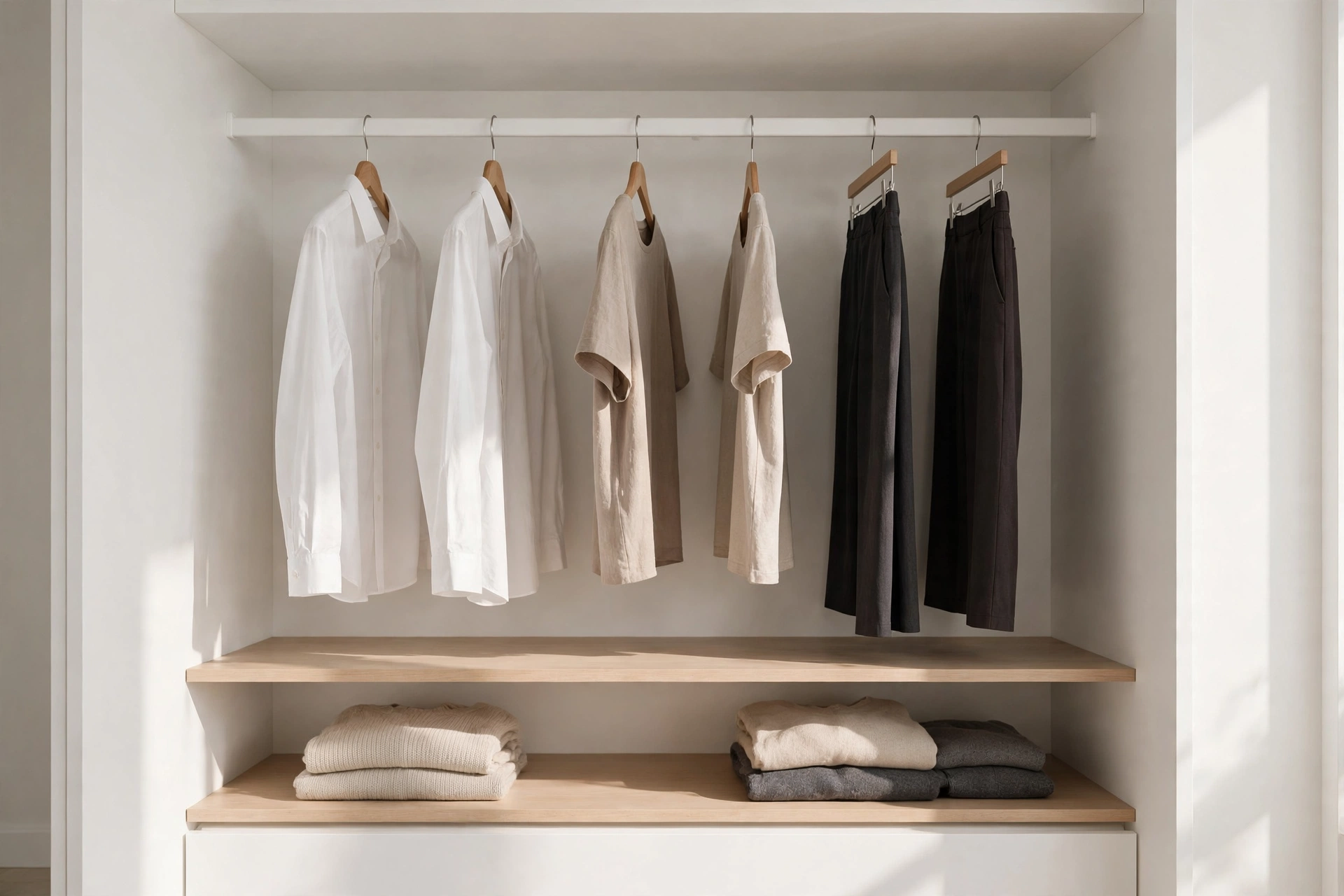
Fold what stays, hang what must be hung, and put the donation bags by the door. Feel how light the closet looks. That feeling is the whole point.
Step 2: Set Your Weekly Rhythm
Here’s where the “routine” part of a minimalist laundry routine comes in. When you have less clothing, you can’t afford to let laundry drift — but you also don’t need marathon laundry days. The sweet spot is a simple weekly rhythm matched to your household size.
For one or two people, two wash days a week is usually plenty. For a family, aim for one full load a day or two loads every other day — the exact split matters less than the consistency. Pick your days and write them down: “Tuesdays and Fridays” is easier to follow than “whenever the basket is full.”
Then give each day a job, so you’re never standing in front of the machine wondering what goes in first:
- Day 1 — Clothes: all the regular clothing, washed together on cold.
- Day 2 — Towels and sheets: towels, bed sheets, pillowcases, kitchen towels.
That’s the whole framework. Two days, two jobs. If you have kids with heavy laundry output, add a midweek “extras” slot — gym clothes, work uniforms, the load of muddy soccer gear. The rule is simple: nothing waits more than a few days, and nothing piles higher than one basket.
The other half of the rhythm is finishing what you start. A load that gets washed and left in the machine is worse than no load at all — it stinks, it rewashes, it doubles your work. Build the folding and putting away into the same time block. I set a timer for twenty minutes when I pull a load from the dryer: fold, hang, put away, done. If you need small laundry room storage ideas to make that twenty minutes possible — a folding shelf, a wall-mounted drying rack, one clear counter — invest there first. Friction is what kills routines.
Step 3: Cut the Sorting Drama
Sorting is where laundry time goes to die. Five tiny piles, one shirt each, special settings for everything — it’s a system designed by someone with unlimited free time. A minimalist laundry routine needs a minimalist sort.
Here is the sorting system I use, and it’s worked for two years: two baskets, no more. One for lights and whites, one for darks and colors. That’s it. Everything goes in cold water, normal cycle. Modern detergents and fabrics are built for this — the old “wash every color separately in its own special temperature” advice comes from an era when dyes ran like rivers. Today’s clothes, especially the sturdy basics a minimalist wardrobe favors, handle mixed cold-water loads just fine.
The only exceptions worth keeping:
- One delicates bag hanging inside the laundry area for the truly fragile things — lace, thin knits, anything you’d cry over.
- Towels and sheets separate from clothing, because towel lint clings to everything and heavy bedding beats up lighter garments in the drum.
Set a simple rule everyone in the house can follow: if it fits in the basket, it goes in on wash day. No one should have to hunt through bedrooms collecting strays. Put one hamper where clothes actually come off — the bathroom, the bedroom, wherever undressing happens — and let gravity do the collecting.
While we’re simplifying: cut your products down to two. One good all-purpose detergent and, if you like it, one scent-free additive like white vinegar as a rinse (it softens and deodorizes without residue). The wall of specialty stain removers, scent boosters, and dryer sheets is just clutter that smells like marketing. For the occasional real stain, keep one small stain bar — the old-fashioned kind works better than most sprays anyway.
Step 4: Fold Less, Hang More, Stress Never
Confession: I used to fold everything like I was preparing it for a store window. Hospital corners on t-shirts. It took forever, and my drawers still looked messy by Thursday. Here’s what actually works: fold less, hang more, and stop chasing perfection.
Hang as much as you reasonably can. Shirts, blouses, trousers, dresses — if it has shoulders, it can live on a hanger. Slim velvet hangers take up almost no rod space, and hanging means zero folding time, zero wrinkles, and a closet you can read at a glance. What can’t be hung gets the simplest fold that fits the drawer: in thirds, stacked or filed vertically so you can see every item.
And give yourself permission for the “good enough” categories:
- Underwear, socks, pajamas: toss into drawer dividers or small open bins. Nobody is auditing your sock drawer.
- Workout clothes: one bin, rolled. They’re stretchy; rolling is faster and kinder to the fabric.
- Kids’ clothes: sorted by child into labeled bins, not folded. If the clothes are clean and findable, you’ve won.
Putting away is the graveyard of laundry systems, so make the destination obvious. Every item should have one home and one home only — a specific hook, a specific drawer section. When clean clothes come out of the basket, there’s no decision to make, just a motion to repeat. This is the same principle that keeps the rest of the house calm: a place for everything, and everything in its place, applied at laundry scale.
Keeping Your Minimalist Laundry Routine Honest
The system works — until slowly, quietly, it doesn’t. A sale rack here, a gifted sweater there, a free t-shirt from a fun run, and suddenly the wardrobe has crept back up to avalanche size. This is the part nobody warns you about: minimalism isn’t a one-time declutter, it’s a maintenance habit.
Build these three check-ins into your life, and the routine will hold for years:
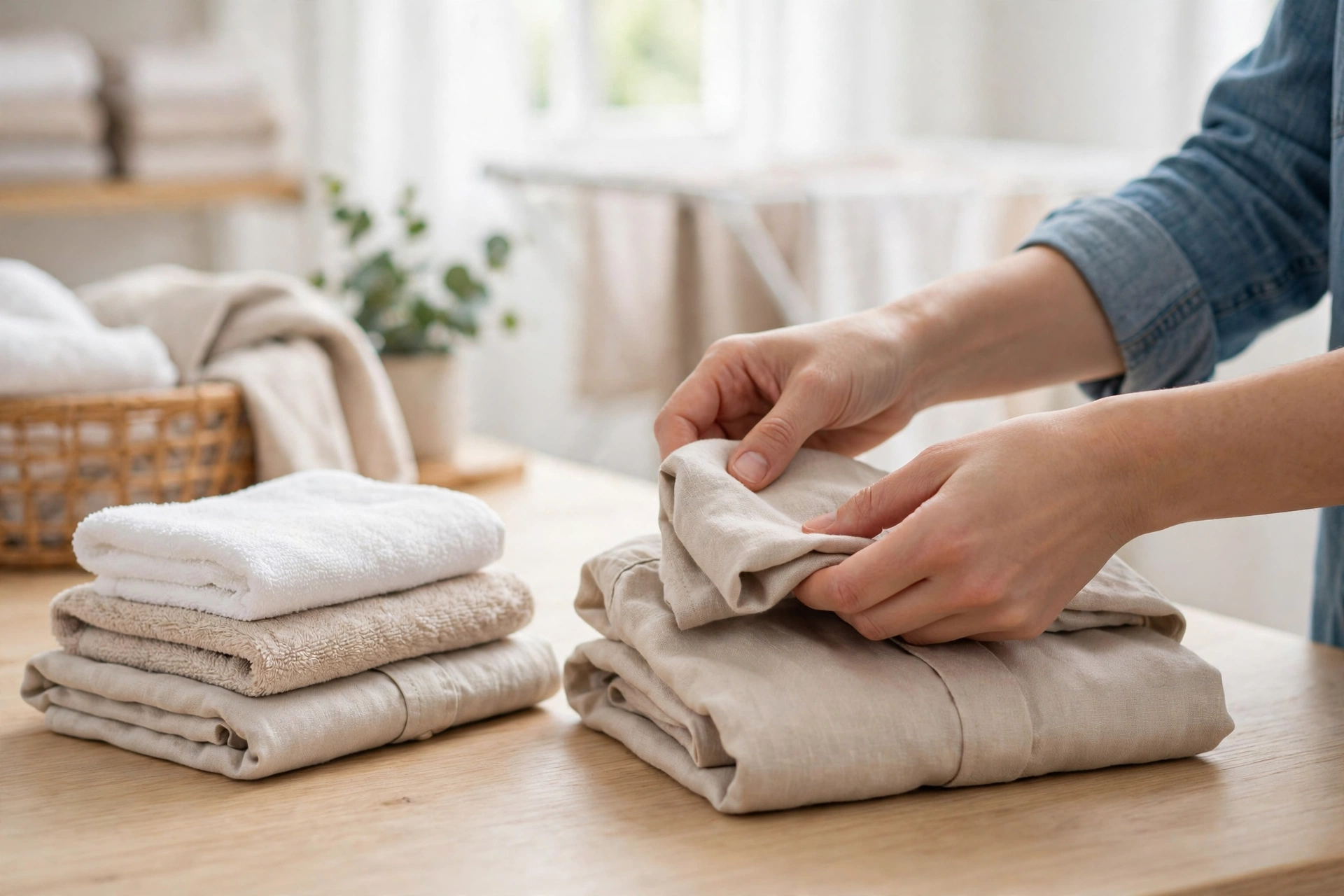
- The folding test: every time you fold laundry, notice what’s worn out, stained, or hasn’t been worn in a month. Toss or donate it on the spot. Your laundry is already in your hands — there’s no better moment to edit.
- The seasonal swap: twice a year, when you pull out summer or winter clothes, do a quick audit before anything goes back in the closet. Off-season items you didn’t miss all season? Out they go. This is also a great time to revisit your capsule wardrobe plan if seasons keep throwing you off.
- The one in, one out audit: keep a small donation bag permanently hanging in the closet. When you buy something new, something old goes in the bag that same day — not later, that day. The one in, one out rule only works if the “out” is immediate.
Watch for the classic backslide patterns, too. The most common decluttering mistakes to avoid apply perfectly to wardrobes: keeping “just in case” outfits for a life you don’t live, holding onto guilt purchases you never wear, and treating sale items as savings instead of clutter-in-waiting. A $12 shirt you never wear is not a bargain — it’s twelve dollars of closet stress.
If the system ever feels heavy again, don’t overhaul it. Just re-run Step 1: shrink the wardrobe first. Every laundry problem I’ve ever had traced back to too many clothes, never to too few.
Start small this week. Pick your two wash days, shrink one drawer, and fold the next load in twenty minutes flat. A minimalist laundry routine isn’t about perfection — it’s about a chore that finally fits inside your life instead of swallowing it. Less to wash, less to fold, less to stress about. That, to me, is what simple living actually feels like.