
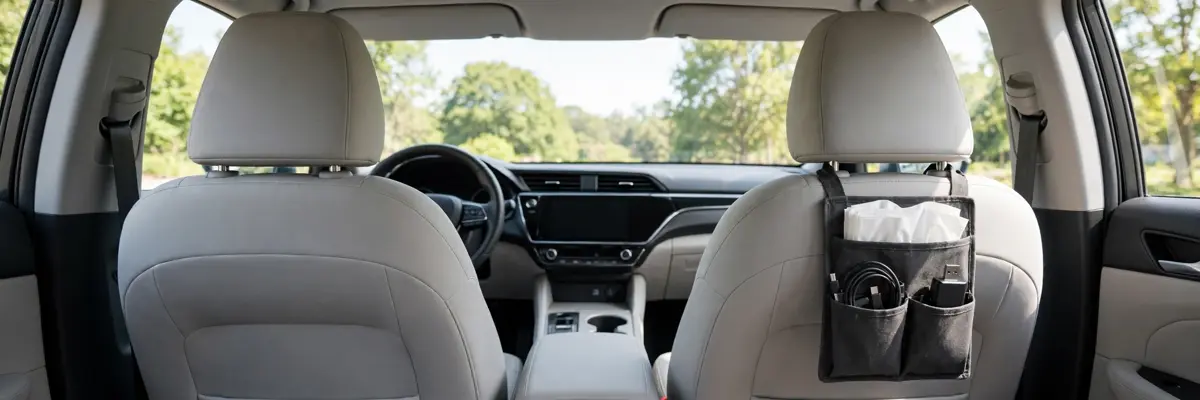

Wondering how to declutter your car? You’re not alone. At some point most of us have opened the passenger door, moved a water bottle, a pile of receipts, and a gym bag off the seat, and thought: how did it get this bad? The average driver spends close to an hour a day behind the wheel, which means car clutter is daily-life clutter — it quietly adds stress to every school run, commute, and grocery stop. The good news is that a car is the easiest decluttering project you’ll ever take on. It’s small, it has a clear finish line, and you can go from chaos to calm in a single afternoon. This guide covers exactly how: empty everything out, sort zone by zone, decide what truly belongs in your car, add a few cheap organizers, and build a ten-minute weekly reset that keeps it that way. Buckle up — let’s get that car feeling like new again.
How to Declutter Your Car: Start With the Full Empty-Out
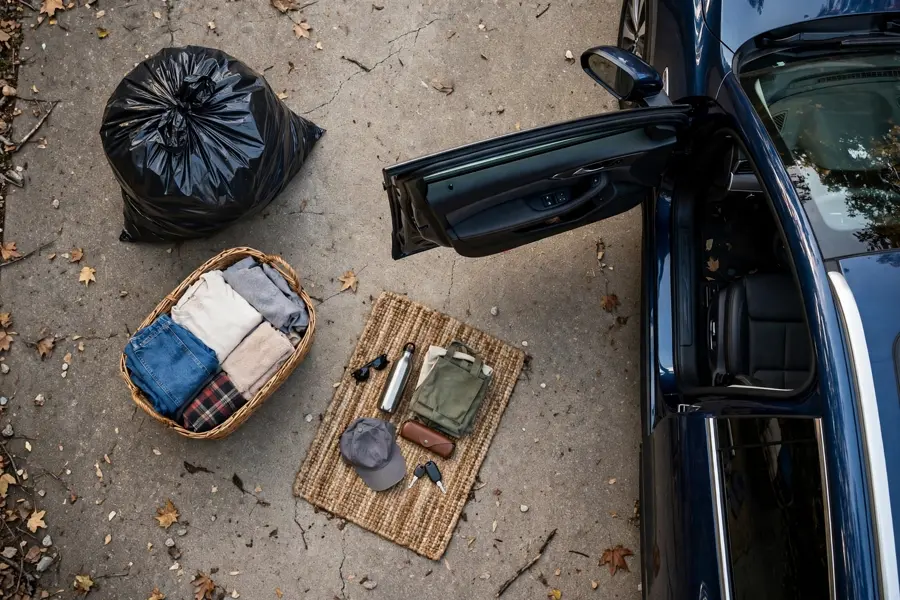
Half-emptying never works. You can’t declutter a car while sitting in the middle of the clutter, so start the way you would with any other stuffed space: take everything out. Park somewhere you can leave the doors open and grab three things: a trash bag, a laundry basket, and a donation bag. Then remove absolutely everything: glove box, center console, door pockets, seat-back pockets, under the seats, the trunk, the visor pockets. Yes, even the things that “live” there. You need to see the full volume of stuff before you can make honest decisions about it. This step usually takes twenty to thirty minutes, and it’s oddly satisfying — watching the empty car emerge feels like a magic trick.
As you empty things out, give the car a quick wipe-down. You don’t need to detail it — just run a damp cloth over the dashboard, console, and door handles, and vacuum the seats and floors if you can. Wiping the blank slate makes the whole project feel fresh and stops you from installing clean systems on top of dusty surfaces. I always find the cleanup itself motivates the sorting: once the car smells faintly of lemon wipes instead of old takeout, I’m suddenly much more ruthless about what goes back in. If the weather is decent, leave the doors open for a few minutes to air everything out too.
Now spread everything you took out on the driveway or garage floor, grouped by type. This is the moment of truth, and it’s where the real decluttering happens. Make five quick piles: trash and recycling, items that belong in the house (carry them inside today), items that belong to other people (a spouse’s jacket, the kids’ library books), keepers that will live in the car, and donations. Be strict about the keepers — if you haven’t touched it in six months, it doesn’t earn a spot in the car. Receipts get photographed or tossed. Expired coupons, single socks, dead pens, cracked phone chargers, and fast-food napkins go straight to trash. And that mysterious trunk bag of stuff that “might be useful someday”? If someday hasn’t arrived in a year, it goes to donations or the trash.
Go Zone by Zone: Glove Box, Console, Doors, and Trunk
With the car empty and the trash dealt with, put back only what earned a spot — and give every item a zone. A car works best when each zone has a job, the same way a tidy home works when each room has a purpose. If you’ve worked through how to declutter a living room, you already know the drill: work one small area at a time and the job never feels overwhelming. Here’s how to handle each car zone:
Glove box
The glove box should hold only what you need while driving: registration, insurance, the owner’s manual, and one pen. That’s it. Old CDs, expired insurance cards from two cars ago, mystery receipts, and a flashlight with dead batteries do not live here anymore. If your registration lives in your phone app, even better — leave the paper copy at home.
Center console
The console is where clutter multiplies fastest — it’s basically the junk drawer of the car, so treat it with the same firm rules you’d use for a junk drawer: keep only what you actually use. Limit it to charging cables, a small pack of tissues, hand cream, and your parking pass or garage remote. A small tray insert stops everything from sliding into a tangled pile. One pen, one cable, one pack of mints — and nothing else.
Doors and seat-back pockets
Door pockets collect water bottles, kids’ toys, stray mail, and single gloves. Give each regular passenger one pocket: the driver’s door holds sunglasses and the phone mount; kids’ seat-back organizers hold their books, coloring supplies, and snack cups. Everything else goes inside the house or into the trash. Seat-back pockets in particular should never hold food — crumbs in a hot car become a science experiment fast.
Trunk
The trunk is storage, not a second closet. Keep an emergency kit, a reusable shopping bag, and (in winter) an ice scraper and a blanket — neatly contained in one or two collapsible bins. Anything else — the folding chair from last summer’s concert, the gym bag that’s been riding along since March, the box of stuff meant for a friend’s house — gets carried out today. Commuters: if your gym bag lives in the trunk “in case you go after work,” be honest about whether you’ve gone even once this month. If not, the bag lives at home and rides along only on gym days.

Decide What Actually Deserves to Live in the Car
Here’s the question that does ninety percent of the work: what do you actually use in the car every week? Most of us carry around a shocking amount of “just in case” stuff that has never once been used. An honest car kit for most drivers fits in a single small bag or one trunk bin: first-aid essentials, a phone charger, tissues, sunscreen, a reusable water bottle, and whatever you personally need daily — medications, sunglasses, a work badge. The trick is to define your car kit once, in writing (a sticky note in the glove box works), and then hold every new item to that list. When a stray item tries to move in — your coworker’s umbrella, a conference tote bag, the kids’ sports gear — ask whether it replaces something or just adds weight. A car should be a tool you enjoy using, not a storage unit with a steering wheel.
Apply the same logic as the rule of one for duplicates: one pen, one charger, one ice scraper, one umbrella, one emergency snack. Duplicates breed quietly in cars because nobody audits them. While you’re at it, run the same audit on your receipts. Gas and parking receipts deserve exactly one home — a small envelope in the glove box or a quick photo and then the trash. A receipt graveyard in the console doesn’t make taxes easier; it just makes the console gross.
Road trippers need a different rule: pack in, pack out. A cooler, snacks, and pillows belong in the car for the trip and come out the day you get home — no exceptions. Don’t let one vacation wreck a tidy car because the post-trip unpacking “could wait.” Make the last hour of the trip the unpacking hour: cooler to the kitchen, trash to the bin, bags to the laundry.
Cheap Organizers That Earn Their Space
You don’t need a fifty-dollar car makeover. A handful of cheap organizers makes the car self-tidying, because everything gets a visible home — the same principle that makes a decluttered home stick: when every category has a place, clutter has nowhere to hide. A seat-back organizer (about ten dollars) holds kids’ supplies, tissues, and chargers. A collapsible trunk bin stops groceries from rolling around. A cupholder tray turns a wasted cup slot into storage for coins, lip balm, and earbuds. A visor organizer keeps sunglasses and documents in one spot. And the single highest-impact item on this list is a simple trash solution — a small lidded bin or even a bag hooked on the back of the seat. Car trash is the number one source of car mess, and a designated trash spot kills it at the source.
Install everything before you load the keepers back in, and be brutal about the total count. Three organizers in a sedan is plenty; six means you’re organizing clutter instead of removing it. Put a small budget on it — twenty or thirty dollars total — because the point is that the system is cheap enough to replace and simple enough to maintain. And here’s the maintenance test: if an organizer sits empty for two weeks, take it out. Empty containers are just clutter with better branding.
The 10-Minute Weekly Reset (Plus the With-Kids Version)
The secret to a car that stays decluttered isn’t a bigger cleanup — it’s a tiny, boring, weekly habit. Pick a trigger you’ll actually remember: Sunday evening, your weekly gas stop, or the moment you pull into the driveway after the big grocery run. Grab the little trash bin, walk around the car once, and pull out everything that doesn’t belong: receipts, wrappers, kid stuff, forgotten bags. House items go to the house, keepers go back to their zones, trash goes in the bin. Ten minutes, once a week, and the car never gets bad again. I pair mine with my ten-minute evening reset — same timer, same quiet satisfaction.
With kids, make the reset a game instead of a chore. Hand each child their own small tote bag and set a five-minute timer: whoever collects the most stray toys, wrappers, and random treasures wins (prize: picking the music for tomorrow’s drive). Kids love the treasure-hunt energy, and it quietly teaches them the same one-in-one-out habit you’re building. After the reset, do a thirty-second wipe of sticky fingerprints and juice-box spills before they fossilize. A car with kids will never look like a showroom, and that’s fine — the goal is a car that feels fresh every Monday morning, not one that photographs well.
Twice a year — spring and fall — do the full empty-out again in about thirty minutes. Rotate the seasonal gear (swap the ice scraper for the sunshade), toss expired first-aid items, and refresh the snack stash. It keeps the car matched to your actual life instead of the life you were living six months ago.
Keeping Your Car Clutter-Free for Good
The last step is a mindset shift: your car is the first thing you sit in every morning and the last thing you park at night, and it quietly sets the tone for your day. Maintaining a clutter-free home and a clutter-free car run on the same fuel — the habit of putting things back where they belong the moment you’re done with them. Build three micro-habits and the car takes care of itself: trash out every time you park (if there’s a bin in sight, take the trash), the one-touch rule for the trunk (bags come inside on the same trip, not the third), and a monthly five-minute glove-box check. When the car stays clear, driving gets calmer, finding your stuff gets instant, and that low-level background guilt disappears. You didn’t just declutter a car — you gave your daily routine a little breathing room.
That’s the whole project: one afternoon, a few trash bags, and a ten-minute weekly reset. Your car will thank you with fresher air, a calmer commute, and a back seat you no longer have to apologize for. So grab a trash bag, park in the driveway this weekend, and start with the full empty-out — your future self, the one driving to work with a spotless dashboard and zero guilt, is already grateful.