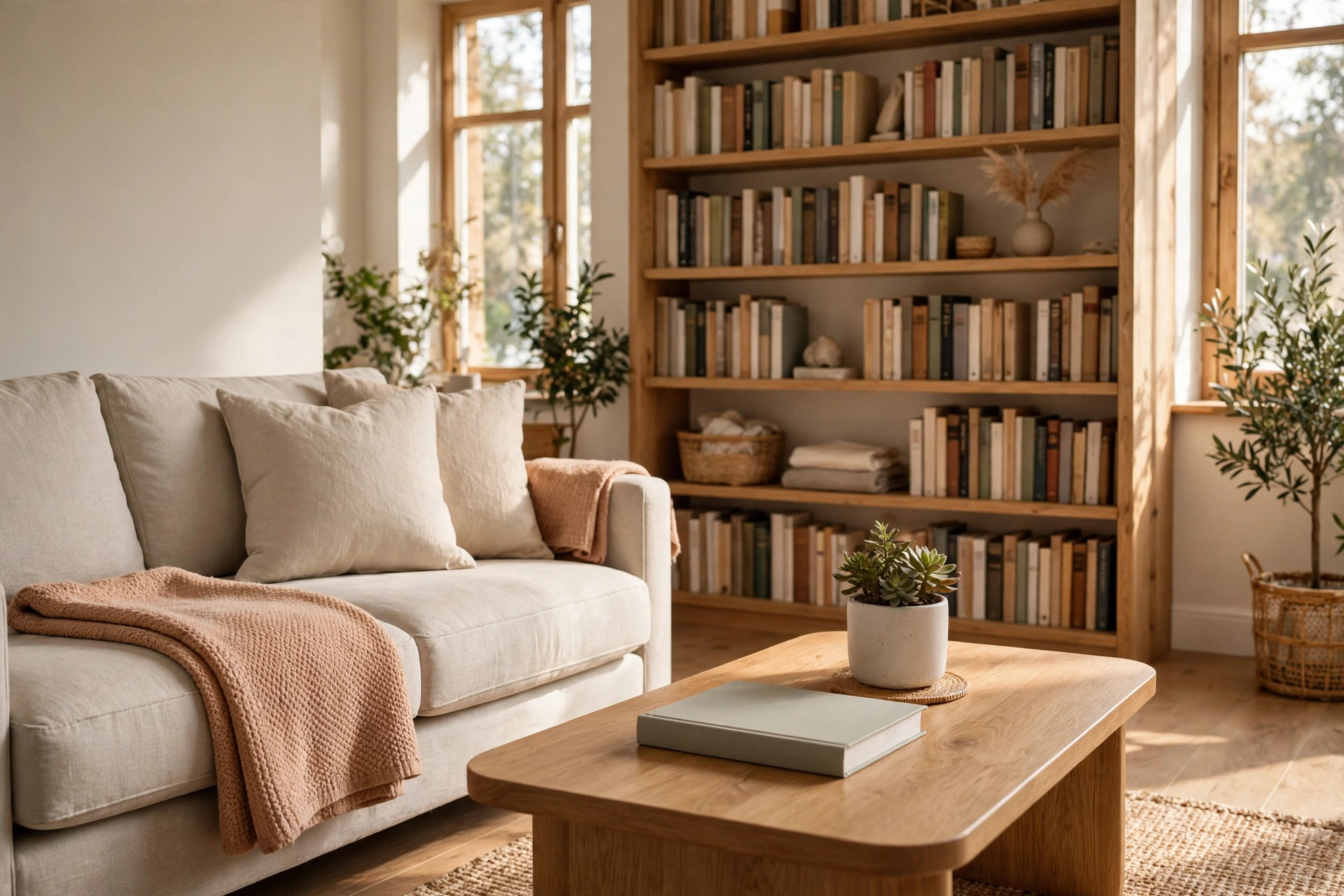

If you’re wondering how to declutter a living room without spending your entire weekend wrestling with a sofa full of laundry, stray chargers, and three remotes that all seem to control nothing, you’re in exactly the right place. The living room is the hardest-working room in most homes. It’s where the family lands after dinner, where guests sit when they visit, where the kids dump their backpacks, and where mail goes to quietly reproduce on the coffee table.
That’s precisely why it resists the usual decluttering advice. A bedroom has a clear function — sleep. A kitchen has a clear function — cooking. But a living room is a lounge, an office, a playroom, a cinema, and a mail sorting depot all at once.
This guide works through the room zone by zone, in a single weekend, with honest decisions and simple systems that keep it calm long after you’re done.
Why Your Living Room Collects Clutter Faster Than Any Other Room
Before touching a single cushion, it helps to understand what you’re fighting. Living rooms accumulate clutter for three reasons, and none of them are laziness.
First, the room has no natural boundary. Clutter in a kitchen gets pushed to a counter and dealt with because you need the counter to cook. Clutter in a living room just settles, becoming invisible within days.
Second, everyone in the household uses the room, which means nobody fully owns it. When a space belongs to everyone, putting things away feels like someone else’s job. The result is the classic shared-space drift: each person leaves one or two things, and suddenly there are fourteen.
Third, living rooms host activities that each bring their own gear — reading (books, glasses, blankets), watching (remotes, consoles, headsets), working (laptops, notebooks, pens), kids playing (toys, craft supplies). Each activity is innocent. Together, they’re a pile.
The fix isn’t one big purge — it’s a home for each activity’s gear, plus a habit that returns stray items to those homes. That’s what this guide builds.
The One-Hour Prep That Saves Your Whole Weekend
Rushing in and grabbing things randomly is how decluttering sessions die. Spend one focused hour setting up, and the rest flows. You’ll need four containers: a bag for trash, a bag or box for donations, a box labeled “relocate” (for things that live in other rooms), and a laundry basket for the homeless items you’ll deal with at the end.
Take a quick photo of the room as it is right now. When you’re two hours in and surrounded by sorted piles, that photo reminds you how far you’ve come.
Now, do one fast sweep before the real sorting starts. Walk through with the relocate box and gather everything that obviously doesn’t belong in a living room — shoes, mail from three weeks ago, the screwdriver, the kid’s science project. Carry the box through the house and put those things where they live. This alone can remove a surprising amount of visual noise. If your hallway or entry is part of the problem, there’s a step-by-step entryway guide that pairs well with this one, since entryway clutter tends to migrate straight into the living room.
Finally, set a timer. Work in 45-minute blocks with 10-minute breaks. The timer keeps you from burning out — and from drifting off to “just reorganize one drawer” elsewhere in the house instead of finishing the room.
How to Declutter a Living Room in 6 Simple Zones
Here’s the core method. Instead of attacking the whole room at once, split it into six zones and finish each one completely before moving on.
Zone 1: The seating area. Strip the sofa and chairs completely. Fluff or replace cushions, fold blankets instead of draping them in lumps, and check under and between cushions — this is where remotes, snack wrappers, and at least one missing pen go to hide. Be honest about throw pillows: if you own nine and use three, the other six are just laundry and dusting.
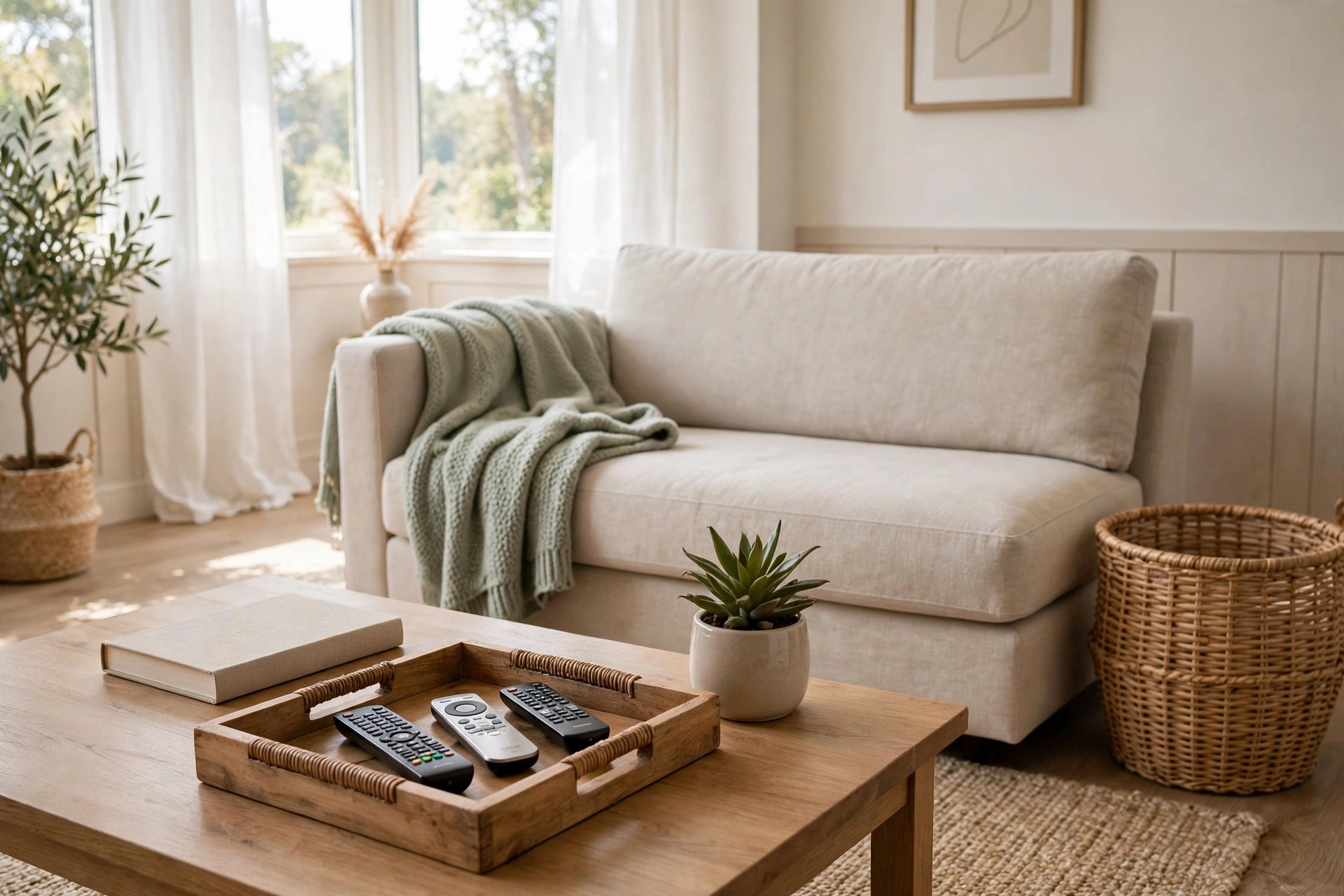
Zone 2: The coffee table and side tables. Remove everything from every surface. Wipe them down. Then decide what earns its place back: a tray for remotes, a coaster stack, one book you’re actually reading, one small plant or candle. Everything else — old magazines, empty water glasses, yesterday’s mail — goes to its proper pile. A good rule: if a surface needs more than ten seconds of tidying to look calm, it holds too much.
Zone 3: The entertainment center. This is the cables-and-devices jungle. Unplug and untangle, bundle cords with simple ties, and toss dead cables and chargers for phones you no longer own. If the TV stand has drawers, treat them like a junk drawer — empty, sort, and only return what’s used weekly.
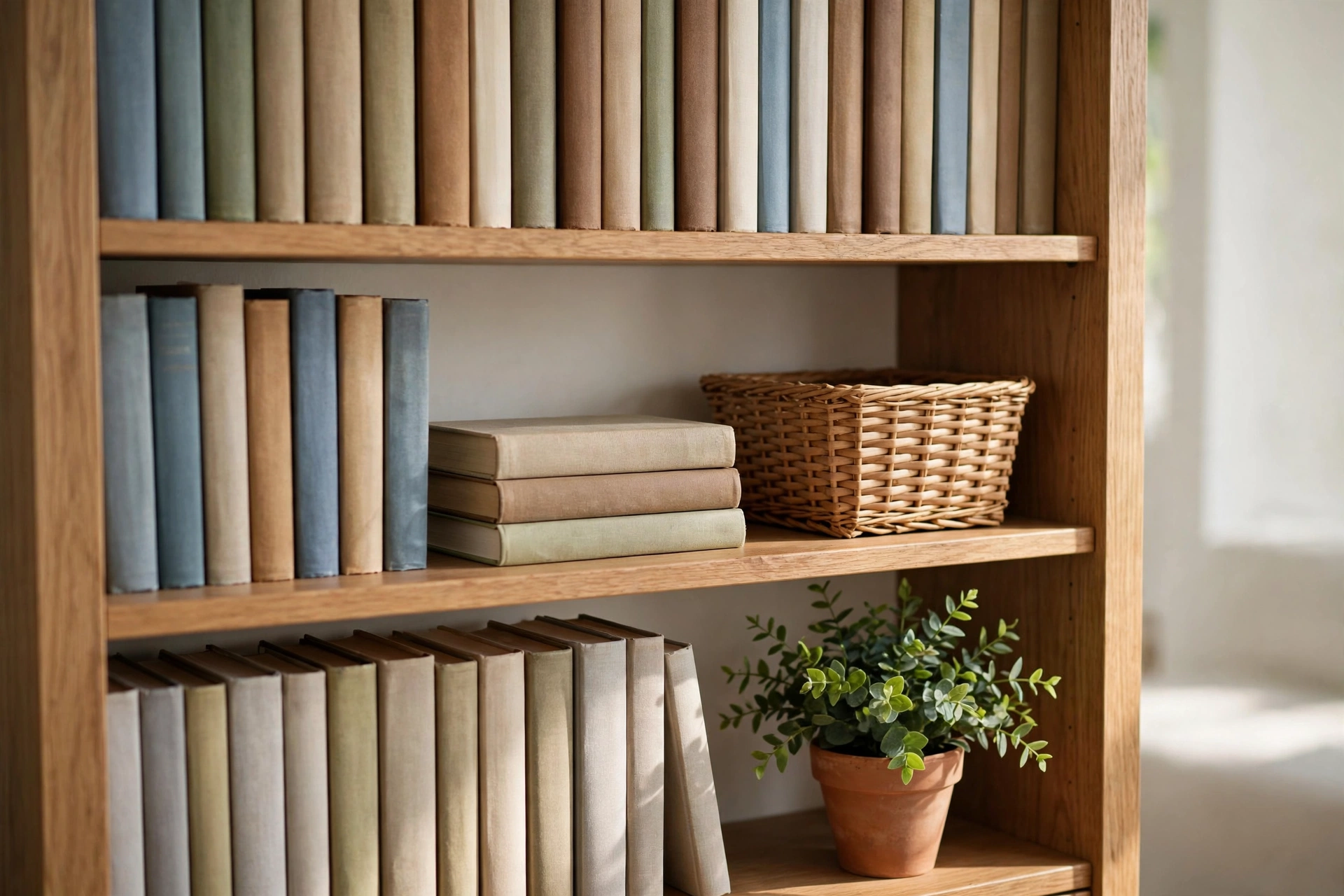
Zone 4: Shelves and bookcases. Take books off one shelf at a time. Keep the ones you’ll genuinely reread or reference, and release the rest — the guilt pile of books bought with big intentions is a classic clutter anchor. Leave breathing room: a shelf crammed edge to edge will collect random objects within a week, while a shelf with intentional gaps invites you to keep it neat.
Zone 5: Decorative surfaces and walls. Look at every decorative object as if you’re seeing it for the first time — these accumulate invisibly over years. Keep what you genuinely enjoy looking at; the rest has served its time. For guidance on the tricky emotional ones, the approach in our calm holiday declutter guide works beautifully for letting go without regret.
Zone 6: The floor and corners. The last zone catches everything the others missed: the basket of “to fix” items, the stack of boxes you never broke down, the exercise mat leaning behind the door. For each item, the question is simple: does it live here on purpose, or is it here because it has nowhere else to go? Items with nowhere to go need a home — which is the next section.
Taming the Usual Suspects: Books, Blankets, and Cables
Every living room has its own repeat offenders — categories that quietly multiply no matter how often you tidy. These deserve a dedicated decision session, because sorting them item by item, scattered across zones, never quite finishes the job.
Books and magazines. Gather every book and magazine from the room into one spot — you’ll immediately see the duplicates and the magazines from last spring. Keep a small, honest number. A practical test: if you haven’t opened it in two years and it’s not a reference you need, let it go. Donate bundles to a library or little free library rather than hoarding them “for someday.”
Throw blankets and pillows. One or two blankets per seating area is plenty for a real household. Wash the keepers so they start fresh, and release the flat, pilled, or mystery-stained ones. A folded blanket reads as decor; a crumpled one reads as clutter.
Cables and chargers. Pull every cable out of the entertainment area and the couch-side charging spots. Test each one. Keep one charging cable per device type in use, and recycle the frayed, orphaned, and “just in case” ones. A short cord organizer or even a labeled pouch stops the keepers from re-tangling. And while you’re at it, check the whole room for duplicates of anything — extra remotes, spare coasters, backup batteries. The rule of one for duplicates is perfect for this moment: one of each, kept in its place.
Kids’ and pet gear. If toys or pet supplies live in the living room, they need a container with a lid or a dedicated basket — not a slow spread across the rug. A single attractive basket by the sofa arm can hold the current rotation of toys; anything that doesn’t fit gets rotated out to storage or donated.
Give Everything a Home: Simple Storage That Actually Works
Decluttering removes things. Organizing keeps them removed. This is the step most guides skip, and it’s why rooms re-clutter within a month. Every category that survives your purge needs a defined home that’s easier to use than the floor or the coffee table.
Start with the items you use daily, because those create the most drift:
- Remotes: a shallow tray or small lidded box on the coffee table or side table. Every remote lives there, always. No tray, no remote.
- Chargers: one charging station — a small basket or drawer near an outlet — for the whole room. No cables draped over sofa arms.
- Blankets: a lidded basket or ottoman with storage beside the main seating. Folded in, out of sight, still reachable for movie night.
- Magazines and mail: a slim wall-mounted file or a single basket by the door. When it’s full, that’s your signal to recycle, not to start a second basket.
- Board games and media: one shelf or one cabinet compartment. If a new game arrives and doesn’t fit, an old one leaves.
Resist the urge to buy furniture before you’ve finished decluttering. Most living rooms already have enough storage once the excess leaves — the problem was never space, it was that every shelf was holding the wrong things.
If you do add anything, choose closed storage for the messy categories — baskets with lids, ottomans with hidden compartments, TV stands with doors. Open shelving is for what you want to see: books you love, one plant, a framed photo.
The 10-Minute Daily Reset That Keeps It Decluttered
Here’s the truth nobody puts in the headline: a decluttered living room doesn’t stay that way by itself. It stays that way because of a small daily habit, and the smaller the habit, the more likely it survives real life.
The reset takes ten minutes, ideally at the same time each day — right after dinner works for most households, or just before bed. Set a timer and move through the room once:
- Return the relocate items: shoes to the door, dishes to the kitchen, toys to their basket, mail to its tray or the recycling.
- Straighten the sofa: fold blankets, plump cushions, clear the coffee table back to its essentials.
- Do one 60-second surface wipe if things look dusty, and empty any small trash.
- Glance at the floor. Anything on it that isn’t furniture or a rug goes home.
That’s it. Ten minutes, one pass, done. On busy days, even a three-minute version keeps the room from sliding backward. Weekly, give one zone a five-minute check, rotating through all six, so nothing quietly re-accumulates.
If clutter has been creeping through the whole house, not just the living room, the same approach helps elsewhere. Our guide on how to declutter a bedroom uses the same zone method for a space that collects its own version of the same drift — clothes on the chair, books on the nightstand, the floor that eats everything.
The first two weeks after a big declutter are when old habits creep back — that’s normal, not failure. Catch the drift early, return the item to its home, and the room stays calm with almost no effort.
A Calmer Room Is Closer Than It Feels
When you’re standing in the middle of a messy living room, it’s easy to believe the fix is a whole new start — new furniture, new decor, a weekend you’ll never find. It isn’t. It’s one honest afternoon of decisions, a home for everything that stays, and ten calm minutes a day after that.
Start this weekend. Pick your timer, work your six zones, and finish with a photo — compare it to the one you took at the beginning. That before-and-after is yours to keep. Your living room is about to become the easiest room in the house to walk into, and the nicest one to stay in.
[…] has a job, the same way a tidy home works when each room has a purpose. If you’ve worked through how to declutter a living room, you already know the drill: work one small area at a time and the job never feels overwhelming. […]