
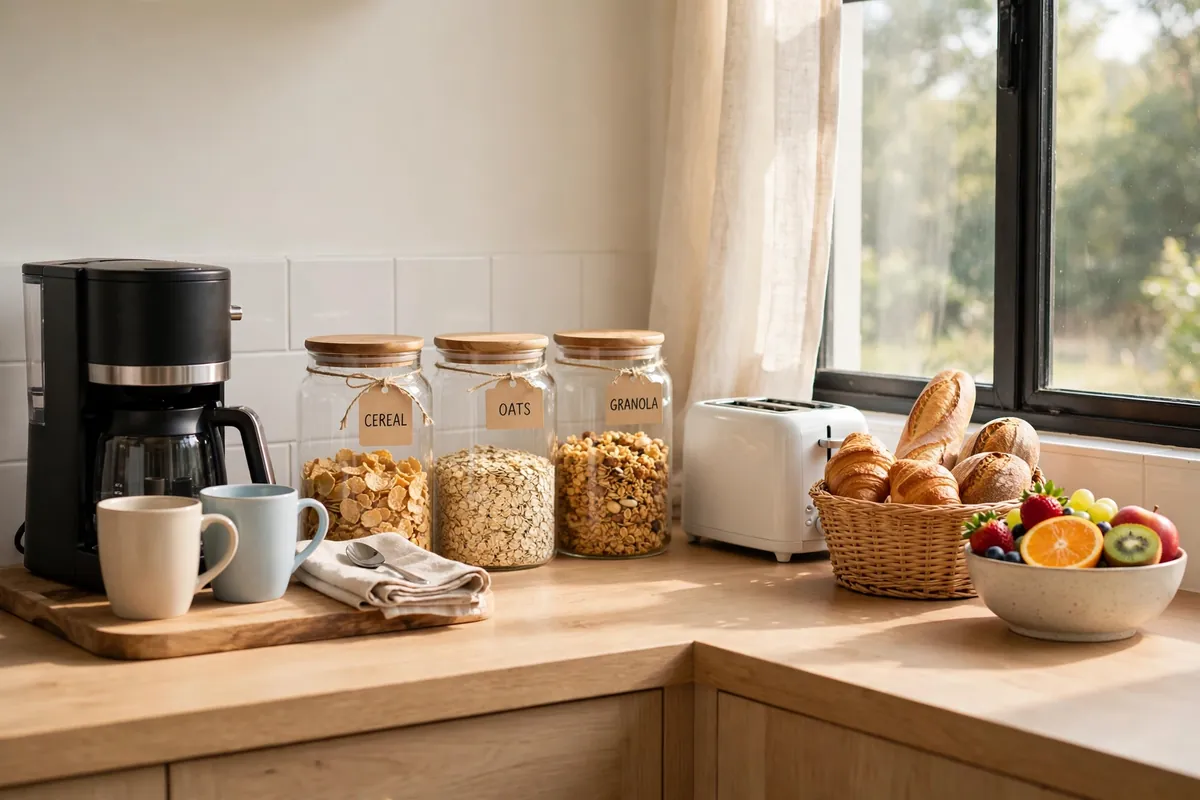

Here is a Tuesday-morning scene you probably know by heart: it is 7:12, you are half awake, someone needs a clean bowl, the cereal is hiding behind last night’s leftovers, the bread has gone mysteriously stale, and breakfast has turned into a scavenger hunt across three cabinets and one cluttered counter. Most of us do not need a bigger kitchen for this. What we need is breakfast station organization — the simple practice of pulling every morning essential into one tidy, grab-and-go corner so busy mornings practically run themselves.
A breakfast station is exactly what it sounds like: one dedicated zone — a stretch of counter, a pantry shelf, or even a rolling cart — where your coffee and tea supplies, cereal, oats, bread, and fruit live side by side, ready to use. When everything you need for the first meal of the day sits in one place, you stop crisscrossing the kitchen with your eyes half open. I have watched this single change turn a frantic 25-minute scramble into a calm 10-minute routine, and it costs nothing but one Sunday afternoon and a handful of containers you probably already own.
Below, I will walk you through the zones, the spot, the containers, and the tiny upkeep habits that make a breakfast station work in real kitchens — including very small ones.
What a Breakfast Station Actually Is (No Remodel Required)
Forget the glossy kitchen-showroom versions for a moment. A breakfast station is not a built-in appliance garage or a renovation project. It is a behavior zone: a deliberate decision that everything related to breakfast lives together, in one defined spot, instead of scattered wherever it happened to land.
The test is simple. Stand at your breakfast station and ask: can one visit get me a bowl of cereal, a plate of toast, and a mug of coffee or tea? If the answer is yes — the mugs, bowls, spoons, bread, spreads, and your drink of choice are all within arm’s reach — you have one. If you have to open three different cabinets and walk past the stove twice, you do not, and every extra step is time you lose on a busy morning.
The most common mistake people make is treating the station as decoration first. It should be a workstation first, pretty second. The stations that actually survive real life are the slightly boring ones: everything visible, everything reachable, nothing staged. You can always add a small plant or a nice tray later, once the system itself is humming.
Breakfast Station Organization Begins With Location
Before you buy a single container, pick the spot. Breakfast station organization works best when the location follows your morning path instead of fighting it. Spend one morning noticing where your feet actually go: most people shuffle from the bedroom to the kitchen door, hit the coffee maker first, then the fridge, then the table. Your station should sit right on that route, ideally at the spot where you naturally stop and stand.
A few location rules that keep paying off:
- Near an outlet. The coffee maker, kettle, and toaster all need power. One shared power strip tucked behind the setup keeps cords from sprawling.
- Close to the fridge. Milk, butter, yogurt, and eggs all come from there. Every ten steps you save matters when you are not fully awake.
- Out of the main cooking path. The station should not block the sink, stove, or dishwasher. Mornings flow better when the breakfast traffic and the lunch-prep traffic do not collide.
- Near a trash bin or sink. Coffee grounds, tea bags, and eggshells need somewhere immediate to go, or they pile up on the counter.
- At the height you use. Daily items belong between knee and eye level. The top shelf is for the fondue set, not the cereal.
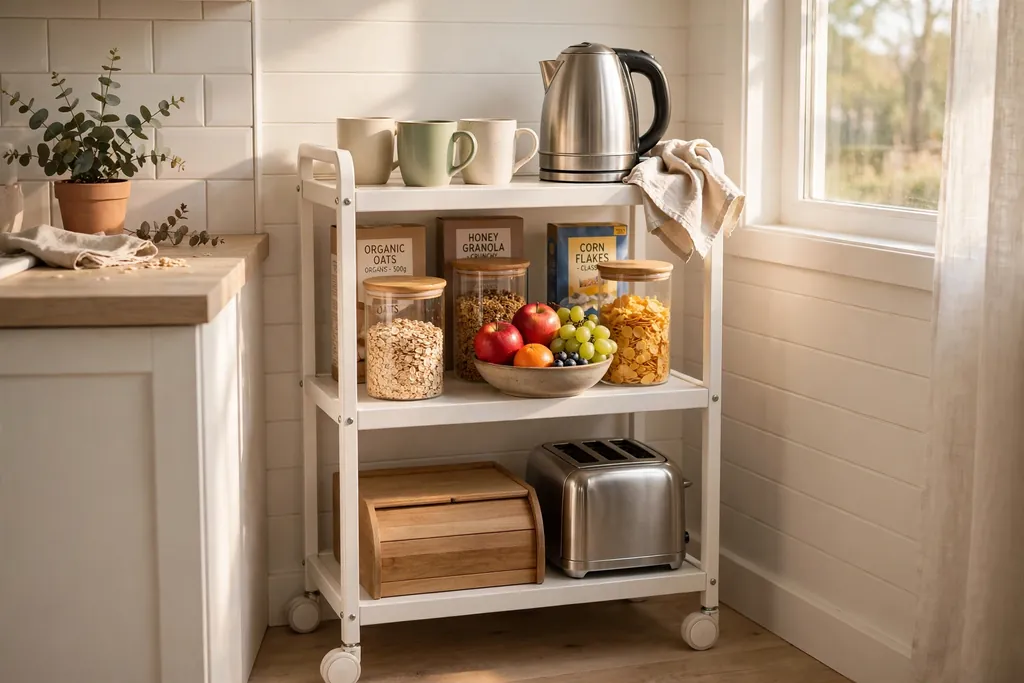
Good locations I have seen work beautifully: the two feet of counter between the fridge and the wall, the end of a pantry run, the inside of a deep lower cabinet with a roll-out shelf, and — a personal favorite — a slim rolling cart that parks beside the counter. The cart deserves special mention: it costs little, needs zero installation, and if your morning traffic changes, it rolls somewhere better.
The Five Zones Every Great Breakfast Station Needs
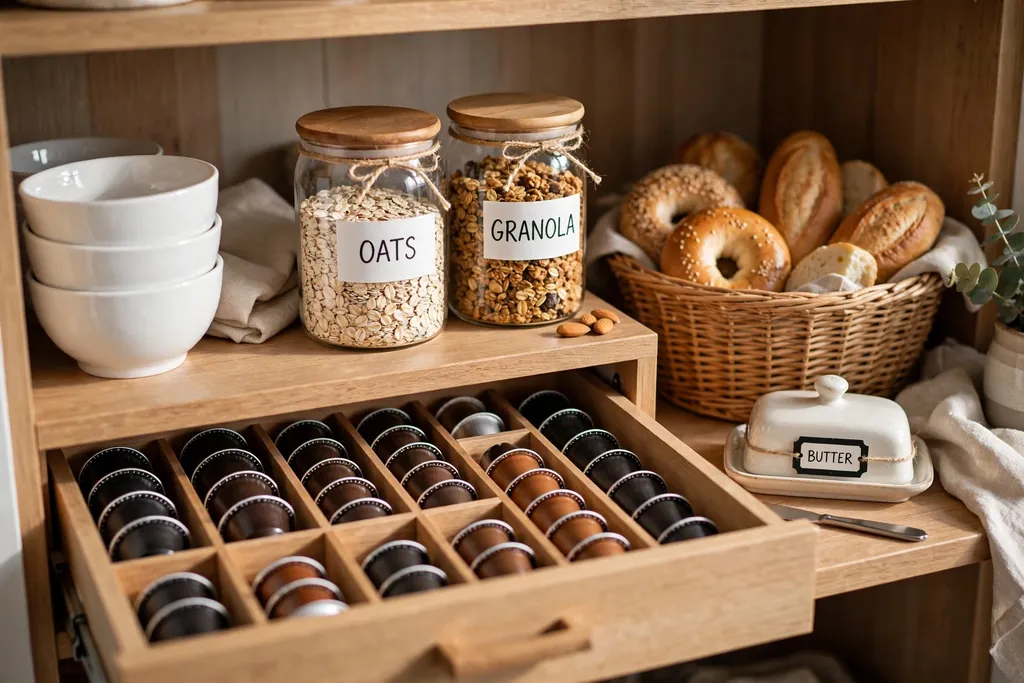
A station without zones is just a crowded corner. Divide your spot into five small jobs, and everything earns its place. Here is the breakdown that works for most households:
1. The Hot Drinks Corner
This is the anchor. Group your coffee maker or electric kettle, your coffee pods, beans, or tea tins, sweeteners, and your everyday mugs in one tight cluster. Put the mugs directly above or beside the machine — not across the kitchen in the “nice” cabinet. A small tray under the setup catches drips and, more importantly, tells your brain exactly where the zone begins and ends. If you already have a standalone coffee setup, a breakfast station is its natural next step — our coffee station organization guide pairs well with everything on this page.
2. The Cereal and Oats Row
Cereal boxes are bulky, floppy, and impossible to stack. Decant the cereals, oats, and granola your family actually eats into clear, airtight canisters and line them up in a row. You will instantly see what is running low, the boxes stop flopping over, and stale cereal becomes rare because the seal keeps it fresh longer. Keep the toppings here too: a small cluster of jars for nuts, dried fruit, chia seeds, and honey means one stop instead of five. Anything nobody has touched in two months goes to the food bank or the bin — shelf space is too valuable for aspirational granola.
3. The Bread and Toast Spot
The toaster, a bread box or lidded basket for the loaf, the butter dish, and a small caddy holding jam, peanut butter, and honey belong together. A butter dish on the counter (kept cool, out of direct sun) means spreadable butter at 7 a.m. without microwaving a rock. If counter space is tight, the bread lives in a drawer directly beneath the toaster — the vertical pairing matters more than the surface.
4. The Fruit Landing
A simple bowl of whole fruit — bananas, apples, clementines — doubles as decoration and as the fastest breakfast in the house. Wash grapes and berries ahead of time and keep them in clear containers at a height kids can reach; when fruit is visible and reachable, it gets eaten. This is the same grab-and-go logic we used in our kids’ snack station organization guide, and it works just as well for adults who are running late.
5. The Dairy and Extras Spot
Milk, yogurt, eggs, and juice live in the fridge, so give them one dedicated fridge zone directly beside or across from the station — a single shelf or a labeled bin. When the dairy is scattered across three shelves, someone will always open the fridge, stare, and give up on breakfast. One zone, one glance, one reach.
One last zone rule: resist the urge to add a sixth zone for vitamins, mail, and charging cables. Those are not breakfast. The station stays fast only if it stays single-purpose.
Containers and Gear That Do the Heavy Lifting
You do not need a shopping spree. You need a short list of workhorses, most of which you can source from a thrift store or the back of your own cabinets:
- Clear airtight canisters for cereal, oats, granola, coffee beans, and tea. Square ones use shelf space better than round ones.
- A cereal dispenser or two if you have kids — portion control, no box flaps, and far less spilling. They also look tidy on a counter.
- A tray, board, or runner to define the station’s footprint. This is the single cheapest upgrade: it corrals clutter and makes wiping the counter a one-lift job.
- A small turntable (lazy Susan) for spreads, honey, and syrup bottles. One spin instead of knocking over three jars.
- Baskets or bins for bread, snack bars, and oatmeal packets. Corralled, not scattered.
- Mug hooks or a small mug tree under a cabinet or on the wall beside the coffee maker. Hanging mugs free up an entire shelf.
- Labels. A simple label on each canister ends the “is this the decaf or the regular?” question forever, and it stops well-meaning family members from refilling the wrong jar.
What not to buy: single-purpose gadgets that solve a problem you do not have, matching sets that look great empty and terrible half-used, and anything that requires a step stool to reach. If a container makes the morning slower, it does not belong at the station, no matter how cute it is.
Breakfast Station Ideas for Tiny Kitchens and Tight Budgets
Small kitchen? The station shrinks to fit — it does not disappear. A single pantry shelf, set up with canisters in the back, the toaster tucked beside them, and a hook for mugs on the door, can hold an entire breakfast system. Our roundup of small pantry organization ideas shows how much function you can squeeze from one shelf and a door.
The rolling cart remains the small-kitchen champion: top tier for the kettle and mugs, middle tier for cereal canisters and the fruit bowl, bottom tier for bread and the toaster. It parks in a six-inch gap beside the fridge and rolls out only when needed. Apartment dwellers love this one because it moves with you — no holes in the wall, no landlord conversations.
On a budget, start with what you own. Mason jars or cleaned pasta-sauce jars become canisters. A baking sheet becomes a tray. A tension rod inside a cabinet becomes a paper-towel holder. The station’s magic was never in the matching containers; it is in the decision that breakfast lives in one place. Spend your first dollars on airtight seals and labels — those two buy the most calm per dollar.
How to Keep Your Breakfast Station Organization Working Long-Term
Any system dies without maintenance, but this one asks for almost nothing: a five-minute evening reset. While dinner dishes soak, restock what ran low, wipe the tray, check the fruit bowl for anything past its prime, and put the butter dish back. Five minutes tonight buys you ten tomorrow — and because the station is one defined spot, the reset is one defined job instead of a whole-kitchen tidy.
A few habits that keep the system honest:
- One in, one out for cereals. A new box only enters when an old one leaves. Three open boxes is the household limit; beyond that, half the cereal goes stale.
- Rotate the fruit. Whatever is ripest goes on top of the bowl, front and center. The forgotten banana at the bottom becomes banana bread, not compost.
- A weekly ten-minute deeper reset. Once a week, wipe the canisters, check expiry dates, and refill the sweetener jar. Sunday evening works for most people.
- Kid-proof the bottom shelf. If little hands use the station, their bowls, cups, and the fruit live low. Kids who can serve themselves stop asking you to do it.
Once the morning system is humming, the same zone logic ports beautifully to the rest of the day. Our lunch-packing station organization ideas apply the identical grab-and-go thinking to the afternoon rush — same habits, different meal.
The bottom line: a breakfast station is one of those rare organizing projects that pays you back every single morning. Pick a spot on your natural path, build the five zones, give everything a container and a label, and protect the whole thing with a five-minute evening reset. You will stop hunting for bowls, stop rebuying cereal you already own, and — best of all — start your day in a kitchen that feels like it is on your side. Busy mornings will not run themselves overnight, but with a tidy breakfast station, they come remarkably close.
[…] simple pour-top containers for yours. And if you like the idea of a proper morning setup, a tidy breakfast station — cereal, bowls, and spoons all in one spot — turns this from a storage trick into a genuinely […]