
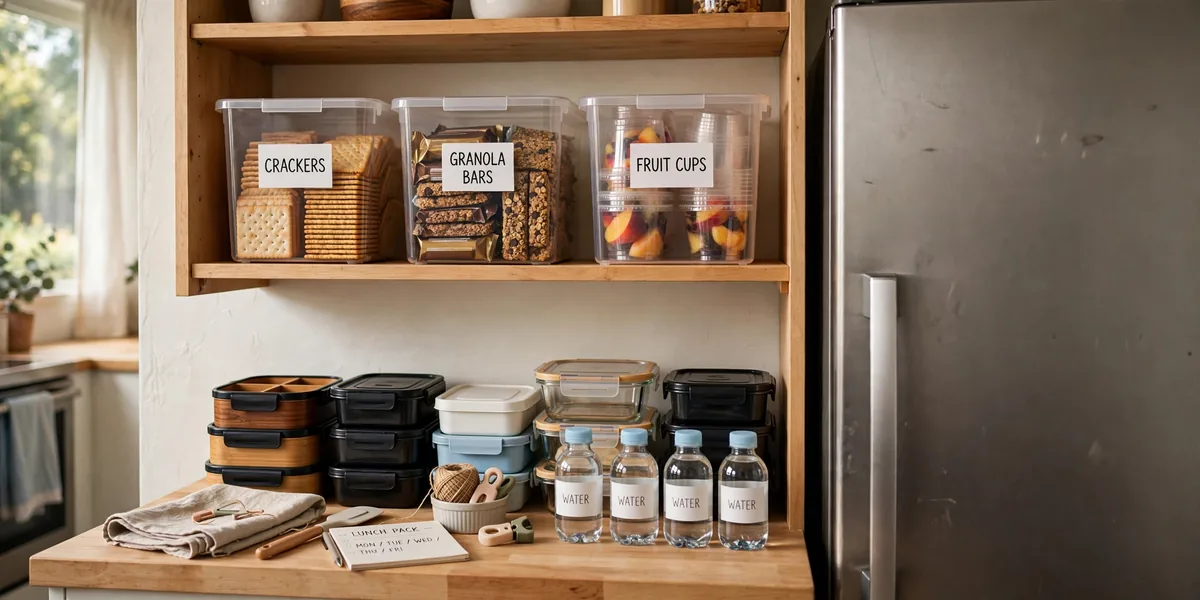

It is 7:12 in the morning. Your hair is still damp, one shoe is missing, and your six-year-old just announced she wants her sandwich “with the crusts off this time, in the blue box, not the green one.” Meanwhile, the yogurt you meant to pack is hiding behind last week’s leftovers. If this scene plays out in your kitchen most weekdays, you are not disorganized — you just do not have a system yet. The fix is a lunch packing station: one corner of your kitchen where every container, snack, and cold pack lives together, ready for an assembly-line morning.
A lunch packing station is exactly what it sounds like — a dedicated zone that holds everything you need to pack lunches in one place. No more sprinting between the pantry, the fridge, and the cabinet that holds the lids-but-never-their-containers. It works for school lunches, work lunches, and packed lunches for a weekend hike. Parents of picky eaters love it because kids can pack their own from approved choices; busy professionals love it because a grab-and-go shelf beats the vending machine every time. Once it is set up, daily effort drops to almost nothing — a five-minute evening reset and a Sunday prep session keep it humming.
Why a Lunch Packing Station Saves Your Mornings
Mornings fall apart because of decision fatigue, not laziness. When you are half-awake and trying to remember who eats peanut butter and who suddenly decided they only eat sun butter, your brain has too many open tabs. A lunch packing station closes most of them in advance. The choices were made on Sunday night, when you were calm. The food is already portioned, the containers are stacked with their lids, and all that is left is the physical act of assembly — about four minutes per lunchbox.
There is a quieter payoff, too: less food waste. When snacks are corralled in one visible bin instead of scattered across three shelves, you see what is running low and what is about to expire. The half-bag of pretzels gets finished instead of going stale behind the cereal boxes. And because the station gives kids real independence — choose one protein, one fruit, one crunchy snack from approved bins — they pack lunches they actually eat, instead of surprise boxes that come home half-full.
Picking the Right Spot for Your Station
The best lunch packing station sits close to the refrigerator, because roughly half of every lunchbox comes from the cold zone. Aim for three small areas within a few steps of each other: a pantry or cabinet shelf for dry goods, a dedicated fridge shelf or drawer for fresh items, and a counter corner or drawer for the gear. They do not need to be adjacent — they need to be deliberate.
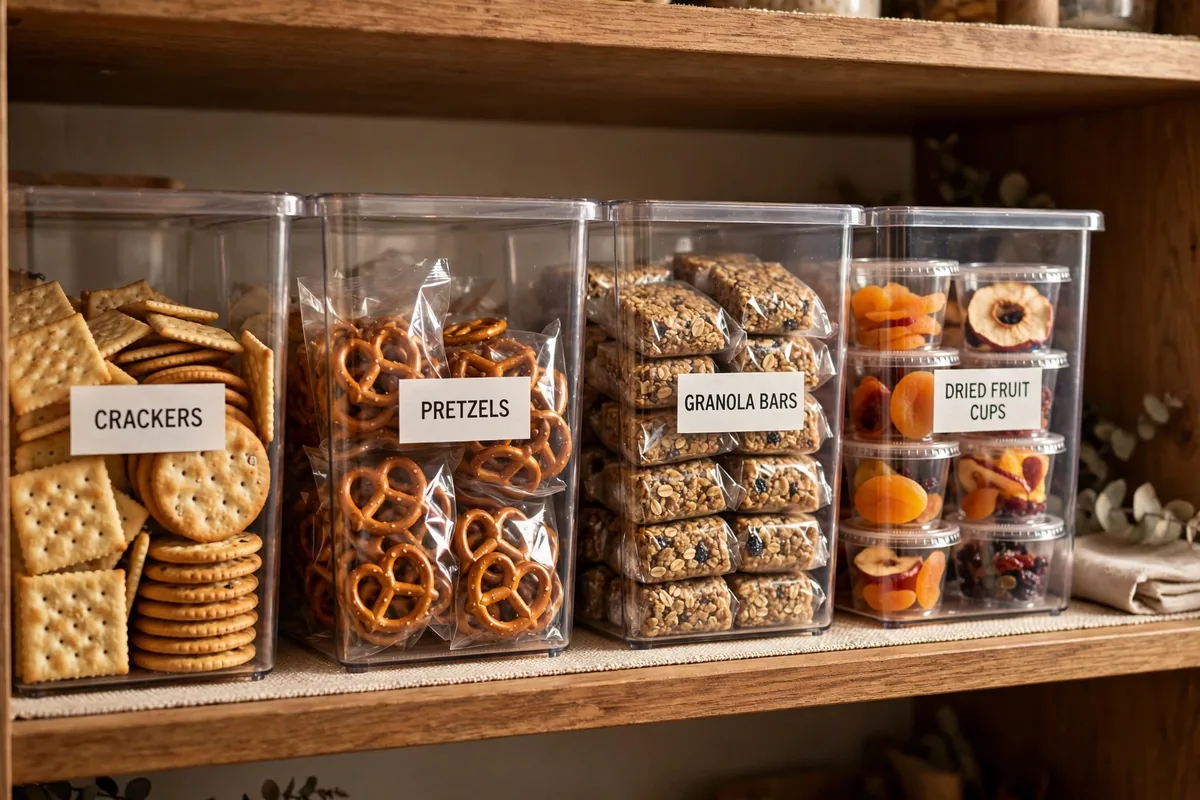
The pantry shelf. Clear one shelf, ideally at kid height if your children will pack their own, for dry-goods bins: crackers, granola bars, fruit cups, trail mix, pretzels. If the pantry is tight, a rolling cart between pantry and fridge works beautifully and tucks away when not in use.
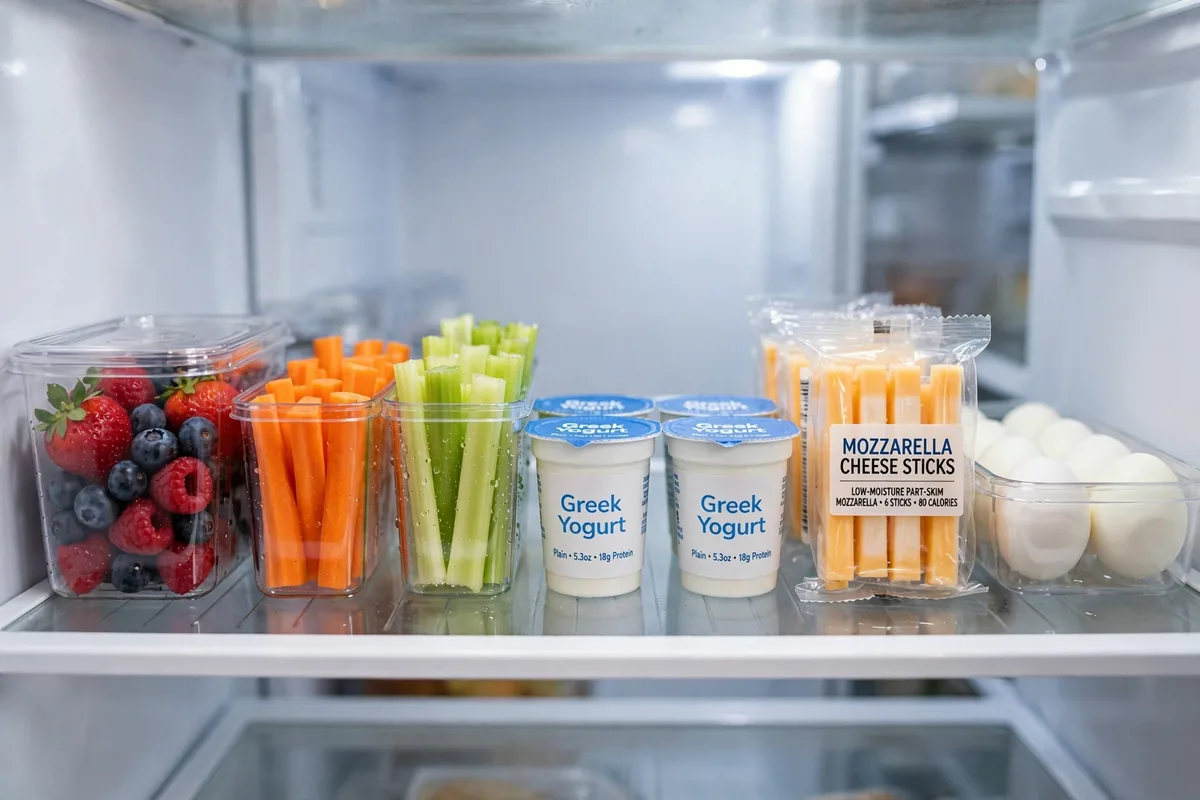
The fridge zone. Claim one shelf or drawer as lunch territory: portioned fruit and vegetables, cheese sticks, yogurt cups, hummus singles, hard-boiled eggs, deli meat, leftover dinner portions. Keeping these together — in organized fridge zones rather than wherever they fit — means you can see the whole lunch inventory in one glance.
The gear spot. Lunchboxes, bento boxes, thermoses, cold packs, bags, utensils, and napkins all belong in one place — a deep drawer near the fridge is perfect, a labeled bin on the counter works if drawer space is scarce. The one non-negotiable: store containers with their lids. The universal time-thief of lunch packing is the lid hunt, and the station eliminates it by rule. If you have already set up a coffee station on your counter, the lunch gear drawer can live right beneath it, forming a single “morning launch pad” corner.
Stocking Your Lunch Packing Station: Containers, Cold Packs, and Supplies
A station is only as good as its supplies. The goal is not a matching set of everything — it is a working kit where nothing is missing at 7 a.m. Start with what you own, then fill gaps deliberately.
Containers and boxes. Uniform sets win: same-size stackable containers with snap lids nest neatly, and interchangeable lids end the lid-matching lottery. For kids, bento-style boxes with built-in compartments do the portioning for you, and nothing leaks into the sandwich. Keep three to five lunchboxes total, so a missed dishwasher night does not sink the morning.
Cold packs. Flat, thin ice packs slide along the side of a soft cooler without stealing food space. Keep four to six in the freezer at all times — two per person plus spares — and make returning them to the freezer part of the evening reset below.
Small extras that prevent mid-morning scrambling:
- A dedicated set of utensils that lives in the station, so you never have to empty the dishwasher to find a spoon.
- Silicone snack bags or small lidded cups for nuts, berries, and dips — reusable ones beat single-serve plastic on cost within a school year.
- Small sauce containers for dressings and dips (nobody likes a soggy sandwich), plus napkins and a marker or painter’s tape for labeling.
Thermoses and bottles. One or two insulated food jars belong in the station if anyone takes soup or leftovers. Keep water bottles in the gear spot too, so they get filled as part of the routine instead of being an afterthought.
One shopping principle saves more money than any single product: buy in bulk, portion at home. A large tub of yogurt spooned into small containers on Sunday costs a fraction of individual cups; a big bag of pretzels portioned into silicone bags beats single-serve bags by a mile. This is where decanting pantry staples into labeled bins pays off twice — once for the pantry, and again inside your station’s grab zone.
Set Up Three Simple Zones: Grab, Prep, and Pack
Here is the heart of the system. Every lunch gets built through three zones, in order. Once everyone in the house knows the flow, mornings practically run themselves.
Zone 1: Grab (pantry shelf). The dry-goods wall — open bins or baskets, one category per bin: crackers and chips, granola and protein bars, dried fruit and trail mix, fruit cups, and a small “treat” bin with a house rule (one per lunch). Clear bins let kids see choices without pulling everything out. Label each bin — it stops the chips migrating into the fruit-cup bin within a week.
Zone 2: Fresh (fridge shelf or drawer). The cold ingredients in clear containers, portioned and ready: washed berries and grapes, carrot and celery sticks, bell pepper strips, cheese sticks, yogurt cups, hummus singles, hard-boiled eggs, deli turkey and cheese. The golden rule of the fresh zone is front-facing visibility — if you cannot see it without moving something else, it might as well not exist. Line containers up in a row rather than stacking them three deep.
Zone 3: Pack (counter corner). The lunchboxes stand open here, bags or coolers beside them, cold packs waiting after their freezer stay. The morning flow: pull the lunchbox, walk the grab shelf, swing by the fridge zone, add a cold pack, zip it closed. Older kids can run the whole circuit alone; younger ones just need a grown-up on fridge duty.
A small but powerful addition: a laminated “lunch formula” card taped inside a cabinet door near the pack zone. Something like 1 protein + 1 fruit or veggie + 1 crunchy + 1 fun. Kids who pack from a formula make balanced choices without a lecture, and you stop hearing “there’s nothing to put in my lunch.”
The 5-Minute Nightly Reset (and a Sunday Power Hour)
A lunch packing station does not stay organized by magic. It stays organized because of two tiny rituals — and the nightly one takes less time than scrolling your phone.
The nightly reset (5 minutes, after dinner):
- Empty every lunchbox that came home — toss trash, rinse containers, load the dishwasher.
- Cold packs go straight back into the freezer. This single habit prevents almost all “we forgot the ice pack” mornings.
- Glance at the grab bins: anything running low goes on the grocery list right now, while you are looking at it.
- If you pack work lunches the night before, assemble them now — tomorrow-you will be grateful.
- Refill water bottles and set them by the lunchboxes.
The Sunday power hour (about 45 minutes):
- Wash and chop the week’s produce: berries into containers, carrots and celery into sticks, peppers into strips.
- Boil a half-dozen eggs; peel half for grab-and-go, leave half unpeeled (they last longer).
- Portion dry snacks into single-serve bags or silicone cups — a whole week’s worth in one sitting.
- Portion yogurt from the big tub into small containers.
- Sketch the week’s plan on a sticky note: Monday wraps, Tuesday leftovers, Wednesday soup in the thermos. Five lines, nothing fancy.
This rhythm — Sunday stocks, evenings reset — is what separates a station that works for a week from one that works for a school year. The Sunday session also doubles as your grocery-list generator: you shop from the station’s actual needs instead of guessing, which quietly trims the grocery bill.
Getting Kids to Pack Their Own Lunches (Without the Chaos)
Handing lunch duty to kids feels like surrendering control, but with the station set up right, it is closer to delegation. The trick is choice architecture: you control the options, they control the picks.
Start by age. A four- or five-year-old can choose one item from each of two bins while you handle the rest. A seven-year-old can run the full grab shelf with the formula card and close her own containers. By nine or ten, most kids can do the entire circuit, fridge zone included, if the cold items are within reach.
Set two or three house rules and post them next to the formula card. Ones that actually stick: one treat per lunch, close every container before it goes back, and if you take the last of something, tell the list-keeper. Rules about process work better than rules about what counts — kids follow process rules because they feel fair.
Expect a transition week. The first few days, kids will either pack three treats or stand frozen in front of six choices. Resist fixing it for them — narrate instead: “You’ve got your crunchy and your treat; what about a protein?” Within two weeks, most kids are faster than their parents. And if younger children are not ready to pack but love to graze, a kids’ snack station alongside the lunch station keeps little hands out of the lunch bins while giving them their own independence.
One last thing: stations drift. The treat bin migrates into the fruit bin, a container returns lidless, the cold packs end up on the counter. That is normal — systems need light maintenance, not perfection. Once a month, spend ten minutes re-sorting the bins and tossing stale snacks. And if something keeps going wrong, the fix is almost never discipline — it is placement. Move things until the easy spot and the right spot are the same spot. Refresh the snack variety every month or two so nobody burns out on the same four choices, and lean into seasonal swaps: berries in summer, clementines in winter, pumpkin muffins in fall.
A lunch packing station will not end every morning scramble — some days the dog eats the homework and nothing saves the schedule. But on ordinary days, it quietly turns the most chaotic fifteen minutes of the morning into a four-minute assembly line. Set up the three zones this weekend, run one Sunday power hour, and by next Monday you will wonder why you ever packed a lunch any other way.