
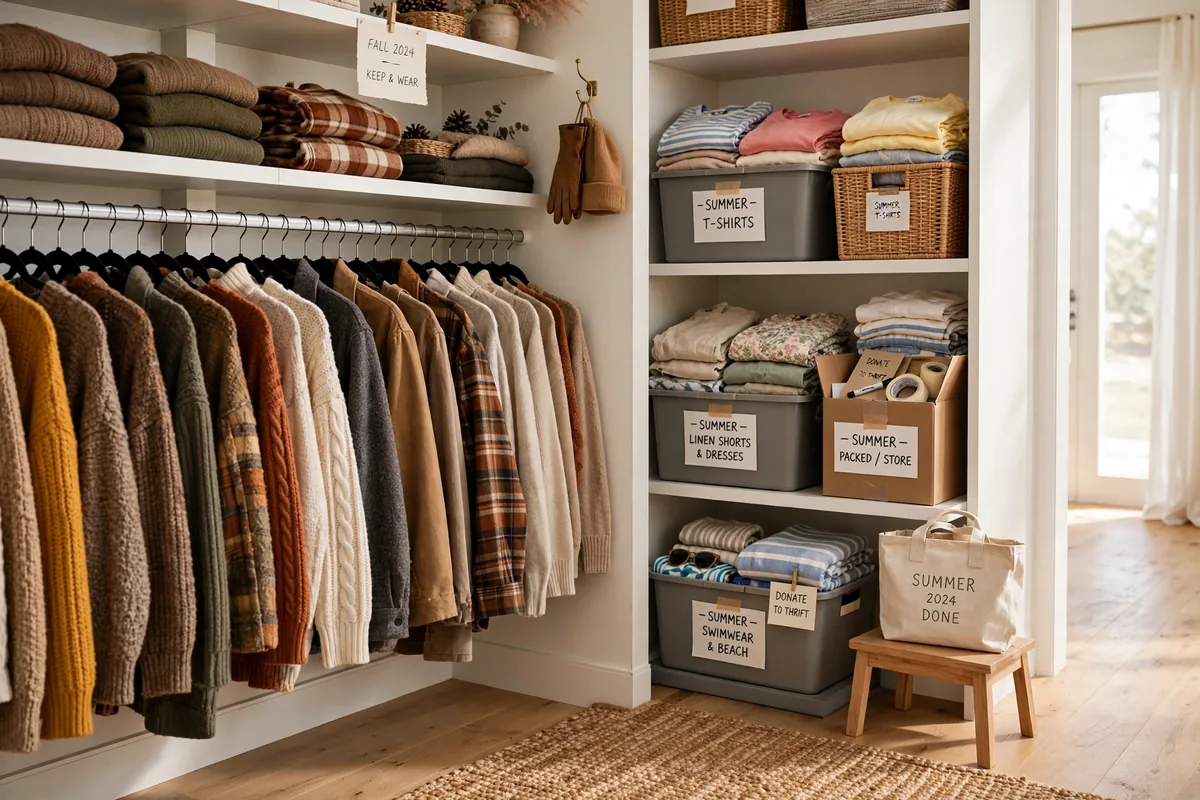

Twice a year, my closet turns into a small battlefield. In October, chunky sweaters wrestle with sundresses for hanger space, and by April the reverse happens — puffer jackets crammed against linen shirts, nothing findable, mornings starting with a sigh. If that sounds familiar, a seasonal closet rotation might be the calmest home upgrade you make this year. Instead of keeping every season’s clothes at your fingertips at once, you rotate: the current season lives front and center, and everything else rests in labeled storage until its turn comes back around. It’s simple, it costs almost nothing, and it turns getting dressed into the easiest part of your morning.
Most people hear “rotate your closet” and picture an exhausting weekend project. It doesn’t have to be that. The version below takes two to three hours, twice a year, and doubles as a built-in checkpoint to notice what’s worn out, what never gets worn, and what you’re ready to let go of. Let’s do this properly.
Why a Seasonal Closet Rotation Saves You Time Every Single Day
Here’s the part that surprises most people: a seasonal closet rotation isn’t really about storage. It’s about decisions. Behavioral research on clutter has consistently found that the more choices you face in the morning, the more mental energy you spend before your day even starts. When your closet holds heavy winter coats in July or tank tops in January, every visible item you have to skip past is a tiny decision your brain is forced to make.
Cut your visible wardrobe in half, and mornings get noticeably faster. There’s also a hidden benefit nobody talks about: your clothes last longer. Heavy knits stuffed under a pile of summer dresses develop creases and stretched shoulders. Delicate sandals jostled behind winter boots get scuffed. Off-season storage protects the pieces you invested in, so when you pull them back out next season they look the way they did when you put them away.
And then there’s the money angle. When you do your rotation, you physically handle every off-season piece — the shorts with the broken zipper you forgot about, the three black turtlenecks you didn’t realize you owned. You shop smarter because you finally know what you actually have, and one honest swap can save you from buying duplicates of things already buried in your own closet.
Step 1: Pick Your Swap Dates (And Stick to Them)
A seasonal closet rotation only needs to happen twice a year — once in spring, once in fall. The mistake most people make is waiting until the weather forces it, which means they’re doing the swap in a rush, usually the morning they realize they have nothing appropriate to wear.
Instead, pick fixed dates. Many organizers recommend a “one month early” approach: do your fall swap in mid-September, before you actually need the sweaters, and your spring swap in mid-March. Swapping early means you’re ready the moment the weather turns, and you’re doing the work in comfortable weather rather than in a panic.
Put it on your calendar right now — treat it like a dental appointment. Block a Saturday or Sunday morning, two to three hours. If you live somewhere with a gradual change between seasons, consider a “soft swap”: one big swap plus a small adjustment six weeks later to fine-tune what’s in and out. The key is the rhythm, not the exact date.
Step 2: The Three-Pile Sort (Your Secret Weapon)
Empty the closet section by section — all the hanging clothes first, then shelves, then drawers and the floor. Yes, everything. It looks dramatic, but it’s the only way to see what you’re actually working with. Now make three piles:
- Current season: Anything you’ll wear in the next few months. This stays in the closet.
- Off-season: Items you’re keeping but won’t wear until the weather flips. These go into storage.
- Let go: Anything that didn’t get worn this past season, doesn’t fit, is damaged beyond repair, or simply doesn’t feel like you anymore.
Be honest about the “let go” pile. The one-season rule is a kind and ruthless friend here: if you didn’t reach for it during the season it belonged to, you won’t miss it. Donate what’s in good shape (a bag dropped at a donation center the same week you sort is the difference between decluttering and re-cluttering), recycle worn-out textiles, and toss what’s truly done. If you need help deciding what stays and goes, this keep/toss/donate framework walks through the decision process piece by piece.
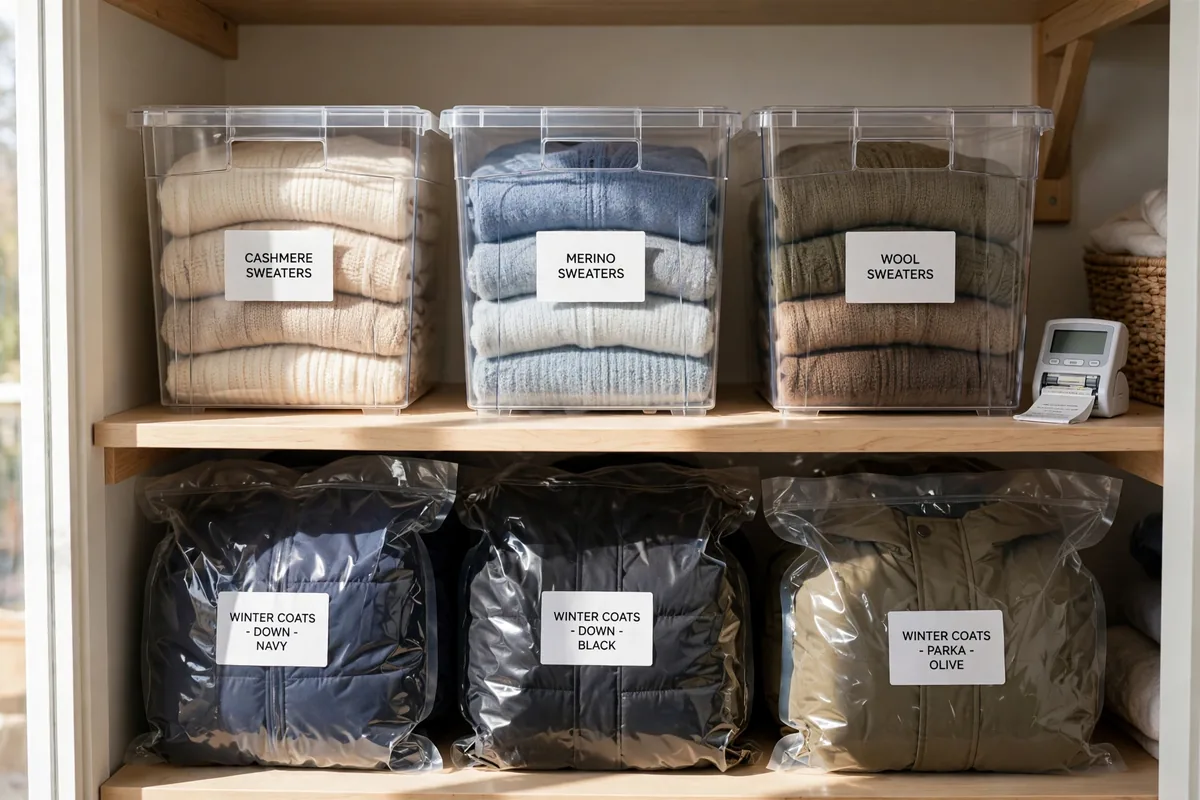
Step 3: Store Off-Season Clothes So They Actually Survive
How you store clothes matters more than where you store them. A sweater crammed into a damp basement box will come out smelling like a forgotten science project. Follow these rules and your off-season clothes will emerge in spring (or fall) looking freshly shopped:
- Wash everything first. Even “clean-looking” items can carry invisible food splatters, sweat, or perfume that attract moths and set into stains over months of storage. This is the single most skipped and most important step.
- Use clear, lidded bins. Clear lets you see what’s inside without opening; lids keep dust and curious insects out. Label each bin by category — “Summer tops,” “Winter sweaters,” “Swim + beach” — with a big label maker or simple masking tape and a marker.
- Vacuum-seal the bulky stuff. Puffers, heavy blankets, and ski gear compress to a fraction of their size. The one caution: don’t vacuum-seal natural fibers like cashmere or down long-term (more than a few months), as prolonged compression can damage them. For those, use regular bins with lavender sachets or cedar blocks.
- Keep delicate shoes in their shape. Stuff boots with paper or use boot shapers so they don’t slump and crease at the ankle. Tuck shoes into individual cloth bags rather than piling them loose in a bin.
- Choose the storage spot wisely. Under-bed containers are prime real estate for off-season clothes — they’re accessible, out of sight, and the flat space keeps things from being crushed. A high closet shelf, the top of a wardrobe, or a labeled bin in a guest room closet all work. Avoid attics and garages if they’re damp or unheated; temperature swings and moisture are fabric’s worst enemies.
One more tip that pays off big: keep a simple list (a phone note is fine) of what’s in each bin. When a freak warm week hits in November and you need that one linen shirt, you’ll find it in thirty seconds instead of opening four bins.
Step 4: Reset the Closet Around Your Real Life
With the off-season items out, you’re left with half a closet and a rare opportunity: organize what’s left around how you actually get dressed. This is where most generic organization advice fails, because it ignores the order of your mornings.
Arrange by outfit order, not by color. Hang work clothes together, casual clothes together, workout gear together — whatever your week looks like. Within each group, order from light to dark; it makes everything visually easy to scan. Keep your five most-worn pieces at eye level, front and center. These are your daily drivers; they deserve prime real estate.
Now’s also the time to check your hardware. Replace the wire hangers (they stretch shoulders — genuinely bad for your clothes) with slim velvet hangers, which take up half the space and keep garments from sliding off. Shelf dividers turn leaning towers of sweaters into tidy stacks you can actually maintain. A small set of hooks on the inside of the closet door creates a home for tomorrow’s outfit, tonight’s pajamas, or the bag you grab daily.
If you’re working with a smaller closet, the swap is even more transformative — suddenly a cramped closet breathes. These small-closet organization ideas have smart zone-by-zone tricks that pair perfectly with a seasonal rotation, including how to use the door, the floor, and the highest shelf.
The Transition Shelf: Surviving In-Between Weather
Here’s the part of a seasonal closet rotation that most guides skip, and it’s the one that saves the most frustration. Swapping everything in one day works beautifully — until the third week of October hits 75°F (24°C) and you want a short-sleeved top you already packed away, or a cold snap arrives in May before you’ve done the spring swap.
The fix is a transition shelf (or small bin): a handful of pieces that work across seasons and live in the closet year-round. Think light cardigans, a versatile jacket, a few long-sleeve basics, jeans that work in any weather, and closed-toe shoes that aren’t extreme for either season. Five to eight pieces is plenty.
These transition pieces are also where layering magic happens. A summer dress plus a chunky cardigan plus tights reads as fall. Keeping a small transitional selection out means you never have to crack open a storage bin mid-season — and you can do a clean, complete swap knowing the unpredictable weeks are covered.
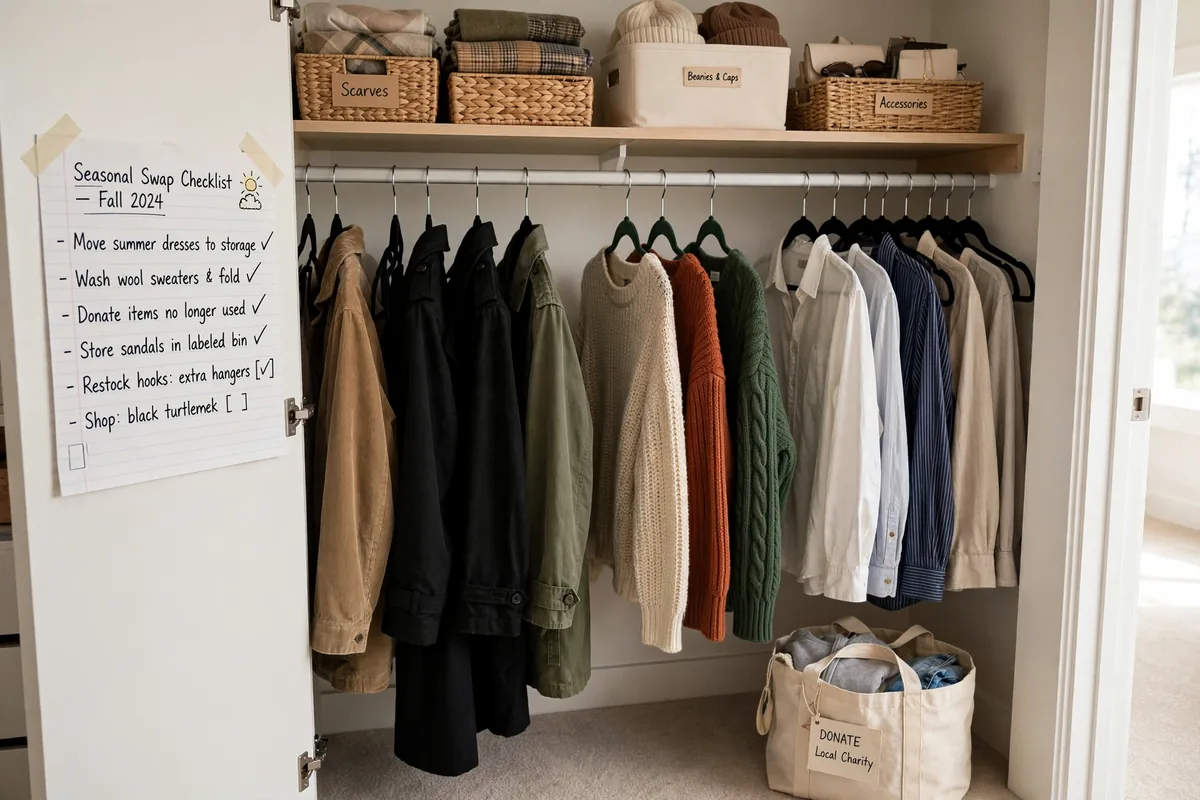
Step 5: Keep It Going With a 15-Minute Seasonal Tune-Up
A seasonal closet rotation only stays effective if the closet doesn’t silently re-clutter between swaps. The good news: maintenance takes about fifteen minutes a month. Here’s the routine:
- First weekend of the month: Do a quick scan. Anything damaged, stained, or that you haven’t reached for in weeks? Move it to a small “revisit” bag hanging on the closet door. When the bag fills up, donate it — no second-guessing.
- Refold the shelves. Sweater stacks drift and lean over time. Five minutes of refolding once a month keeps them from becoming an avalanche risk.
- Check the floor. The closet floor is where shoes multiply and bags accumulate. Return strays to their homes or admit they don’t have one and create it.
- Log your wish list. Instead of impulse-buying, keep a running note of genuine gaps you notice — “need a replacement white button-down,” “winter boots are worn out.” When the next swap comes, you’ll shop with a precise list instead of vague urges.
That monthly tune-up also makes each actual swap dramatically faster. The second time you do a seasonal rotation, you’ll be amazed — you’ll know exactly what’s where, the bins are already labeled, and the whole thing might take ninety minutes. It becomes a pleasant ritual rather than a dreaded project, especially if you pair it with a podcast and a good coffee.
Small Spaces? Your Seasonal Rotation Matters Even More
If your closet is tiny — a reach-in, a shared wardrobe, or a corner of a studio — you might assume a seasonal closet rotation is a luxury for people with walk-ins. It’s actually the opposite: the smaller your storage, the more every inch matters, and nothing eats inches faster than off-season bulk.
For small closets, make the swap non-negotiable. Off-season clothes go to under-bed bins, the top shelf of a hallway closet, or even a friend’s garage shelf if you’re truly out of space (clearly labeled, of course). Use the freed vertical space for the current season: a second tension rod below the main one doubles hanging space for shorter items like shirts, and stacking slim bins on the closet floor replaces a dresser.
Renters take note: you don’t need to drill a single hole to make this work. Tension rods, over-the-door hooks, and freestanding rolling racks all move with you, and the rotation itself is entirely deposit-safe. If the fall swap has you thinking about bigger tidy-up projects before guests arrive, this fall deep-cleaning checklist and this calm guide to decluttering before the holidays are perfect companions for your October rotation weekend.
A seasonal closet rotation is one of those rare home systems that gets easier every time you do it. The first swap takes an afternoon; the third takes an hour and feels like visiting old friends when you unpack the bins. Pick your swap dates, grab your bins, and give your closet the breathing room it’s been waiting for.
[…] actually findable in December. While you are at it, this is a great moment to take stock before the seasonal rotation of your storage spaces shifts everything around for […]
[…] a whole closet at once, this little audit pairs naturally with the rotation habit in our guide to seasonal closet rotation — accessories are the easiest category to rotate in and […]
[…] socks constantly. And if outgrown clothes wait in the same drawer for a younger sibling, these seasonal closet rotation ideas make the hand-me-down shuffle much less […]
[…] coats and heavy knitwear into storage frees rail space for what you actually wear now, and these seasonal closet rotation ideas show how to time the swap so you are never caught out by a sudden cold […]