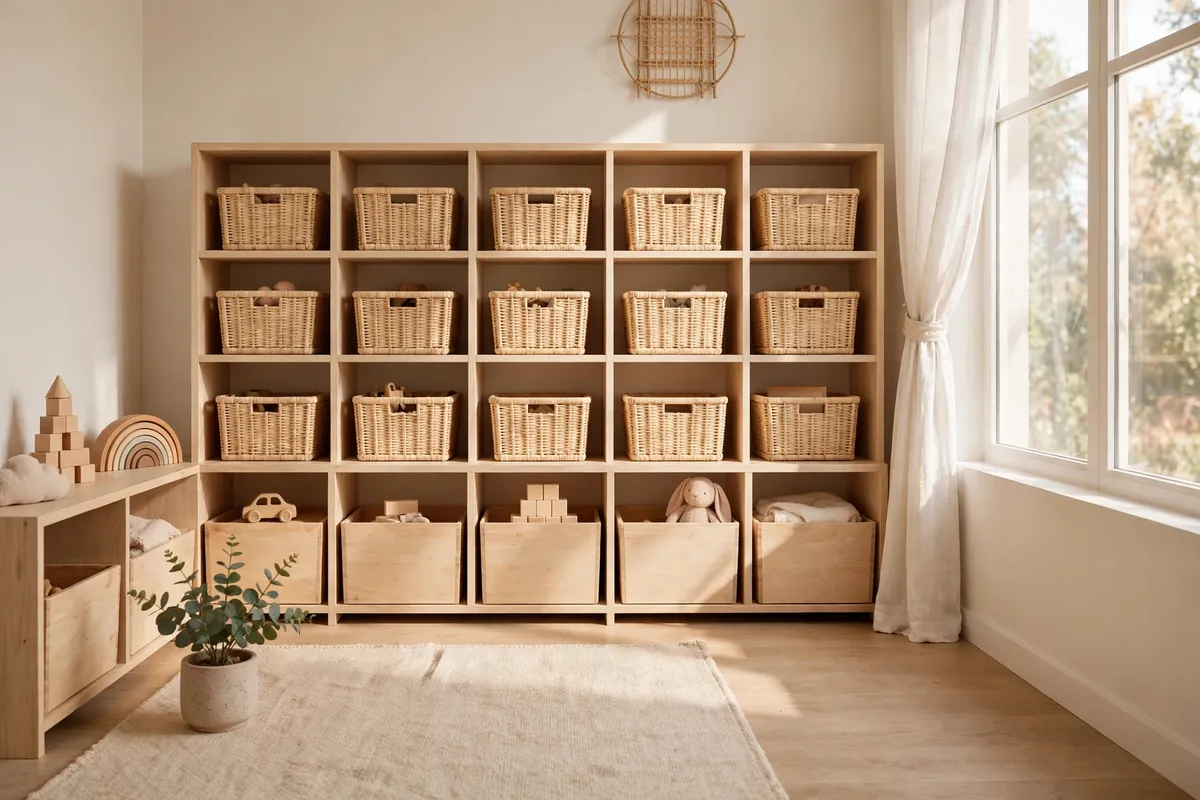

If your living room currently looks like a toy store exploded in it, take a breath — you’re not failing as a parent. You’re just living with kids. And here’s the good news: when you declutter kids’ toys the right way, something surprising happens. Your children actually play more, not less. With fewer toys competing for attention, kids play longer, get more creative, and — the real miracle — cleanup becomes a five-minute job instead of an archaeological dig through plastic rubble.
But the process itself can feel like defusing a bomb. Announce “we’re getting rid of your toys!” and you’re in meltdown territory within seconds. Theirs and yours. This guide gives you a tear-free system that actually works: a secret pre-sort, games that turn kids into willing teammates, the reverse-declutter trick, and the containment rules that stop the clutter from creeping back next month.
Step 1: Declutter Kids’ Toys in Secret First (the Pre-Sort)
Here’s the part nobody tells you: don’t start with your kids in the room. As tempting as it is to make decluttering a whole-family event from minute one, involving them too early is a reliable way to end up with a crying child clinging to a broken fast-food toy that hasn’t been touched in a year.
While they’re at school, at a playdate, or napping, do a quiet first pass and pull out the obvious stuff:
- Broken toys and anything missing essential pieces. The puzzle with eleven pieces, the remote-control car with no remote, the doll with one shoe and a mysterious sticky patch — these aren’t keepsakes, they’re clutter wearing a disguise.
- Outgrown baby toys. If your seven-year-old hasn’t touched the shape sorter since preschool, it’s safe to let it go.
- Duplicates. Three identical water pistols, two copies of the same board game, the fifth stuffed bunny from Easter baskets past.
- Party favors and freebies. The plastic trinkets from goodie bags have a useful life of about forty-eight hours. Release them.
Bag these up and move them straight to the car or garage — out of sight, out of mind. In my experience, kids genuinely do not notice when the broken and forgotten stuff disappears. What they do notice is when you try to take something they love, which is why the final decisions always involve them. That trust matters enormously: if they learn you’ll sneak their favorites away behind their back, every future declutter becomes a battle. The pre-sort simply clears the easy wins so the real conversation starts from a manageable pile instead of a mountain.
Step 2: Time It Right and Set the Tone
Timing is everything when you’re trying to declutter kids’ toys without tears. Never attempt a toy sort when your child is tired, hungry, or already cranky — that’s not a decluttering session, that’s a hostage negotiation. Pick a calm morning after breakfast or a lazy weekend afternoon when everyone’s in a decent mood and nobody’s watching the clock.
Then frame the whole thing positively. Banish “we need to get rid of your stuff” from your vocabulary and try language like: “Let’s see which toys are ready for new adventures with other kids” or “We’re going to make more room for your favorites to shine.” Kids take their emotional cues from you — if you treat it like a fun project, they will too. And if you’re quietly wrestling with your own attachment to their baby toys, do that processing privately first. If you need help with the emotional side, our guide to letting go of sentimental items is a good place to start.
Most importantly, make your child your partner, not the victim. Explain the plan, give them a real role in it, and make one clear promise: nothing they truly love leaves without their say-so. That single promise defuses most of the fear before you even begin.
Step 3: Turn Sorting Into a Game
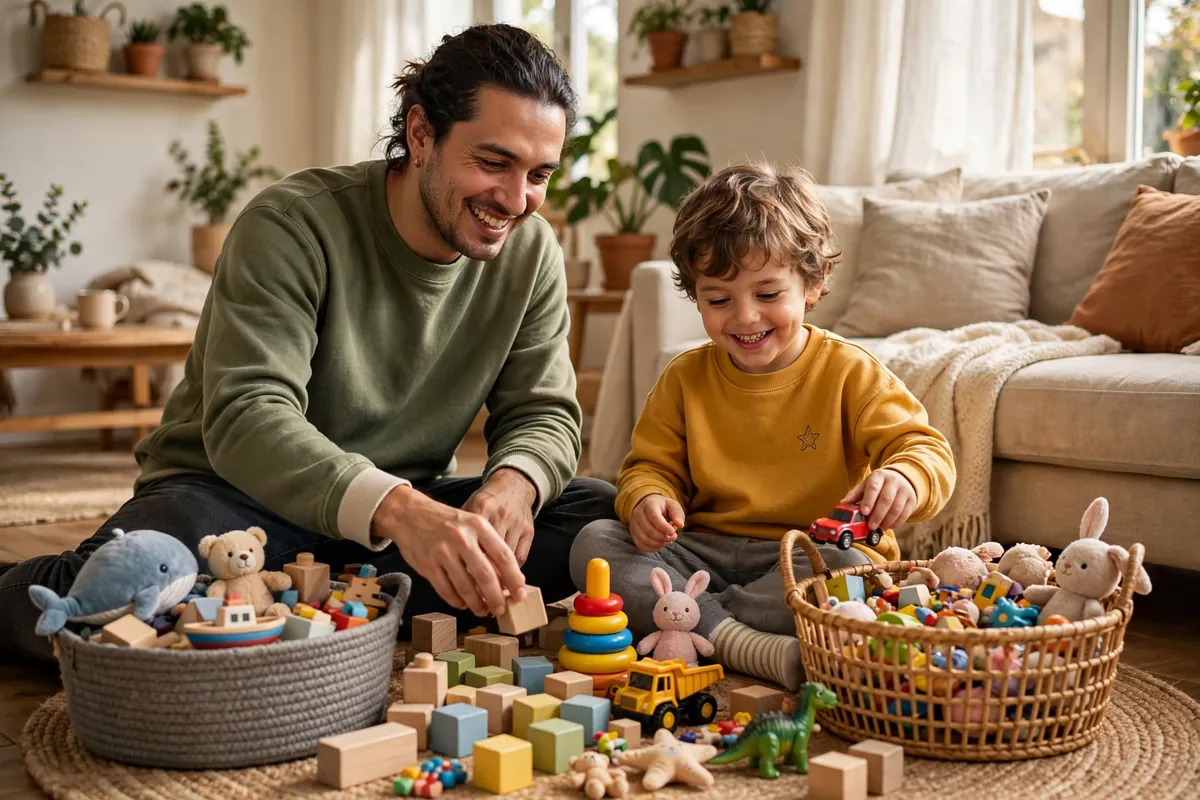
Kids who would stage a full protest over “cleaning up” will happily sort toys for an hour if it feels like play. Use that. Set up three bins or boxes labeled Keep, Donate, and Maybe, then try one of these approaches:
- The five-minute sprint. Set a timer and challenge them to sort as many toys as they can before it dings. Kids love beating the clock, and the time pressure keeps them from overthinking every single decision.
- The treasure hunt. Write simple clues like “find three toys you don’t play with anymore” or “find something a younger kid would love.” Every toy they agree to let go earns treasure points, redeemable for a sticker, a special snack, or a trip to the park. Suddenly letting go feels like winning.
- The expert reviewer. Hand your child a clipboard (real or imaginary) and make them the official toy inspector. Their job: examine each toy and deliver a verdict — “still awesome” or “ready for a new kid.” The role gives them authority, and authority feels a lot better than loss.
- The shopping question. Ask, “If we were at the toy store right now and you could pick anything, which of these would you choose?” It’s a playful way to surface true favorites without the pressure of “what should we get rid of.”
For younger kids, keep it physical and silly. For older kids, the reviewer role and the shopping question tend to work best — they want to feel respected, not managed. And if energy flags halfway through, stop. A half-sorted toy box today beats a tearful marathon that makes everyone dread the next round.
Step 4: Try the Reverse Declutter
Here’s the psychological trick that changes everything: stop asking what to get rid of. When you ask a child what they don’t like, they freeze — because honestly, they like everything. Instead, flip the question and ask what they want to keep.
Give them a container — a bin, a basket, a designated shelf — and say: “Fill this with your absolute favorites. The toys you’d be heartbroken to lose.” They’ll dive in happily, because choosing favorites feels good. Once the favorites are in, look at what’s left together. The remaining toys get an honest second look: the well-liked ones can fill leftover space, and the ones nobody reached for suddenly look a lot more donatable.
Clear limits make this work. “We’re keeping the toys that fit in this bin” or “ten stuffed animals, you choose which ten” turns an overwhelming decision into a fun prioritization challenge. Kids are surprisingly good at ranking their favorites when the boundary is concrete.
For the true fence-sitters, use the Maybe box: seal undecided toys in a box, date it, and stash it in a closet. If nobody asks about anything in it for thirty days, the whole box goes to donation unopened. More often than not, they never mention a single item — which tells you everything you need to know.
Step 5: Give Every Surviving Toy a Zone
Here’s a hard truth: toys are like glitter. If you don’t contain them, they end up everywhere. Part of the reason toys take over the entire house is that we let them — there’s no rule about where they belong, so they belong nowhere and everywhere at once.
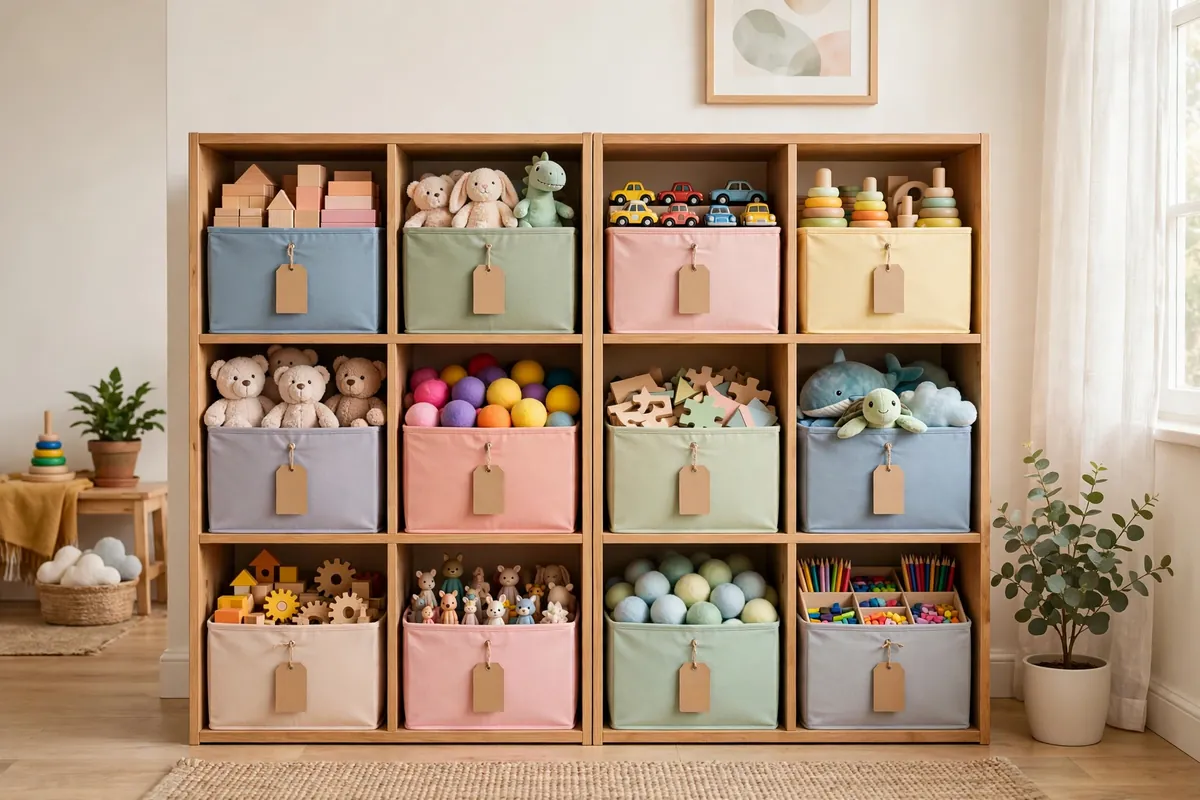
Fix it with toy zones. Pick a few specific areas where toys are allowed to live: the playroom shelves, one basket in the living room, a shelf in the bedroom. Then make the golden rule: no toy lives on the floor — everything has a home. Now every toy you kept has to fit into one of these zones, and that constraint alone naturally limits how much stays.
Make the zones work with simple, kid-friendly storage:
- Cube organizers with labeled bins sorted by category — building toys, art supplies, dolls, cars. Labels with pictures work for pre-readers.
- One “quick toss” basket per zone for end-of-day speed cleanups. Perfection isn’t the goal; contained is.
- A visible spot for current favorites — a low shelf where the week’s most-played toys live, so kids don’t have to excavate bins to find them.
If your play space is tight, our small-space storage ideas have more tricks for squeezing toy storage into small homes. And if the rest of the house needs the same treatment, work through our room-by-room decluttering checklist one space at a time.
Step 6: Start a Toy Rotation (and Stop the Inflow)
You’ve decluttered — now keep it that way. The single most powerful maintenance tool is the toy rotation: pack away roughly half the kept toys in labeled bins in a closet, and swap them out every month or so. Kids greet the “new” toys like it’s Christmas morning, play deeply with them for weeks, and the toys in storage stay fresh instead of fading into background clutter. It genuinely feels like getting new toys without spending a dime.
Then tackle the other end of the problem: the inflow. Birthdays, holidays, and generous grandparents can undo a whole declutter in a single afternoon. It’s far easier to keep tears at bay if you’re not constantly re-decluttering, so have the kind conversation with relatives: suggest experience gifts, books, art supplies, or contributions to a savings account instead of more plastic. Most grandparents are relieved to have guidance.
Adopt a simple one-in, one-out rule going forward: every new toy that enters means one leaves. And move the donation pile out of the house fast — bag it, load the car, drop it off within days. The longer “go” bags sit in the hallway, the more likely a small person rediscovers them and stages a rescue mission.
For upkeep, the 15-minute declutter method is perfect for a weekly toy reset — set a timer, everyone grabs, and the playroom is back under control before the kettle boils.
The Calm After the Toy Storm
When you’re done, take a minute to enjoy it with your kids. Sit on the floor of the actual visible floor and notice how much calmer the room feels. Tell them what a great job they did choosing and sorting — because they did, and that pride is what makes them willing partners next time.
And if it didn’t go perfectly? That’s completely fine. Maybe there were a few tears, maybe the Maybe box is suspiciously full. Every round gets easier. Each time you declutter kids’ toys together, they get a little more confident, a little more decisive, and a little more aware that letting go of things can feel surprisingly good. That’s not just a tidier playroom — that’s a life skill in the making.
[…] missions. If the rest of the house is mid-declutter too, these same ruthless instincts apply to decluttering your kids’ toys — one zone at a time keeps it […]
[…] sealed for two weeks — if they don’t ask for it, it goes. If toys are the main mountain, our guide to decluttering kids’ toys walks through the process with scripts for the hard […]