
My first apartment was 480 square feet, and I remember standing in the middle of it on move-in day wondering where on earth my stuff was supposed to go. The closets were the size of phone booths. The “pantry” was one shelf. I owned way too many books and exactly zero plan.
Three years in that apartment taught me more about storage than any organizing book ever could. Small spaces don’t need more stuff — they need smarter use of the space you already have. Every inch counts, and once you learn to see the hidden storage spots (under, over, behind, inside), a tiny home stops feeling tiny.
These are the ten ideas that actually made a difference for me.
1. Go Vertical: Your Walls Are Free Storage
Most small apartments have eight feet of wall height, and most people only use the bottom four. That’s half your storage potential sitting empty.
Tall, narrow bookshelves fit into gaps you didn’t know you had — the space beside the fridge, the strip of wall by the front door. Wall-mounted shelves above desks, sofas, and even toilets turn dead air into storage for books, baskets, and plants. A pegboard in the kitchen or office holds tools, utensils, and supplies without eating a single inch of floor or counter.
One rule: don’t let vertical storage become visual clutter. Group things in baskets or matching boxes on high shelves, and leave some breathing room. A wall packed edge-to-edge looks like a storage unit; a wall with breathing room looks like a home.
2. Under-Bed Storage (The Biggest Secret in a Small Home)
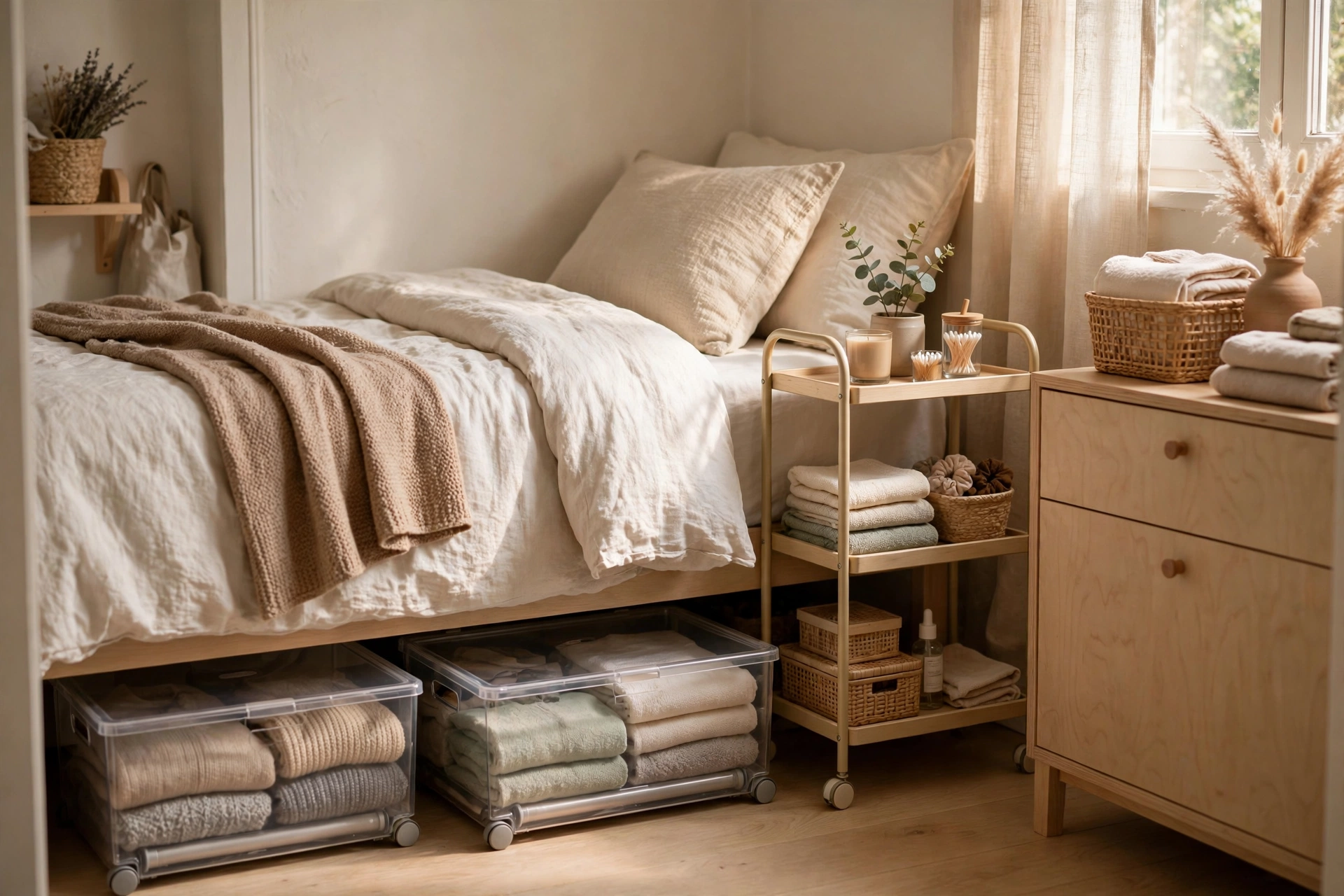
The space under your bed is roughly the size of a closet — and most people use it as a dust farm.
Flat, lidded boxes made for under-bed use are perfect for off-season clothes, extra linens, shoes, or keepsakes. If your bed sits too low, risers lift it a few inches and double your capacity overnight. Rolling drawers are even better — they slide out like a built-in dresser.
Keep one rule: under-bed storage is for things you need occasionally, not things you’re hiding. If you haven’t opened the box in a year, that’s a declutter signal, not a storage problem. (We have a whole guide on getting this right: Under-Bed Storage: Smart Ideas and the Mistakes to Avoid.)
3. Over-the-Door Organizers
The backs of doors are the most underused surfaces in any small home.
A clear pocket organizer on the pantry door holds spices, wraps, and snacks. One on the bedroom door becomes a shoe rack, a cleaning-supply station, or a gift-wrap center. Over-the-door hooks on the bathroom door handle towels and robes; on the entry door, they catch coats and bags.
These cost almost nothing and need zero tools to install — perfect for renters. Just choose sturdy ones; a flimsy organizer loaded with cans will teach you a loud lesson about weight limits.
4. Furniture That Does Double Duty
In a small apartment, every piece of furniture should earn its footprint twice.
A storage ottoman holds blankets and board games while serving as a footrest and an extra seat. A bed with built-in drawers replaces an entire dresser. A coffee table with a lift-top and hidden compartments stores remotes, laptops, and charging cables. A dining bench with a flip-up seat swallows table linens, art supplies, or pet toys.
When I bought my storage ottoman, it replaced two bulky boxes I’d been tripping over. That one swap gave me back about four square feet of floor — in a 480-square-foot apartment, that’s real money.
5. Rolling Carts (The Small-Space MVPs)
A slim rolling cart costs less than a nice dinner out and solves an absurd number of storage problems.
Slide one between the fridge and the wall for spices and canned goods. Park one next to the bathroom sink for toiletries. Roll one into the closet for shoes or folded clothes. The magic is mobility — it lives in a six-inch gap when you don’t need it and rolls to wherever you do.
Look for carts with wheels that lock, and measure your gaps before buying. “Approximately six inches” is how carts end up donated.
6. Hooks and Pegboards Everywhere
If you can’t fit a shelf, you can almost always fit a hook.
Adhesive hooks (renter-friendly, no holes) hold keys by the door, towels in the bathroom, mugs under a cabinet, and bags inside a closet. A strip of hooks inside the entry closet handles umbrellas, leashes, and tote bags. In the bedroom, hooks on the wall beside your dresser become a “tomorrow’s outfit” station that also keeps clothes off the chair.
Pegboards work the same magic at bigger scale — in a home office, a craft corner, or a tiny kitchen. Tools you can see get used; tools buried in drawers get forgotten.
7. Clear Containers and Labels
This one sounds boring. It is not boring. It changes everything.
When you can see what’s inside a bin, you stop buying duplicates and stop tearing everything apart to find one thing. Use clear containers for pantry goods, craft supplies, medications, and electronics. Then label them — a label maker costs little and makes you look like a genius.
Decant the worst offenders: flour, rice, pasta, and cereal stay fresher in sealed containers and take up less room than half-open bags. In the fridge, clear bins group condiments, snacks, and leftovers so nothing gets lost in the back. (Our guide How to Organize Your Fridge So Food Lasts Longer goes deep on this.)
8. The Inside of Cabinet Doors
Open a cabinet door and look at its back. That’s free, hidden storage you’re probably ignoring.
Adhesive hooks or slim racks on the inside of kitchen cabinet doors hold measuring cups, pot lids, or a cutting board. Under the bathroom sink, a door-mounted caddy keeps cleaning supplies off the floor of the cabinet — and you can actually see them. Inside a wardrobe door, hooks hold belts, scarves, or tomorrow’s outfit.
Because it’s behind a closed door, this storage can be purely practical — no need to make it pretty. Function first.
9. Build a One-Spot Entryway Station
Small apartments don’t have mudrooms, but every home needs a landing zone — or clutter migrates straight to the couch and kitchen counter.
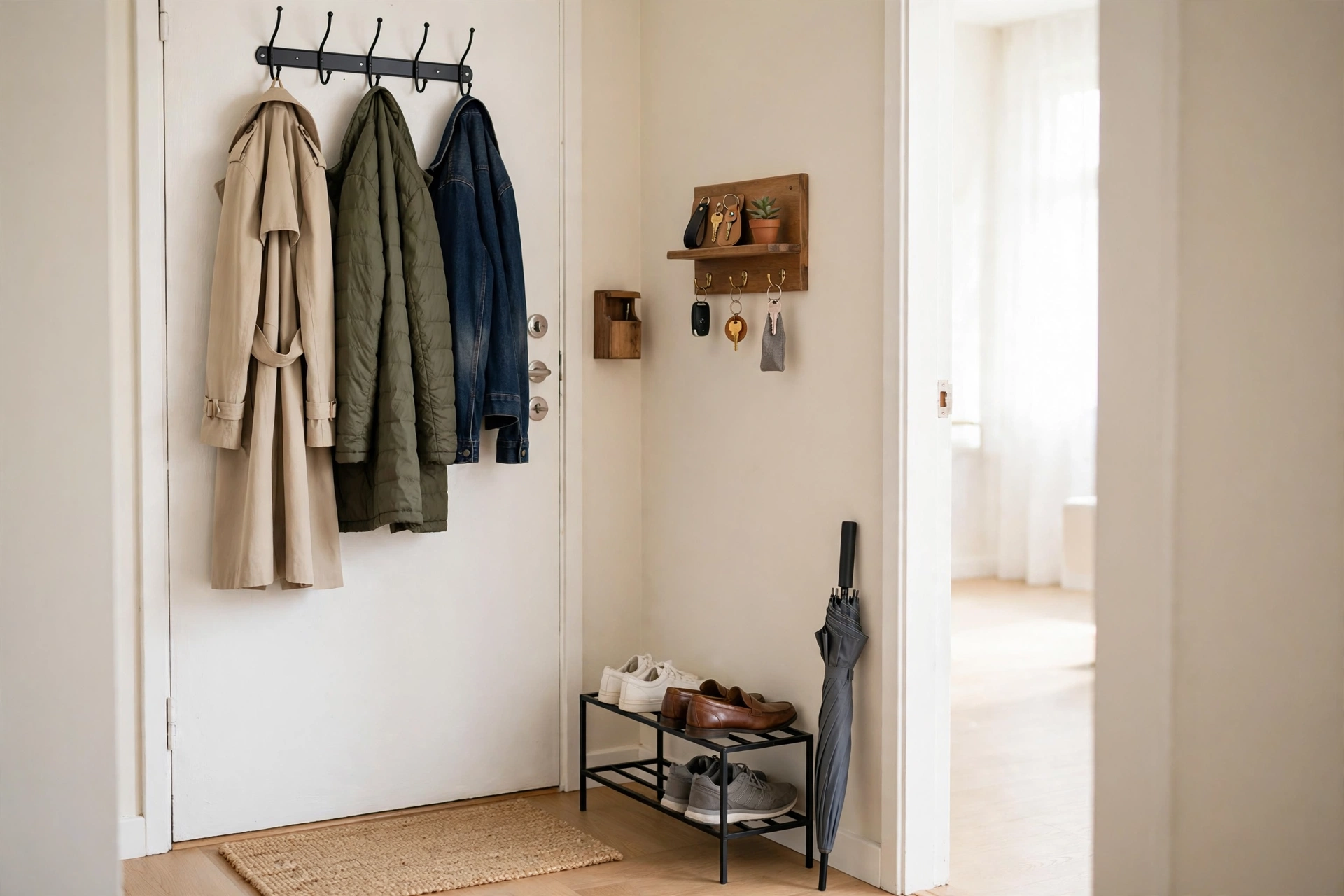
Claim one small spot by the door: a wall hook or two, a slim tray or bowl for keys, and a basket for shoes. That’s the entire system. Everything you carry in gets parked there; everything you need to leave gets grabbed there.
This tiny station prevents an astonishing amount of mess. Mail stops piling on the table. Shoes stop colonizing the hallway. It takes fifteen minutes to set up and pays off every single day.
10. Hunt for Hidden Storage (Ottomans, Benches, Hollow Everything)
Once you’ve done the first nine, go hunting. Small homes are full of storage hiding inside furniture.
Window seats with lift-up lids. Benches at the foot of the bed. Hollow ottomans and poufs. Suitcases stacked as a side table (storage inside, style outside). A skirted table hides bins underneath. Even a deep sofa’s arms can hold throws.
The trick is choosing spots for things you need rarely but want nearby — guest bedding, holiday decorations, camping gear. Daily-use items should stay accessible; hidden storage is for the “sometimes” stuff.
The Rule Before Any of This: Declutter First
I’ll say it plainly, because it saves people so much money: don’t buy a single organizer until you’ve decluttered. Storage solutions can’t fix having too much stuff — they just give clutter nicer housing.
Spend one weekend going room by room with the four-box method (keep, donate, trash, relocate) before you shop. You’ll be shocked how much “storage problem” was actually a “too much stuff problem.” Start with How to Declutter Your Home Room by Room: A Beginner’s Complete Guide, then come back here and buy only what the remaining stuff actually needs.
Frequently Asked Questions
What’s the cheapest way to add storage to a small apartment?
Adhesive hooks, over-the-door organizers, and under-bed boxes — you can do all three for the price of one piece of furniture. Vertical wall shelves are the next best value.
How do I store things in a small apartment without it looking cluttered?
Contain, conceal, and match. Use closed containers in one or two colors, keep open shelves to about 70% full, and give everything a door or a lid. Visual calm comes from uniformity, not from owning less.
Are storage beds worth it?
If you have no dresser space, absolutely. Built-in drawers replace an entire piece of furniture. If your closet is fine, a bed frame with clearance for rolling boxes underneath gives you the same benefit for less money.
What should I never store long-term in a small apartment?
Duplicates (“just in case” items), anything you haven’t touched in a year, and sentimental clutter you keep out of guilt. In a small space, every item pays rent — make sure it earns it.
Small apartments reward the organized and punish the sentimental hoarder — I say that with love, as a reformed one. Start with one idea from this list this weekend. Then another. Within a month, your tiny home will feel twice as big, and you’ll wonder why you ever thought you needed more space.
Next up: once your storage is sorted, keep the clutter from coming back with The 15-Minute Declutter Method: 10 Spaces You Can Tidy Today.