
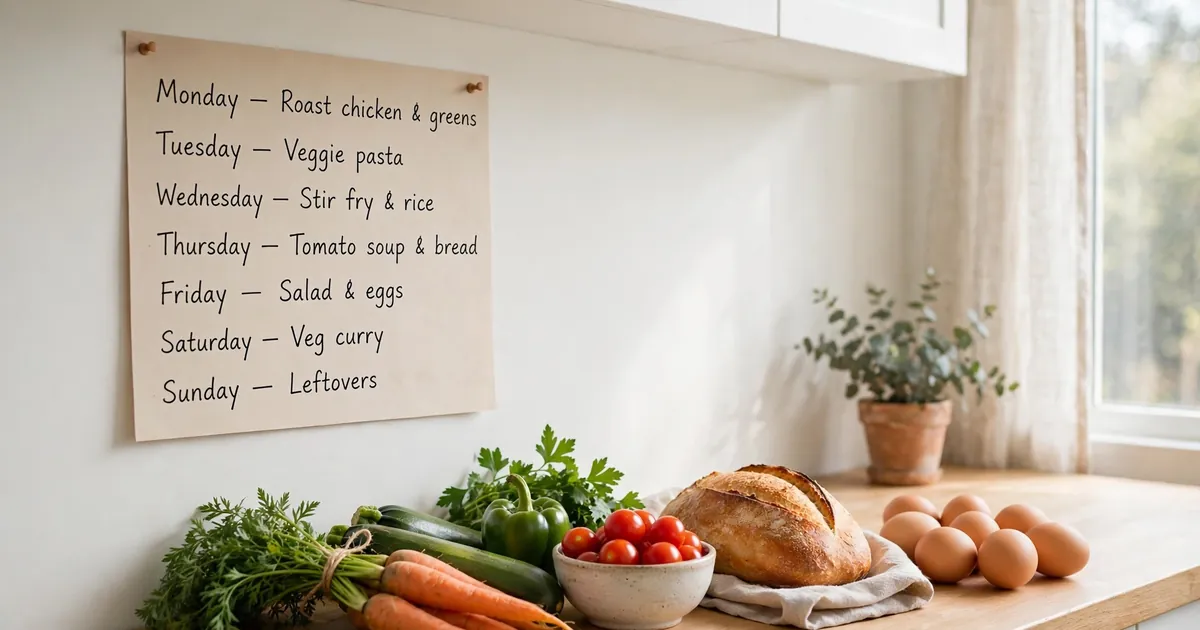

If you have ever stood in front of an open fridge at six in the evening, tired and hungry, wondering what on earth to cook, you already know the problem that minimalist meal planning is designed to solve. It is not a lack of recipes. Most of us have more recipes saved on our phones than we could cook in a year. The problem is decision fatigue: too many options, no clear starting point, and a week that was never given even five minutes of thought. A simpler approach changes all of that, and it starts with planning less, not more.
This guide is built around one liberating idea: you only need to plan four or five dinners a week. The rest of the week takes care of itself through leftovers, simple staples, and one flexible night that bends around real life. No colour-coded spreadsheets, no Sunday spent batch-cooking twelve identical containers, no guilt when Tuesday does not go to plan. Just a small, repeatable rhythm that keeps your kitchen calm, your grocery bill lower, and your evenings a little easier.
Why Planning Four or Five Dinners Is Enough
A full seven-day plan looks impressive on paper, but it rarely survives contact with a real week. Someone works late. A child refuses the planned meal. A friend suggests takeaway. Suddenly two or three planned dinners never happen, the ingredients bought for them sit in the fridge, and the plan feels like a failure. That is not a willpower problem; it is a design problem. A plan with no slack in it cannot absorb real life.
Planning four or five dinners leaves breathing room on purpose. The unplanned nights are not gaps in the system; they are part of it. One night is for leftovers, dressed up differently so nobody feels they are eating the same meal twice. Another night is for the simplest food in your repertoire — eggs on toast, a bowl of soup from the freezer, pasta with whatever vegetables are left. When you plan this way, a changed evening is not a derailment. It is just the plan working as intended.
There is a quieter benefit too. When you only have to choose four or five meals, choosing becomes easy. You can pick from a short list of family favourites instead of scrolling endlessly for inspiration. Most households, if they are honest, rotate through ten or twelve dinners they actually enjoy. Planning from that short list, rather than from the entire internet, is what makes the habit stick past the second week.
The Minimalist Meal Planning Template
Here is the whole template, and it fits on a sticky note. Pick one theme for each planned night, then fill in a meal you already know how to cook. For example: Monday, pasta night. Tuesday, tray bake night. Wednesday, soup or stew night. Thursday, tacos or wraps night. Friday, whatever is left or a freezer meal. Themes do the heavy lifting because they narrow your choices before you even start thinking. You are not choosing from every meal in the world; you are choosing one pasta dish.
Keep the template in the same place every week — a notebook on the counter, a note on your phone, or a small whiteboard on the fridge. The ritual takes about ten minutes, ideally while you are already in the kitchen, perhaps while the kettle boils on a Saturday morning. Look at what is already in the fridge and freezer first, then plan around it. A half-used jar of sauce, a bag of frozen vegetables, or chicken thighs bought on offer last week are all starting points, not afterthoughts.
It also helps to keep a running list of your household’s reliable meals — the ones everyone eats without complaint and you can cook half-asleep. Aim for twelve to fifteen. When planning day comes, you are simply picking four or five names from that list. New recipes are welcome, but limit yourself to one new dish a week at most. Trying three unfamiliar recipes in one week is how cooking starts to feel like homework, and it is usually the week people quietly give up.
The 10-Ingredient Pantry Backbone
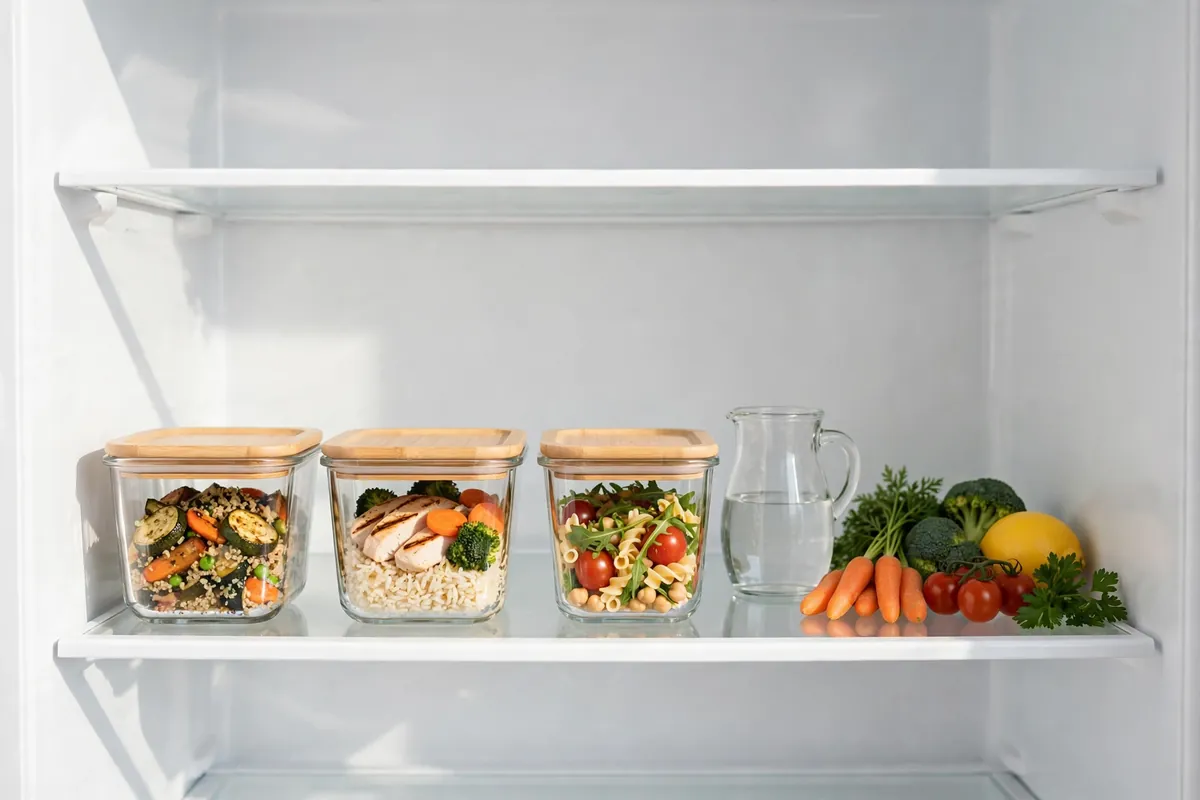
A minimalist kitchen does not need a pantry that looks like a small supermarket. It needs a backbone: a short list of versatile ingredients that can turn into many different meals. If you keep these stocked, you will rarely be caught without dinner, even on a night you forgot to plan. Here is a backbone that works for most households:
- Tinned tomatoes and tomato paste — the base for pasta sauces, soups, stews, and shakshuka.
- Dried pasta and rice — two grains that pair with almost anything and cook without fuss.
- Tinned beans and chickpeas — cheap protein that stretches a meal and fills hungry teenagers.
- Onions and garlic — the starting point of nearly every savoury dish worth eating.
- Stock cubes or paste — instant depth for soups, risottos, and braises.
- Olive oil and one good vinegar — for cooking, dressings, and finishing dishes.
- Soy sauce — a shortcut to flavour in stir-fries, noodle bowls, and marinades.
- One versatile spice blend — smoked paprika, cumin, or a curry powder you genuinely like.
- Eggs — breakfast, lunch, and emergency dinner in a single ingredient.
- Frozen mixed vegetables — no chopping, no waste, always there when fresh produce runs out.
Notice what is not on the list: five kinds of flour, three bottles of hot sauce, a spice rack of jars you bought for one recipe in 2023 and never opened again. A small pantry is easier to see, easier to shop for, and far easier to use. When you can see everything you own at a glance, you stop buying duplicates and start using what you have. That alone cuts a surprising amount of waste.
Fresh ingredients still matter, of course, but you only need a few each week: some seasonal vegetables, a protein or two, bread, milk, and fruit. Everything else comes from the backbone. This is also why a single weekly shop works so well — the list is short, the shop is quick, and you are far less tempted by impulse buys when you walk in knowing exactly what you need.
Leftover Night, the Freezer, and Busy Evenings
Leftovers get a bad reputation they do not deserve, mostly because they are served exactly as they were the first time. The trick is transformation, not repetition. Roast chicken on Sunday becomes chicken wraps on Monday or a quick chicken soup on Tuesday. A pot of chilli becomes loaded baked potatoes the next night. Cooked rice becomes fried rice with an egg and whatever vegetables remain. Nobody at the table needs to know — or care — that dinner started its life yesterday.
Your freezer is the other quiet hero of this system. A few anchor meals, cooked in double batches when you already have the pots out, are worth more than any elaborate meal-prep routine. A tray of bolognese, a pot of soup, a casserole portioned into containers — these are dinners you have already made, waiting for the evenings when cooking from scratch is simply not going to happen. Label each container with what it is and the date, because mystery tubs are how freezers become graveyards.
Busy nights deserve their own honest category in your plan, not a pretence that you will cook a proper meal at eight o’clock after a long day. Decide in advance what your busy-night meal is: a freezer anchor, a fifteen-minute pasta, or a simple platter of bread, cheese, and salad. Having that decision made beforehand is the whole point. The hardest part of weeknight cooking is rarely the cooking itself; it is standing in the kitchen, exhausted, trying to decide what to make. A plan removes that moment entirely.
Picky eaters fit into this system better than into rigid plans, too. Instead of cooking two separate dinners, build meals with a shared base and flexible toppings: a taco night where everyone fills their own wrap, a pasta night with sauce on the side, a soup night with bread and toppings to choose from. One meal, several ways to eat it. It keeps the cook sane and gives fussy eaters a sense of control, which often matters more than the food itself.
How Less Planning Means Less Waste and Less Stress
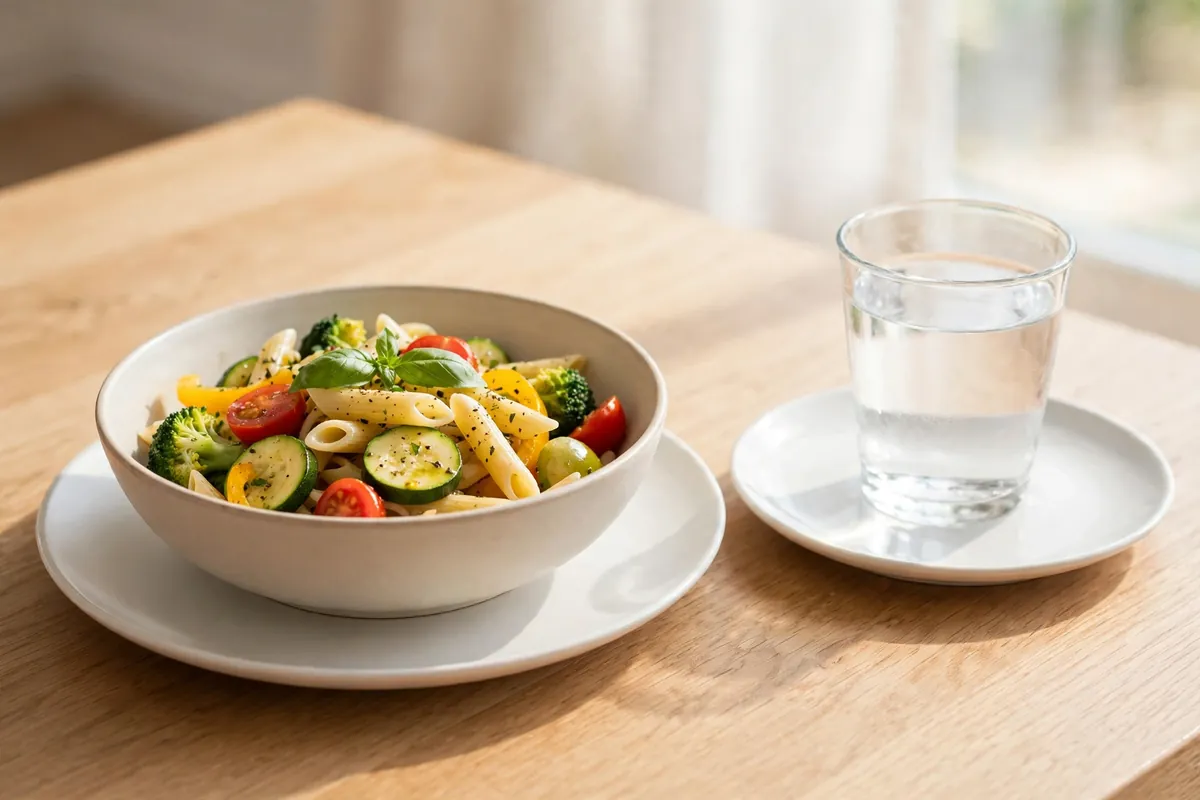
Here is the part that surprises most people: planning fewer meals actually reduces food waste. The households that throw away the most food are often the ones that bought ingredients for seven ambitious dinners and cooked only four of them. Every uncooked plan becomes something wilting in the vegetable drawer. When you plan four or five meals, shop once for exactly those meals, and let leftovers and staples cover the rest, there is simply less food sitting around waiting to go bad.
The weekly shop itself becomes calmer. A short list, written from your four or five planned meals plus the pantry backbone, means a faster shop and fewer impulse purchases. It also makes it easier to check what you already have before you leave the house — a two-minute fridge check that prevents the classic duplicate purchase of the cream, herbs, or cheese you already own. Over a month, that small habit saves real money.
There is a broader calm that comes with this way of running a kitchen, and it connects to the rest of a simpler home. A calm morning makes the whole day feel steadier, which is why a minimalist morning routine pairs so naturally with a simple meal plan — both are about removing decisions before the day demands them. The same principle applies to the household budget: a short shopping list and fewer impulse buys are a practical form of simple living on a budget, achieved without spreadsheets or sacrifice.
It also helps to see meal planning as one habit among several small ones that keep a home feeling effortless, rather than a grand project on its own. The simple living habits that keep a minimalist home effortless work the same way this plan does: small, repeatable, and forgiving when life intervenes. And when you are ready to make weeknights even smoother, a tidy kitchen setup matters as much as the plan itself — good meal prep kitchen organization means your tools, containers, and staples are exactly where you expect them when dinner needs to happen fast.
A Calmer Week Starts With One Small Plan
You do not need a new personality to eat well at home. You need four or five dinners, a short list of ingredients you trust, one night for leftovers, and a freezer with a couple of meals waiting for the hard days. That is the whole system, and it is deliberately small enough to survive a busy week, a fussy eater, and a change of plans.
Try it this week. On Saturday or Sunday, take ten quiet minutes, pick four dinners from your favourites, write the shopping list, and then stop. Leave the other nights open and see how good that feels. Chances are, dinner will be calmer, the fridge will be emptier in the best possible way, and the six o’clock question — what are we eating tonight? — will already have an answer. And that small, ordinary peace is exactly what a simpler kitchen is for.