
I’ll be honest with you: the first time I decided to “declutter my home,” I made every mistake possible. I pulled everything out of every closet on the same Saturday, ended up sitting on the floor surrounded by a mountain of stuff at 9 PM, and shoved most of it back where it came from. The house looked worse than when I started.
Here’s what I learned: decluttering doesn’t work as one giant event. It works as a series of small, finishable wins — one room, one corner, one drawer at a time. That’s exactly what this guide gives you.
Why Room-by-Room Beats the “Big Purge”
When you try to declutter your whole home at once, two things happen. First, decision fatigue hits you like a wall — by hour three, you can’t tell whether you need that third spatula or not. Second, the mess gets bigger before it gets smaller, and that middle stage is where most people quit.
Going room by room fixes both problems. You work in a defined space with a clear finish line. You can see the result the same day. And that visible progress is what keeps you going to the next room instead of giving up.
Start with the easiest room, not the hardest. A quick win on day one builds momentum that carries you through the garage on day ten.
Before You Start: Set Up Your System
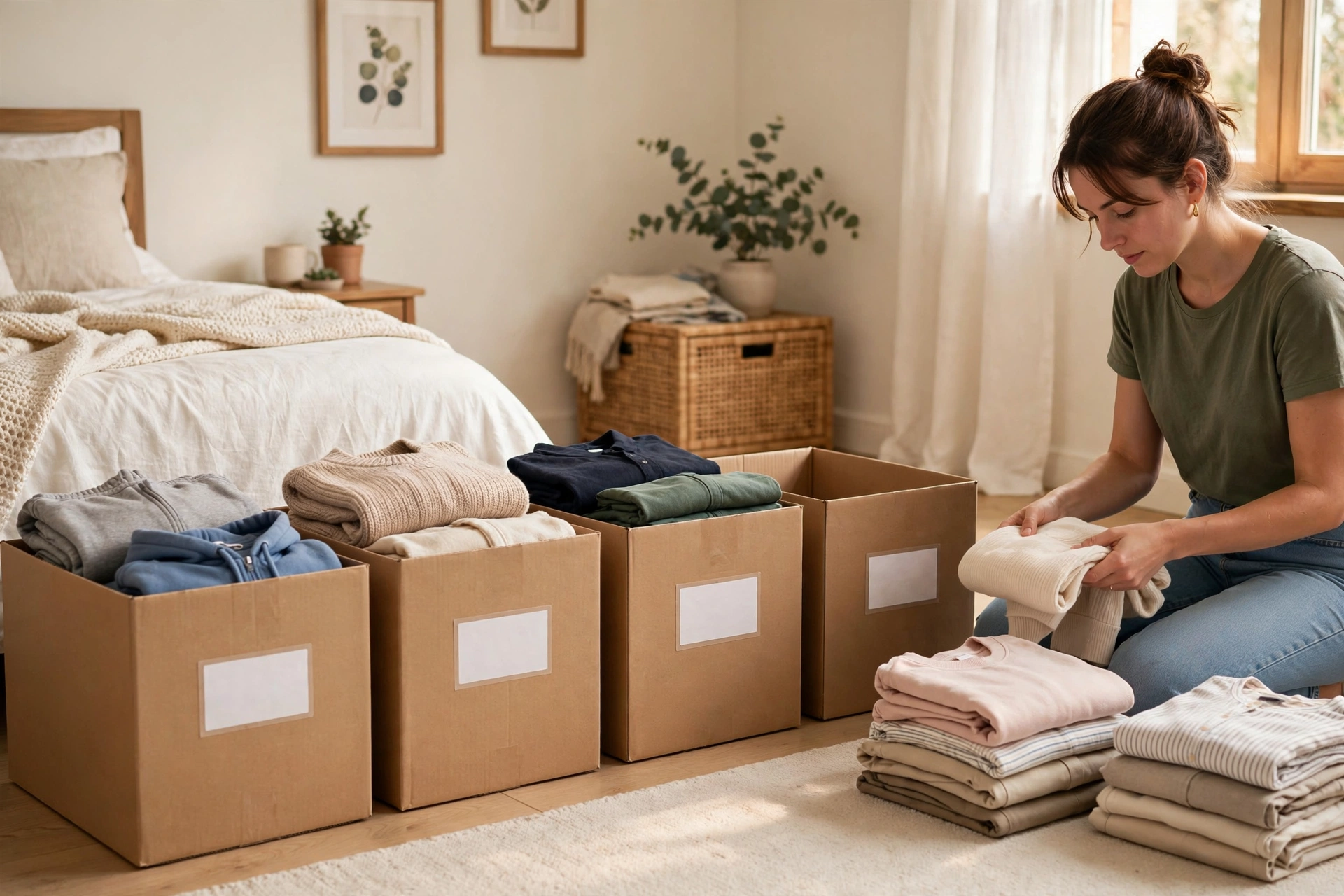
Don’t start pulling things off shelves until you’ve set up your sorting system. Grab four boxes or bags and label them:
- Keep — things you use, love, or genuinely need.
- Donate/Sell — things in good condition that someone else could use.
- Trash/Recycle — broken, stained, expired, or genuinely useless items.
- Relocate — things that belong in a different room.
That fourth box is the secret weapon. Half the “clutter” in most rooms isn’t junk — it’s just stuff that wandered into the wrong place. A relocate box keeps you from running around the house mid-sort.
Also grab: a trash bag, a timer, and your phone (for the “before” photo — you’ll want it later).
The 15-Minute Rule That Changes Everything
Here’s the rule I wish someone had told me years ago: set a timer for 15 minutes and work until it rings. Then stop — even if you’re mid-drawer. Come back tomorrow.
This sounds too simple to matter, but it matters enormously. Fifteen minutes is short enough that your brain doesn’t resist starting. And “I’ll just do 15 minutes” almost always turns into 30, because starting was the hard part. On the days it doesn’t, you still got 15 minutes of progress, which beats zero every single time.
Room 1: The Bedroom (Start Here)
Bedrooms are the best starting point because the clutter is usually shallow — clothes, books, random nightstand stuff. Nothing emotionally loaded.
Surfaces first. Clear your nightstand and dresser tops completely. Wipe them down. Only put back what you actually use there: a lamp, your book, a glass of water. Everything else goes into a box for sorting.
The closet. Take everything out — yes, everything. This is the one place where pulling it all out works, because you need to see the full picture. Then put items back one at a time, asking one question: “Have I worn this in the last year?” If not, it goes to donate. Be ruthless with the “someday” clothes. Someday has a way of never coming.
Under the bed. This is where things go to be forgotten. Pull it all out. If you forgot you owned it, that’s your answer — donate or toss.
A realistic target: one bedroom in a single 15–30 minute session.
Room 2: The Kitchen
Kitchens accumulate duplicates. Open any cabinet and count your mugs — I’ll wait. Most of us have twice what we use.
Cabinets and drawers. Empty one cabinet at a time (never the whole kitchen at once). Group like with like: all the baking stuff together, all the storage containers together. You’ll immediately see the duplicates — three whisks, seven water bottles, lids with no containers. Keep the best of each, donate or recycle the rest.
The fridge and pantry. Check expiration dates without mercy. That spice from 2019? Gone. Half-used condiments you bought for one recipe? Gone. Then group what’s left by category so you can actually see what you have — this alone cuts grocery waste dramatically.
Countertops. This is the big visual win. Aim to keep only daily-use items on the counter: the coffee maker, maybe a knife block. Everything else gets a home inside a cabinet. A clear counter makes the whole kitchen feel twice as big.
Room 3: The Bathroom
Small room, fast win. Pull everything out of the medicine cabinet and under-sink area.
Toss expired medications (check if your pharmacy takes them back), dried-out makeup, and those hotel shampoo bottles you’ve been “saving” since 2022. Keep daily items accessible and move the rest — backup supplies, first-aid stuff — into labeled bins.
One tip that changed my bathroom: a small tray on the counter for the five things you use every morning. Everything else lives behind a door. Instant calm.
Room 4: The Living Room
Living rooms collect other rooms’ clutter — toys, mail, chargers, random papers. Start with the relocate box and walk the room, returning everything that belongs elsewhere.
Then tackle the paper. Mail, magazines, old receipts, kids’ school papers — sort into three piles: act on it, file it, recycle it. Be honest about the “file it” pile; if you haven’t looked at a manual in two years, recycle it and look it up online if you ever need it.
Finish with surfaces: coffee table, shelves, TV stand. Every decorative item should earn its spot. If you dust around it more than you enjoy looking at it, it can go.
Room 5: The Entryway and “Drop Zones”
The entryway is the first thing you see when you come home and the last thing you see when you leave. It sets the tone for the whole house.
Give every person in the house one hook and one bin or basket. Coats on hooks, shoes in the bin, keys in a bowl by the door. That’s it. When the entryway has a system, clutter stops migrating deeper into the house.
What to Do With the Donate Box (This Week, Not Someday)
Here’s where decluttering efforts quietly die: the donate bags sit in the garage for three months, then slowly migrate back into the house. Don’t let that happen.
Schedule the drop-off before you start decluttering. Put it in your calendar: “Saturday 10 AM — donation center.” Most donation centers take 20 minutes. For anything worth real money, list it online the same week — set a deadline, and whatever doesn’t sell by then goes to donation. No second chances.
The Mistakes That Undo Your Progress
A few honest warnings from someone who’s made all of these:
- Buying organizers before decluttering. This is the classic trap. You cannot organize clutter — you can only hide it in prettier boxes. Declutter first, then buy storage for what’s left.
- The “maybe” pile. A maybe pile is just a delayed decision. If you’re unsure, ask: “Would I buy this again today?” If the answer is no, let it go.
- Decluttering someone else’s stuff. Your partner’s hobby gear, your kid’s toys — not your call. Declutter your own things and let the results inspire them. (It works more often than you’d think.)
- Trying to be perfect. Your home doesn’t need to look like a magazine. It needs to work for your life. “Good enough and maintainable” beats “perfect for one afternoon” every time.
Keeping It That Way: The 10-Minute Reset
Decluttering is a project; staying decluttered is a habit. The habit is simple: a 10-minute reset every evening. Set a timer, walk through the main rooms, and put things back where they belong. That’s it.
Pair it with a one-in-one-out rule for new purchases: something new comes in, something old goes out. This single rule prevents 90% of re-cluttering.
Frequently Asked Questions
How long does it take to declutter a whole house?
For an average home, working 15–30 minutes a day, most people finish in 3–6 weeks. It’s not a weekend project, and that’s fine — slow and finished beats fast and abandoned.
Should I declutter before or after cleaning?
Declutter first, always. There’s no point deep-cleaning around stuff you’re about to get rid of. Clear the surfaces, then clean them.
What if I feel guilty getting rid of gifts?
The gift already did its job — it showed someone was thinking of you. You’re allowed to let the object go while keeping the memory. If guilt is strong, take a photo of it first.
Where do I start if every room feels overwhelming?
Start with one drawer. Seriously — the junk drawer, the bathroom drawer, any single drawer. Finish it completely. That one small finished space will show you that you can do this.
You don’t need a perfect home. You need a home that feels good to walk into at the end of the day. Start with one room, set your timer for 15 minutes, and go. Future you — the one relaxing in a calm, clear living room — will be glad you did.
Want to go deeper? Read our guide on The 15-Minute Declutter Method: 10 Spaces You Can Tidy Today next.
[…] to this? Start with our room-by-room decluttering guide — the kitchen section pairs perfectly with this […]
[…] you reach the memory box, you’ll trust your judgment. If you’re new to this, start with How to Declutter Your Home Room by Room: A Beginner’s Complete Guide and come back here […]
[…] No. Declutter first, then buy only what the remaining items need. Most 15-minute sessions need nothing but bags and a wipe-down. (Full room-by-room guidance: How to Declutter Your Home Room by Room: A Beginner’s Complete Guide.) […]