

Good bathroom shelf organization ideas do more than make a room look tidy. They change how your mornings feel. When the moisturizer is exactly where your hand expects it, when the towels are stacked within reach and the counter is finally clear, the whole routine gets calmer.
Most bathrooms are not short on shelves. They are short on decisions. A shelf becomes a dumping ground the moment everything vaguely bathroom-related lands on it: the spare shampoo, the hair dryer, the candle someone gave you two Christmases ago, the medicine you meant to return to the cabinet. The fix is not buying more storage. It is giving every shelf a job, keeping only the things you actually reach for every day in the easy spots, and letting the rest live somewhere less visible.
Start With a Shelf Audit Before You Buy Anything
Before you spend a penny on baskets or brackets, take everything off your shelves. Every bottle, every jar, every stray bobby pin. Wipe the shelves down, then sort what came off them into three honest piles: daily essentials, weekly or occasional items, and things that do not belong in the bathroom at all.
Daily essentials are the short list: toothbrush and toothpaste, the cleanser and moisturizer you use every morning, deodorant, any medication you take daily, and perhaps one hair product. Weekly items might include a face mask, a deep conditioner, or the nail kit. The third pile is usually the most revealing. Old hotel toiletries, expired sunscreen, three nearly identical body lotions, a candle that lost its scent a year ago. Be ruthless here. If you have not reached for it in a month, it is not a daily essential, and it does not earn a spot on an open shelf.
Bathroom Shelf Organization Ideas for Floating Shelves
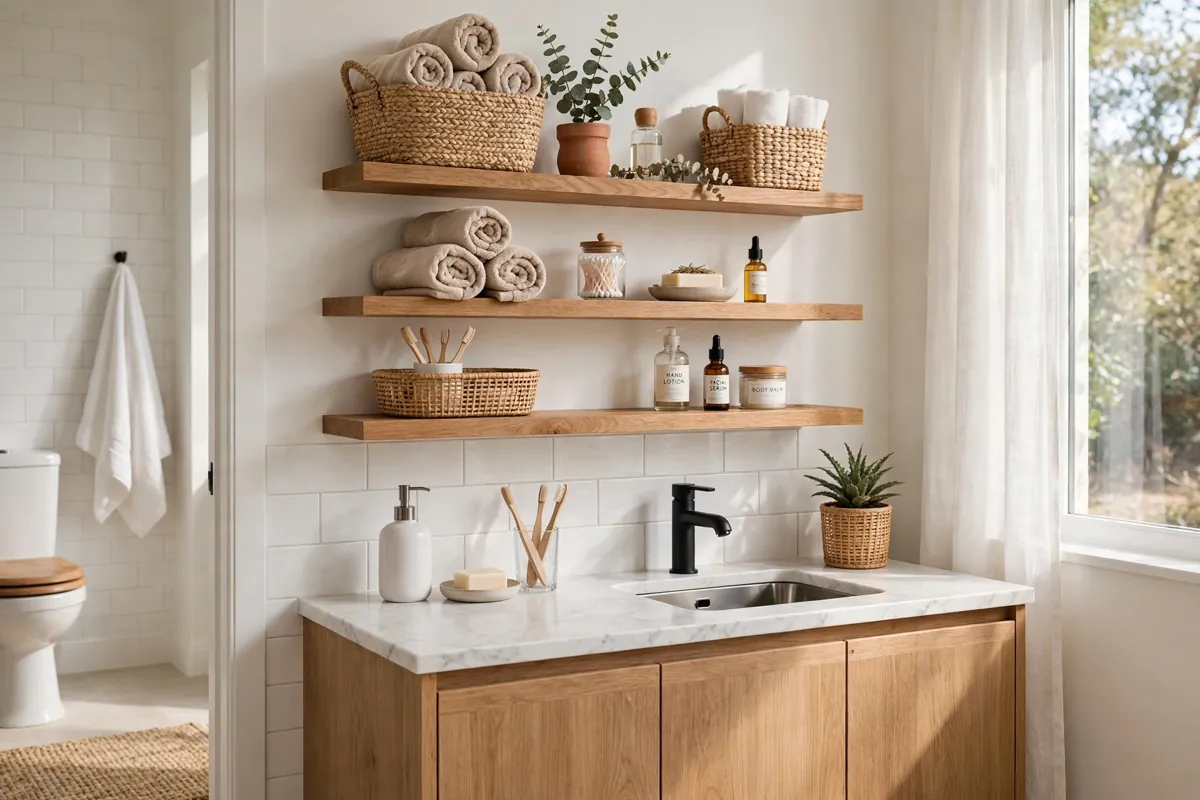
Floating shelves are the workhorse of bathroom storage, and they suit almost every layout because they use wall space that would otherwise sit empty. The trick is placement. Hang them at a height you can reach without standing on tiptoe, usually just above eye level for the lowest shelf, with enough room above each shelf to lift a bottle out without knocking its neighbours over.
Roll towels instead of folding them flat. Rolled towels take up less depth, look deliberately styled rather than just stacked, and are far easier to pull out one at a time without disturbing the rest.
Leave breathing room. A shelf packed edge to edge reads as clutter no matter how neatly the items are arranged. Aim to leave about a third of each shelf empty, or at least one clear gap between groupings. That empty space is what makes the difference between a shelf that looks organized and a shelf that looks like a shop display.
- Anchor each shelf with one larger item, such as a basket of towels or a tall plant, then build smaller items around it.
- Group like with like: all skincare together, all hair care together, never a random mix on every shelf.
- Keep the heaviest items on the lowest shelf so nothing top-heavy can fall on you mid-routine.
- Use the front edge for daily items and push spares to the back, so your hand finds the right bottle without thinking.
Over-Toilet Shelving That Actually Works
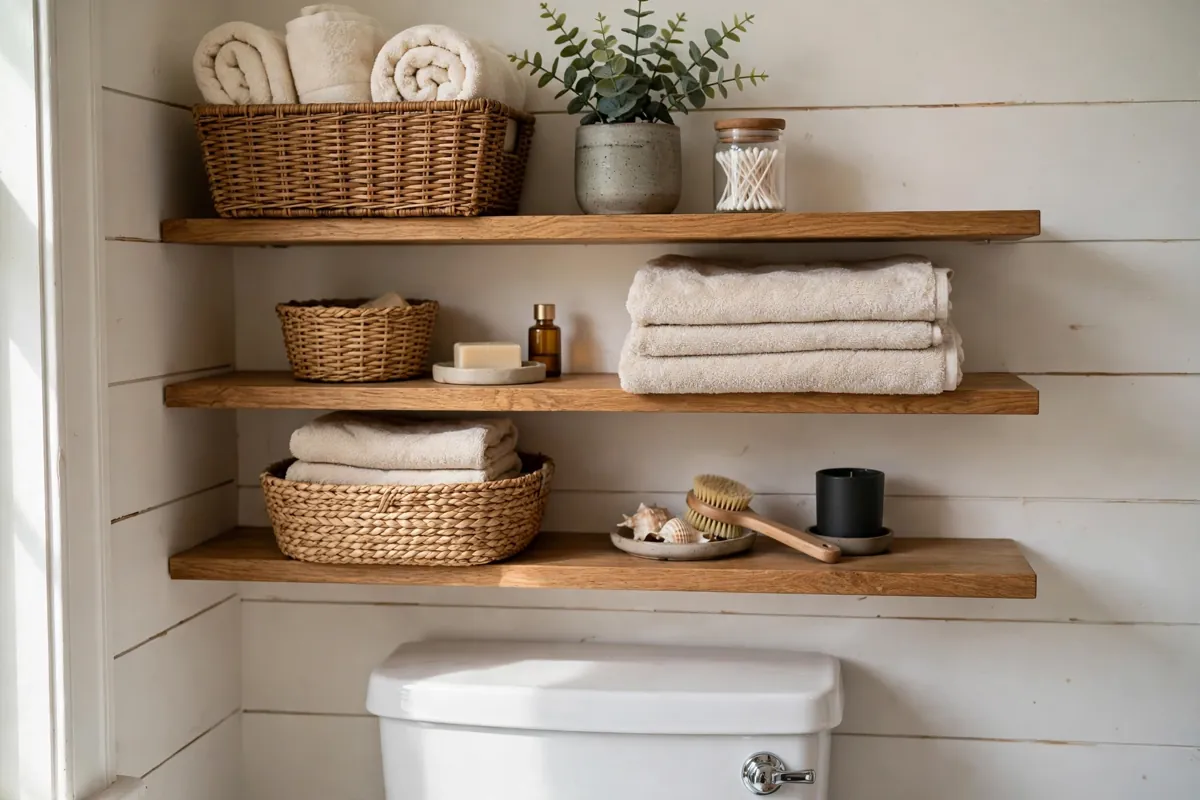
The wall above the toilet is often the only stretch of free wall in a small bathroom, and over-toilet shelving turns it into genuinely useful storage. A freestanding over-toilet unit is the easiest option, especially if you rent, while a pair of wall-mounted shelves above the cistern gives a lighter, more built-in look.
Height matters more here than anywhere else. The bottom shelf should sit high enough that you never bump your head when you stand up, and low enough that you can still reach it. For most people that means the first shelf starts around 60 to 75 centimetres above the top of the cistern.
Over-toilet shelves are also a good place to keep the less photogenic necessities. If your bathroom also needs a drawer overhaul, these bathroom drawer organization ideas pair well with the shelf plan, because drawers hide the small fiddly things while shelves hold the bulky ones.
Shower Shelves and Niches Without the Slippery Chaos
Shower storage fails in a very specific way: bottles slide, fall, and end up lined up along the edge of the tub like refugees. The fix is containment. A shower caddy with raised edges, a suction shelf with a lip, or a built-in niche all work, but only if the bottles actually fit and the shelf drains.
If you are choosing a shower shelf, look for drainage holes or a slatted base. Standing water breeds mildew under bottles, and a shelf that cannot drain will look grimy within a fortnight no matter how often you clean it.
Limit shower shelves to what you use in the shower. Shampoo, conditioner, body wash, and perhaps a razor and a face wash. Everything else, including the fancy scrub you use once a month, belongs outside the shower. This is also the kindest rule for shared bathrooms: when every person has one bottle each on the shelf, nobody’s products get knocked into the tub during someone else’s shower.
Styling Shelves Without Creating Clutter
There is a fine line between a styled shelf and a cluttered one, and it mostly comes down to restraint. Pick one or two decorative touches per bathroom, not per shelf. A small trailing plant, a single candle, or a framed print leaning against the wall is plenty. The shelves themselves should stay functional first.
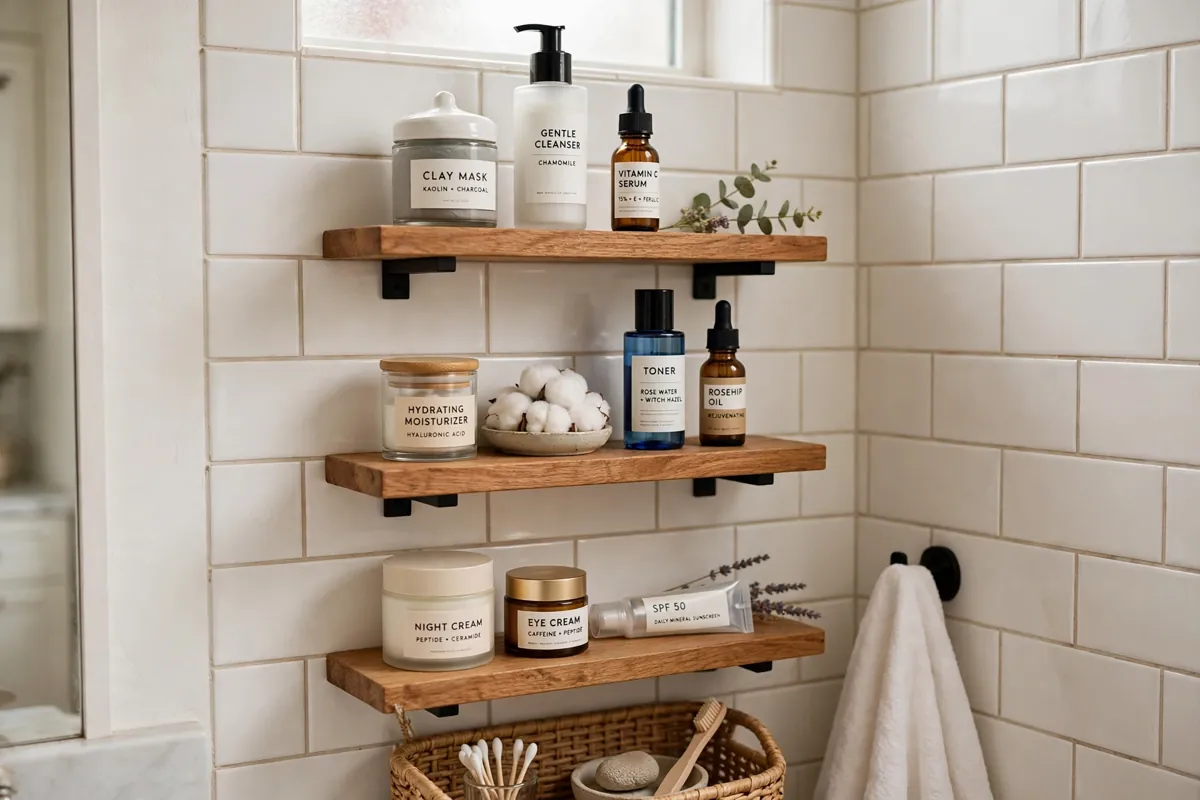
Colour helps more than decoration. Decanting mismatched products into matching amber or clear pump bottles instantly calms a shelf, and it also means you can see at a glance when something is running low.
And remember the counter. Shelves work best when they take pressure off the countertop, not when they duplicate it. If the same products sit on both the shelf and the sink edge, move one set away. For a calmer morning routine overall, these bathroom countertop organization ideas for a calm, clutter-free morning are worth reading alongside this guide.
Baskets and Bins That Earn Their Place
Baskets are the single most useful tool for open shelves because they turn a row of small loose items into one tidy unit you can lift out, use, and put back. But the wrong basket creates as much mess as it solves. The best ones for bathrooms are water-resistant, easy to wipe clean, and sized to the shelf with a little room to spare on each side.
Good choices include woven seagrass for a warm natural look on dry shelves, plastic or coated wire for anything near water, and fabric bins with a wipeable lining for spare toiletries. Avoid untreated wicker directly beside the shower or above the toilet, where steam and splashes will warp it within months.
- Small baskets: hair ties, clips, cotton pads, and other tiny items that otherwise scatter.
- Medium baskets: one person’s daily routine, kept together so mornings need no hunting.
- Large baskets or bins: spare towels, toilet rolls, and cleaning supplies, ideally on the lowest shelf.
- Open-top bins: things you grab daily, such as a hair dryer or straighteners, where a lid would just slow you down.
If under-sink space is part of your storage picture too, matching the basket style there keeps the whole room coherent. These under-sink bathroom storage ideas show how to make that awkward cabinet genuinely useful.
What NOT to Put on Open Shelves
Open shelves are honest storage: everything on them is on display, exposed to steam, dust, and splashes. Some things simply do not belong there, and keeping them off the shelves is half the battle.
First, anything that degrades in humidity. Perfume loses its scent faster in a steamy bathroom, and many medications should be stored somewhere cool and dry rather than on a shelf above a hot shower. Second, anything you would be embarrassed for a guest to see or reach for: personal medications, prescription creams, and anything private belong behind a closed door.
Third, bulk stock. A twelve-pack of toilet rolls or five backup shampoos on an open shelf looks like a warehouse, not a bathroom. Keep one spare of each daily item accessible and store the rest in a linen cupboard or under the sink. Fourth, anything with a fiddly lid or a tendency to leak. Nail polish remover, hair dye, and strong cleaning products are better in a closed cabinet where a spill is contained.
A Simple Keep-It-Tidy Routine
The best shelf system in the world will drift back to chaos without a tiny routine to hold it in place. The good news is that the routine only needs to take about two minutes, and most of it can ride on habits you already have.
Every evening, or every morning after your routine, do a thirty-second reset: put anything that migrated to the counter back on its shelf, straighten one crooked row, and toss any empty bottle straight into recycling instead of leaving it to be dealt with later.
Once a month, do a five-minute expiry check. Bathroom products do expire, and old sunscreen, opened eye drops, and ancient creams are not doing your skin any favours. Check the dates on the most-used shelf each month and work through the rest over the year. For the cabinet that holds the overflow, these medicine cabinet organization ideas that end the morning scramble are a natural companion to the shelf routine. This is also the moment to move anything you have stopped using off the open shelf and into a drawer or out of the bathroom entirely.
Renter-Friendly No-Drill Options
Renting does not mean living with bare walls and a cluttered counter. Several strong no-drill options hold real weight these days, provided you choose the right fix for the surface and respect the weight limits printed on the packaging.
Adhesive shelves with nano tape or strong suction cups work well on smooth tiles and glass, and they come off cleanly when you move out. For heavier items like stacked towels, a freestanding over-toilet unit or a leaning ladder shelf needs no wall fixings at all and moves with you to the next flat.
Whatever you choose, prep the surface first: clean and dry the tile, let adhesive cure for the full time stated on the packet (usually 24 hours) before loading it, and test with a light load before trusting it with your favourite products. A shelf that falls at 2 a.m. helps nobody.
Putting It All Together in Your Bathroom
Start with the audit, then choose one shelf to fix first, usually the one you use every morning. Empty it, decide its job, put back only the daily essentials in matching containers or baskets, and leave a little empty space. Live with that one shelf for a week. You will quickly notice what you reach for, what you ignore, and whether the height and grouping actually suit your routine.
Good shelves are not about perfection. They are about making the everyday stuff easy to find, easy to reach, and easy to put back. Get that right and the bathroom starts to feel like a room that works with you rather than against you, even on the busiest mornings.
Conclusion
A tidy bathroom shelf is really a small kindness to your future self. A few honest decisions, a basket or two in the right places, and a two-minute reset each day are all it takes to keep your everyday essentials within reach and your mornings a little calmer. Start with one shelf this weekend, and let the rest follow.