
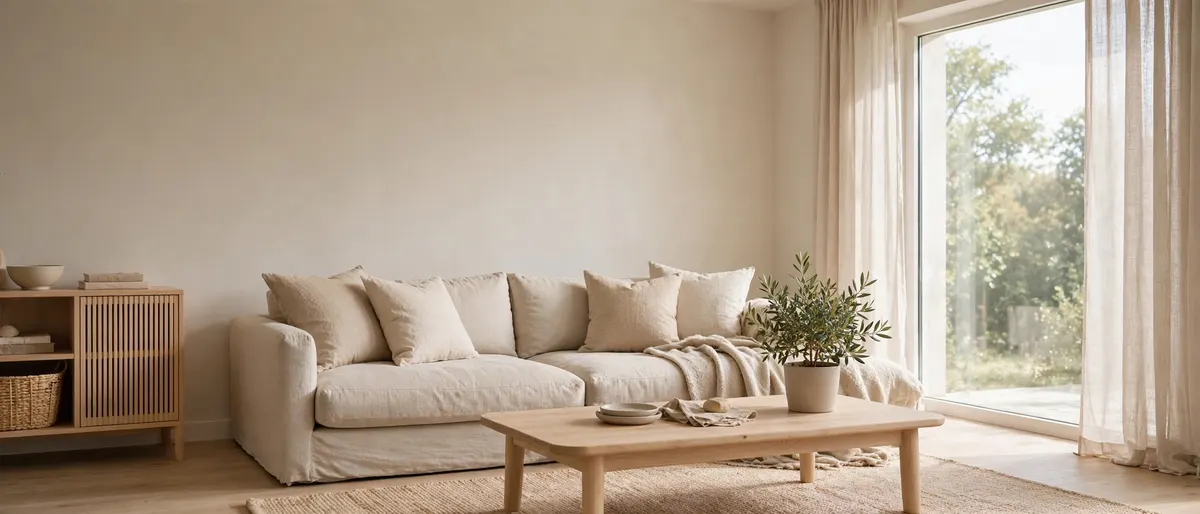

I’ll be honest with you: when I first heard “minimalist living room ideas,” my brain went straight to those stark white rooms you see on social media — the ones that look like nobody has ever sat on the couch, or eaten a meal, or lived an actual life there. Beautiful in a photo. Deeply uncomfortable to imagine coming home to.
So when I simplified my own living room, my rule was simple: calmer, not emptier. Warm, lived-in, a place where you can put your feet up without asking permission. Here’s what actually worked.
Why Most Minimalist Living Room Ideas Go Wrong
The problem with most minimalist living room ideas isn’t the idea of “less.” It’s where people stop. They clear everything out, paint everything white, and wonder why the room feels like a waiting area — then they either give up on minimalism or start buying stuff to fill the weird void, landing right back where they started.
Minimalism was never supposed to mean “own nothing.” It’s supposed to mean that what you own earns its place. A calm living room isn’t an empty one. It’s a room where everything in it was chosen on purpose — and everything that wasn’t got shown the door.
That’s the version we’re building here. Warm minimalism. Calm, but cozy. Simple, but still personal. If you’re starting your decluttering journey from scratch, our guide on How to Declutter Your Home Room by Room: A Beginner’s Complete Guide pairs perfectly with this — it gets the stuff out, and this article shows you how to arrange what’s left.
Idea 1: Keep Fewer, Better Pieces
Here’s the question that changed my living room: does this piece of furniture earn its floor space?
Most living rooms have too many large pieces, not too many small ones. The sofa plus the loveseat plus the two armchairs nobody sits in, the coffee table plus the side table plus the TV console. Every one of those eats visual space, and crowded rooms feel stressful even when they’re technically tidy.
Pick the pieces you actually use. One good sofa beats a sofa-and-loveseat combo you’ll never fill. And be honest about the armchair in the corner — if it mostly holds laundry, it doesn’t need to live here.
Here’s the surprising part: the empty floor space you’re left with isn’t wasted. It’s doing the most important work in the room. That breathing room between pieces is what makes a minimalist living room feel calm. Your eyes finally have somewhere to rest.
You don’t need to buy a single thing for this step. Start by removing one piece — the one you already know is just taking up space — and live with the gap for a week. Most people never put it back.
Idea 2: Give Everything a Hidden Home
This is the real secret behind every calm minimalist living room you’ve ever admired: the stuff is still there. It’s just behind a door.
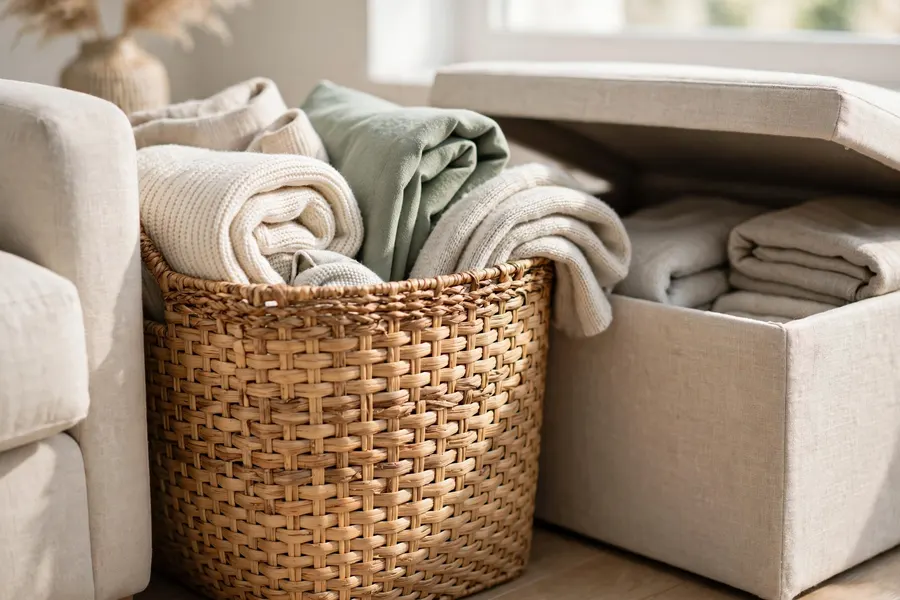
Remotes, chargers, the throw blanket, the unopened mail — in a minimalist living room, all of it has a hidden home. A storage ottoman instead of a plain one. A coffee table with drawers instead of an open shelf. A lidded basket tucked beside the sofa for the blankets. Closed storage, not open shelves, for the practical stuff of daily life.
The goal is simple: surfaces stay clear because everything has somewhere to go at the end of the day. That’s what makes the evening reset possible — you can’t tidy a room in ten minutes if half the stuff has no home.
If your living room is on the smaller side, this matters even more. Our roundup of the 10 Best Storage Ideas for Small Apartments and Tiny Homes has some clever options that work beautifully in a minimalist living room — pieces that store things without looking like storage.
Idea 3: Style With Less — The Rule of Restraint
Okay, this is the part that feels hardest, and I won’t pretend it didn’t take me a few tries. Styling a minimalist living room means choosing one or two things per surface and stopping there.
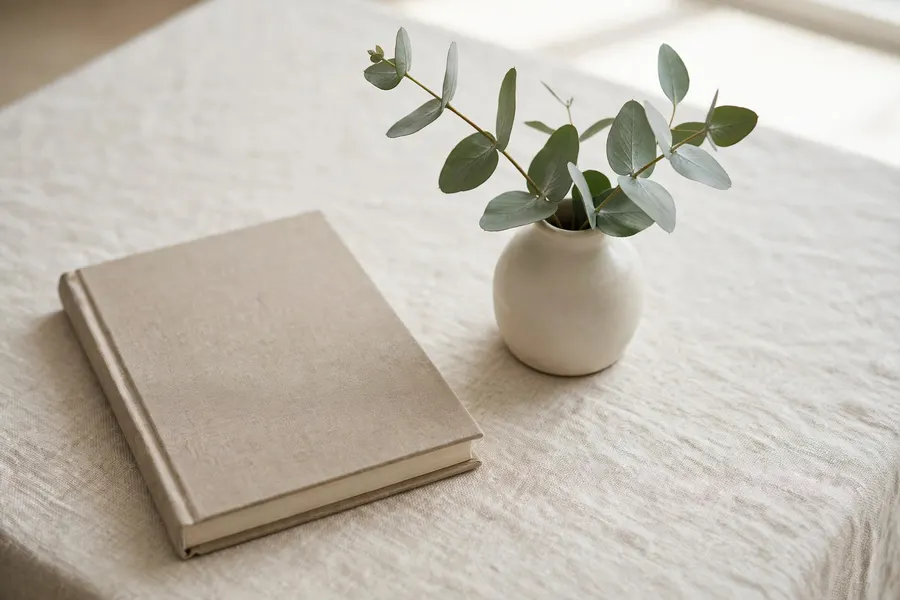
The coffee table gets a single book and a small vase — that’s it. The shelf gets three or four objects you genuinely love, with actual empty space between them. The wall gets one piece of art, hung at the right height, instead of a gallery wall of things you feel lukewarm about.
Here’s why the empty space matters: when every surface is full, your favorite vase is just noise. Give it breathing room and it becomes the thing your eye lands on — the thing that makes the room feel like yours.
A good test, borrowed from my own decluttering days: if you dust around a decorative item more than you actually look at it, it hasn’t earned its spot. Keep the pieces that make you smile when you walk in. Let the rest go — you can read more about handling the tricky ones in How to Declutter Sentimental Items
Idea 4: Warmth Comes From Color and Texture
This is where warm minimalism pulls ahead of the cold, sterile version — and it’s the part most people skip. When you have fewer things, every choice shows. So choose warmth.
That doesn’t mean you need color everywhere. It means choosing warm neutrals instead of cold ones: cream instead of stark white, oatmeal and warm greys instead of concrete grey, natural wood tones instead of glossy black. Two or three colors, repeated through the room, is plenty.
Then layer texture, because texture is what makes a simple room feel cozy instead of bare. A chunky knit throw over the sofa arm, a wool or jute rug underfoot, a woven basket, a ceramic vase — different materials catch the light differently, and that variation gives the room depth without adding a single extra object.
And get one green plant. I mean it — one plant changes a minimalist living room more than almost anything else. It adds life, color, and softness in a way no object can. If you’ve killed plants before (no judgment, I’ve been there), a snake plant or a pothos forgives a lot.
Idea 5: Deal With What You Remove — This Week
Here’s the unglamorous part nobody posts about: the extra armchair, the bag of decor, the basket of cables — it all has to actually leave. This is where minimalist makeovers quietly fail. The stuff you removed sits in the hallway “for now,” and three weeks later it has migrated right back into the living room.
Decide before you start. The donate bag goes in your car the same day, with a drop-off scheduled for the weekend. Anything worth real money gets listed online within the week — and set a firm deadline: if it doesn’t sell by Sunday, it gets donated too. No second chances, no “I’ll deal with it later.” Later is where clutter goes to live forever.
Be especially careful with decor that has memories attached. The candle holder from your trip, the frame your aunt gave you — these are the things that sneak back in. Take a photo of them, keep the memory, and let the object go. The room you’re building will hold new memories soon enough.
Start Smaller Than You Think
If this all sounds like a lot, here’s my actual advice: don’t redo your living room this weekend. Just do one thing. Clear off your coffee table completely, wipe it down, and put back only the two things you want there. Live with that for a few days.
You’ll notice something — your eyes will start finding other spots that feel too full. The shelf, the side table, that corner that’s become a landing zone. And you’ll fix them one at a time, at your own pace, because now you know what calm feels like and you want more of it.
A minimalist living room isn’t a finish line you cross. It’s just a room that finally feels like exhaling at the end of the day. You don’t need to buy anything to get there — the calm is already underneath the stuff, waiting. Start with the coffee table, and go from there.
Want to keep the momentum going? Read Swedish Death Cleaning: A Gentle Guide to Decluttering for Good next — it’s a surprisingly comforting way to think about what we keep and why.
[…] a showroom — and not one of them required me to own more than I wanted to keep. If you’ve been trying out minimalist living room ideas but something still feels off, this is the missing […]
[…] If you’ve already been simplifying your physical space — say, with ideas like the ones in our minimalist living room ideas — your digital life is the natural next […]