


You know that specific little panic — the one where you’re half-awake, one eye open, digging through your medicine cabinet for the allergy pills because your nose has decided today is the day, and all you can find is a fossilized tube of sunscreen from 2019? Yeah. That cabinet is basically the junk drawer of the bathroom, except the stakes are higher because you usually need something right now when you go reaching in. These medicine cabinet organization ideas come from real bathrooms, real mornings, and the hard-won lesson that a ten-minute reset can genuinely change how your day starts.
Here’s the thing nobody tells you: a medicine cabinet is one of the smallest storage spaces in your entire house, yet we ask it to hold medications, first aid supplies, skincare, vitamins, contact lens stuff, and — somehow — four half-used lip balms. It fails because it has no system, not because you’re disorganized. Let’s fix that.
Start With a Brutally Honest Clear-Out
Before you buy a single container, take everything out. Yes, everything — pile it on the counter or the bath mat. There’s no organizing clutter; you’re just rearranging chaos. This is also a safety job, not just a tidying one, so be ruthless.
Check every expiration date. Medicines don’t just quietly stop working — some, like liquid antibiotics and certain eye drops, can actually go bad in ways that matter. That mystery bottle with the label worn off? It goes. The half-squeezed ointment from a camping trip two summers ago? Gone. A good rule of thumb: if you can’t name what it’s for, or you haven’t touched it in a year, it doesn’t earn a spot back in the cabinet.
- Expired medications: Bag them up and take them to a pharmacy take-back box or a drug disposal program. Don’t just flush them or toss them loose in the trash.
- Duplicates: Three nearly-empty tubes of the same ointment? Combine or toss. Keep one backup, not three.
- Belongs-elsewhere items: Extra bottles, bulk boxes, and backup supplies don’t live here. They go in the storage under your bathroom sink or the linen closet.
- Things that melted, dried out, or separated: If it smells weird or the texture changed, trust your nose and let it go.
Most people end up throwing away a third of what’s in there. That alone doubles your usable space without buying anything.
Medicine Cabinet Organization Ideas That Actually Work Day to Day
Now for the fun part. The single best medicine cabinet organization idea isn’t a product — it’s zoning. Group everything by when and how you use it, not by product type. Your brain already thinks in routines (“morning stuff,” “the 3 a.m. headache stuff”), so the cabinet should too.
Give each shelf a job. The easiest split, and the one most real families actually stick with:
- Bottom shelf — daily routine: The things you reach for every single day. Prescriptions you take in the morning, vitamins, deodorant, contact solution. This shelf is at eye and hand level, so it gets the VIPs.
- Middle shelf — as-needed relief: Painkillers, allergy meds, antacids, cough syrup, bandages. The “I feel terrible, help me” shelf. Everything here should be grabbable in five seconds.
- Top shelf — occasional and backups: The thermometer, the tweezers, backup floss, the travel-size stuff, first aid odds and ends. You climb for these on purpose, not in a hurry.
If you share the cabinet, give each person their own zone instead of their own shelf — a small tray or a clearly labeled bin per person works better than splitting shelves, because shelves get out of balance fast. One person always has more stuff. That’s fine; zones flex, shelves don’t.
Small Containers, Risers, and Labels Do the Heavy Lifting
A medicine cabinet is usually six inches deep, so the back row is where things go to die. The fix is boring and cheap, which is exactly why it works: containers you can pull out.
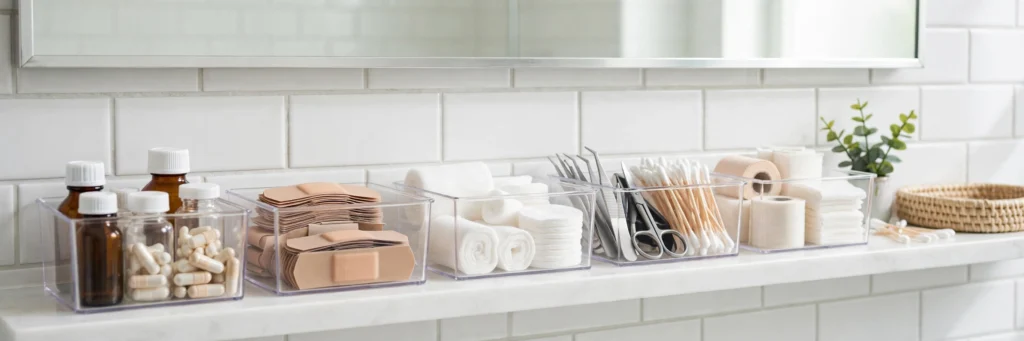
Clear, narrow bins are the MVP. A couple of slim bins — roughly the width of your palm — lined up on each shelf turn the whole cabinet into a pull-out drawer. When you need the allergy meds, you slide the whole bin out, grab what you need, and slide it back. No more knocking over the cough syrup to reach the Tums. Clear plastic matters: you can see what’s inside without opening anything, which is half the battle at 6 a.m.
Risers and small stacking shelves double the real estate. A two-tier riser on the middle shelf means your painkillers sit up front and low while the taller bottles stand behind them, both visible at a glance. Measure your cabinet’s interior height first — cabinets vary wildly, and a riser that’s half an inch too tall is a special kind of heartbreak.
Labels are non-negotiable if anyone besides you opens this cabinet. A simple label maker — or even painter’s tape and a marker — on each bin: “Pain & Fever,” “Allergy,” “First Aid,” “Daily Meds.” It sounds fussy until your partner finds the antihistamines without waking you up to ask. That’s worth the five minutes of labeling, I promise.
Decant the bulky stuff
Cotton balls, cotton swabs, bandages, and floss picks come in packaging designed for store shelves, not your cabinet. Move them into small clear jars or short containers — the kind you already have in a kitchen drawer. It frees up a shocking amount of space and, honestly, it just looks calmer. Your morning brain will thank you. If you’ve already tackled your bathroom counter organization, apply the same decanting logic there — the two systems work best as a pair.
Steal Back the Inside of the Door
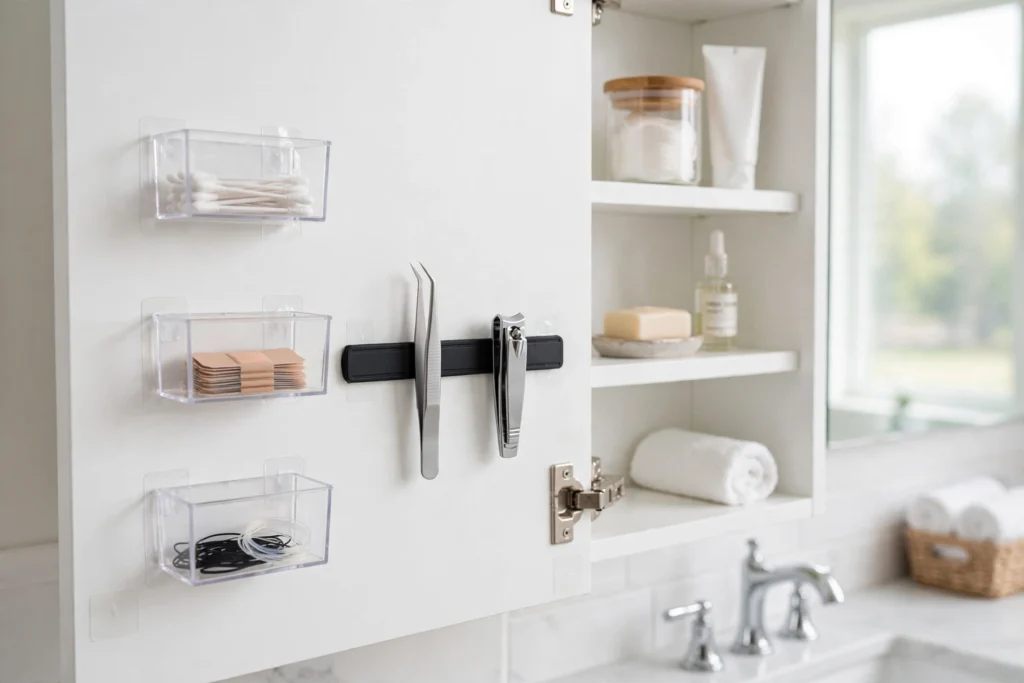
The inside of the medicine cabinet door is the most underused square footage in your bathroom. Narrow adhesive bins, a magnetic strip, or a couple of sturdy command-strip caddies on the door give you a whole extra shelf’s worth of storage that never existed before.
What’s it good for? Flat and light things: daily pill organizers, nail files, tweezers, a spare toothbrush, bobby pins, the reading glasses you always lose. Avoid heavy bottles — they’ll test your adhesive’s commitment in the middle of the night, and you don’t want to meet your ibuprofen on the bathroom floor.
A magnetic strip along the door’s inner edge is a sleeper hit for tiny metal items: tweezers, nail clippers, bobby pins. They stick, they’re visible, and they never migrate to the bottom of a bin again. If your cabinet is mirrored on the inside, small suction-cup baskets work on the glass shelves too — great for holding the two or three things you use every single morning within arm’s reach.
Keep Some Things Out of the Medicine Cabinet Entirely
Part of organizing a medicine cabinet is knowing what shouldn’t be in it. The cabinet’s superpower is that it’s small, dry-ish, and at hand height — but it’s also warm and steamy every time someone showers. That’s genuinely bad for some items.
- Bulk backups: The three-pack of vitamins, the family-size painkiller bottle, the backup shampoo. One working bottle lives in the cabinet; the rest go in the linen closet or under the sink. Restock monthly.
- Heat-sensitive medications: Insulin, certain eye drops, and anything your pharmacist said to store in a cool place — the bathroom is the worst room in the house for these. A kitchen drawer or a dedicated cool spot wins.
- Kids’ meds and anything tempting: If you have small children or curious pets, anything they shouldn’t eat or drink should be up high, locked, or in a different room entirely. A medicine cabinet at toddler eye level is not secure storage, no matter how tidy it looks.
- Makeup and skincare overflow: Your daily moisturizer and sunscreen can live here, but the full collection deserves its own system — see these makeup organization ideas for small bathrooms so the cabinet doesn’t turn into a cosmetics annex.
Think of the cabinet as your “right now” kit and everything else as the warehouse. The smaller the kit, the faster it works.
A 5-Minute Routine That Keeps It Tidy for Good
Here’s where most organization projects die: nobody maintains them. So make the maintenance laughably small. Once a month — tie it to something you already do, like paying the electric bill or the first of the month — spend five minutes on the cabinet.
- Toss anything expired or empty (check the back row — that’s where the expired ones hide).
- Wipe down the shelves. Leaky bottles leave sticky rings that attract dust and grime.
- Check the bins: did anything migrate? The allergy bin shouldn’t contain dental floss.
- Restock the daily shelf from your backups if anything’s running low.
That’s it. Five minutes, once a month, and the system holds. The real secret to every one of these medicine cabinet organization ideas is that they have to survive your actual life — tired evenings, sick days, houseguests who put things back in the wrong spot. Pull-out bins and labels are forgiving. Complicated systems are not.
Your medicine cabinet doesn’t need to look like a magazine spread. It needs to hand you the right thing, in the dark, in under ten seconds. Clear the clutter, zone by routine, use bins you can slide out, label what matters, and keep the backups somewhere else. Do that, and the next time your nose declares war at 6 a.m., the allergy pills will be exactly where your hand expects them to be — and that tiny morning victory is worth every minute of this project.
[…] space) or a medicine cabinet with actual order to it instead of a game of bathroom Jenga — these medicine cabinet organization ideas end the morning scramble for […]
[…] heat and humidity can reduce their effectiveness. If your cabinet has become a mini pharmacy, these medicine cabinet organization ideas will help you move them somewhere cool and dry while keeping your mornings just as […]