
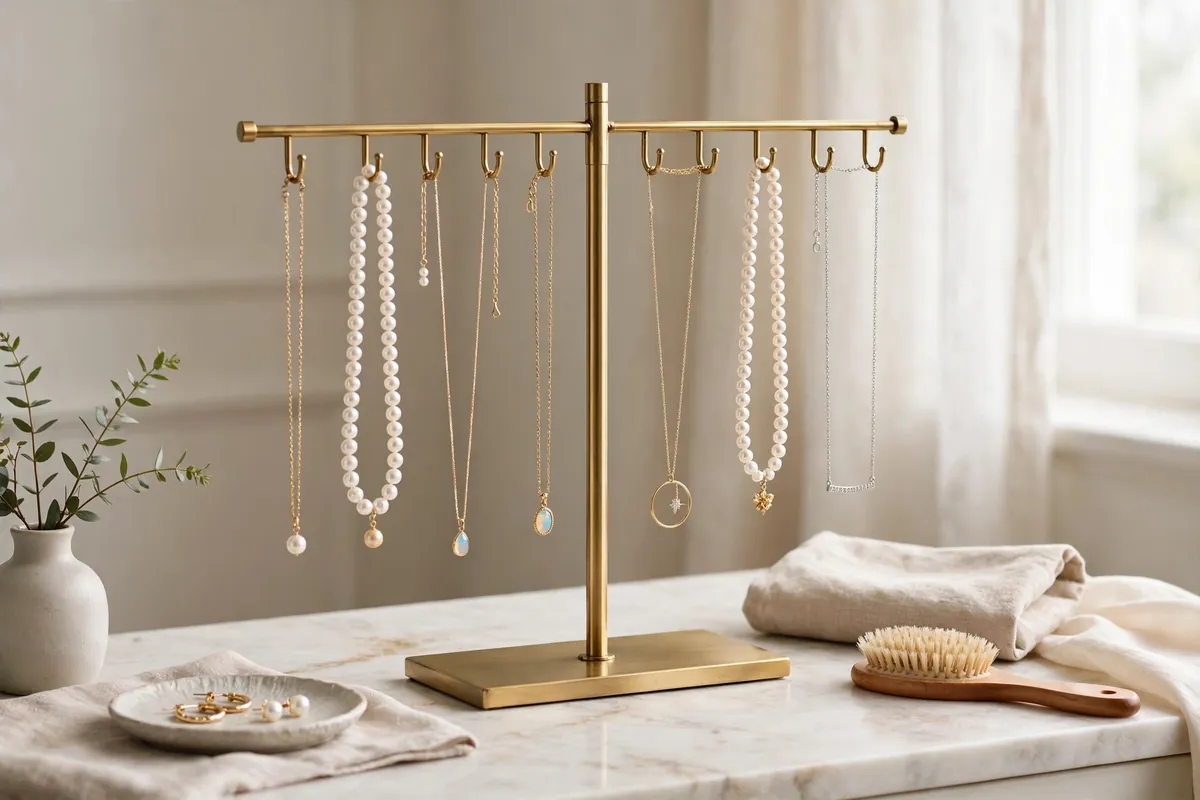

Every jewelry lover knows the scene: you reach for a necklace and pull up a knotted ball of chains fused together like some kind of metallic tumbleweed. Ten minutes of frustrated picking later, you’re late and wearing the same studs as yesterday. Good jewelry organization ideas solve two problems at once — every piece is easy to find, and nothing is jumbled together long enough to tangle, scratch, or tarnish.
The secret the pros know is that jewelry storage isn’t about buying the prettiest box. It’s about giving every single piece its own address. One necklace per hook, one pair of earrings per compartment, one home per ring. This guide walks you through the full system: the honest audit, tangle-proof necklace storage, smart systems for small pieces, jeweler-style sorting, and the rescue tricks that save the pieces already knotted.
First, the Audit: Lay It All Out
Before you buy a single organizer, empty everything — the jewelry box, the nightstand dish, the bathroom counter, the mysterious drawer where single earrings go to retire — onto a soft towel on your bed. Seeing the entire collection at once is always eye-opening. Most of us wear about twenty percent of what we own.
Now be honest with each piece:
- Broken beyond reasonable repair? The bracelet with the dead clasp, the necklace missing three stones, the earring whose mate vanished two apartments ago. If the repair costs more than the piece is worth to you, let it go.
- Tarnished past saving? Some costume pieces corrode to the point of no return. Keep the ones worth polishing; release the ones that are done.
- Do you actually wear it? The bridesmaid necklace, the trend piece from five years ago, the “someday” statement earrings. If you haven’t reached for it in over a year, it’s decoration for a drawer — donate it to someone who’ll wear it.
- Does it still suit you? Tastes change. The chunky plastic bangles of your twenties might not be your thirties. That’s growth, not waste.
What remains is your real collection — the pieces you love and wear. Those are the ones worth protecting with a proper system. And if this audit has you eyeing the rest of your closet too, our wardrobe keep-toss-donate guide applies the same honest questions to clothes.
Jewelry Organization Ideas for Necklaces: Tame the Tangle Champions
Necklaces cause ninety percent of jewelry storage grief. Chains are tangle-seeking missiles — leave two in the same compartment and they’ll find each other. The rule is absolute: one necklace, one home. Never double up.
You have two excellent approaches, and the right one depends on your space:
- Hang them. Individual hooks are the gold standard for necklaces. A wall-mounted rack, the inside of a closet door, or a standing display keeps every chain separated, visible, and gravity-stretched so it can’t knot. Space hooks so neighboring chains hang without touching, put the shortest chains highest, and always re-hang each necklace clasped — an unclasped chain is a tangle waiting to happen. Bonus: visible jewelry gets worn more. That necklace buried in a box might as well not exist.
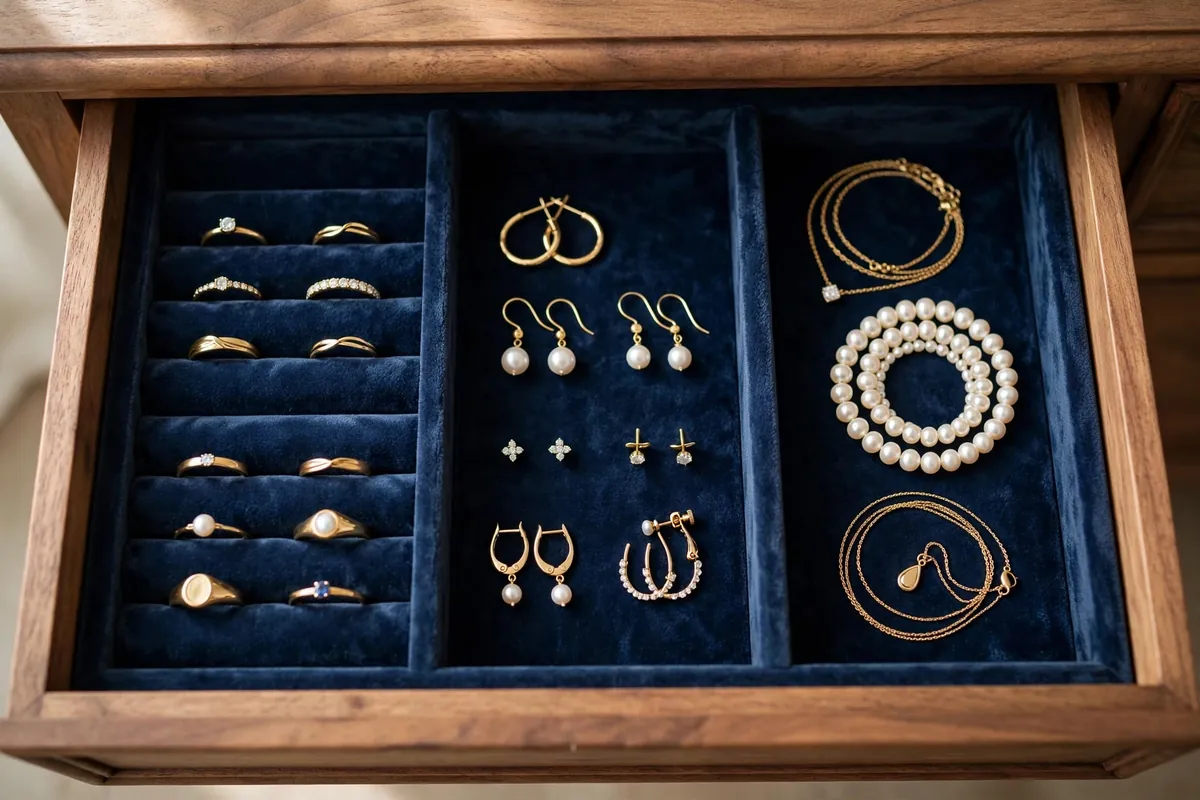
- Lay them flat in compartments. If drawers are your thing, use a velvet-lined tray with long individual compartments. Clasp each chain first, then lay it in a gentle S-curve — no sharp bends, no coiling. One compartment per chain, no exceptions. A clear-lid tray on top keeps everyday pieces visible for quick morning decisions.
For travel, steal the oldest trick in the book: thread each chain through a plastic drinking straw, clasp it, and slip it into a soft pouch. The straw holds the chain rigid and utterly incapable of knotting. It looks ridiculous. It works perfectly.
Delicate or high-value pieces deserve extra care — soft individual pouches, anti-tarnish strips for silver, and a spot away from humidity like bathrooms. Fine jewelry and fashion jewelry should live in separate zones so a heavy cuff can’t scratch a delicate chain.
Earrings, Rings, and Bracelets: Small Pieces, Smart Systems
Small pieces have the opposite problem from necklaces: they don’t tangle, they vanish. Single earrings, loose backs, rings slipped off “just for a second” — the fix is compartments small enough that nothing migrates.
- Earrings: A simple ice cube tray is a shockingly good organizer — each compartment is exactly the right size for one pair, and you can see everything at a glance. For studs specifically, a piece of felt or a dedicated stud holder keeps pairs together and backs from escaping.
- Rings: Padded ring rolls or a velvet tray with ring slots keep bands separated and scratch-free. And place a small ring dish on your nightstand and by the kitchen sink for the rings you wear daily — it prevents the “tissue tragedy” (ring wrapped in tissue, tissue thrown away) and the heart-stopping clink of a ring heading for the drain.
- Bracelets: Bangles stack beautifully on a standing paper-towel holder or a dedicated bracelet bar. Cuffs and charm bracelets do best in individual compartments where charms can’t snag each other.
- Everyday vs. occasion: Keep the pieces you wear weekly in a small, accessible tray on your dresser — your grab-and-go station. Reserve the main box or deep drawer for occasion pieces. This one split saves more morning minutes than any other change.
If counter space is tight, stackable modular trays are brilliant: buy one layer for rings, one for earrings, one for necklaces, and stack only as high as your collection needs. The system grows with you instead of forcing you into a box that’s wrong six months later.
Sort Like a Jeweler: By Category, Metal, or Occasion
Once every piece has a home, a sorting logic makes the whole system intuitive. Pick the scheme that matches how you actually choose jewelry in the morning:
- By category. All hoops together, all pendants together, all cocktail rings together. Simplest to maintain, easiest for other people (partners buying gifts, take note) to navigate.
- By metal. This is the anti-tarnish secret weapon. Store sterling silver pieces together in anti-tarnish pouches or a box with anti-tarnish lining, separate from gold. Certain metals accelerate each other’s tarnishing when stored touching — separation genuinely extends the life of your silver.
- By occasion or outfit. Work pieces in one tray, evening pieces in another. If you dress by occasion, organize by occasion.
- By color story. Some people think in palettes — warm golds together, cool silvers together. If that’s how your brain works, honor it.
Whatever scheme you choose, label tray edges or sections lightly. Labels sound fussy until the third time someone “borrows” a necklace and returns it to the wrong spot. And keep the system visible: jewelry you can see is jewelry you wear. A beautiful collection hidden in a dark box is just expensive clutter. If your bedroom storage needs the same visibility treatment, our bedroom organization ideas cover dressers, nightstands, and closets.
Rescue and Maintain: Detangling Tricks That Actually Work
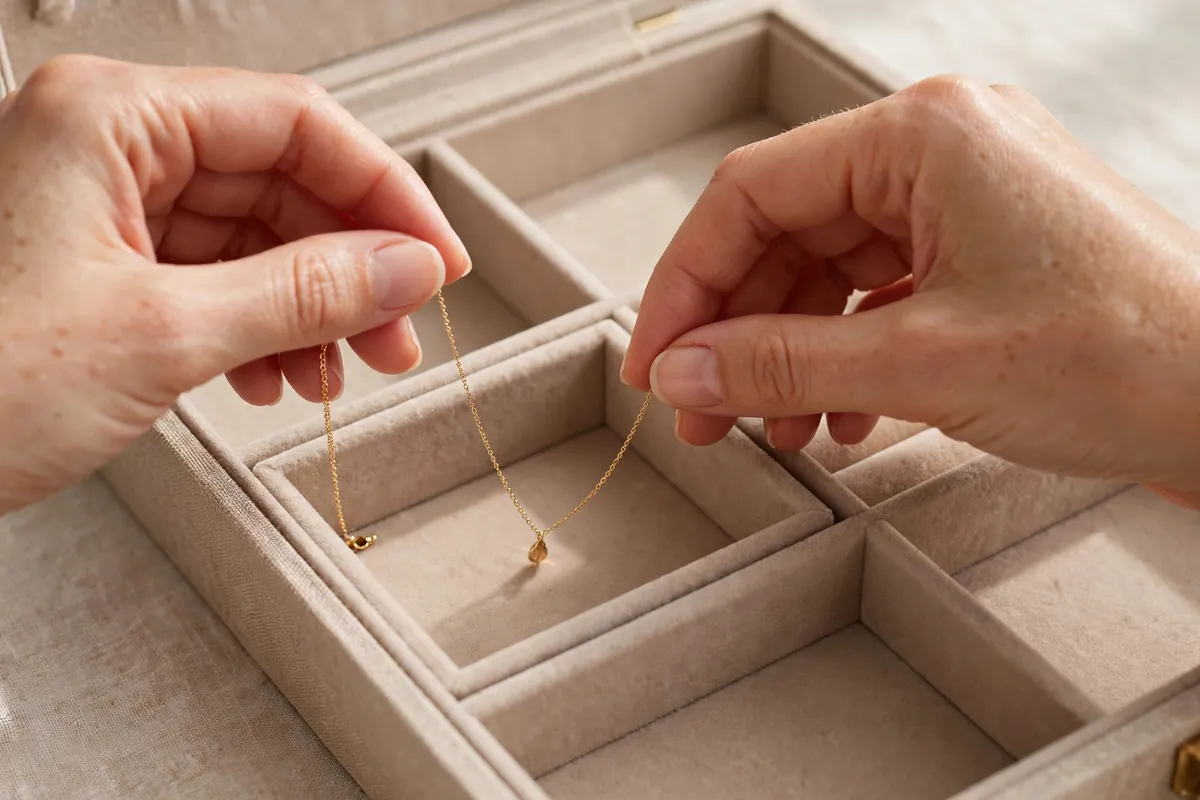
Already own a knotted mess? Don’t yank — you’ll tighten the knot or snap the chain. Lay the necklace on a flat, hard surface and work with two straight pins or fine tweezers, teasing the knot open millimeter by millimeter. For truly stubborn tangles, a tiny drop of baby oil or mineral oil on the knot gives the chain enough slip to work free. Patience beats force every time.
Then protect the rescue with a few maintenance habits:
- Wipe pieces after wearing. A quick pass with a soft cloth removes the oils and perfume that accelerate tarnish. Thirty seconds now saves a polishing session later.
- Put jewelry on last, take it off first. Perfume, hairspray, and lotion go on before jewelry, not after. Chemicals are the quiet killers of plating and pearls.
- Keep it dry. Don’t store jewelry in the bathroom if you can avoid it — humidity is tarnish’s best friend. A bedroom drawer with a silica packet beats a steamy vanity every time.
- Check clasps and settings twice a year. A loose stone caught early is a quick jeweler visit; caught late, it’s a lost stone.
For small closets where a full jewelry armoire is fantasy, wall-mounted or over-the-door organizers turn dead space into display — our small closet organization guide has more vertical-space tricks, and the shoe-organizing principles in our shoe storage guide (compartments, visibility, one home per item) apply beautifully to accessories too.
Your Weekend Jewelry Reset Plan
If your collection is currently a single chaotic box, here’s a realistic weekend plan that gets you to a working system without overwhelm. Saturday morning: do the audit — lay everything out, make your keep/donate/repair piles, and bag the discards for donation immediately. Saturday afternoon: clean the keepers (a soft cloth and warm soapy water handle most costume pieces; silver gets a proper polish) and detangle any knotted necklaces with the pin-and-oil method. Sunday: set up your system — install the hooks or lay out the trays, assign every piece its address, and put the everyday tray on your dresser.
Start simple and upgrade later. A ten-dollar velvet tray and a strip of adhesive hooks will transform your mornings just as well as a luxury armoire — the system matters more than the container. You can always graduate to stackable trays or a wall display once you know how your collection actually behaves.
Wear It, Don’t Store It
The real goal of all these jewelry organization ideas isn’t a prettier box — it’s a collection you actually enjoy. When every necklace hangs tangle-free, every earring pair sits together, and your everyday pieces wait in one grab-and-go tray, getting dressed becomes fun again. You’ll rediscover pieces you forgot you owned and finally wear the good stuff instead of saving it for “someday.”
Start with the audit this week — it’s the single highest-impact step. Then give every surviving piece its own address, and enjoy the small daily luxury of reaching for exactly what you want, finding it instantly, and walking out the door on time.