
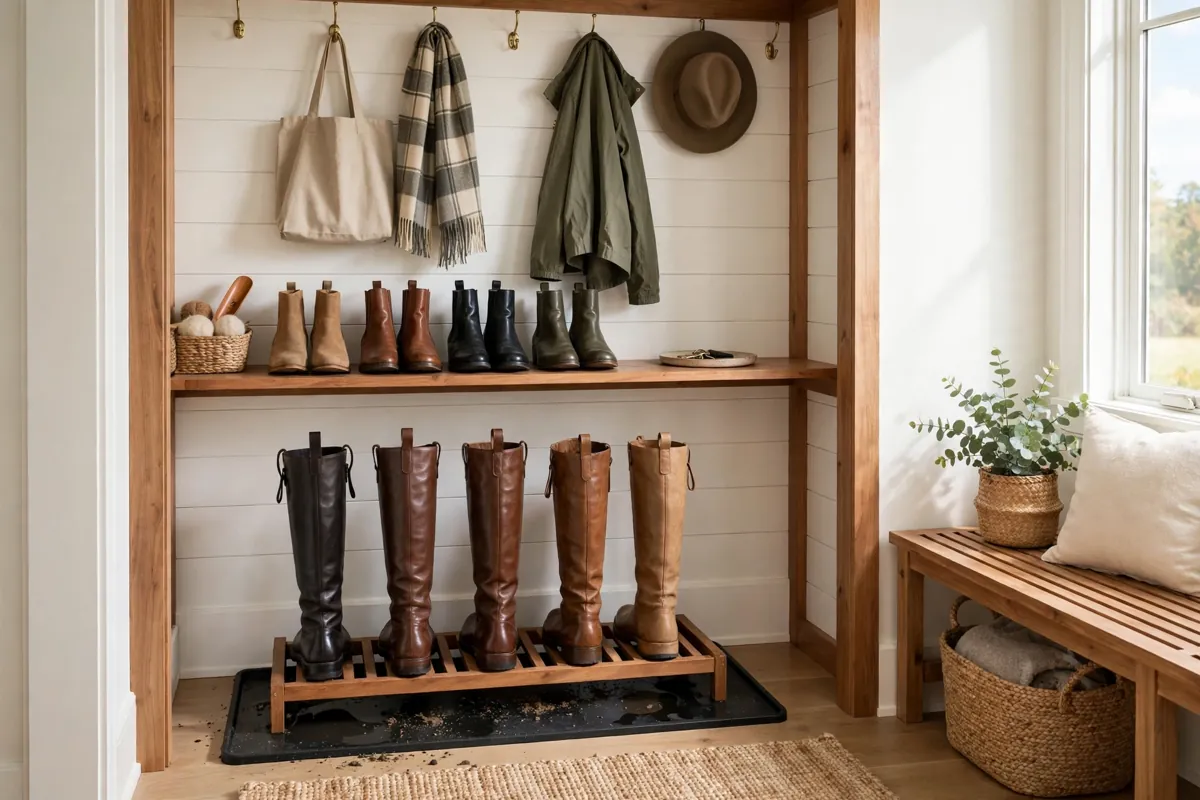

Boots are wonderful until you have to live with them. Unlike sneakers or flats, they are tall, heavy, sometimes muddy, and they refuse to sit quietly in a neat little row. One pair by the door becomes three, then five, and before long you are tripping over a fallen riding boot while hunting for its missing partner. The good news is that the right boot storage ideas can turn that daily scramble into something calm and easy, even if your closet is small and your household owns more boots than you care to admit.
I learned this the hard way one wet November morning, when my winter boots were buried behind boxes, my rain boots were still damp, and a tall boot had flopped over so often it had a permanent crease. Since then, I have treated boot storage as a small system rather than a pile, and it has saved me time every day since.
This guide walks you through that system: ideas for everyday boots, tall pairs that will not stay upright, tight closets that seem to have no room, and off-season pairs that deserve proper care while they wait. Nothing here requires a remodel or a big budget, just an afternoon, a few inexpensive tools, and a willingness to give every pair a real home.
Start With a Quick Boot Audit
Before you buy a single rack or tray, gather every pair of boots in the house and lay them out where you can see them. It is the fastest way to understand what you are actually storing, and you may discover duplicates, pairs nobody has worn in two years, and boots that need repair first.
Sort them into three groups: everyday boots you reach for several times a week, occasional pairs like dress or hiking boots that come out a few times a month, and off-season pairs. Each group needs different storage, and mixing them together is usually what creates the mess.
While you sort, check each pair honestly. Wipe off mud and salt, look for cracked soles or broken zips, and let damp pairs dry fully before they go back into storage. Boots stored wet develop smells and mildew fast, especially in a closed closet. A pair that is genuinely worn out is a donation decision, not a storage problem, and letting it go frees space for the pairs you love.
- Count by person and by season: knowing who owns what stops one person’s boots from swallowing the whole entryway.
- Measure your tallest pair: tall boots need more vertical room than you think, so measure before buying shelves or boxes.
- Note what is actually muddy or wet: those pairs belong near the door on a tray, not deep inside a bedroom closet.
- Set a one-in, one-out rule: when a new pair arrives, an old one leaves, so the system never quietly overflows again.
Boot Storage Ideas for Everyday Pairs by the Door
The boots you wear most should live closest to the door, because that is where the daily routine happens. If you have to walk to another room to fetch them, you will stop putting them away, and the pile by the door will return. A simple setup near the entrance beats a beautiful closet system that nobody uses.
Start with a boot tray. Choose one with a raised edge and a ridged surface so water drains away and air circulates underneath. A tray about 30 inches wide holds two to three pairs and protects floors from slush, salt, and mud. Empty and wipe it once a week; a tray full of standing water helps nobody. If your entry is tight, a slim tray beside the door works just as well, and it pairs nicely with these small mudroom storage ideas that make a tiny entry work hard.
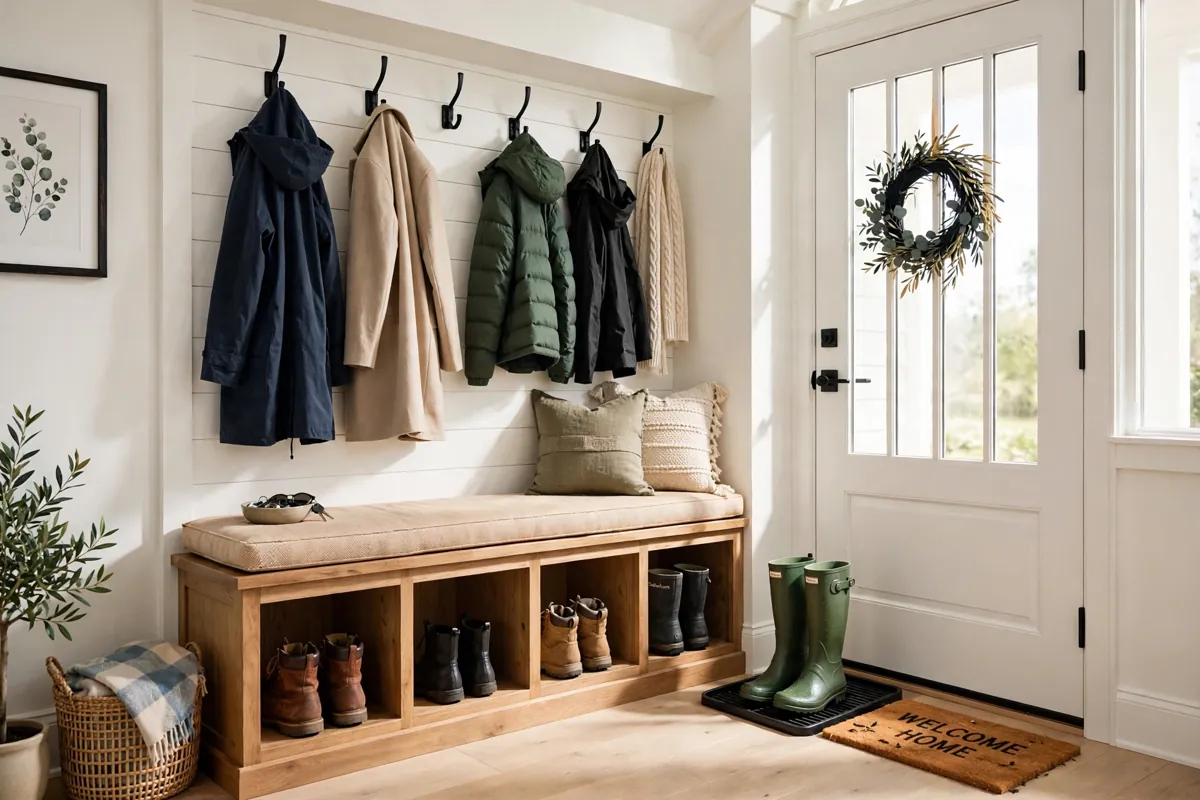
Above or beside the tray, add a low rack or a row of cubbies so each pair has its own slot. Open shelving is better than a closed cabinet for everyday boots because wet pairs need airflow to dry. If several people share the entry, assign one cubby or section per person and label it if children are involved. Kids are far more likely to put boots away when the spot is clearly theirs, and you are far less likely to find a single muddy boot in the middle of the hallway.
A storage bench pulls the whole setup together. You can sit down to pull boots on, which matters on icy mornings, and the boots slide into cubbies or onto a shelf underneath. Choose a bench with an open bottom shelf rather than a sealed box if your boots are often damp, so they can breathe and you can see at a glance which pairs are home.
Keep Tall Boots Standing Tall
Tall boots are the hardest pairs to store well, because gravity works against you. Left unsupported, they flop over, crease at the ankle, and turn into a tangled heap. The fix is simple: give them something to lean on from the inside.
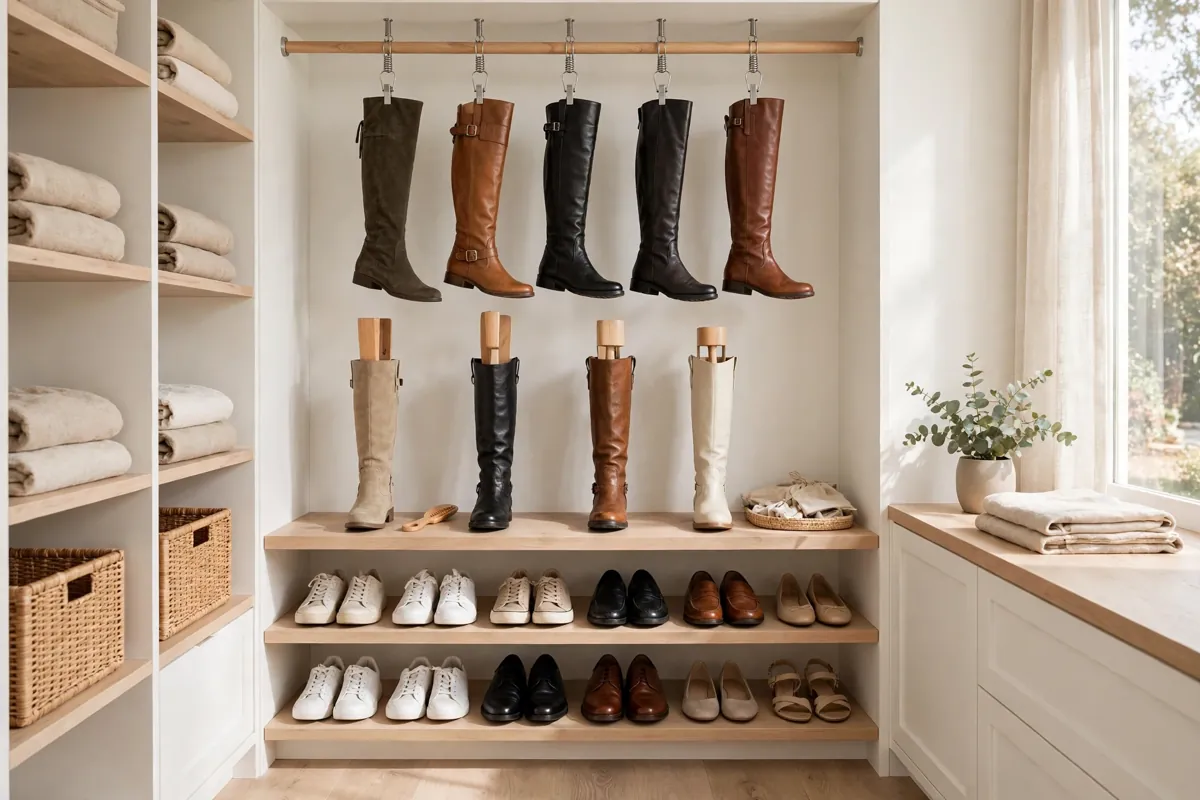
Boot shapers are the easiest solution. You can buy spring-loaded plastic inserts, inflatable shapers, or sturdy cardboard forms that slide inside the shaft and hold it upright. For a free version, roll a magazine tightly, slide it into a tall sock, or cut a pool noodle to the height of the shaft. Whatever you use, make sure it reaches near the top of the boot without stretching the leather or fabric. A shaper that is too short lets the top fold over anyway.
Once shaped, tall boots can stand on a closet floor, a low shelf, or in a tall cubby. Keep pairs together with a little room between them so zips and buckles do not scratch each other. If the floor is crowded, try hanging instead: clip-style boot hangers, or sturdy trouser hangers with clips, grip the top of each boot and hang it from the rod. Slip a small cloth between clip and boot to prevent marks on leather, and hang the pair with toes facing opposite directions so they sit flat.
One mistake to avoid is stacking anything on top of tall boots. A bag or box balanced on shaped boots will eventually push them over and can dent the shaft. Give tall boots their own shelf or floor section, even if it means moving lesser-used shoes elsewhere.
Small Closets, Big Boot Collections
A small closet does not mean owning fewer boots. It means using height, doors, and hidden corners more cleverly. The secret is to stop thinking of the floor as the only place boots can live.
Start by looking up. A shelf installed above your existing shoe rack, or a high shelf near the top of the closet, is perfect for occasional pairs that you only need a few times a month. Keep them in clear, labelled boxes up there so you can spot the right pair without pulling everything down. Under the bed is another overlooked home for boots, especially flat under-bed boxes with dividers that keep pairs separated and dust-free. For more ways to make tight spaces work harder, these shoe organization ideas for small closets pair nicely with the boot-specific tips here.
The back of the closet door is also valuable. A heavy-duty over-the-door organizer with large pockets can hold ankle boots, while sturdy hooks can carry rain boots upside down by their loops, helping them dry and keeping them off the floor. Just check the door still closes and the organizer is rated for the weight; boots are heavier than sneakers, and a flimsy one will sag within weeks.
If your closet shares space with coats and bags, consider a narrow vertical boot rack that slides into a gap beside the hanging clothes. Some racks are only a foot wide but hold four or five pairs on angled shelves, letting moisture drip onto a tray below. Measure the gap before you order, including the height of your tallest pair. When the hallway closet is doing double duty, a few hallway closet organization ideas can help divide the space fairly.
Boot Storage Ideas for Off-Season Pairs
When a season ends, your boots deserve a proper send-off rather than being shoved to the back of a closet still dusty from their last outing. Off-season storage is where most long-term damage happens, because pairs sit untouched for months in conditions nobody checks.
Begin by cleaning each pair properly. Brush off dried mud, wipe leather with a damp cloth and conditioner if you use it, and wash rubber wellies with warm soapy water. Let everything dry completely, ideally overnight in a ventilated room, before it goes into any container. Stuff tall boots with shapers or tissue so they hold their shape, and tuck a baking soda sachet or cedar block inside each pair to absorb moisture and odour. Never store boots in a sealed plastic bag, which traps humidity; a breathable cotton bag or ventilated box is far kinder to leather and fabric.
Clear boxes are your best friend here, because you can see what is inside without opening every container. Label each box with the contents and the owner, and store them on a closet shelf or under the bed rather than in a damp garage or hot attic. Extreme heat dries leather out and cold damp encourages mould, so a stable indoor spot wins. If the garage is your only option, use lidded waterproof bins kept off the concrete floor, and check them once mid-season.
- Clean before you store: salt and mud left for months can stain and weaken materials permanently.
- Dry fully first: even slightly damp boots can develop mildew in a closed box.
- Keep pairs together: one box per pair, or a divider per pair, stops the annual hunt for a missing boot.
- Label everything: a quick label saves you opening five boxes to find the winter snow boots.
Rotating pairs in and out of season is also a good moment to reassess what you own, and this guide to seasonal closet rotation ideas walks through a simple swap routine that keeps your closet matched to the weather without a full reorganisation every few months.
Keep Them Dry, Clean and Ready to Grab
The best boot storage system is one you can maintain without thinking about it, and that mostly comes down to drying and a weekly reset. When you come in with wet boots, knock off loose mud outside, set them on the tray with space between pairs, and pull the tongues forward so air reaches inside. Stuffing them with newspaper for a few hours speeds drying, but remove it once they are dry so it does not hold moisture against the lining.
Once a week, take five minutes to reset the area: return stray pairs to their spots, shake out the tray, wipe salt marks, and check the shapers in your tall boots. This tiny routine stops the slow creep back into a pile, and lets you spot problems early, like a loose sole or a sticking zip, while they are still easy fixes.
Finally, agree on one household rule that makes the system stick: boots come off at the door and go straight onto the tray or into their cubby. When everyone knows where their pairs live, mornings run more smoothly and boots last longer. That is the real payoff: not a perfect-looking closet, but a calmer start to every day.
You do not need to fix every pair in one weekend. Start with the boots by the door, add a tray and a place for each pair, then work through the tall boots and off-season boxes when you have an hour to spare. Within weeks you will notice the difference: no more tripping, no more hunting, and boots that look as good at the end of the season as they did at the start. Give every pair a home, keep it dry, and your future self, rushing out on a rainy morning, will be quietly grateful.