

Kitchen Counter Organization Ideas That Actually Work in Real Kitchens
Every kitchen has a tipping point. One morning there’s plenty of space to roll out dough; by Friday that same counter is hosting a toaster, three half-empty vitamin bottles, yesterday’s mail, a phone charger, and a mug you don’t even remember using. Sound familiar? If your counters feel more like a storage unit than a workspace, these kitchen counter organization ideas are for you — practical, realistic systems that hold up in real kitchens, not just in magazine photos.
Here’s the honest truth: a tidy counter isn’t about owning less stuff or buying a dozen matching organizers. It’s about deciding what earns a permanent spot on your counter and giving everything else a real home somewhere else. When your counters work with you instead of against you, cooking dinner stops feeling like a negotiation and starts feeling like the best part of the day. You don’t need a renovation or a minimalist personality — you just need a plan, a free afternoon, and the willingness to be a little ruthless about what stays.
Start With a Blank Slate: The Total Counter Clear-Out
The single most effective of all kitchen counter organization ideas is also the least glamorous: take everything off. Every appliance, every jar, every paper clip and stray rubber band. Wipe the counters completely clean. Then — and only then — decide what comes back.
Sort what you removed into three piles: daily essentials (things you genuinely touch nearly every day), sometimes items (weekly or monthly use), and clutter (mail, dead batteries, mystery keys, the bread maker you last used in March). Daily essentials earn counter space. Sometimes items move into cabinets or the pantry. Clutter leaves the kitchen entirely — not into a drawer, out of the room.
Be especially honest about appliances. The air fryer you use four nights a week stays. The juicer from the great health kick of 2024? It can live in a cabinet until it proves itself again. A good rule of thumb: if you haven’t reached for it in three weeks, it doesn’t deserve prime real estate on your most valuable work surface. And if moving things into cabinets feels impossible because every cabinet is already bursting, that’s useful information — your cabinets need attention too, and our guide to kitchen cabinet organization ideas walks through exactly how to fix that.
Create Zones: The Backbone of Kitchen Counter Organization Ideas
Restaurants don’t scatter tools randomly across the kitchen — every station has a job, and home kitchens thrive on the same logic. Divide your counter by task, and clutter stops wandering from one end to the other.
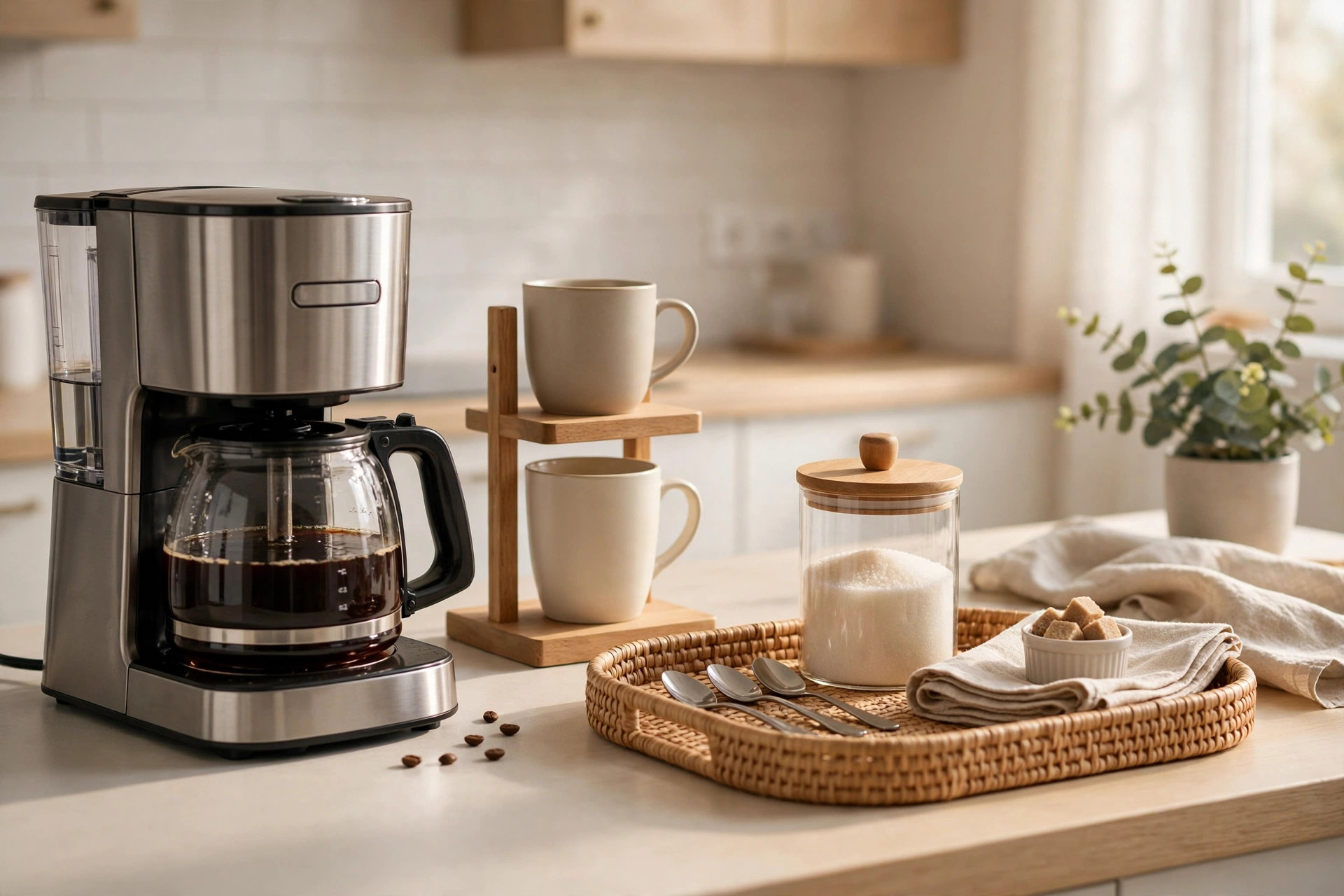
The coffee or tea zone: If your mornings start with coffee, give it a dedicated corner. Machine, mugs, sugar, filters — everything on one small tray or in one stretch of counter near an outlet. When guests visit, you point to one spot. When it’s time to clean, you lift one tray and wipe underneath. Done.
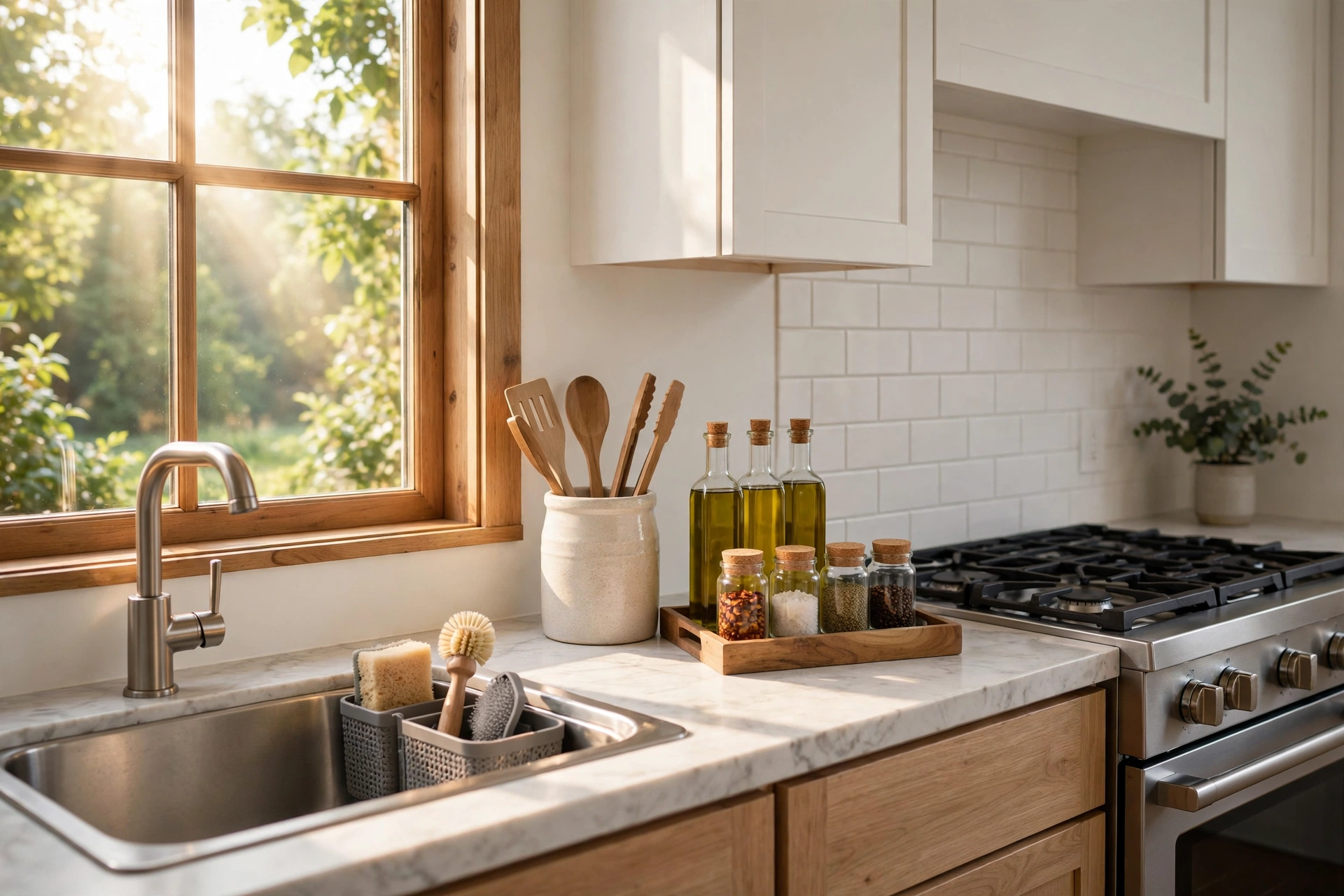
The cooking zone: Next to the stove, keep only what you grab mid-recipe — a utensil crock with your most-used tools, olive oil, salt and pepper, and maybe a small spoon rest. Everything else moves away so you actually have elbow room when a pot boils over or two pans need attention at once.
The prep zone: Protect one clear stretch of counter — ideally between the sink and the stove — as your chopping and mixing headquarters. This is sacred space. No appliance lives here permanently, no mail lands here, no exceptions. Even a two-foot clear runway changes how cooking feels.
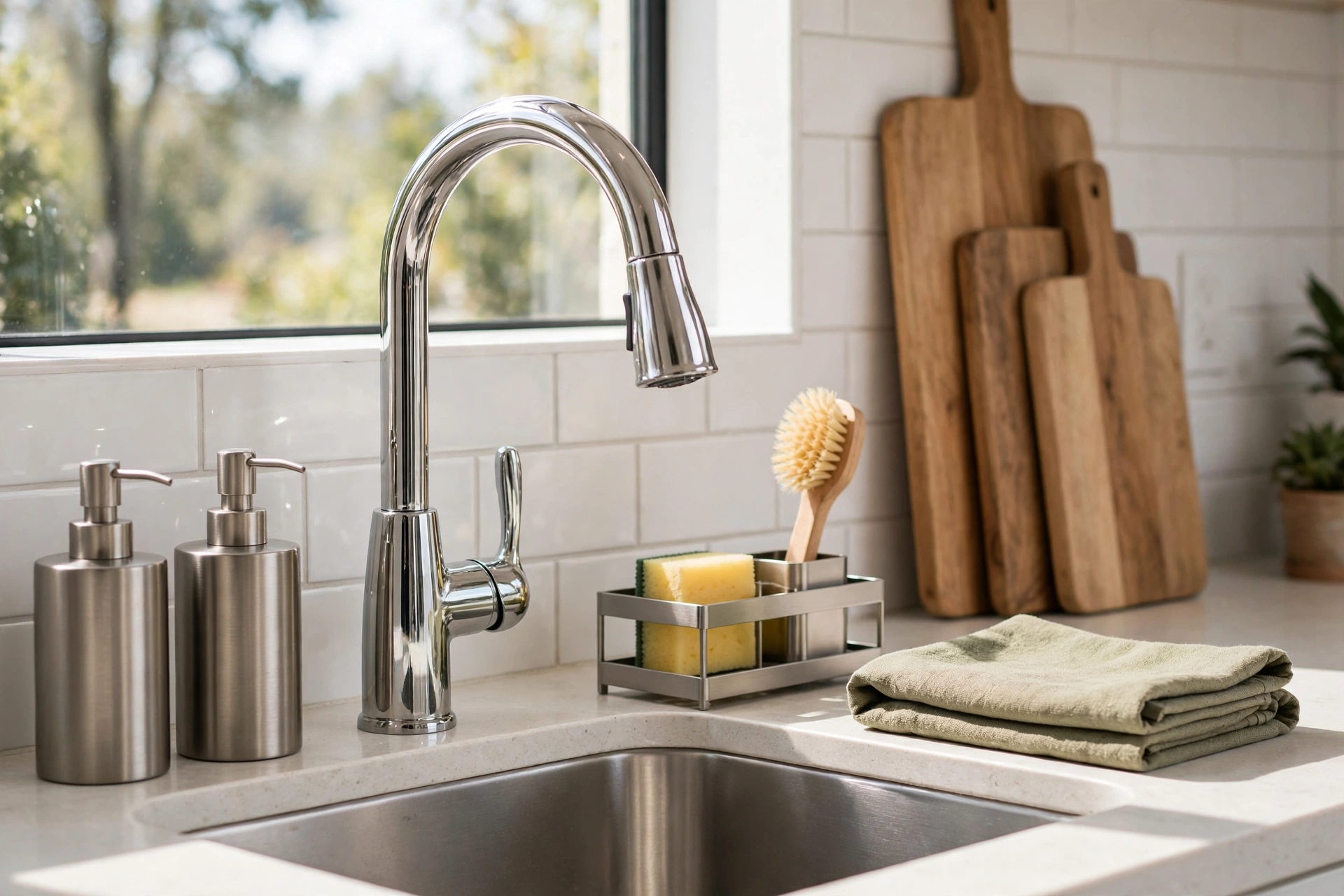
The sink zone: Dish soap, a sponge, a brush, and a drying rack or mat. That’s the whole list. Everything else near the sink is clutter waiting to get splashed.
The landing zone: If your kitchen doubles as the family’s drop zone, designate one small tray or basket near the entrance for keys, mail, and sunglasses — then empty it every night. A contained landing zone beats a counter-wide sprawl, and it trains everyone in the house where things go.
If your kitchen has an island, it deserves its own zoning plan rather than becoming the default dumping ground — our kitchen island organization ideas show how to keep that big surface pulling its weight.
Go Vertical: Make Your Walls and Backsplash Earn Their Keep
When counter space is tight, the answer usually isn’t a bigger kitchen — it’s going up. Walls, backsplashes, and the undersides of cabinets are some of the most underused square footage in the entire home, and putting them to work is one of the smartest kitchen counter organization ideas for small kitchens.
A magnetic knife strip mounted on the backsplash frees an entire drawer or counter block and keeps sharp blades safely out of reach of little hands. A simple rail with S-hooks holds cooking utensils, measuring cups, or oven mitts right where you cook — no more digging through a crowded crock. Under-cabinet hooks are perfect for mugs, especially in galley kitchens where every inch of counter is precious.
Floating shelves can turn a blank wall into storage for everyday dishes, glasses, or matching canisters. They look intentional rather than cluttered when you stick to one material or color family — a row of white bowls or clear glass jars reads as decor. Wall-mounted paper towel holders and slim spice racks get two of the messiest counter residents off the surface for good.
- Magnetic knife strip — frees drawer or counter space, keeps blades safe and visible
- Backsplash rail with hooks — utensils, mitts, and measuring cups within arm’s reach of the stove
- Under-cabinet hooks — mugs and small tools hung where they’d otherwise never fit
- Floating shelves — everyday dishes and canisters displayed neatly off the counter
- Wall-mounted paper towel holder — reclaims the corner the standing holder used to eat
Renters, you’re not left out: sturdy adhesive hooks and no-drill tension shelves give you real vertical storage without a single hole in the wall, and everything comes down cleanly when you move.
Corral the Everyday Essentials
Some things genuinely need to live on the counter — the goal was never an empty kitchen, it’s an intentional one. The trick is containment: group loose items so they read as one tidy unit instead of scattered clutter.
Put cooking oils, vinegar, salt, and pepper on a single tray near the stove. When it’s time to wipe the counter, you lift one tray instead of juggling six sticky bottles. A small lazy Susan works the same magic for spices and condiments — one spin and everything is visible, with no more knocking over the paprika to reach the cumin hiding behind it.
At the sink, a slim caddy keeps soap, sponge, and brush together and lets water drain instead of pooling into a grimy ring. A utensil crock corrals spatulas and wooden spoons; pick one that matches your kitchen’s style and it doubles as decor. Decant dish soap and hand soap into matching dispensers, and even the sink zone starts looking deliberate.
And the fruit bowl? Keep it — but make it the only bowl. One intentional bowl of fruit looks abundant and inviting. Three bowls, a bread box, and a cookie jar look like a grocery display that exploded. Decide which one earns the spot and relocate the rest.
While you’re deciding what stays out, think about what comes in: groceries need a fast path from bag to home, or they linger on the counter for days. Keep your fridge organized so perishables have an instant destination — these fridge organization ideas that keep your refrigerator tidy for good mean fewer bags stranded on the counter after every grocery run.
Win the Appliance Battle
Appliances are the biggest counter-space thieves in most kitchens, and nearly every home hosts at least one squatter. Audit yours honestly: which appliances do you actually use daily? For most households it’s the coffee maker and maybe the toaster. Everything else — the stand mixer, the blender, the slow cooker, the waffle iron — can live in a cabinet or pantry and come out for its shift.
If you have the space, an appliance garage (a countertop cabinet with a lift-up or tambour door) hides the toaster and mixer while keeping them plugged in and ready to use. No garage? Store lesser-used appliances in the cabinet closest to where you use them, so putting one away takes five seconds instead of a trek across the kitchen. The easier it is to store, the more likely you’ll actually do it.
Cords deserve a mention too. A coffee maker with a cable snaking across the counter instantly looks messy, no matter how tidy everything else is. Use small adhesive cord clips to route cables neatly along the backsplash, and set up a dedicated charging spot — a drawer with a power strip or a small station on a shelf — so phones and tablets stop colonizing your prep zone.
Don’t forget utensil overflow either. If your crock is so stuffed you can’t pull out a spatula without a wrestling match, the extras belong in a drawer, not on the counter. And if that drawer is pure chaos, this kitchen drawer organization guide that ends the junk-drawer chaos will get it sorted — because organized drawers are what keep counters from absorbing the overflow.
Small Daily Habits That Keep Your Kitchen Counter Organization System Working
Even the best organization system drifts without maintenance — but maintenance doesn’t have to mean a weekend overhaul. Three tiny habits keep counters clear indefinitely, and none of them takes more than a couple of minutes.
- The 90-second evening reset: Before bed, walk the counters with a small basket. Everything that doesn’t live there goes in the basket; put its contents away now or in the morning. Wipe the surfaces. Done. Ninety seconds tonight saves a twenty-minute excavation on Saturday.
- One in, one out: Every time something new earns a permanent counter spot — a new air fryer, a gifted olive oil set — something else moves off. This single rule stops clutter creep cold, because counters only ever hold what they can comfortably fit.
- The weekly edit: Once a week, scan your counters with fresh eyes. Is the holiday cookie tin still out? Did the vitamins migrate back? Has a stack of papers started a colony near the toaster? Return strays to their homes before they multiply.
None of this requires perfection or a personality transplant. The goal is simply a kitchen where you can always find a clear stretch of counter when you need one — and on most days, you’ll have a whole lot more than that. Systems beat willpower: when every item has a home and the reset takes ninety seconds, staying tidy stops being a project and starts being automatic.
A Calmer Counter Is Closer Than You Think
Kitchen counters are where your home’s busiest work happens — morning coffee, weeknight dinners, lunchbox assembly lines, homework spread out while pasta boils. They deserve better than doubling as a junk drawer with a view. Start with the full clear-out, build your zones, send storage vertical, corral the everyday essentials, and tame the appliance invasion. Then let the ninety-second evening reset do the quiet work of keeping it all in place.
Pick the single idea that would make the biggest difference in your kitchen and try it this weekend — not all fifteen, just one. Small, steady changes beat grand overhauls every time. And a calm counter has a funny way of making the whole kitchen feel calmer too, which makes everything that happens around it a little bit easier.
[…] single biggest change you can make to how your kitchen feels, and you can read more ideas in these kitchen counter organization ideas once the decluttering is […]
[…] share the same visual field, so a cluttered counter will undo tidy shelves and vice versa. A few kitchen counter organization ideas will help you decide what stays out permanently and what gets put away after use, for one calm look […]