
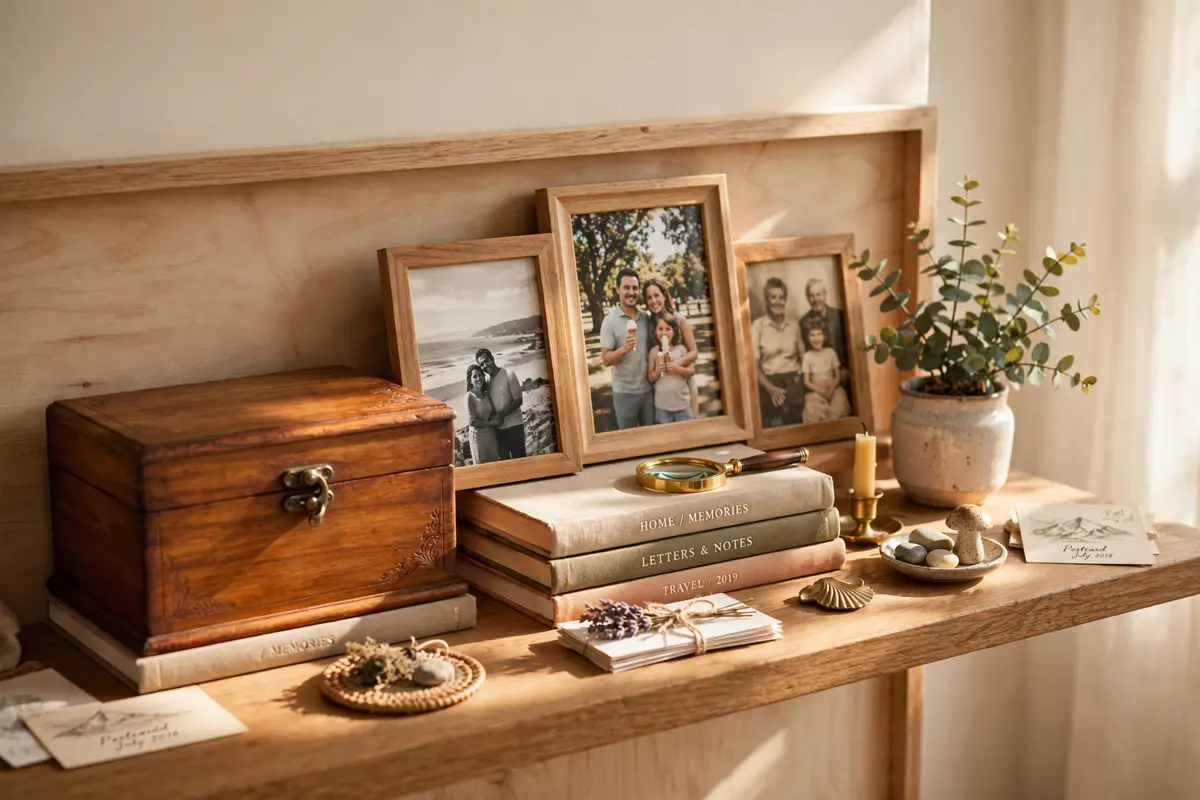

There is a cardboard box in my hall closet that I have moved four times in six years. I have never opened it in any of my new homes — I just carry it from closet to closet, taping it shut each time. Inside, as far as I remember: concert ticket stubs, a stack of birthday cards, a clay handprint my daughter made when she was four, and a sweater my grandmother knitted before she passed away. If you are learning about decluttering sentimental items, you probably have a box just like mine. Maybe it is a dresser drawer, a spare room, or a storage unit you pay for every month.
Sentimental clutter is the final boss of decluttering. You will not grieve a dented saucepan, but your dad’s toolbox or your baby’s first shoes? Every one of them whispers that throwing it away means throwing them away. So we keep everything, and the memories we meant to honor end up buried under clutter we feel guilty about.
Here is the truth I wish someone had told me years ago: letting go of an object is not letting go of the person or the memory. In fact, honoring your memories usually becomes easier with fewer things, not more. This guide walks you through a gentle, judgment-free process to sort keepsakes, choose what truly deserves a place in your home, and release the rest — without guilt and without regret.
Why Sentimental Clutter Is the Hardest to Tackle
Most decluttering advice is built around practicality: Do you use it? Would you buy it again? Those questions collapse the moment emotion enters the picture. A chipped mug fails every practicality test, but if your late husband bought it on your honeymoon, no checklist makes it easy to drop in a donation bag.
Psychologists call this the endowment effect — we value things more simply because they are ours, and the effect intensifies when the object is tied to love, grief, or identity. It helps to name what you are really wrestling with:
- Grief: Items from someone who died or a chapter of life that closed. Letting go feels like losing them twice.
- Guilt: Gifts from people you love. Tossing them feels like a betrayal of the giver.
- Identity: Trophies, uniforms, concert shirts — physical evidence of who you used to be.
- Fear of forgetting: The deep worry that if the object goes, the memory fades with it.
Here is the liberating part: none of these feelings live inside the object. Your grandmother does not live in the sweater. She lives in you. Once you test that idea and actually believe it, the physical decisions get surprisingly lighter — and the daily background guilt of the untouched boxes finally starts to lift.
Ground Rules Before You Begin
Sentimental sorting done badly ends with you crying on the floor into a box of old letters — nobody’s idea of a productive Saturday. A few guardrails change everything:
- Work in small batches. One box, one drawer, or one hour — never “the whole attic.” Emotional stamina is real and it runs out. When it does, stop. The boxes will wait.
- Do not start with the hardest thing. Warm up on low-stakes items like old greeting cards before facing a late parent’s belongings. Decision-making is a muscle; let it warm up.
- Gather by category first. Pull all photos into one pile, all letters into another, all kids’ artwork into a third. Seeing the true volume of each category makes keepers and duplicates obvious in a way scattered boxes never do.
- Set up four zones: Keep, Digitize, Give to Someone Else, and Let Go. Labeled bags or boxes on the floor keep your hands honest once emotions start talking.
- Choose your company wisely. Some people sort best alone with tea and music; others need a calm friend who will sit quietly and share memories — never someone who rushes or judges you.
Step 1: Gather Everything Into One Place
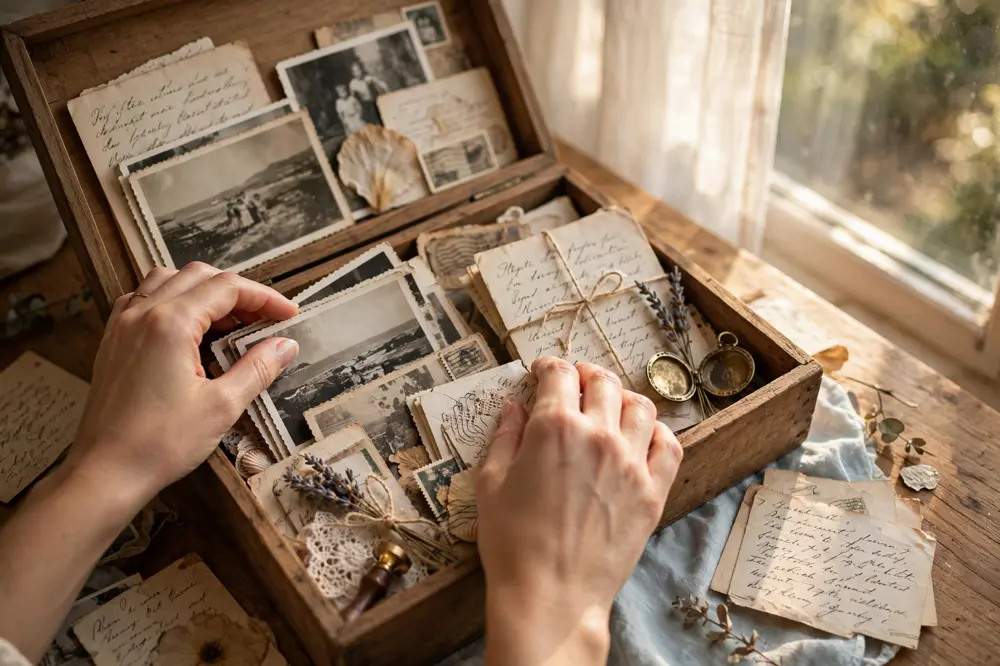
Before you decide anything, you need to see the full picture. Walk through every room, closet, attic, and storage space and pull out every sentimental item you find. Spread them on the biggest surface you have — a living room floor works beautifully.
This step is about collecting, not judging. Do not start tossing things the moment you pick them up. Just gather. You will be surprised how many “I thought I lost that” moments happen, and how many near-identical duplicates surface — five copies of the same school photo, three versions of the same vacation album.
- Include the hidden stashes: The top of the wardrobe, the bottom drawer of the desk, the box in the garage you have not opened since the move. Those forgotten spots hold a third of most people’s sentimental clutter.
- Keep a notebook nearby. Jot down the stories that surface as you gather — the who, what, and why behind each item. You will want these notes later when you decide what to keep and how to display it.
- Watch for the “I’ll do it properly someday” pile. The box of photos meant for albums, the broken clock meant for repair. Someday usually never comes — decide now whether the task is worth doing this month or never.
Step 2: Sort Into Four Zones
Now work through your gathered pile category by category — all the photos first, then all the letters, then all the kids’ artwork, and so on. Hold each item, give it one honest look, and place it in a zone:
- Keep: Items that genuinely represent your favorite memories and the people you love most. Be honest: is it the memory you cherish, or the obligation you feel?
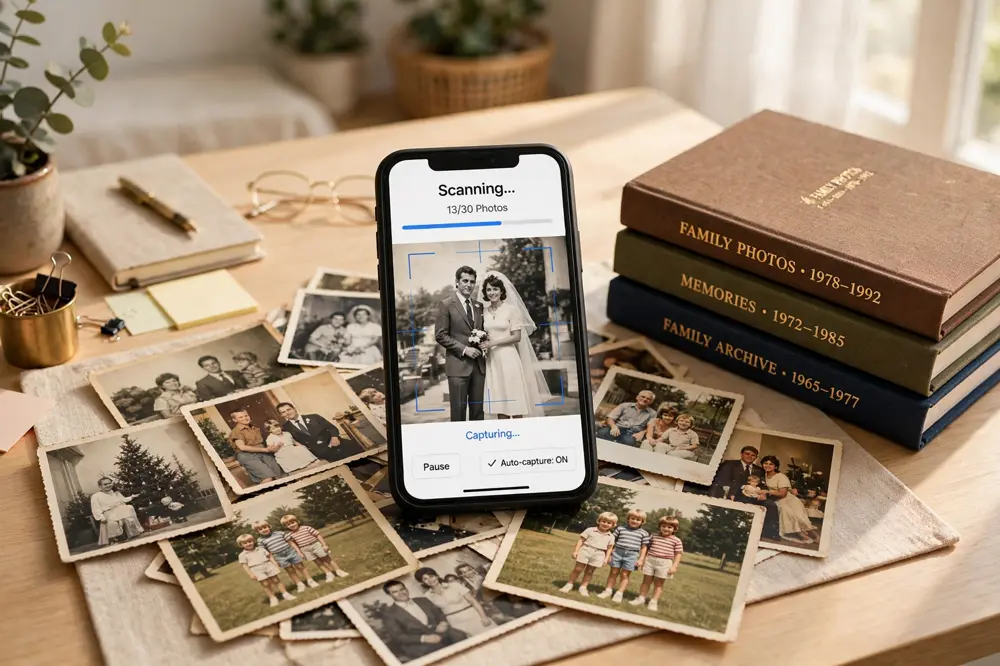
- Digitize: Photos, letters, kids’ artwork, home videos. Scanning preserves the memory in a fraction of the space — and digital copies are shareable and safe from floods and fading.
- Give to someone else: Your mother’s wedding china goes to the sibling who actually wants it. Your childhood baseball glove goes to your kid. Passing things on keeps them alive instead of boxed.
- Let go: The rest. This is the hardest zone, and it is where the process below helps most.
Step 3: The Gentle Letting-Go Process
For items you cannot bring yourself to keep but know you should release, try this ritual:
- Take a photo of the item. This single act removes 80% of the fear of forgetting. The photo lives in a dedicated “memory” folder on your phone or computer, taking up zero physical space.
- Write down the story. One or two sentences: who gave it, what it meant, why it mattered. The story is the real keepsake; the object was just its container.
- Thank it and let it go. This sounds cheesy, but a brief moment of gratitude — spoken or silent — gives your brain the closure it needs. Then donate, recycle, or bin it without revisiting the decision.
- Revisit the “maybe” box after 30 days. If you had items you could not decide on, box them and date the box. If you have not opened it in a month, you have your answer.
Step 4: Display What You Keep Beautifully
Here is the payoff: with the guilt-clutter gone, the real treasures finally get their moment. A curated shelf of ten meaningful items tells your story far better than ten boxes of everything. Ideas that work in real homes:
- The memory box: One beautiful box per family member or per era of life. When it is full, something leaves before something new comes in.
- Rotating display: A single shelf or shadow box where the featured keepsake changes monthly. Kids love this — their latest favorite gets the spotlight.
- Functional keepsakes: Your grandmother’s quilt on the guest bed, your dad’s toolbox in your workshop. Used memories beat stored memories.
- Photo books: Turn digitized photos into one or two printed books per year. They live on the coffee table, not in the attic — and they get looked at.
What to Do With Inherited Items
Inherited clutter carries the heaviest guilt. Remember: your parent did not give you their furniture to burden you — they wanted you to live well. Keep the few pieces that truly speak to you or serve your home, pass the rest to family who want them, and donate what is left to someone who needs it. The love is not in the china cabinet.
A Gentler Home, Honest Memories
Decluttering sentimental items is not about becoming cold or minimalist — it is about making room for the memories that actually matter. Start with one small box this weekend. Photograph it, write its stories, and let the rest go with gratitude. You will be surprised how much lighter the house — and the heart — feels.
For more gentle approaches to letting go, see our guides on decluttering mistakes to avoid and seasonal wardrobe decluttering.
[…] handling, and if sentimental items tend to stall your decluttering altogether, the approach in our guide to decluttering sentimental items will walk you through deciding without […]
[…] If an item has genuine emotional weight, like fabric your mother saved for you, read our guide on decluttering sentimental items without the guilt before you […]
[…] with a friend — the photo preserves the memory in a folder that takes up zero shelf space. Our guide to decluttering sentimental items walks through this photo-first approach in detail, and it works just as well for […]
[…] still keeps the memory. If you want a gentler, more detailed approach to this part, our guide to decluttering sentimental items walks through it step by […]