
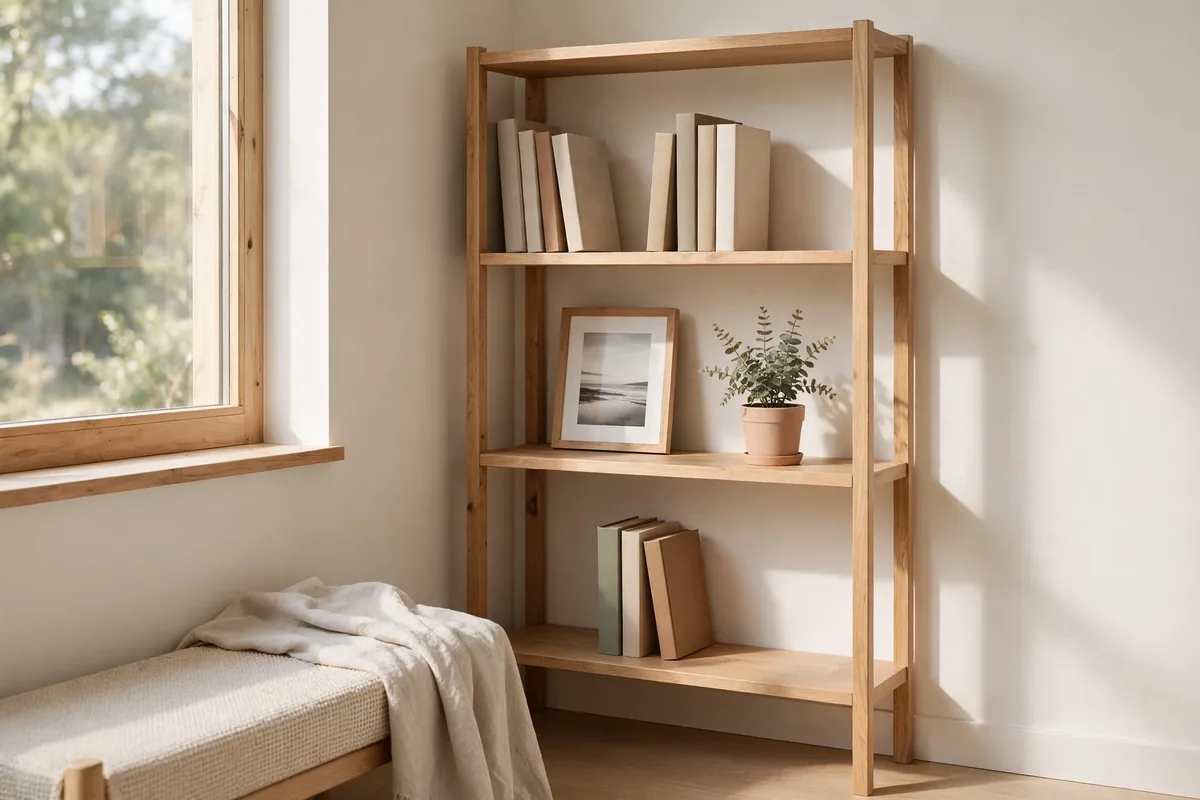

Why Book Clutter Feels Different From All Other Clutter
There is a particular kind of guilt that lives on a crowded bookshelf. You walk past it on the way to make coffee and your eyes snag on that novel your college roommate lent you six years ago, the diet book from the era of the standing desk, the two-volume history set you have opened exactly once. Every spine is a small, dusty accusation. Yet unlike the junk drawer or the overstuffed closet, you feel almost bad when you try to declutter bookshelves. Throwing away a broken mug is easy. Letting go of a book can feel like betraying the person you were when you picked it up.
Here is the truth that sets people free: when you declutter bookshelves, you are not throwing away your past, your intelligence, or your love of reading. You are making room for the books that actually matter to you right now. A shelf crammed with 200 books you will never open does not make you a reader. A small, curated collection of books you genuinely love — books you reach for, lend to friends, or simply admire — does.
I learned this the hard way during a move in my late twenties. I had eight boxes of books, and the movers quoted me extra for the weight. As I taped the lids shut, I realized I had never opened half of them. They had survived three apartments as decoration for my identity: the person who reads serious nonfiction, the person who was going to learn French. None of that was true anymore. Letting go of those books felt, to my surprise, not like loss — like relief.
If your shelves are overflowing and the thought of thinning them makes your stomach tighten, this guide is for you: zero guilt trips, and a clear plan for every book that leaves your home.
Start by Gathering Every Book in the House
This is the step everyone wants to skip, and it is the step that makes the whole thing work. Before you decide about a single book, collect them all — from the nightstand, the hallway table, the kids’ room, the office corner, the kitchen counter where cookbooks live. Pile them on the floor or the dining table where you can see everything at once.
Why? Because books hide. You might think you own forty books when you actually own a hundred and ten, spread across five rooms. Seeing the full collection at once is strangely clarifying. It turns vague unease (“I think I have too many”) into concrete information (“I own twelve books about productivity and I have finished one”).
While you gather, do this quick triage and nothing more:
- Obvious duplicates — you bought the paperback before remembering the hardcover was on the shelf. Pull them aside.
- Damaged beyond saving — mold, missing pages, spines that have given up. These are not books anymore; they are recycling.
- Things that are not books — old magazines, free conference swag, manuals for appliances you replaced years ago. They do not count as your collection and they can leave right now.
Give yourself a real afternoon for this. Rushing is what creates the pile of “maybes” that never gets resolved.

The Keep-or-Let-Go Test: How to Declutter Bookshelves Honestly
Now the real work — and it is simpler than you think. Pick up each book, one at a time, and ask yourself the questions below. There are no trick questions and no right answers. The goal is to be honest rather than aspirational.
- Have I read it — and would I read it again? Books you reread, or genuinely plan to reread, earn their place. Books you read once and enjoyed but will never touch again are memories, not tools. You do not need to keep the trophy.
- Is it a reference I actually use? Some books are tools: the sourdough bible you open weekly, the field guide you carry on hikes, the medical reference you check at work. If you consult it at least a few times a year, it stays. If you could find the same information online in thirty seconds, it goes.
- Does it match who I am now, not who I was? The French textbooks from the exchange year, the parenting books your kids have outgrown, the career-change books from a pivot you already made — these belong to earlier chapters. Thank them for their service and let them move on to someone who needs them now.
- Am I keeping it for someone else’s benefit? The expensive gift from your father-in-law, the signed first edition from a friend who checks whether it is still on your shelf — keeping a book out of obligation is clutter with extra guilt attached. The person who gave it to you would not want it to become a burden.
- Would I buy it again today? This is the single most clarifying question. If you lost it in a fire and insurance offered to replace your books one by one, would this title make the cut? If not, you already know the answer.
For books with real emotional weight — the novel your late grandmother underlined, the poetry collection from your best friend’s wedding — slow down. These deserve their own handling, and if sentimental items tend to stall your decluttering altogether, the approach in our guide to decluttering sentimental items will walk you through deciding without regret.
A note for the parents in the room: children’s books multiply like nothing else in the house. Keep the ten or fifteen your kids genuinely reach for — the worn, beloved ones with the cracked spines. Those well-loved copies are the proof of a reading household. The pristine gift books they have never opened can go to another family’s shelves.
What to Do With the Books You Release
Knowing where your books are going makes letting go dramatically easier. A “donate” pile that sits in the hallway for three months is not decluttering — it is relocating clutter. Before you start sorting, decide your destinations and, if possible, set a drop-off date within the week.
- Local libraries often accept donations and sell what they cannot shelve through friends-of-the-library sales. Call first — policies vary.
- Charity shops and thrift stores take most fiction and nonfiction in decent condition. This is your fastest option for large volumes.
- Schools, shelters, and community centers are often thrilled to get children’s books and popular fiction. A quick call to one can clear fifty books in an afternoon.
- Little Free Libraries — those charming wooden boxes on neighborhood sidewalks — are perfect for the last handful of paperbacks. Walking them over on a Saturday morning is genuinely satisfying.
- Sell the valuable ones. First editions, textbooks published in the last few years, and out-of-print titles can be worth real money. Scan barcodes on a used-book app and list anything worth more than a coffee. It is a satisfying side effect of the whole project.
- Recycle the ruined ones. Hardcovers need their bindings removed before recycling in most areas; paperbacks can usually go straight in the bin. Check your local rules once and be done with it.
One practical tip: keep a tote bag by the front door for a month after the big sort. Books you second-guess go into the bag, not back on the shelf. If you do not rescue a book from the bag within thirty days, you have your answer.
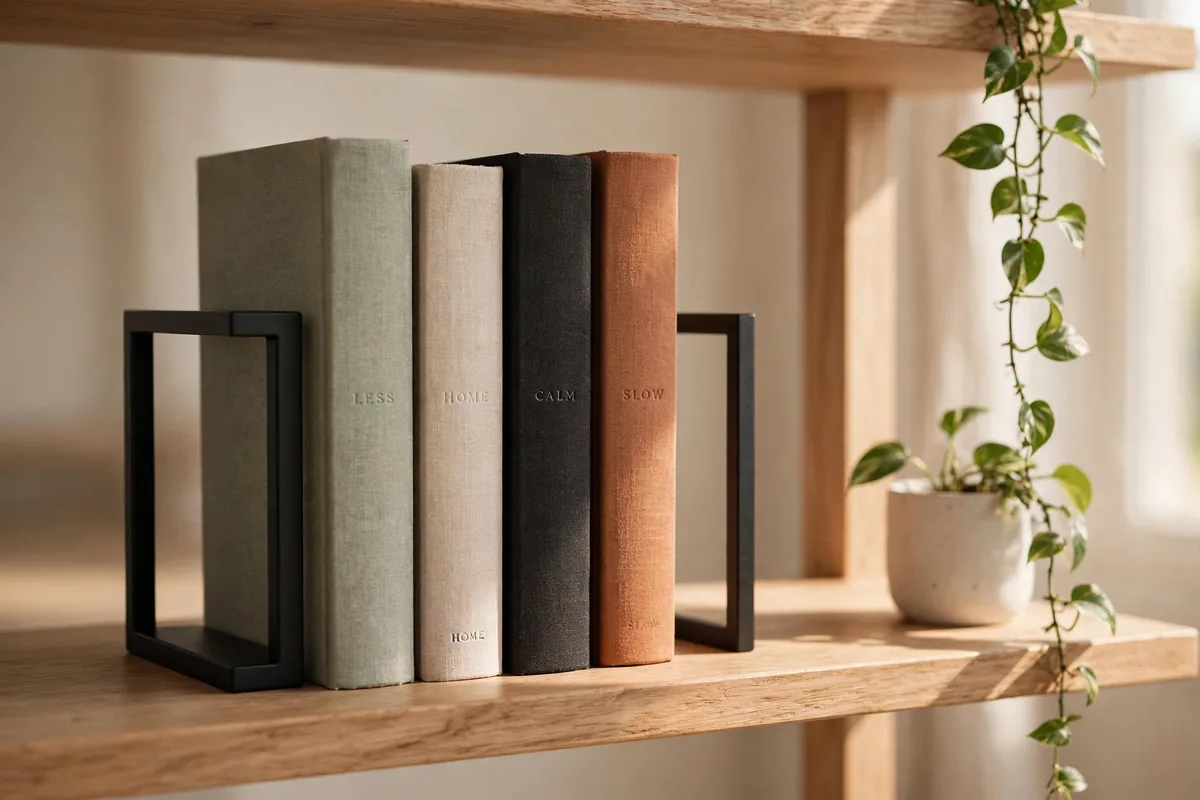
How to Declutter Bookshelves and Rebuild Them the Minimalist Way
Once the keepers are chosen, you get the fun part: putting them back. A freshly decluttered bookshelf should look like a gallery, not a warehouse. The minimalist approach is simple — leave breathing room. If every shelf is packed spine to spine, the eye has nowhere to rest and the shelf looks cluttered again within a month.
Arrange your books in a way that fits how you actually use them. Most people are happiest with one of these:
- By genre, then author — the classic system, and still the best for households where more than one person uses the shelves.
- By how you read — a small shelf of current reads and next-ups near your favorite chair, reference books near where you use them, everything else together. This is function over form, and it works beautifully.
- By size with space in between — if aesthetics matter to you, grouping by height and leaving gaps for a plant, a framed photo, or a meaningful object creates that calm, curated look without any rainbow-order fuss.
The gaps matter as much as the books. A stack of three art books laid horizontally can anchor a shelf and give you a surface for a small plant or candle. One shelf can hold nothing but your three most beautiful volumes and a photograph. This is where your bookshelf stops being storage and becomes part of the room — something a few thoughtful touches from minimalist home decor ideas can amplify even further.
And dust the shelves while they are empty. You will be amazed how much better the room smells, and a clean shelf makes the remaining books look like they belong in a bookshop rather than a storage unit.
Keep It That Way: The One-In, One-Out Shelf Rule
Here is the part most guides skip, and the reason bookshelves creep back to chaos: books keep arriving. Birthdays, holidays, bookstore browsing, “I saw this and thought of you” gifts. Without a system, you will be doing this whole project again in eighteen months.
The simplest system is the one-in, one-out rule: every time a new book enters the house, one book leaves. Not approximately, not eventually — before the new book goes on the shelf, its predecessor goes into the donation tote. It takes thirty seconds and it is the entire maintenance plan. The full reasoning behind it is covered in our one-in, one-out rule guide, and it applies to books more gracefully than to almost anything else, because books are meant to circulate.
A few more habits that keep shelves calm for good:
- Audit once a year. Pick a weekend — early January works beautifully — and do a quick pass with the “would I buy it again today?” question. An annual rhythm keeps the collection current without another marathon.
- Lean on the library and e-books for experiments. If you are not sure you will love a book, borrow it or sample it digitally first. The physical shelf becomes reserved for proven favorites.
- Give the shelf a weekly thirty-second reset. Books migrate — to the nightstand, the coffee table, the bathroom. A tiny weekly habit of putting them home keeps the visual calm you worked for. It is the same gentle rhythm behind our broader guide to maintaining a clutter-free home: small, regular resets beat heroic purges every time.
And when the next well-meaning relative asks what you want for the holidays, remember you are allowed to say “no physical books, please — but I would love a bookstore gift card.”
A Shelf That Finally Feels Like Yours
A decluttered bookshelf does something subtle to a room. You notice the books again — really notice them. The novel that changed how you see things is suddenly visible instead of buried between three self-help books you bought on impulse. Guests browse and find things worth talking about. You stop seeing a storage problem and start seeing a collection, which is what it was always supposed to be.
You do not have to own fifty books or five to be a reader. You only have to keep the ones that still speak to you. Start with one shelf this weekend — just one — and see how it feels. Chances are, you will finish the rest before the kettle boils for your second cup of tea.