
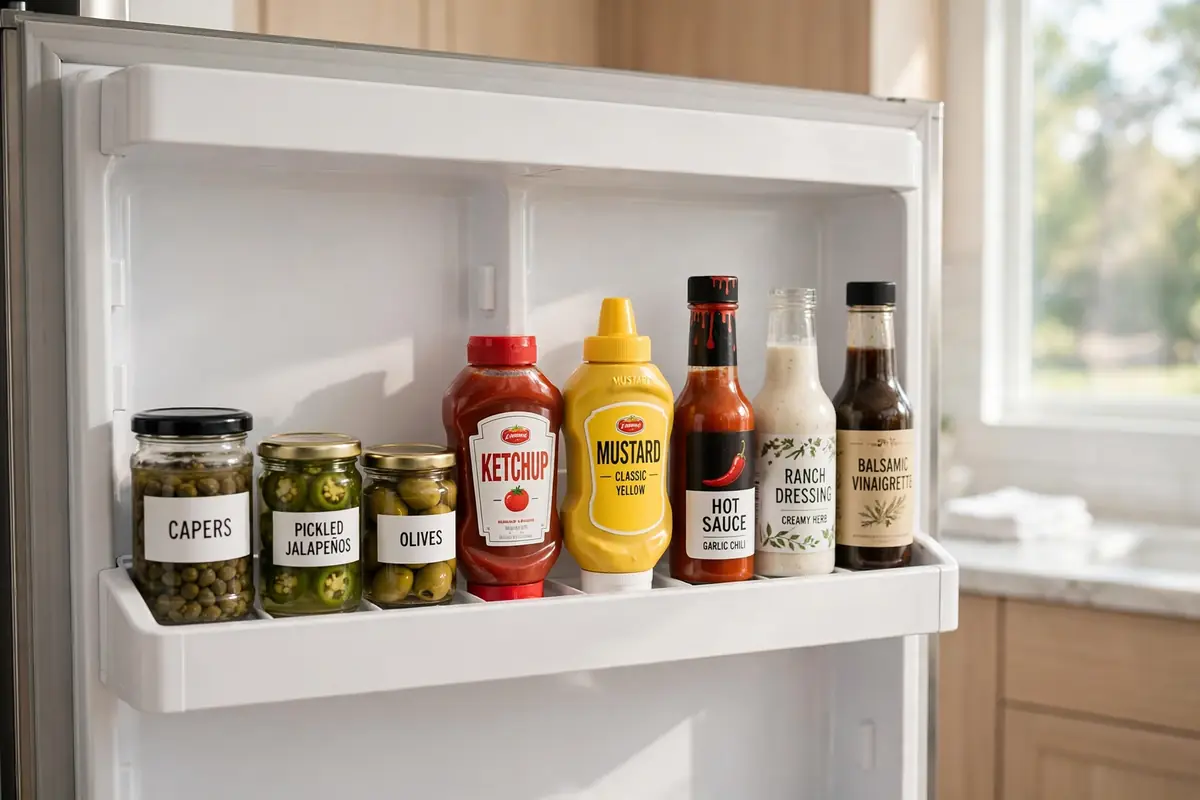

Somewhere in the back of your refrigerator door right now, there is a bottle of barbecue sauce you bought for a cookout in July, a sticky jar of apricot jam with the label half torn off, and at least two bottles of mustard that you were sure you had run out of — which is exactly why you bought the second one. This is the quiet chaos of condiment organization, and nearly every kitchen suffers from it, no matter how tidy the rest of the room looks.
Condiments are a special kind of clutter. They arrive one at a time — a bottle of sriracha for one recipe, a jar of tahini for another, a handful of soy sauce packets from the takeout place — and each one feels too useful to throw away. Six months later, the collection has colonized the entire fridge door, half the pantry shelf, and that one drawer nobody wants to open. The good news is that condiments are also one of the easiest things in the kitchen to organize, because the system is simple: group, contain, and maintain. Let me walk you through it.
Start With a Condiment Audit (Yes, Really)
Before you buy a single bin or turntable, pull every condiment out of everywhere — the fridge door, the pantry, the cabinet above the stove, the junk drawer where the takeout packets live. Line them up on the counter. Yes, all of them. The first time I did this, I found three bottles of ketchup, two open jars of salsa, and a collection of soy sauce packets that could have stocked a small restaurant.
Now be ruthless, because most of us keep condiments far past their prime. Check the dates and trust your senses:
- Opened mustards, ketchups, and vinegar-based sauces last 6–12 months in the fridge; toss anything separated, off-smelling, or dated before last year.
- Opened mayonnaise, dairy-based dressings, and anything creamy get about 2 months after opening — these are the ones that quietly turn on you.
- Opened salsa, pesto, and pickles last a few weeks to a couple of months; if there’s mold or fizz, it’s gone.
- Shelf-stable staples (unopened hot sauce, soy sauce, vinegars, honey) last ages, but pantry condiments like cooking oils and nut-based sauces can go rancid — give them a sniff.
Combine duplicates into one bottle where you can, recycle the empties, and wipe down the survivors with a damp cloth. You’ll be amazed at how much lighter the collection feels before you’ve even organized anything. This same purge-first habit is the backbone of any tidy kitchen — it’s the reason a proper fridge organization routine always starts with emptying the shelves first.
Zone Your Bottles: The Condiment Organization System That Actually Works
Here’s the insight that changes everything: don’t organize condiments alphabetically or by size. Organize them by how you use them. Create zones based on meals or cuisines, and you’ll stop hunting for the right bottle while dinner goes cold.
In the fridge door — which is condiment headquarters for most of us — dedicate each shelf or section to one zone:
- The sandwich shelf: mayonnaise, mustards, pickles, relish, and sandwich spreads, all in one place so lunch assembly takes seconds.
- The global shelf: soy sauce, fish sauce, chili crisp, sriracha, hoisin, and rice vinegar together, so your stir-fry nights don’t involve a treasure hunt.
- The breakfast shelf: syrups, jams, jellies, and peanut butter — the things that never travel beyond the toast.
- The dressing shelf: salad dressings, marinades, and dips grouped together and always stored upright.
If a household member has their own condiment obsession — my partner’s collection of hot sauces is genuinely a hobby — give that its own zone too, so it stops bleeding into everyone else’s space. Small clear bins (3–4 inches wide, the kind with non-slip bases) corral each zone so bottles don’t topple every time the door swings. And label the bins, not the bottles: a simple “sandwich” or “Asian sauces” tag on the front of each bin is all it takes for the whole family to put things back where they belong.
Turntables, Risers, and Bins: The Tools Worth Buying
You don’t need a drawer full of gadgets, but three tools genuinely earn their place in any condiment setup:
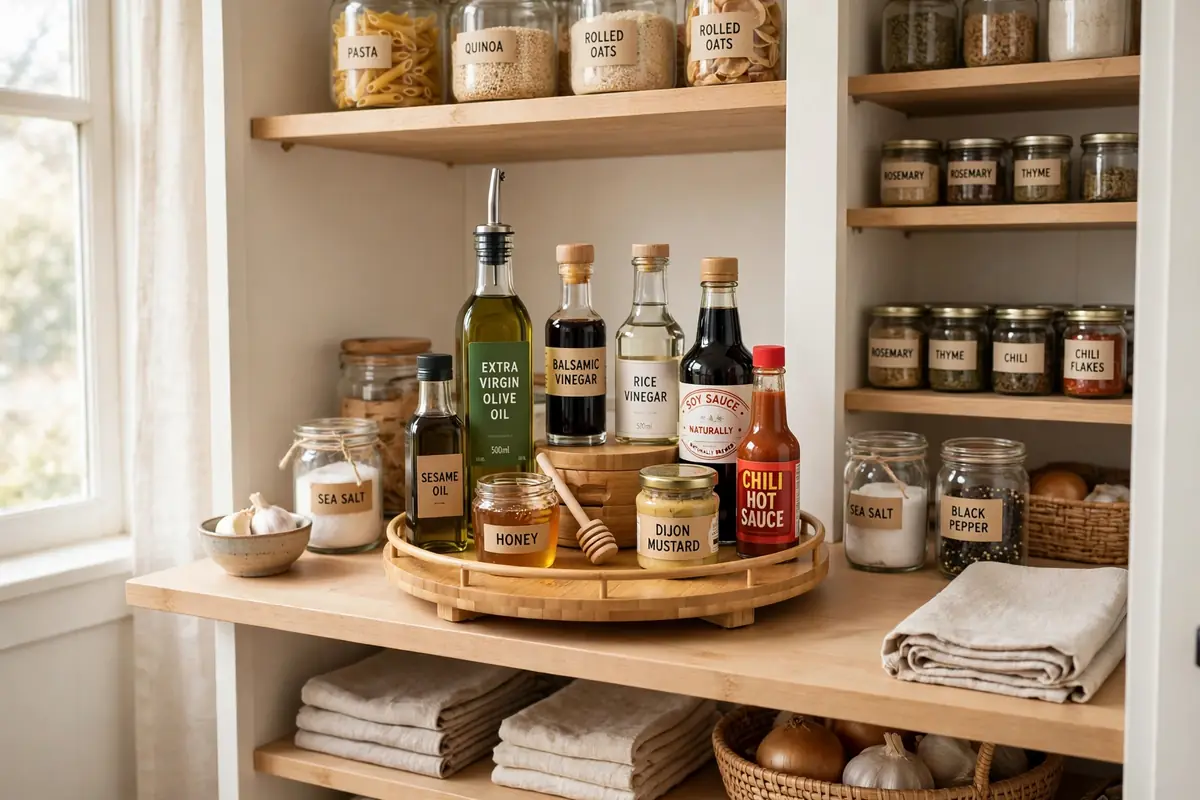
A lazy susan turntable is the single best condiment tool for deep shelves or pantry cabinets. One spin brings the bottle at the back to the front — no more finding two of everything because the first one was hiding behind the cereal. For a fridge shelf, pick one around 10 inches with a raised rim so bottles don’t slide off mid-spin. For pantry shelves, a turntable dedicated to non-refrigerated condiments — olive oil, vinegar, honey, worcestershire sauce — keeps daily cooking essentials at arm’s reach without the pile-up.
Tiered risers solve the tall-bottles-hiding-short-jars problem. Place the riser at the back of a shelf and shorter items in front, and suddenly you can see every label without moving a thing. They work beautifully in pantry cabinets for shelf-stable condiments and in the fridge for the rows of jam jars.
Stackable clear bins are for the loose ends: dressing packets, taco sauce sachets, and all those small tubes that otherwise scatter. If your condiment collection spills over onto the pantry door, narrow over-the-door racks with small bins do the same job vertically — worth every penny in a small kitchen.
Taming the Takeout Packet Stash
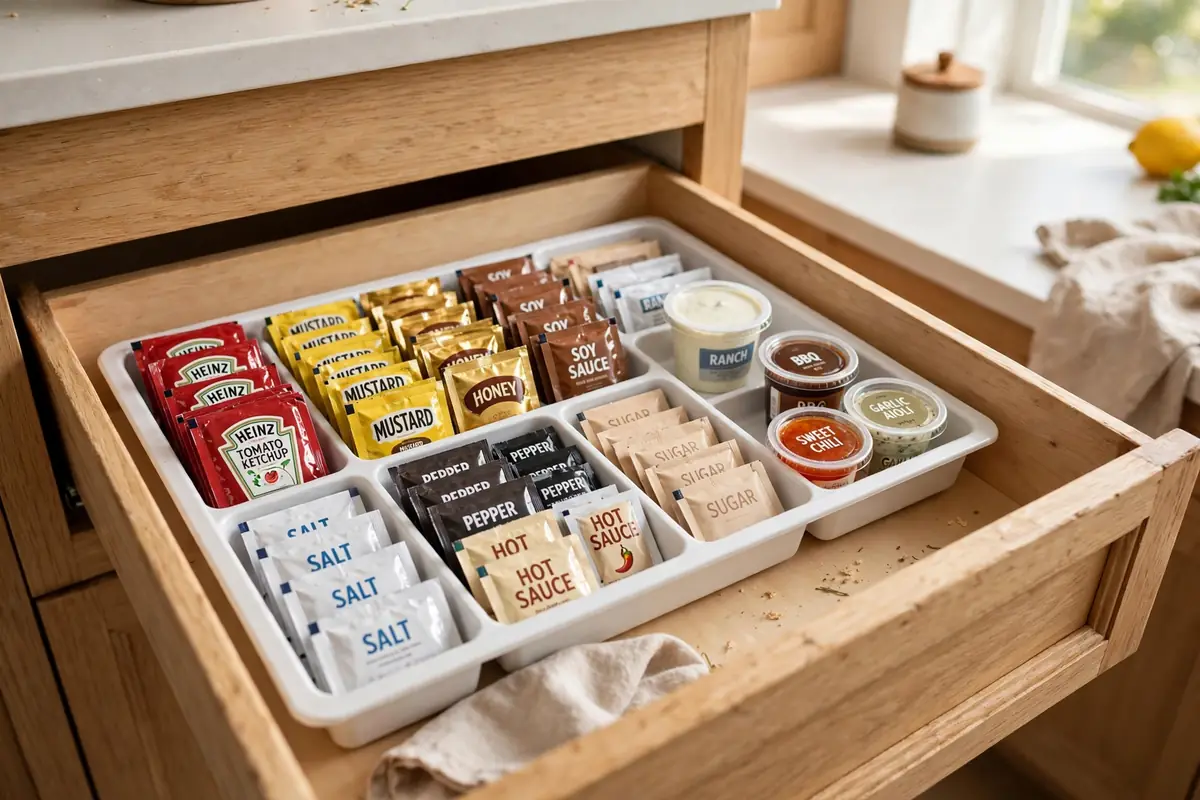
Let’s talk about the drawer full of ketchup packets, soy sauce fish, and plastic tubs of duck sauce, because almost everyone has one. Packets are the dandelions of the condiment world: they multiply when you’re not looking.
The trick is containment plus a strict cap. A small compartment organizer — the kind made for tea bags works perfectly — gives each type of packet its own slot. One slot for soy sauce, one for ketchup, one for hot sauce, one for salt and pepper. When a slot overflows, that’s your signal: stop taking packets home. Keep the organizer in a single drawer or mount a suction-cup caddy inside a cabinet door so the packets never colonize a whole shelf again.
And use the first-in, first-out rule: when you bring new packets home, drop them at the back and take from the front. Packets last a long time, but the ones living in a warm car glove box for a month are not worth keeping. While you’re at it, apply the same packet discipline to the little sauce tubs and dipping cups — if you haven’t touched them in a month, toss them, because you’ll get fresh ones with the next order anyway.
Pantry Condiments That Never Needed the Fridge
A surprising number of fridge-door overcrowders don’t need to be refrigerated at all. Moving them out frees up serious door real estate:
- Hot sauce, soy sauce, and vinegar are high-acid and perfectly happy in the pantry after opening.
- Honey actually crystallizes faster in the fridge — it belongs in the pantry, lid sealed.
- Unopened anything — jars, cans, bottles — should stay in the pantry until the seal is broken.
- Cooking oils and vinegars live near the stove or on a pantry turntable, not fighting ketchup for fridge-door space.
The rule of thumb: the fridge door is the warmest part of the fridge, so reserve it for high-acid, preservative-heavy items like mustard, ketchup, and pickles that tolerate temperature swings. Dairy-based dressings and anything creamy belong on a colder middle shelf instead. Moving the pantry-safe condiments out also pairs beautifully with a broader pantry reset — deep shelves in particular benefit from the same one-touch-access logic as your deep pantry shelf strategy.
The 5-Minute Monthly Reset
Half-empty bottles are condiment clutter’s sneakiest form. You can’t tell how much is left, so you buy another one, and now there are two. Make decanting part of your monthly routine: pour the dregs into one container, recycle the empty, and the duplicates disappear at the source. Same goes for those nearly-empty jam jars — combine, recycle, done.
A label maker (or just painter’s tape and a marker) pulls more weight here than anywhere else in the kitchen. Label each zone bin, and mark any homemade or decanted jar with the contents and the date it was opened. Nobody opens the fridge and wonders what’s in “the mystery jar” anymore. The same labeling instinct that keeps your spice cabinet from becoming a graveyard of faded jars works just as well on condiments.
Once a month — tie it to your grocery run — spend five minutes on your condiments:
- Toss anything expired, off-smelling, or separated beyond saving.
- Combine duplicates and wipe sticky bottle necks with a damp cloth.
- Check the packet drawer: recycle the overflow, keep the slots within their caps.
- Put anything that wandered back into its zone bin.
That’s it. Five minutes, and the system holds. What you’ll notice after a month or two is the side effect nobody talks about: you stop buying duplicates, which means you stop wasting money and food. A tidy condiment shelf isn’t just prettier — it quietly cuts your grocery bill and your food waste at the same time.
The sticky bottle tower in your fridge door didn’t appear overnight, and it doesn’t need a full weekend to fix. An hour of auditing, an afternoon of zoning, and a five-minute monthly habit are all it takes to turn the mess into a system. Your future self — the one making a sandwich in forty seconds flat, mustard found on the first try — will be very glad you did.
[…] problem that plagues so many pantries. For more ideas on keeping small bottles under control, these condiment organization ideas work beautifully for oils and vinegars too, since the bottles are often the same size and […]