
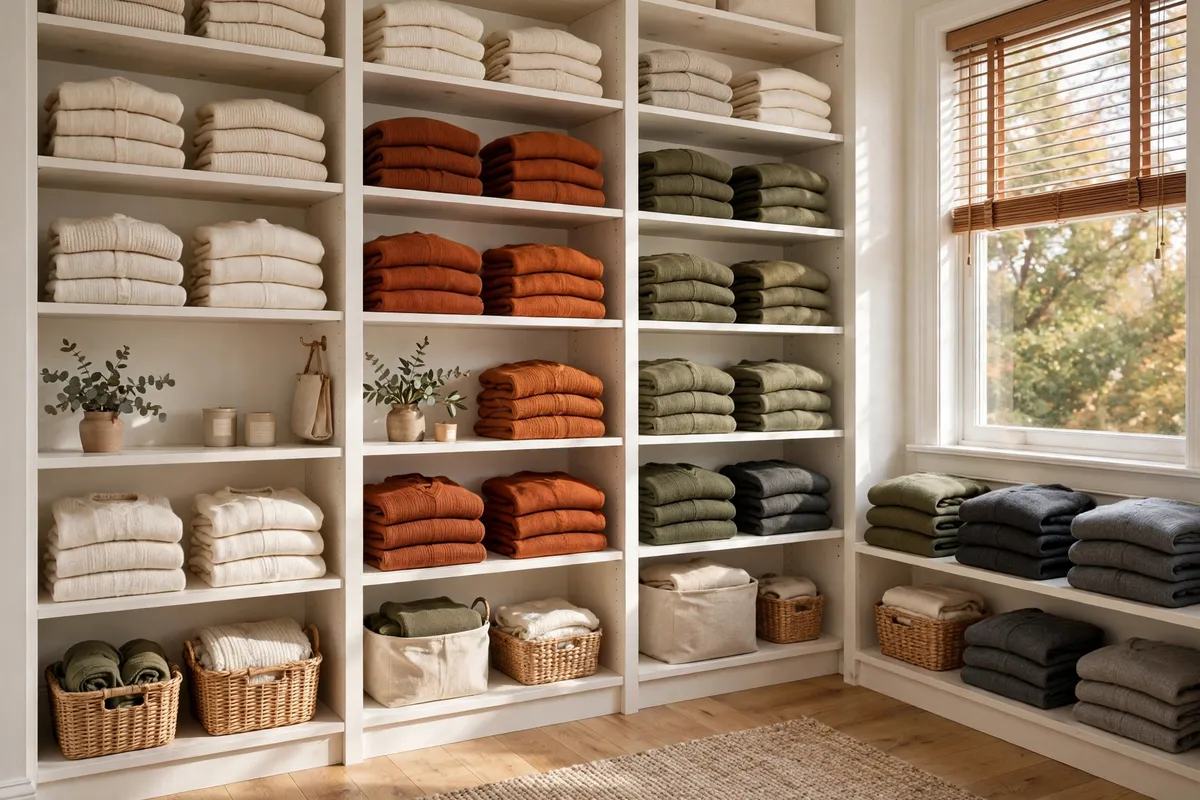

Every October, the same quiet disaster repeats itself in my closet. The air turns crisp, I reach for my favorite chunky cardigan — and find it wedged at the back of a shelf, stretched at the shoulders from hanging on the wrong hanger all summer. If that scene feels familiar, these sweater storage ideas are for you. Sweaters are awkward things to store: too bulky to hang like shirts, too heavy to stack like tees, and too expensive to let them pill into oblivion. But with a few deliberate systems, you can keep every knit in your wardrobe neat, visible, and ready to wear for years.
These systems are all fixable — and you don’t need a bigger closet to do it. Most sweater problems aren’t space problems; they’re system problems. Here’s what actually works, broken down by closet type and sweater type.
Why Sweaters Deserve Better Than a Hanger
Let’s start with the rule every professional organizer will tell you: never hang sweaters on standard hangers. Gravity pulls heavy knit fabric down through the week, stretching the shoulders and neckline until the garment permanently loses its shape. This happens slowly enough that you don’t notice until your $80 cashmere blend looks like it belongs to someone twice your size.
Two exceptions: thin, lightweight sweaters — fine-gauge cotton or merino — can be draped over a padded hanger folded across the bar (the “fold, don’t pierce” method). Structured cardigans with sturdy shoulder seams also survive hanging better than slouchy pullovers. Everything else? Fold it.
Folding is the foundation of every sweater storage idea in this guide. A flat, consistent fold (shoulders in, sides to center, fold in thirds) makes sweaters stackable, drawer-friendly, and easy to see. It takes about twenty seconds per sweater — less time than it takes to hunt for the one you lost in the chaos.
The 3 Golden Rules of Sweater Storage That Actually Last
Before we get into specific systems, there are three principles that separate a closet that stays tidy from one that falls apart by December:
- Visibility beats neatness. A perfectly folded stack is useless if you can’t see what’s in the middle. Every system below keeps sweaters visible — through file folding, clear fronts, or labeled bins — because the sweaters you can’t see are the sweaters you never wear.
- Containment prevents collapse. Sweater stacks taller than four or five sweaters always topple. Bins, dividers, and shelf cubbies give each stack physical walls, so pulling one sweater out doesn’t trigger an avalanche.
- Weight goes low, light goes high. Chunky cable knits are heavy and get squished; place them lower where they can’t compress thinner sweaters. Lightweight knits can live on upper shelves without damage.
Keep these three in mind and almost any storage setup will work. Ignore them and even expensive closet systems dissolve into sweater soup.
The Best Sweater Storage Ideas for Closet Shelves
Shelves are the natural home for folded sweaters — flat surface, easy reach, no door mechanism to fight. If your closet already has shelving, you’re halfway there. The trick is dividing those wide shelves so each stack stays contained.
Use shelf dividers to create “cubbies”
Clear acrylic or white metal shelf dividers slide right onto existing shelves and instantly create defined bays for sweater stacks. One bay per stack, two to four sweaters per bay depending on thickness. The dividers stop stacks from leaning into each other, and you can pull a sweater from the middle of a stack without the whole thing sliding sideways. If you have a walk-in closet with wide shelving, dividers are probably the single highest-impact upgrade you can make.
Try a hanging closet organizer for vertical space
If your closet has more hanging rod than shelf space — common in reach-in closets — a fabric hanging organizer with six or eight cubbies turns empty air into sweater storage. Fold sweaters into each cubby, two or three per slot for thicker knits. Choose a organizer with sturdy, box-shaped cubbies rather than soft sling-style shelves, which bow under weight and squeeze everything together. For rental closets you can’t drill into, a hanging organizer hooks right over the rod and is completely damage-free.
Group by weight and color within each section
How you arrange sweaters within the shelves matters almost as much as the containers. Sort chunky sweaters together and lightweight knits together — mixing them means thin sweaters get crushed. Within each weight group, arrange by color, lightest to darkest. It takes five extra minutes on setup day and makes getting dressed in the morning genuinely faster, because you can scan a shelf like a rainbow instead of digging through a pile.
Dedicate one shelf to “this week” sweaters
Here’s a small trick that solves the mid-week mess: keep one shelf bay or one end of a shelf for the sweaters you’re actually wearing this week. Monday’s cardigan, Tuesday’s pullover — when you get home, refold it loosely and set it back in the “current” zone instead of trying to wedge it back into its permanent spot. It stays accessible, you don’t disturb your neat stacks daily, and Sunday night you do a quick five-minute reset of just that one zone.
Drawer and Bin Systems for Bulky Knits
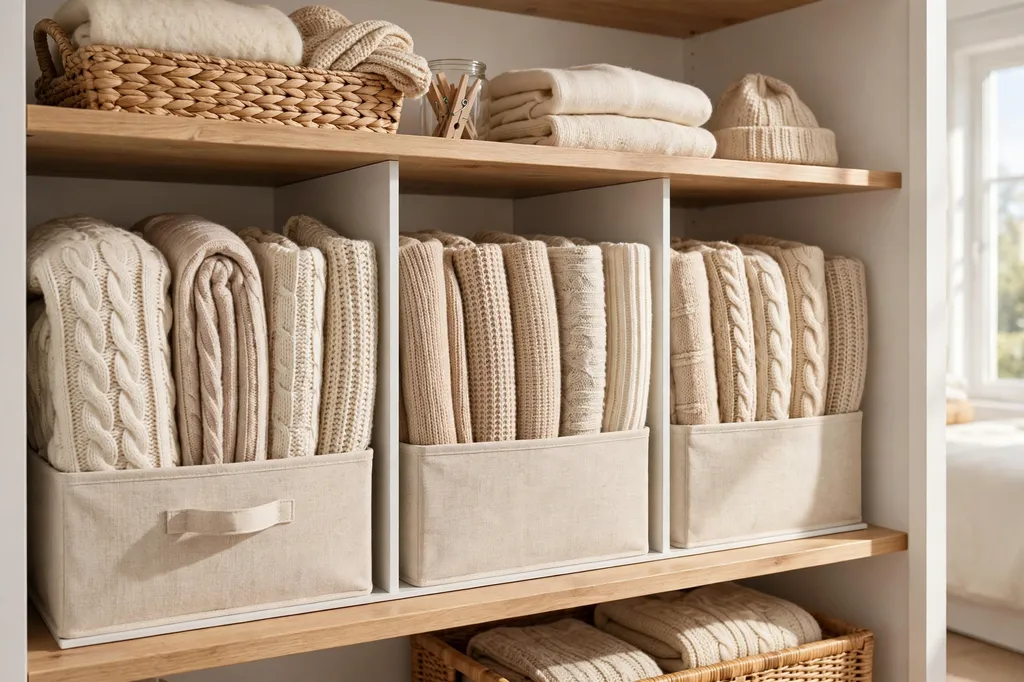
Drawers are sweater storage gold — but only if you use them right. A deep drawer with sweaters stacked flat on top of each other is a black hole: you always wear the top one and forget everything below. The fix is file folding, a method where sweaters are folded into rectangles and stored vertically, like files in a cabinet, so every single one is visible from above.
File folding takes practice, but the payoff is real. You can fit more sweaters in less space, and every morning you see all your options at once. For thin sweaters it works perfectly. For very chunky knits that won’t stand upright, add spring-loaded drawer dividers or small fabric bins inside the drawer to keep the rows standing.
- Use open bins inside deep drawers. Place one rectangular fabric or plastic bin per sweater category (work cardigans, weekend pullovers, dressy knits) inside a deep drawer. File-fold the sweaters into the bins. This doubles as a divider system and makes it easy to pull out a whole category — like when you’re packing for a trip.
- Add drawer dividers for shallow drawers. Bamboo or plastic dividers turn a wide dresser drawer into lanes. Two chunky sweaters per lane, file-folded. If your sweaters live in a dresser rather than the closet, our guide on how to organize a dresser has more drawer-specific layouts that pair perfectly with this method.
- Avoid wire or rough-textured bins. Sweaters snag. Choose smooth fabric, acrylic, or plastic bins — rattan and seagrass look beautiful but will catch on knit fibers, especially cashmere and loose-weave wool.
- Label the bins. A piece of masking tape and a marker is all it takes. “Chunky knits,” “cardigans,” “turtlenecks” — labels keep the system alive long after the initial organizing energy wears off.
Small Closet? These Sweater Storage Ideas Save Serious Space
If your closet is small, sweaters can feel like space-hogging monsters — a chunky cable-knit takes up the room of four folded t-shirts. A few space-first strategies can free up surprising amounts of room without making you part with a single sweater.
First, vacuum-seal only your true off-season sweaters. Vacuum bags compress a bulky winter pile to a fraction of its size, but constant compression is hard on wool, so don’t vacuum-seal sweaters you’re wearing now.
Second, use the top shelf for bulky sweaters. The shelf near the ceiling is awkward for daily grabs but perfect for thick sweaters you rotate weekly. Store them in a fabric bin or lidded box up there, and use a small step stool if needed. This frees your eye-level shelves for the sweaters you reach for every day.
Third, roll instead of fold for travel and gaps. Rolling bulky sweaters tightly reduces their volume compared to a loose fold — useful for packing a suitcase or fitting one more sweater into a stuffed bin. It wrinkles some fabrics, so test with a sweater you care less about first.
Finally, if hats, scarves, and bags are eating your shelf space, moving them to their own homes — like a dedicated accessory zone for scarves and bags — can free an entire shelf for knits. Sweaters need the premium shelf space more than a stack of belts does.
Seasonal Sweater Storage: Storing the Off-Season Pile
Twice a year, half your sweaters become dead weight — thick winter knits in June, lightweight cardigans in January. Off-season storage done right means your current closet stays lean and your stored sweaters come back fresh. Off-season storage done wrong means moth holes and a musty smell you’ll spend hours fixing.
Always wash before storing. Body oils, perfume, and tiny food stains are invisible to you but irresistible to moths. Wash or dry-clean every sweater before it goes into long-term storage, and make sure it’s completely dry — trapped moisture is how mildew starts.
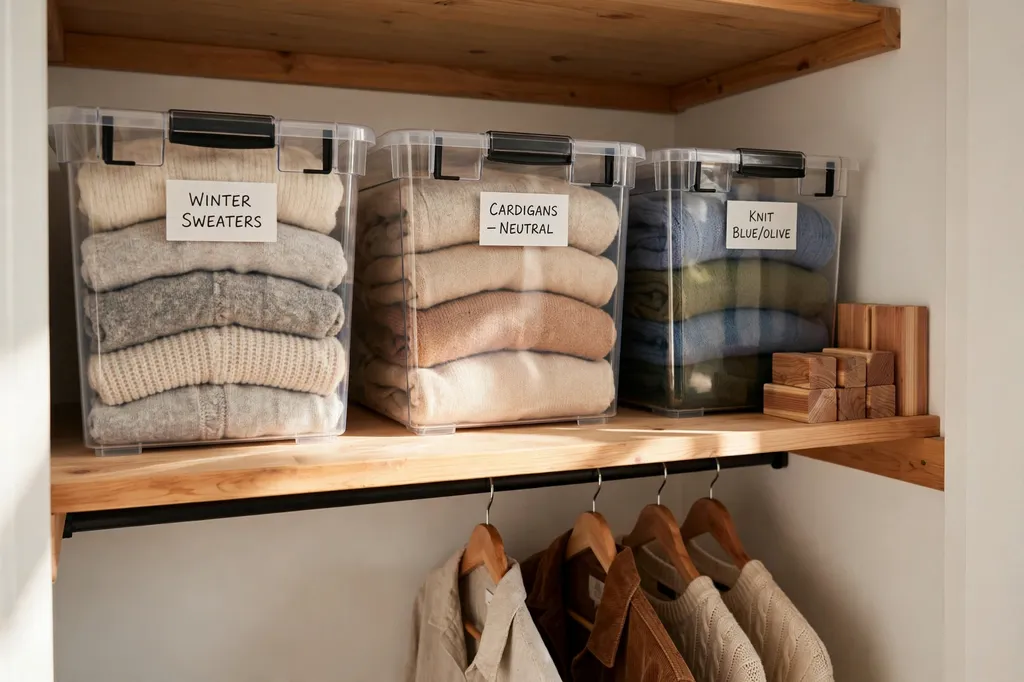
Choose the right container. Breathable fabric bins or cotton storage bags are best for wool and cashmere because they allow air circulation. Clear plastic bins work too and make it easy to see what’s inside; just don’t seal them airtight in a damp space. Under-bed storage bags are perfect for this — they use otherwise dead space and keep off-season knits accessible when the weather turns. If you’re doing a full seasonal closet rotation, storing the off-season sweaters as a group keeps the swap fast.
Add moth protection. Cedar blocks, cedar rings, or lavender sachets repel moths naturally. Replace or sand cedar blocks once a year, since the scent fades. If you’ve ever had a moth problem, consider sealing wool sweaters in zip bags for the season — it’s not glamorous, but it works.
Label with the season and contents. “Winter sweaters — chunky knits” on a bin saves you from opening four boxes next October.
Keeping the System Alive All Season
A sweater organization system only works if you maintain it — and maintenance has to be almost effortless, or it won’t happen. Build these two tiny habits into your routine:
- The two-second fold. You don’t need a perfect department-store fold every day. When you take a sweater off, fold it roughly in thirds and put it back. A loose fold takes seconds and prevents the pile from growing. Save the crisp folds for the seasonal reset.
- The Sunday five-minute reset. Once a week, take five minutes to straighten the sweater shelves — restack anything leaning, return “this week” sweaters to their homes, and spot-check for stains or pilling. Five minutes a week beats a three-hour reorganization in February.
- Depill as you go. Keep an electric fabric shaver or sweater comb near the closet. Pills form naturally from friction; removing them monthly keeps sweaters looking new for years. It’s a small act of care that extends a sweater’s life dramatically.
If you notice a particular system failing — stacks sliding, bins overflowing — don’t blame yourself; adjust the system. Add a divider, split an overfull bin, move the least-worn sweaters to the top shelf. The system should adapt to your real life, not the other way around.
A Cozier Closet, One Fold at a Time
Organizing sweaters isn’t really about sweaters — it’s about making the small daily ritual of getting dressed feel easy instead of frustrating. When every knit has a home you can see and reach, you stop wasting money on duplicates of things you already own, you wear what you love instead of what’s on top, and your favorite sweaters stay beautiful season after season. Pick one idea from this guide — a shelf divider, a labeled bin, a file-folded drawer — and start there. Your October self will thank you.
[…] belong in neat stacks on shelves or in cubbies. If you want to do this properly, our guide to sweater storage ideas for a tidy closet walks through folding methods that keep knits from stretching and look genuinely good on open […]
[…] Sweaters deserve special care, since they stretch and lose their shape if hung or squashed; these sweater storage ideas for a tidy closet explain how to fold and stack knitwear so it stays looking good season after […]