
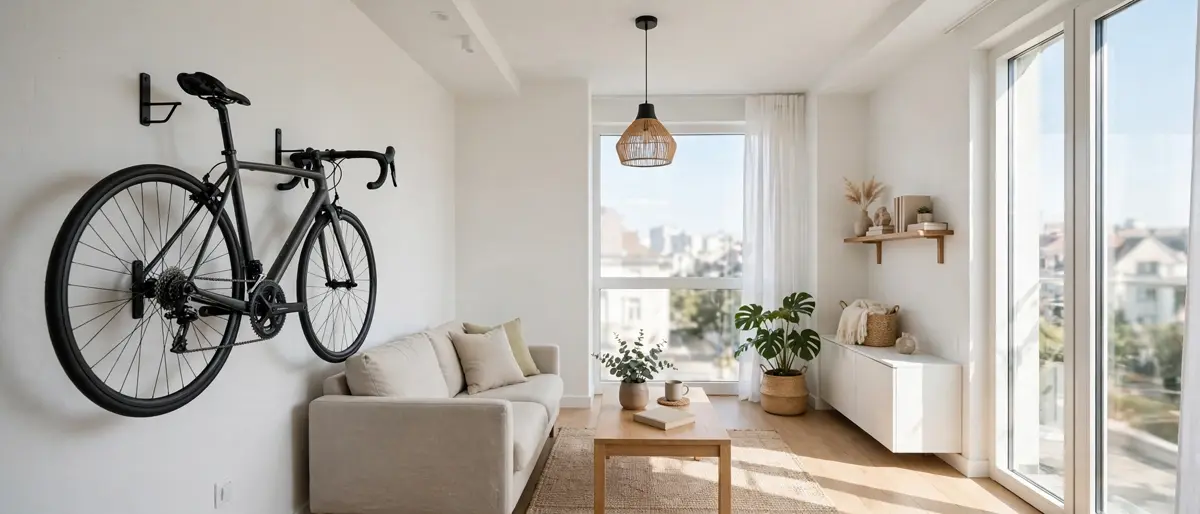

A bike is one of the best things you can own in a small apartment — and one of the hardest things to live with. It saves you money on transit, it gets you out of the house, and then it comes home with you and swallows your hallway. These small apartment bike storage ideas are for the real-world version of that problem: the studio where your bike sleeps next to your sofa, the rental where you cannot drill a single hole, the e-bike that weighs as much as a piece of furniture. The right setup keeps your wheels out of the way without turning your home into a garage.
Measure Your Bike’s True Footprint Before You Buy Anything
A bike parked flat against a wall looks small. It is not. A typical adult bike is about 70 inches long and takes up roughly 8 square feet of floor when it leans casually in a corner. Two bikes? Nearly a 4-by-4-foot zone of your apartment is gone.
Take three minutes with a tape measure. Note the handlebar width (the widest point, usually around 26–28 inches), the total length, and the height. Then measure your candidate storage spot — the wall segment, the hallway width, the gap behind your door. The number-one mistake in apartment bike storage is buying a clever mount and discovering the pedals still jut into the walkway. If you have an e-bike, add the battery to your math: they run 45 to 70 pounds, so whatever holds it needs a real weight rating, not an optimistic one.
This quick measuring habit pairs well with the way you plan the rest of a compact home. If you have not yet worked through your overall layout, these studio apartment storage ideas that make a small space work hard will help you see where a bike can live without eating your living area.
Small Apartment Bike Storage Ideas: Go Vertical With Wall Hooks
The fastest square-footage win is getting the bike off the floor. A simple wall hook rated for 50 pounds lets you hang a standard road or hybrid bike vertically by its front wheel, and the floor footprint shrinks from 8 square feet to about 2. The bike slides into the room’s dead vertical space — the air above your floorboards — and your hallway walkway stays open.
A few practical notes from people who actually live with these:
- Swivel mounts beat fixed hooks. A swivel mount lets the bike rotate flat against the wall after you hang it, so the handlebars do not block the room. They cost more, but the daily convenience is worth it.
- Stud placement decides the spot. A bike bouncing on drywall anchors is a slow-motion accident. Find the stud with a stud finder (or the tap-and-knock method), and mount into it.
- One hook per wheel is cleaner for couples. Two bikes on one wide horizontal bar work, but alternating the hang heights keeps handlebars from tangling.
- Protect the wall. A small adhesive rubber pad or a scrap of carpet behind the tire stops the slow buildup of scuff marks.
If you drill into anything at all, make it worth it — one good wall hook outperforms three mediocre floor stands for daily convenience.
No-Drill Renter Options That Actually Hold
Not allowed to drill? You are not out of options. The no-drill solutions have gotten genuinely good, and some are better than screws for certain bikes.
Freestanding gravity stands lean against the wall and hold the bike by the top tube or the wheel. They take up about the same footprint as the bike itself and move with you when your lease ends. The cheap ones wobble — spend a little more for a model with rubber feet and a wide base.
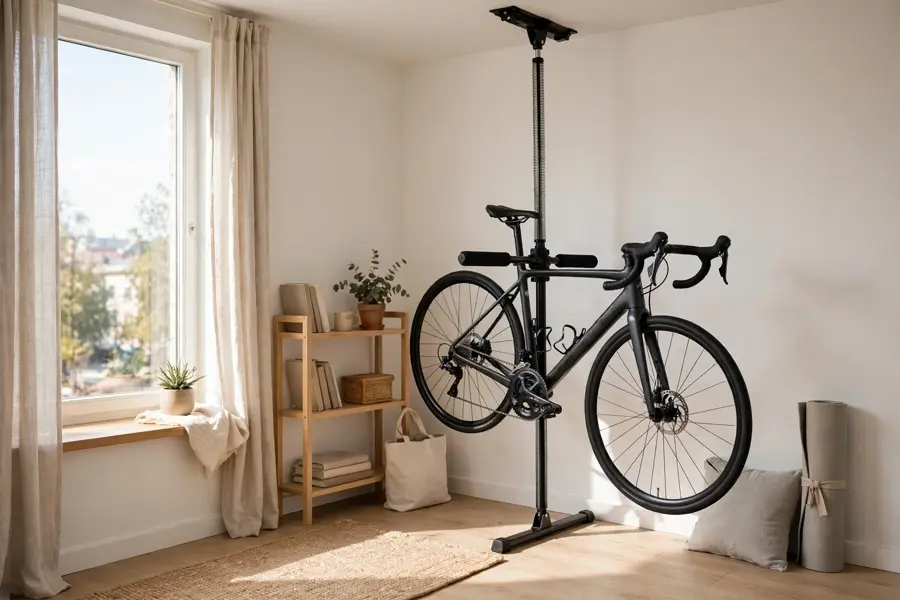
Tension-pole stands wedge between floor and ceiling like a shower rod with bike arms. They hold one or two bikes, need zero holes, and slot into a corner beautifully. Measure your ceiling height first; standard poles handle 8-to-9-foot ceilings, and extension kits exist for taller ones.
Floor stands for the front or rear wheel are the simplest option — the bike rolls in and stands upright. They are the least stable of the three (a bump can topple the bike), so they suit a quiet corner better than a hallway people rush through.
Renters juggle this constraint in every room, and bike gear is just one piece of it. A roundup of dorm room organization ideas is surprisingly relevant here — it was written for people who cannot drill, cannot renovate, and must make every square inch behave.
Steal the Thin Slices: Hallways, Doors, and Behind-the-Furniture Gaps
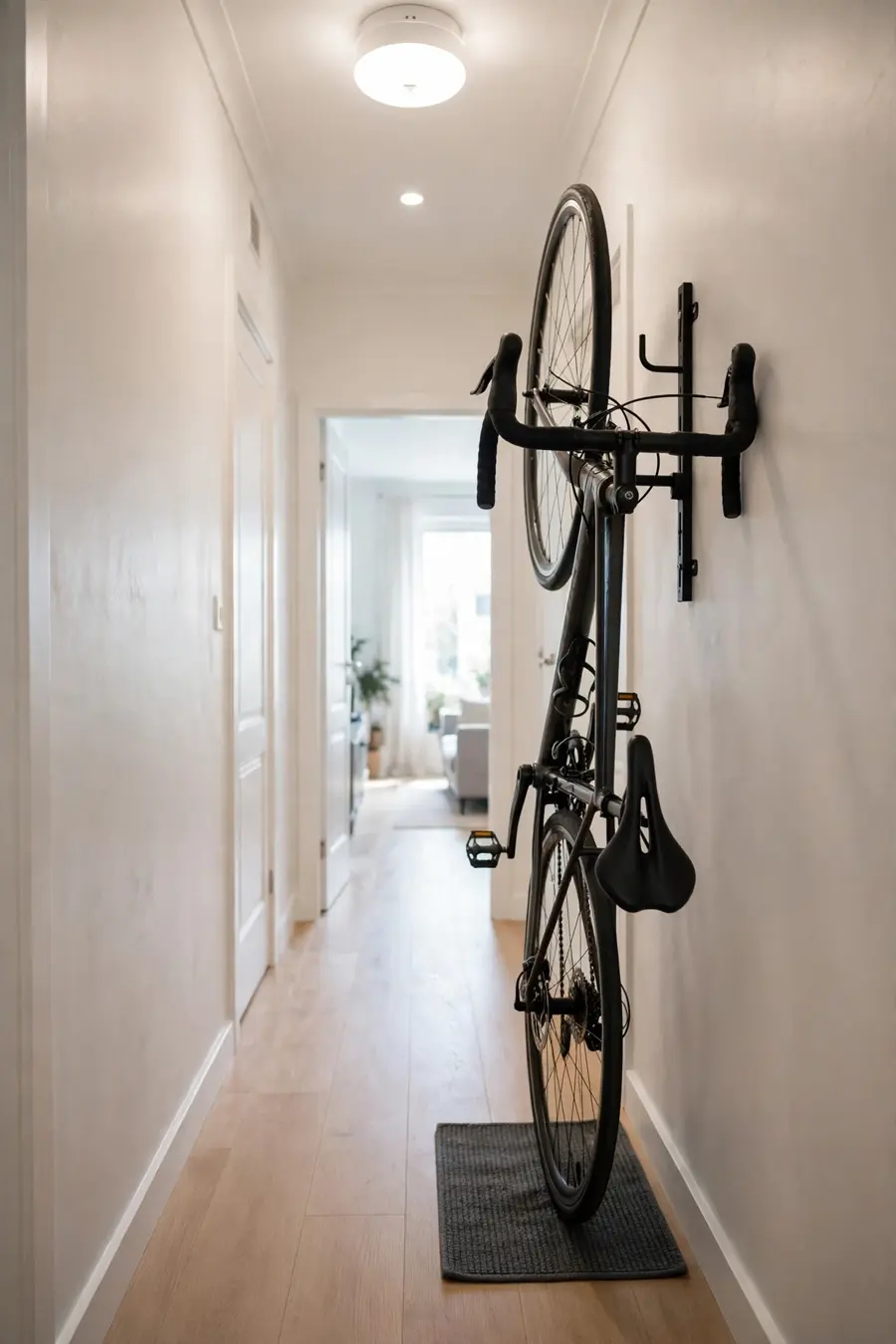
Apartment storage is won and lost in slices — the 6-inch gap behind a door, the hallway wall above the baseboard, the dead space behind a freestanding bookshelf. Bikes fit these slices better than you would think when you stop parking them flat.
- Behind the front door. A vertical hook on the wall behind an inward-swinging door stores a bike in space you were already ignoring. Open the door slowly the first week until it becomes habit.
- The hallway stretch above waist height. A horizontal wall mount places the bike chest-high, with shoes and umbrellas underneath — the entryway does double duty. Keep it in a low-traffic stretch so nobody clotheslines a handlebar at night.
- Under the stair bulkhead or next to the fridge. That awkward alcove too small for furniture? A vertical-hook bike fits a 2-foot-wide alcove perfectly.
- Behind the sofa. In a studio, the gap between the sofa back and the wall can hide a bike entirely from the room’s main sightline — guests see a tidy room, you see your bike.
The trick with thin-slice storage is thinking in layers: floor level for daily gear, waist height for the bike, eye level and above for the rest. When the layers work together, a tiny entry can still work hard — bike included.
E-Bikes and Second Bikes: The Special Cases
Standard bikes are light enough to hang by a wheel. E-bikes and bike number two break that assumption.
E-bikes: At 45–70 pounds, most will destroy a basic wheel hook and make your arms hate you every morning. Store e-bikes low — a heavy-duty floor stand or a wall-mounted cradle that supports the frame, not the wheel. Remove the battery before lifting (it can be 8 pounds on its own) and store the battery indoors at room temperature anyway. If your e-bike must live near the door for security, a low-profile floor dock keeps the lifting to a minimum.
The second bike: Two bikes is where apartment storage gets serious. The best pattern is stacking vertically — one bike high on a wall mount, one below it, alternating handlebar direction so nothing tangles. Tension poles with two sets of arms do this without holes. If you ride daily and your partner rides weekends, hang the daily rider at the reachable spot and the weekend bike higher.
When neither bike can leave, treat them as furniture in your planning: they need a permanent home, not a parking spot you renegotiate every evening.
Keep the Floors Clean: Mats, Trays, and the Tire-Wipe Habit
A bike stored indoors is a bike that rains indoors. Road grit, wet tires, and chain oil will find your floors, your walls, and your white sofa. The fix is a small system, not a big effort:
- A boot tray or rubber mat under the wheels. Cheap, catches drips, and defines the bike’s home visually — which also stops it from “migrating” across the room.
- The ten-second tire wipe. Keep an old towel by the door. A quick wipe of both tires after a wet ride prevents 90 percent of floor marks. This is the single highest-leverage habit in indoor bike storage.
- A chain guard or rag. Chain oil on a wall or pant leg is miserable. A simple chain cover, or just draping a rag over the chainring, ends it.
- Fenders on the bike itself. They keep rain off your back on the ride and off your hallway floor at home.
Cleanliness is what separates “I store my bike inside” from “my home looks like a bike shop.” The mat-and-towel setup takes five minutes to establish and runs on autopilot after that.
Make It Look Intentional, Not Temporary
Here is the secret nobody tells renters: a bike stored well can look good. A bike on a handsome wood-finish mount, above a small tray with your lock and lights, reads as a curated entryway — not clutter. Match the mount finish to your room (matte black hardware in a modern space, wood tones in a warm one), keep a dedicated small shelf or basket nearby for gloves, lock, and lights, and route the bike’s home into the room’s sightlines instead of hiding it apologetically.
This is the same principle that makes small living rooms feel twice as big: every object has a visible, deliberate home, so nothing reads as clutter even when the square footage is tight. Your bike is just the biggest, most athletic member of the family. Give it its spot, keep it clean, and it stops being the thing you apologize for when guests come over.
Start with the tape measure, pick one mounting method that fits your lease and your bike’s weight, add the mat and the towel, and give it a week. By next weekend, the hallway will feel bigger, the living room will feel calmer, and your bike will still be exactly where you left it — out of the way, ready to roll.