

You don’t need to throw everything away, move into a tiny house, or wear the same grey t-shirt for the rest of your life. If you’ve been quietly wondering how to start minimalism without turning your whole world upside down, you’re in exactly the right place. Most minimalist advice online is written by people who already finished the journey — which is a bit like learning to swim from someone who only describes how nice the water feels. This guide is for the person standing at the edge of the pool: curious, a little overwhelmed, and not sure where the shallow end is. You’ll get a calm, realistic plan for your first weekend, a gentle room-by-room map for your first month, and the five mistakes that make most beginners quit — so you can skip them entirely.
What Minimalism Really Is (Hint: It’s Not a Competition)
Let’s clear up the biggest misunderstanding first. Minimalism is not about owning as little as humanly possible. It’s not a white-walled apartment with one chair and a smug sense of superiority. At its core, minimalism is simply this: being intentional about what you own, and making sure everything in your life earns its place. That’s it. Your version might mean thirty books on a shelf you genuinely love; someone else’s might mean a library card. Both are minimalism.
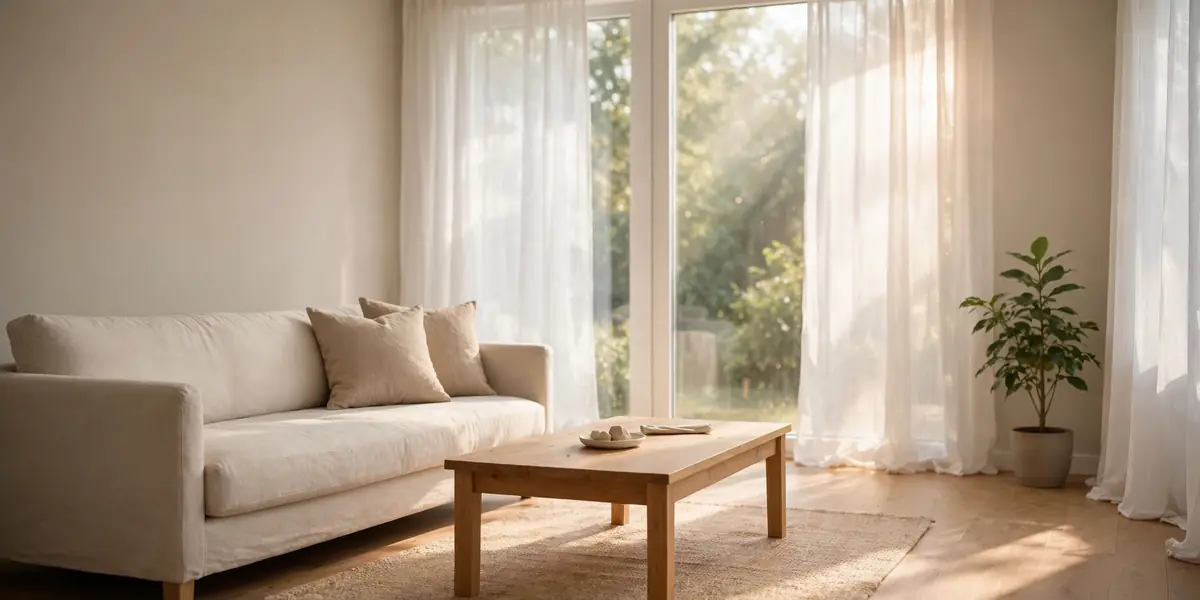
The confusion comes from the photos. You’ve probably seen those pristine, nearly empty living rooms and thought, “I could never live like that — I have kids,” or “…I actually enjoy my stuff.” Here’s the secret those photos don’t tell you: almost nobody lives in those rooms. What real minimalism looks like is much more ordinary, and honestly much nicer. It’s a kitchen drawer that glides open instead of sticking. It’s a closet where every top actually fits you and you can see all of them. It’s the quiet relief of opening your front door and not being greeted by a pile of things that need dealing with.
Before you touch a single drawer, do one small thing: write down your why. Not a vague “I want to be minimal” — something concrete. Maybe it’s “I’m tired of spending my Saturdays tidying the same mess.” Maybe it’s “I want to save money instead of buying storage bins.” Maybe it’s “I want my home to feel calm when I walk in after a long day.” Stick it on your fridge or your phone’s lock screen. On the days when you’re knee-deep in old cables wondering why you started, that sentence is the thing that carries you through.

How to Start Minimalism: Your First Weekend Plan
Forget the thirty-day challenges and the dramatic before-and-after marathons. The best way to start is small enough that you can’t fail. Give yourself one weekend — not to transform your house, but to prove to yourself that this feels good.
Friday evening (30 minutes): set up your sorting system. Grab three bags or boxes and label them: Trash, Donate, Relocate. The relocate box is the secret weapon — it’s for things that belong somewhere else in the house. Without it, you’ll spend the whole weekend wandering around putting single items away. Put on music or a podcast. Make it pleasant, not punishing.
Saturday: pick one tiny, high-impact win. Not the garage. Not the attic. Choose one drawer, one shelf, or one corner that annoys you daily — the junk drawer that won’t close, the nightstand buried under chargers, the bathroom shelf of half-empty bottles. Take everything out, wipe the surface, and put back only what you actually use. Ask each item one question: “Do I use this, or do I just feel guilty throwing it away?” Guilt is not a use. The whole thing should take about twenty minutes, and when it’s done, stand back and look at it. That small rush of calm? That’s your fuel.
Sunday: take the donation bag out of the house immediately. This is the step almost everyone skips, and it’s the one that matters most. A bag of donations sitting in the hallway for three weeks isn’t decluttered — it’s just relocated clutter. Drop it at the charity shop, put it in the trunk, or schedule a pickup before Sunday night. Out of the house means out of your mental load too.
That’s the whole first weekend. One drawer, one shelf, one honest trip to the donation point. If that felt good — and it almost always does — you’re ready for the bigger map below.
5 Beginner Mistakes That Make People Quit
I’ve watched enough friends start and stall to spot the patterns. Here are the traps, in order of how often they end the journey early:
- 1. Trying to do the whole house in one go. The “declutter everything this weekend” plan produces exactly two outcomes: a half-finished disaster that makes the house worse, or a burned-out beginner who never tries again. Minimalism is a direction, not a deadline. Small, finished zones beat a house full of half-sorted piles.
- 2. Decluttering someone else’s stuff. This one destroys more minimalist journeys — and causes more arguments — than any other. You can suggest, you can model, but the moment you start bagging up your partner’s books or your teenager’s collection, you’ve turned a personal project into a household war. Declutter your own things first. Let the calm spread.
- 3. Buying your way into minimalism. It’s painfully ironic, but beginners do it constantly: ordering a set of matching storage containers, a label maker, and a “minimalist wardrobe capsule” before decluttering a single item. You don’t need new organizing products to start — most of what you need is a few bags and honest decisions. If you find the urge to shop creeping in, a no-buy month is a brilliant companion experiment.
- 4. Comparing your real home to internet minimalism. Those stark, empty rooms are staged for photos. Your home has a laundry basket, a school backpack by the door, and a mug in the sink — because people actually live there. Minimalism should make your real life easier, not make you feel like your real life is failing some aesthetic test.
- 5. Skipping the “out.” Bags of donations in the hallway, a box of “sell someday” items in the garage, electronics piled for recycling for six months. Clutter that has left the shelf but not the house still costs you mental energy. Build the exit into every decluttering session: trash goes in the bin, donations go in the car, and “sell” items get listed within 48 hours or donated.
Your Room-by-Room Starter Map for the First Month
Once the first weekend proves the concept, work through your home gently — one zone a week. This order is deliberate: it starts with the places that give you the biggest emotional payoff first, so your motivation compounds instead of draining.
Week 1: visible surfaces. Counters, coffee tables, the top of the dresser. Flat surfaces are clutter magnets, and clearing them changes how your whole home feels in under an hour. Give every surface one home for its essentials (a small tray for keys, one charging spot) and clear everything else. You’ll be shocked how much bigger the rooms look.
Week 2: the closet. Pull out everything you haven’t worn in a year — be honest about the “someday” jeans and the shirt that’s almost right. Keep only what fits your actual life today, not a hypothetical one. For the keepers, a little structure helps: matching hangers and one simple rotation system make getting dressed genuinely easier.
Week 3: the kitchen and the digital corners. The kitchen is where duplicates multiply — three spatulas, two garlic presses, a drawer of takeaway menus. Keep the best of each category and release the rest. Then give your phone the same treatment: delete unused apps, unsubscribe from the email lists, clear the camera roll. If you want a deeper dive into the digital side, our digital declutter guide walks through the whole process.
Week 4: the emotional stuff and the holiday question. Sentimental items — letters, childhood things, gifts you never loved — go last for a reason. By now your decision muscle is strong, and you’ll find it much easier to keep the memory and release the object (a photo of the item often does the job). This is also a good moment to get ahead of the calendar: if the gift-giving season usually floods your home, reading our guide to declutter before the holidays now will save you January’s regret.
How to Start Minimalism on a Busy Schedule (and Keep It Going)
Here’s the honest truth most guides skip: minimalism isn’t a project you finish. It’s a way of making decisions that keeps working quietly in the background. The good news is that maintenance takes almost no time once the big passes are done. The trick is building tiny habits into days that are already full.
The ten-minute rule is the backbone. Set a timer for ten minutes each evening and reset one room — dishes into the dishwasher, cushions straightened, the day’s paper dealt with. Ten minutes doesn’t sound like much, but it’s the difference between a home that stays calm and one that slowly slides back. Three minutes of putting things back still beats zero.
The second habit is guarding the front door. Every item that enters your home will eventually need a home, cleaning, and one day, a decision about leaving. So pause before things come in. The 24-hour rule works beautifully for non-essentials: want it today, buy it tomorrow if you still want it. Most urges expire overnight. And when something new does come in, let something go out — not as a strict law, but as a gentle rhythm that keeps the balance.
Finally, schedule a light seasonal review — fifteen minutes, four times a year. Open the closet, the junk drawer, the bathroom shelf, and ask: is everything here still earning its place? Homes collect drift the way shelves collect dust; a quick seasonal pass stops it compounding. For a fuller routine that keeps a simplified home running smoothly, our guide on how to maintain a clutter-free home has the whole system.
A Calmer Home Is Closer Than You Think
Minimalism doesn’t ask you to become a different person. It just asks you to notice what actually serves your life — and to let go of the rest, one drawer, one bag, one honest decision at a time. Start tonight: pick the one small spot that bugs you most, set a timer for twenty minutes, and feel what that little pocket of calm is like. Then come back tomorrow and do the next one. Six months from now, you’ll open your front door, breathe out, and wonder why you ever waited. Your calmer home is already in there, underneath the excess — you just have to uncover it.
[…] clears a cluttered closet, aimed at your first hour. If you’re new to that way of thinking, this calm starter guide to minimalism walks through the mindset step by […]
[…] or a much-loved teddy that has seen better days. If you are just beginning to simplify, a gentle beginner’s guide to minimalism can help you set a realistic starting point before you tackle the toy […]