
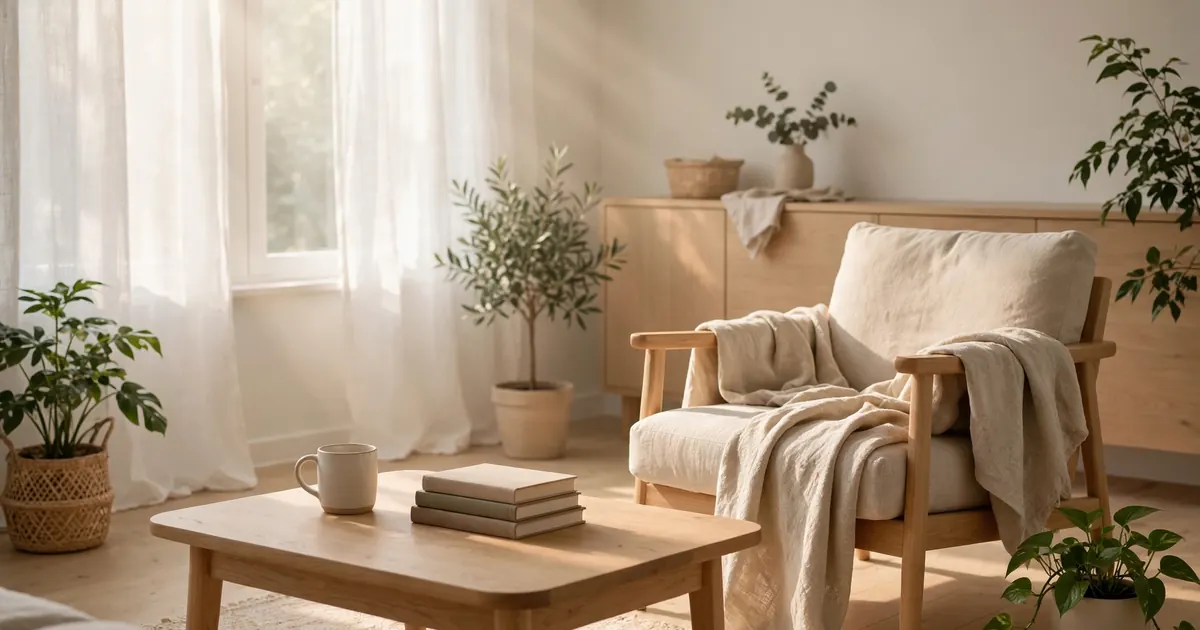

Last Tuesday my alarm went off at 6:40 and I was already behind. I grabbed my phone to check the weather, fell into three emails, then sprinted through a shower while mentally rehearsing a meeting. By the time I left the house, the kitchen looked like a crime scene and I felt like the day had mugged me before it even started. That frantic morning wasn’t unusual — it was just how life felt for months. Then I started paying attention to slow living habits, and something surprising happened: the house got calmer before it got any less cluttered. I didn’t move furniture or throw out half my belongings. I changed the pace — and the chaos quieted down with it.
This isn’t another guide about owning fewer things, though having less certainly helps (our guide to simple living habits for a minimalist home covers that side beautifully). This is about rhythm. The way you move through your rooms, the order you do things, the small rituals that tell your nervous system it’s safe to unclench. If your home feels busy even when it looks tidy, the problem usually isn’t stuff. It’s speed.
What Slow Living Habits Actually Look Like at Home
Forget the glossy imagery for a moment — the linen napkins, the hand-thrown pottery, the sourdough on a wooden board. Real slow living habits at home are far less photogenic and far more useful. They’re things like putting your keys in the same dish every single evening, or sitting down with your coffee instead of drinking it over the sink while scrolling. They’re boring on purpose. That’s the point.
The philosophy is simple: modern life trains us to rush everything, and rushing creates a specific kind of household chaos — the kind where nothing is ever quite finished. When you slow down just enough to complete each small task before starting the next, the backlog stops growing. The principles that make the biggest difference:
- One task, finished, before the next begins. Not ten tabs open, not three rooms half-tidied. Finish the thing. The mental relief is wildly disproportionate to the effort.
- Transitions matter more than tasks. The two minutes between arriving home and starting dinner, or between dinner and bedtime, set the tone. Protect them.
- Reduce decisions, reduce noise. A home that asks a hundred small questions a day — where does this go, what’s for dinner, did I answer that — keeps your brain in overdrive.
- Build in buffers. Slow living means leaving ten minutes unplanned, so an interruption doesn’t detonate the whole evening.
My own turning point came on a Saturday when I timed how long it actually took to unload the dishwasher. Two minutes and forty seconds. I had been “saving” that task for later all week, letting it breed low-level guilt, when the task itself was shorter than one round of scrolling the news. Slow living habits aren’t about doing less. They’re about doing things when they’re small.
Calmer Mornings: A Slower Routine That Actually Sticks
Mornings set the emotional weather for the whole day, which is why slow living starts before 9 a.m. You don’t need a ninety-minute sunrise routine with meditation and journaling — unless you genuinely want one. You need a morning that doesn’t ambush you.
The first habit is almost embarrassingly simple: get ready in the same order every day. It sounds trivial, but decision-making is a finite resource, and a fixed sequence — bathroom, clothes, bed made, breakfast — removes about forty micro-decisions before your coffee kicks in. Within a week it becomes muscle memory, and muscle memory is the opposite of chaos.
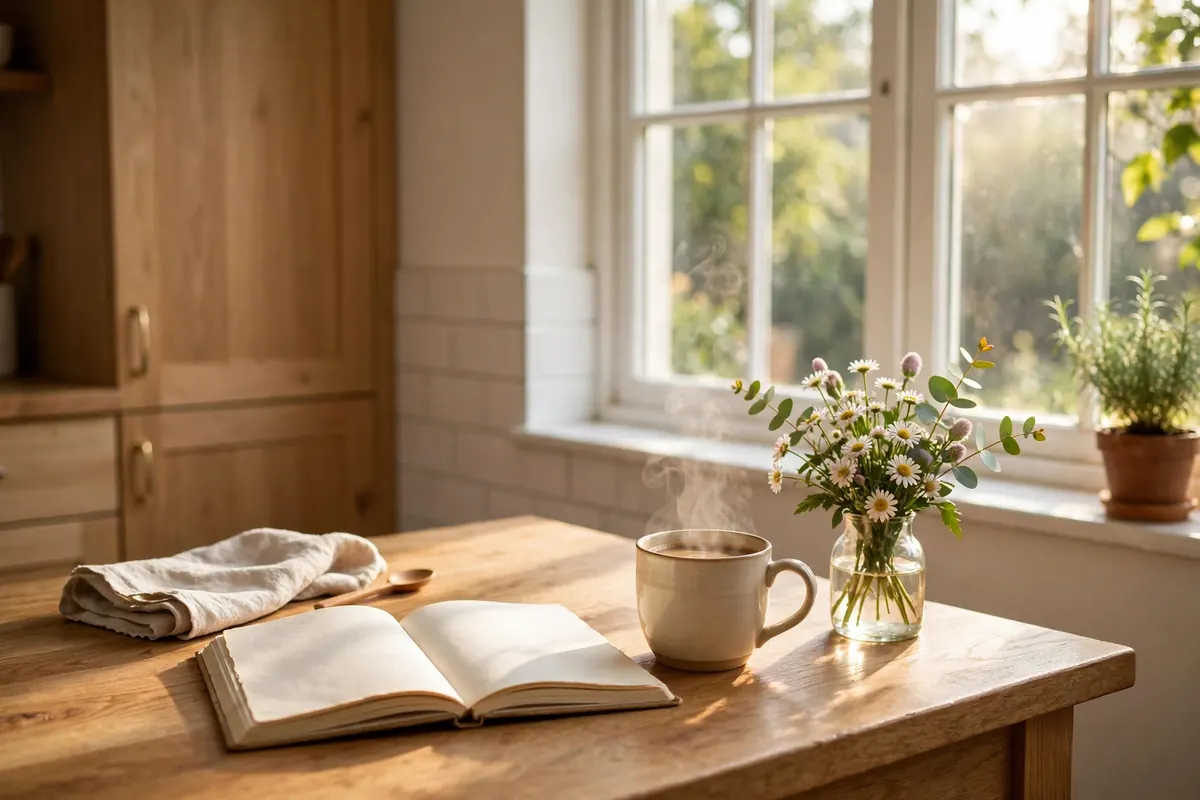
The second is to sit down for breakfast, even if it’s ten minutes. Eating your toast standing at the counter while checking your phone programs the whole day to run at standing-and-scrolling speed. A chair, a mug, ten minutes of not doing anything else. That’s it. One reader told us she started doing this at her kitchen table and her six-year-old, without being told, began bringing his cereal to the table too instead of wandering around with it. Habits at home are contagious like that.
Third: prep the exit the night before. Bags by the door, keys in the dish, tomorrow’s clothes chosen. This one habit probably removes more morning panic than any other single change. When everything that leaves the house has a staging area, nobody is searching for a missing shoe at 8:15 while the bus pulls away.
And fourth: keep the phone off until you’re dressed. If your phone is your alarm, fine — move it across the room so you have to stand up, and don’t open anything but the weather. The emails, the group chats, the news: they can all wait thirty minutes. Nothing that matters happens in your inbox between 7:00 and 7:30, but plenty that doesn’t matter will happily steal your attention.
Build a launch pad that works for your life
A launch pad is just a dedicated spot near the door where going-out essentials live. For a family, that might be a cubby per person with their backpack, shoes, and jacket. For a single person in a studio flat, it might be one hook, one tray, and a tote bag. The size doesn’t matter; the consistency does. When everyone knows where things stage, mornings lose their sharp edges.
Design Your Home for a Slower Pace
Here’s something nobody tells you about slow living: your home is either helping you or sabotaging you, every single day, in ways you stopped noticing. The dining table you can’t eat at because it’s a mail-sorting station. The chair in the bedroom buried under yesterday’s clothes. The entryway where bags, shoes, and jackets form a small mountain. Each one is a tiny friction point, and friction creates hurry.
Start with surfaces. Keep horizontal surfaces mostly clear. This doesn’t mean styling your kitchen counter like a magazine — it means the counter is for cooking, the dining table is for eating, and the hallway console is for keys and a lamp, not a landslide of everything. When each surface has a job, you stop losing things, and you stop the frantic searching that makes a home feel frantic.
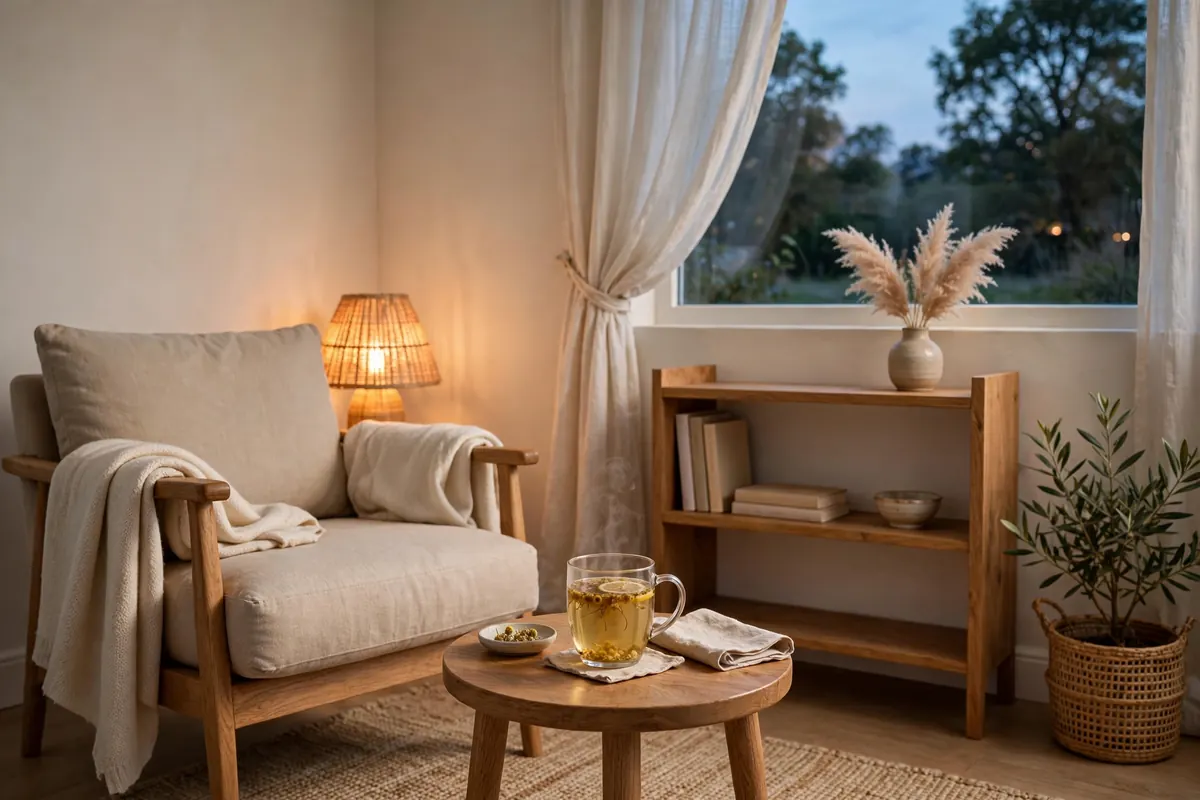
Next, create one calm corner. A chair by a window with a small table, a throw blanket, and a lamp. A single bookshelf with the books you’re actually reading — if yours needs help, our guide to decluttering bookshelves the minimalist way makes it painless. This corner is your visual anchor: proof, right there in the room, that calm is possible in this house. When the rest of the home is mid-week mess, that one corner reminds you where you’re heading.
Also, think about traffic flow. Watch how your household actually moves for one evening — you’ll be amazed. The laundry basket that’s always in the hallway because there’s no closer spot. The shoes piled by the front door because the closet is across the flat. Small relocations — a basket where the laundry actually happens, a shoe tray by the door — remove dozens of daily annoyances.
Finally, let the light in. It’s the cheapest home upgrade in existence. Open the blinds properly in the morning. A bright room slows you down in a good way — people literally linger more in naturally lit spaces. Dim, cluttered rooms push you to get out; bright, clear ones invite you to stay.
Build Rhythm Into Chores and Clutter Care
The fastest way to make housework feel endless is to do it in marathon bursts — the five-hour Saturday clean that leaves everyone exhausted and resentful. Slow living approaches chores the way it approaches everything: in small, regular rhythms instead of panicked sprints.
Start with a ten-minute evening reset. Every night, before the TV or the book or bed, set a timer for ten minutes. Everyone in the house tidies whatever’s in front of them — dishes in the dishwasher, cushions straightened, bags put away, surfaces wiped. Then stop. It’s not a deep clean; it’s a daily landing. The magic is that waking up to a house that’s roughly in order changes how the next morning feels. No more opening your eyes to yesterday’s mess, which is a kind of time-travel stress nobody needs.
Then, give every chore a day. Laundry on Wednesdays. Bathroom on Thursdays. Floors on Saturdays. This sounds rigid, but it’s actually liberating: you stop spending mental energy wondering when the towels will get washed, because the towels get washed on Wednesday. They run on a gentle loop instead of a crisis system where everything happens only when it becomes unbearable.
And when things start creeping back in — because they always do — slow down before you buy. Most household clutter doesn’t arrive as junk; it arrives as perfectly reasonable purchases that quietly duplicate something you own. Before anything new crosses the threshold, the one-in-one-out rule is your simplest guard: something new comes in, something similar goes out. Pair it with a no-buy month once or twice a year to reset your shopping reflex entirely. Your future self, calmly enjoying a house that stays tidy on its own, will thank you.
The “enough” standard
Perfectionism is the enemy of a calm home. Slow living gives you permission to aim for “enough”: beds made but not styled, floors vacuumed but not mopped, laundry clean but maybe in the basket. “Enough” is maintainable. Perfect is a setup for failure, and failure feels like chaos. Set the bar where you can clear it every day, and the house stays at a steady, comfortable hum instead of swinging between spotless and disaster.
Slow Living Habits for Calmer Evenings
If mornings are the opening scene, evenings are the closing credits — and they deserve the same care. The slow evening is where slow living habits pay off most visibly, because this is when the whole household exhales together.
The single most powerful evening habit is a digital sunset: screens off (or at least parked) an hour before bed. Consider what replaces it — a slower dinner, a walk around the block, ten pages of a book, a cup of tea that you actually taste. The first few nights feel strange. By the second week, you won’t want to go back. Families consistently tell us this one habit changes the temperature of the whole household more than any organizing system.
Second, cook one simple meal a week, slowly, together. Not every night — life is real. But one evening where dinner isn’t fuel shoveled between activities: someone chops, someone stirs, the radio’s on, nobody’s in a hurry. A pot of soup, homemade pizza, breakfast-for-dinner. These are the evenings people remember years later.
Third, end the day with a tiny ritual of your own. A short walk. Five minutes of tidying the living room so tomorrow’s you walks into order. A cup of something warm while you look out the window. A written line in a notebook about one good thing from the day. Rituals are the guardrails of slow living — they mark the day as complete, and they tell your brain the rushing is over.
A Calmer Home Is Built One Habit at a Time
You don’t need to overhaul your life this weekend. That’s the old, fast way of thinking — the same thinking that turned your Saturday into a cleaning marathon. Slow living habits work precisely because they start small: one morning routine, one clear surface, one ten-minute reset, one phone parked in the kitchen overnight.
Pick a single habit from this list and try it for a week. Just one. When it feels automatic, add another. Within a couple of months, your home will feel different — not because you followed a thirty-day plan, but because the pace inside it changed. A calmer home isn’t a destination you arrive at. It’s a rhythm you keep. And you can start keeping it tonight, with the ten-minute reset, before the day is even over.
[…] Notice how the room feels afterward — not emptier, but calmer. That calm is the whole point of slow living habits for a calmer home, and it starts with releasing the things that were never really yours to carry. This holiday […]
[…] you actually keep beats an ideal one you abandon by Friday. This is the same philosophy behind slow living habits: small, sustainable shifts compound into a genuinely calmer home […]