
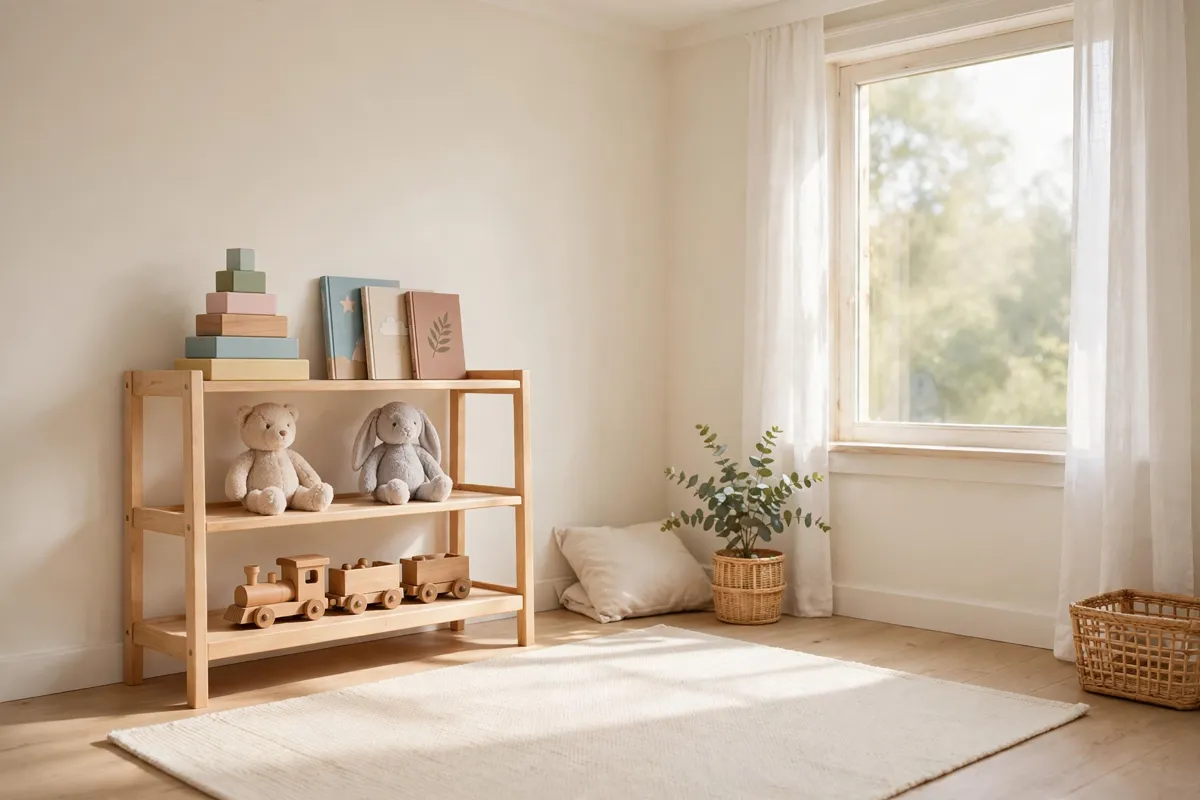

Learning how to declutter kids toys is one of those parenting projects that sounds simple until you’re ankle-deep in plastic dinosaurs, sorting a drawer of Happy Meal trinkets, and wondering how one small child accumulated forty-two stuffed animals. Here’s the truth most guides skip: you don’t have to declutter the toys to “get it over with.” You get to do it because the toy mountain is quietly making your kids’ play worse, not better.
One finding about children and clutter keeps surfacing: kids with fewer toys play longer, more creatively, and with more focus than kids drowning in options. A playroom packed to the ceiling gets ignored; the same room with a curated shelf of twenty toys becomes a busy little workshop. The goal isn’t minimalism for its own sake. It’s giving your kids back the ability to actually play.
This guide walks you through decluttering your kids’ toys without the tears — yours or theirs. No shame, no dramatic garbage bags in the night, no guilt. Just a calm, practical process that works for toddlers through tweens.
Start With the Conversation, Not the Toys
Most toy decluttering advice jumps straight to bins and labels. Don’t. The single biggest factor in whether this goes smoothly is whether your kids feel blindsided. Nobody likes discovering that their things were thrown away behind their back — and kids remember it.
A few days before you start, talk about it — not as a punishment, but as an upgrade. Say something like: “Your toy shelf is so full you can’t find the good stuff anymore. Let’s make room for the toys you really love.” For younger kids, frame it as helping other children. Older kids can handle more honesty: “Half of these you haven’t touched in months. Let’s see what’s actually worth the space.”
Set one clear, concrete limit together before you touch a single toy. Examples that work:
- The container rule: “We keep what fits in this toy bin and the bookshelf. That’s it.”
- The number rule: “Pick your twelve favorite stuffed animals. The rest find new homes.”
- The shelf rule: “Every toy gets a home on this shelf. If it doesn’t fit, something has to go.”
Limits work better than vague instructions like “choose what you love,” because kids will tell you they love everything — including the broken plastic snake with one eye. Physical boundaries make decisions easier for everyone. If you’re already working on getting their kids’ bedroom organized, the same container-limit thinking applies beautifully.
How to Declutter Kids Toys in 5 Phases
Breaking the job into phases keeps it from feeling like an all-weekend siege. Plan on two to three hours total, ideally while the kids are around for the deciding parts and elsewhere for the pre-sorting. Here’s the process:
Phase 1: Gather Everything
Pull every toy out of every hiding place — bedrooms, playroom, living room baskets, the car, that box in the hallway closet. Put it all on the living room floor or in the yard. This step is miserable and non-negotiable, because it’s the only way to see the true scale. The sight of it all at once usually motivates everyone involved.
Phase 2: Sort Into Broad Groups
Don’t evaluate anything yet. Just group similar toys together: stuffed animals, dolls and figures, building sets, art supplies, puzzles and games, vehicles, outdoor toys, electronic toys, and “random small stuff.”
Phase 3: The Obvious Purge
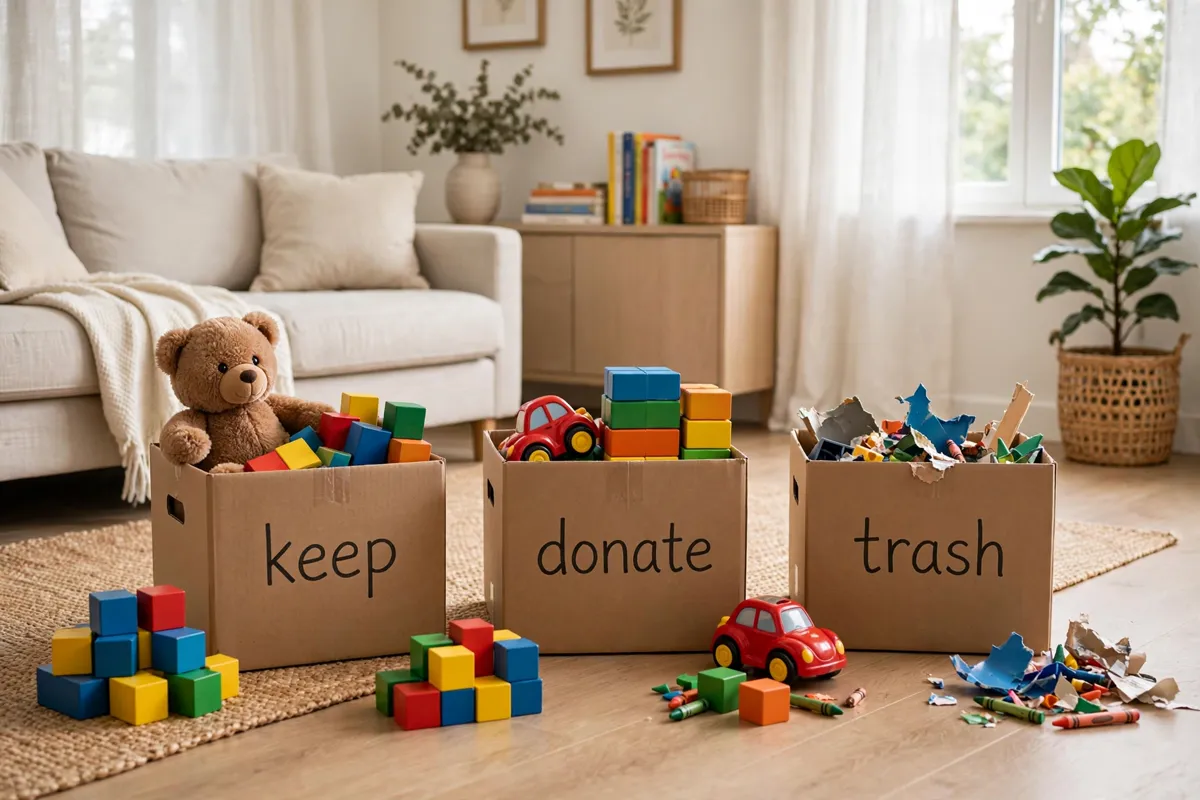
Walk each group and pull the easy decisions first: broken toys, toys missing essential pieces, dried-out markers, single socks from dress-up costumes, McDonald’s trinkets from three years ago, and anything stained beyond hope. Bag this for trash or recycling right away. You will usually clear 20 to 30 percent of the volume in this pass alone, and it builds momentum.
Phase 4: Decide With Your Child
Now go group by group with your child and sort into three destinations: keep, donate, and not sure. The “not sure” pile is the secret weapon — it removes the pressure of a final decision in the moment. Box the “not sure” toys, date the box, and stash it in the garage or a closet for six weeks. If nobody asks for anything in it, donate the box unopened. In my experience, fewer than one in ten “not sure” boxes ever get reopened.
Phase 5: Reset the Space
Put the keepers back with actual homes — not shoved into a toy box, but arranged on shelves or in labeled bins so every toy is visible. Visibility is everything with kids: if they can’t see it, they won’t play with it. Leave some breathing room on every shelf. Empty space isn’t wasted space; it’s the margin that keeps the room calm.
The Keep-or-Let-Go Rules That Actually Work
During Phase 4, decisions stall when there’s no clear standard. These questions cut through the waffling. Run each questionable toy through them:
- Has it been played with in the last three months? Seasons matter here — the sled stays in October, obviously — but a toy untouched through a whole season of its “prime time” is a donate candidate.
- Is it broken or missing key pieces? A puzzle with six missing pieces isn’t a puzzle; it’s cardboard clutter. Be honest about whether you’ll ever fix it.
- Is there a duplicate? Kids don’t need three nearly identical fire trucks. Keep the best one.
- Does it match their age? The baby stacking rings can go if your kid is seven. Someone else’s baby will love them.
- Does the toy do the playing, or does the child? Toys with buttons that light up and sing every verse of a song tend to get boring fast. Open-ended toys — blocks, art supplies, dress-up clothes — hold attention for years. When in doubt, keep the open-ended ones.
- Would you buy it again today? This one question kills more clutter than all the others combined.
One more rule, for the adults: never sneak-declutter without telling your child. Yes, it’s faster. But when a kid discovers their favorite blue car is gone and nobody told them, you haven’t just removed a toy — you’ve taught them that their things aren’t safe and their opinions don’t count. If you want to pre-sort before involving them (smart for toddlers), keep the pre-removed bag around for a couple of weeks in case something beloved accidentally went in.
Handling Guilt, Gifts, and Grandparent Piles
Here’s the part nobody warns you about: the hardest toys to declutter usually aren’t the kids’ favorites. They’re the guilt toys — the expensive Lego set Grandma bought that nobody plays with, the duplicate birthday gift you feel bad returning, the handmade doll from an aunt.
Some perspective that helps: a gift’s job was to delight the giver in the giving and delight the child in the receiving. Once both of those have happened, the gift has done its work. Keeping a dusty, unloved toy on a shelf out of obligation doesn’t honor the giver; it just stores guilt in plastic form. Take a photo of your child with the gift before it goes — the memory matters, and a photo takes up no shelf space.
For the ongoing influx, the real solution is upstream. Before the next birthday or holiday, have the awkward-but-kind conversation with grandparents and relatives: “She’s happiest with art supplies and building sets right now — experiences and consumables are always a hit.” And for the random junk from party favors and kids’ menus, adopt a simple rule: enjoy it for the day, then it leaves the house.
This is also the moment to declutter your own guilt about the mess. A house full of toys doesn’t mean you’re failing. It means you’re a parent in a culture that equates love with stuff. Letting some of it go isn’t ungrateful — it’s making room for play, peace, and the toys your kids genuinely adore.
Toy Rotation: The Trick That Keeps It Clutter-Free
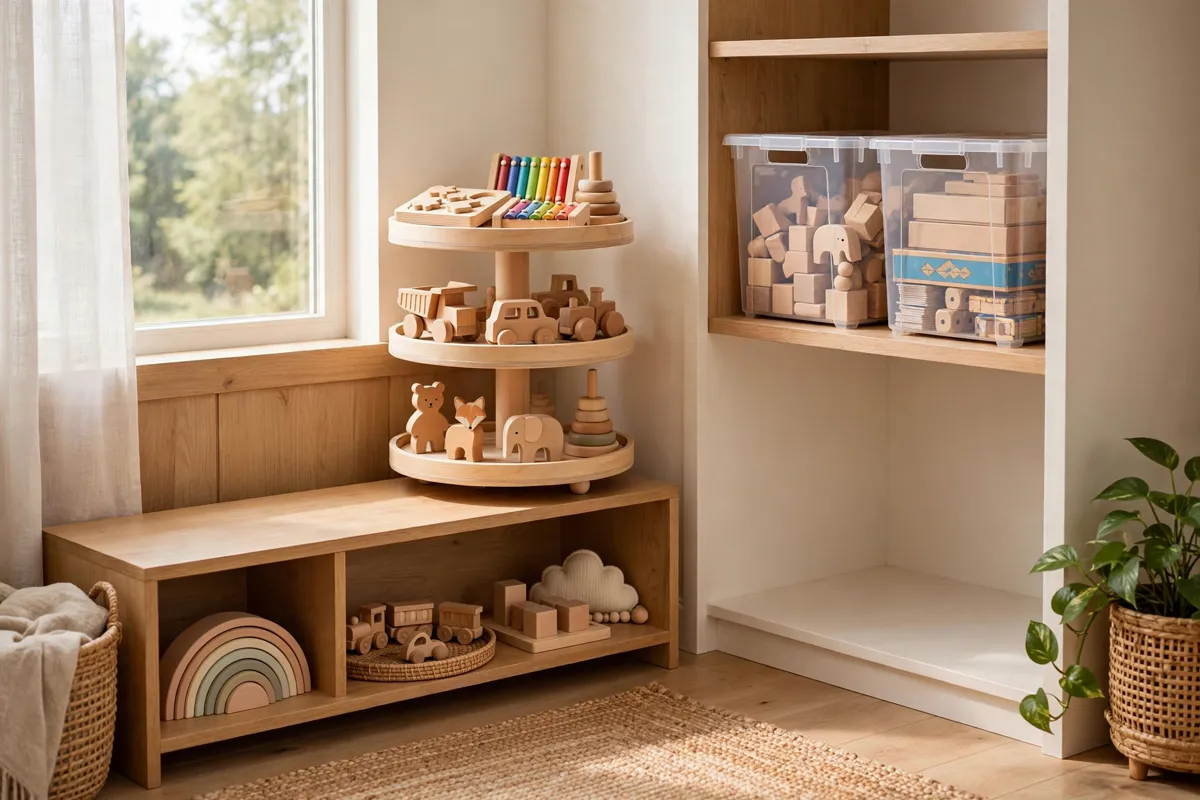
Here’s the secret of every parent whose playroom stays manageable: they don’t keep all the toys out. Toy rotation means storing roughly half the keepers in bins and swapping them out every few weeks or monthly. The stored toys feel brand new when they come back, kids play longer and more imaginatively, and the daily mess is literally half the size.
A simple rotation system:
- Keep two to three labeled bins in a closet or garage — one for building toys, one for pretend play, one for art and games, for example.
- Rotate on a schedule that suits your family — every two weeks is ideal, monthly is fine, even seasonally works.
- Let your child help choose what goes in and out. It turns the swap into an event, not a chore.
- Keep a small “high rotation” shelf of all-time favorites that never goes into storage.
Toy rotation also quietly solves the guilt-gift problem: the elaborate castle set nobody plays with can live in a rotation bin instead of on the shelf, and in a few months you’ll know for sure whether it deserves to stay. The same keep-it-visible principles that make decluttering a junk drawer stick apply to the playroom: everything visible, everything with a home, nothing crammed.
What to Do With the Piles: Donate, Sell, or Toss
Once decisions are made, move the outgoing piles out fast. Bags of donations sitting in the hallway for three weeks have a way of migrating back onto shelves.
- Donate: Gently used toys in working condition go to children’s charities, shelters, preschools, or local buy-nothing groups. Clean them first — a quick wipe-down takes minutes and makes a real difference. Many communities run toy drives in November and December, so time a big purge before the holidays and your donations land exactly when families need them most.
- Sell: High-value items — complete Lego sets, barely-used ride-ons, brand-name play kitchens — sell well on local marketplaces. Set a one-week deadline: if it hasn’t sold, donate it. Otherwise your garage becomes a toy warehouse with extra steps.
- Toss or recycle: Broken plastic toys generally can’t go in curbside recycling, but many areas have specialty drop-offs — check your local waste authority. A cracked, sharp-edged toy is a safety hazard, not a donation.
- Sentimental keepsakes: Let each child keep a small memory box — one box, with a lid, that closes. Favorite childhood toys that truly matter can live there. The box’s edges are the limit.
One practical note: handle the donation drop-off yourself and don’t announce it to younger kids in advance. This isn’t sneaking — the toys were already sorted with their input — it’s just sparing everyone a last-minute change of heart at the charity shop door.
A calmer playroom is closer than you think. Figuring out how to declutter kids toys isn’t really about the toys. It’s about the afternoons: fewer frantic searches for the one missing Lego piece, less stepping on sharp plastic in bare feet, more of your child sitting on the floor, deeply absorbed in something they love. That’s the payoff, and it’s worth an afternoon of sorting.
Start small if the whole-house gather feels overwhelming — just the stuffed animals, just the art supplies. The momentum from one clear win usually carries you through the rest. And once the system is in place, keeping it takes minutes, not hours: a quick evening tidy where everything returns to its home, a seasonal rotation, and a simple one-in-one-out understanding for new toys. The habits in our guide to maintaining a clutter-free home build on exactly this kind of system — and the calm spreads from the playroom to the rest of the house faster than you’d expect.
[…] have already tackled the toy mountain once before, a gentler follow-up approach helps. Our guide to decluttering kids’ toys without tears covers the same keep-or-donate conversation in more depth, including what to do when siblings […]