


Every morning, I stood in front of my closet and squinted. Was that blouse navy or black? Did that sweater have a stain on it, or was it just a shadow? My closet was organized enough — the clothes were hung, the shelves were neat — but I was choosing outfits in the dark. These closet lighting ideas changed all of that, and honestly, I wish I had done it years earlier.
Here is the thing nobody tells you about closet organization: you can fold, sort, and color-code all you want, but if you cannot actually see what you own, none of it matters. Bad lighting turns a tidy closet into a frustrating guessing game. Good lighting turns getting dressed into one of the easiest parts of your day.
Most of these closet lighting ideas cost less than a new pair of jeans, take under an hour to install, and need zero electrical skills.
Why Good Closet Lighting Ideas Matter More Than You Would Expect
Think about how many decisions you make in your closet every morning. You check colors, look for stains, match patterns, and try to remember which shirt is freshly laundered. Doing that under one dim hallway bulb — which is how most reach-in closets are lit, if they are lit at all — is genuinely hard.
The biggest problem is not just darkness. It is shadows and color distortion. A single bulb behind you means your body blocks the light exactly where you need it. And cool, harsh light makes black pants look charcoal, navy look black, and that camel coat look orange. You walk out the door wearing a mismatch you only notice in the office bathroom mirror.
Good closet lighting fixes all of this at once. It fills the corners, shows true colors, and makes the whole space feel calmer. There is a reason clothing stores spend so much money on lighting — when you can see things clearly, you use them more. The same applies at home: a well-lit closet means you actually wear the clothes you own instead of reaching for the same three things that live at the front.
The Two Rules of Closet Light: Warm, and In Front of the Clothes
Before you buy anything, it helps to know the two things that matter most: color temperature and placement.
Color temperature is measured in Kelvins, and for closets, warm light in the 3000 to 3500K range wins every time. It flatters skin, shows fabric colors honestly, and makes the space feel cozy instead of clinical. Daylight-balanced bulbs (5000K and up) sound good in theory, but in practice they wash everything out and make a small closet feel like a doctor’s office.
Look for bulbs labeled 90+ CRI (color rendering index) if you can. CRI measures how truthfully a light shows colors, and cheap LEDs with low CRI ratings are exactly why your striped shirt looked fine at home and wild at work. The price difference is small and the difference in what you see is enormous.
Placement matters just as much. The single most important principle from retail lighting is this: light the clothes from the front, not from above. A fixture mounted directly over the hanging rod is the most common closet mistake, because the clothes themselves cast shadows down onto everything below them. Instead, put light slightly in front of the rod — under the shelf above it, or along the vertical sides of the opening. Your morning self will thank you every single day.
10 Practical Closet Lighting Ideas for Every Closet and Budget
These are ordered roughly from easiest and cheapest to more involved. Pick one or combine a few — even a single upgrade makes a dramatic difference.
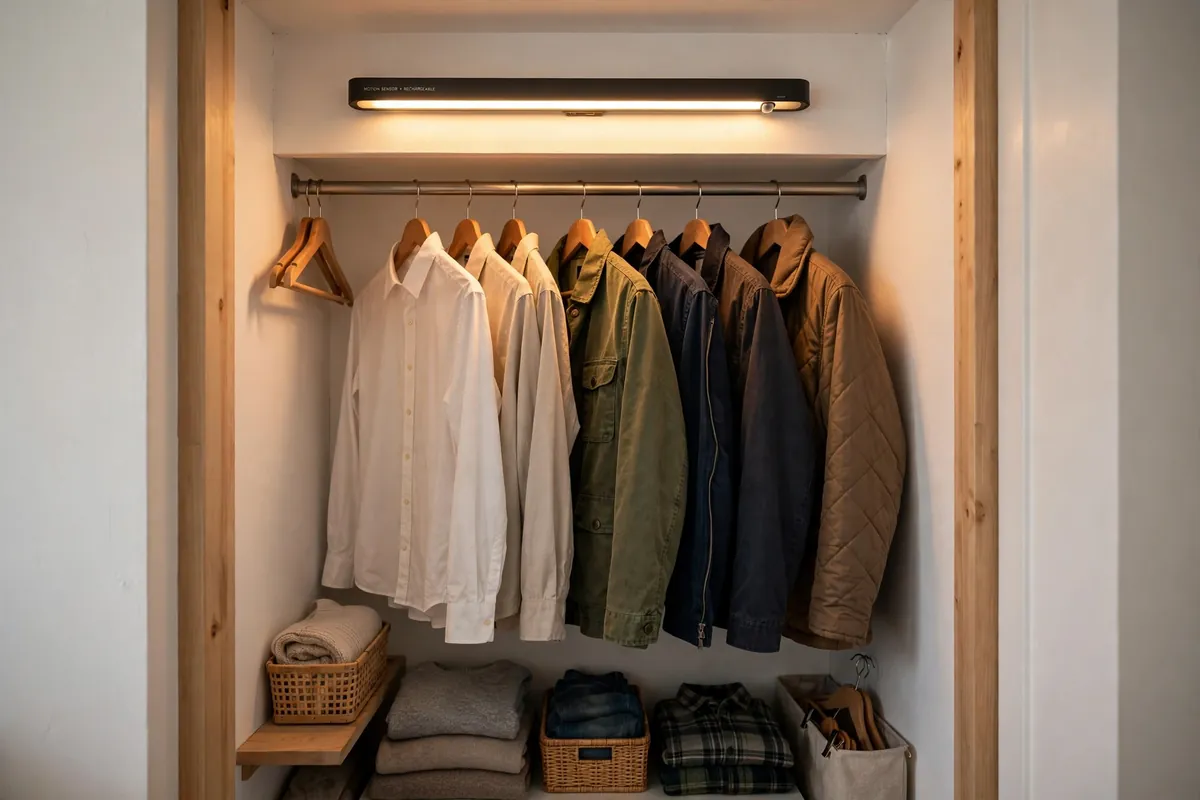
- Rechargeable LED light bars. The easiest starting point in this whole list. These slim bars stick to a shelf or wall with a magnetic strip, run on a built-in battery you charge with USB, and turn on by motion. Mount one under each shelf above a hanging rod and you have instant, even, hands-free light. Most last weeks or months between charges.
- Motion-sensor puck lights. Small, round, battery-powered discs that stick anywhere with adhesive backing. Two or three puck lights inside a dark reach-in closet — one on each side wall, one on the back — eliminate the shadows a single fixture cannot reach. Tap-to-turn-on models are cheapest; motion-sensor versions mean you never touch a switch with laundry in your arms.
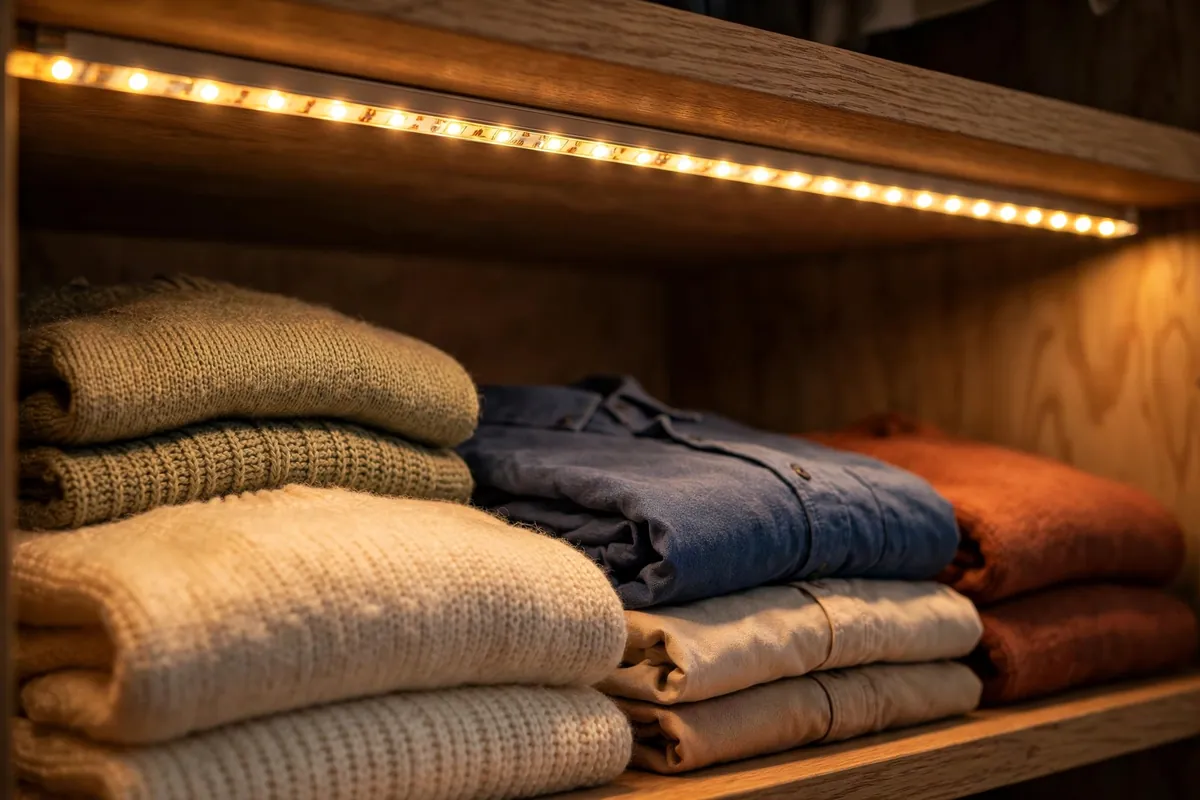
- LED strip lights under shelves. The single most effective upgrade for small closets, in my experience. A flexible strip stuck to the underside of each shelf washes the shelf below in soft, even light. Plug-in strips are cheapest and brightest; battery-powered versions with remotes are simpler. Keep the strip slightly back from the front edge so you never see the diodes directly.
- Closet rod with integrated lighting. Specialty hanging rods now come with a built-in LED channel underneath. If you are replacing a rod anyway, this is a beautiful solution — the light follows the rod and illuminates every hanger evenly. It is also one of the most satisfying upgrades because it hides all the hardware.
- Vertical strip lighting along the sides. For tall wardrobe sections or the inside edges of a walk-in closet, vertical strips light the full height of hanging clothes at once. This is the boutique trick: retail dressing areas use vertical light for exactly this reason, and it makes long garments — dresses, coats, robes — visible top to bottom instead of fading into darkness halfway down.
- Lighting inside drawers and cubbies. The drawers are where light never reaches, which is why they become black holes for socks and belts. Thin motion-activated strips inside drawers, or tiny puck lights in deep cubbies, turn them back into usable space. If you already sorted your jewelry and scarves with some closet accessory organization ideas, lighting is what keeps them visible.
- A statement ceiling light for walk-ins. If you have a walk-in closet with real ceiling height, one flush-mount fixture or a small chandelier gives the whole space an ambient base layer. Then layer task lighting (strips, rods) on top. The ceiling light alone will not cut it — but as part of a layered plan it is the finishing touch that makes the closet feel like a dressing room.
- Mirror backlighting. If there is a full-length mirror in or near your closet, a soft LED strip behind it or along its frame does two things at once: it lights you for outfit checks and adds gentle fill light to the room. It is a small detail that makes morning outfit decisions noticeably easier.
- Shoe shelf front lighting. Shoes live low and in the dark — especially boots and heels at the back of the shelf. A narrow strip mounted at the front lip of each shoe shelf, aimed back into the cubby, turns a muddy row of footwear into a display you can actually browse. This pairs beautifully with proper small-closet shoe organization so the shoes you organized are shoes you can find.
- Smart bulbs on a schedule. If your closet has a real fixture with a socket, a smart bulb set to warm 3000K and a morning schedule means the light is already on and flattering when you walk in. Some smart bulbs even shift color through the day — warm in the morning, neutral midday — so colors read the same at 7am as they will under office lights.
The Best Closet Lighting Ideas for Renters
If you rent, everything above that involves no wiring is your playground — which is almost the entire list. Landlords generally do not care about stick-on LEDs, and the best part is that you can take it all with you when you move.
My go-to renter setup is: rechargeable motion-sensor light bars under the shelves above the hanging rods, plus a couple of puck lights on the side walls. Total cost is under thirty dollars, installation is peel-and-stick, and the whole thing takes about fifteen minutes. When move-out day comes, everything pops off without a mark. This is the same damage-free philosophy behind good renter-friendly closet organization ideas — upgrade the space, keep your deposit.
A few renter-specific tips: use magnetic-mount bars rather than adhesive where possible, because magnets come off painted surfaces even cleaner. If your lease is strict about adhesive marks, run strips with removable mounting tape made for renters instead of the tape that comes in the box. And keep one spare light bar charged and ready — a dead bar in a dark closet is worse than no bar at all, because you keep expecting light that never comes.
One more idea for renters and owners alike: if you share a closet, give each side its own light source. In a shared closet, one person always gets the good light and the other gets shadows. Two small bars — one per side — is the fairest upgrade you can make, and it is worth reading our shared closet guide for the layout tricks that go with it.
Closet Lighting Mistakes to Avoid
These are the five mistakes I see most often. Avoid them and you will skip the frustrating part of this project entirely.
- Lighting only the ceiling. A single overhead fixture in a closet with a hanging rod creates a cone of light above the clothes and shadows everywhere else. Always pair ceiling light with shelf-level or rod-level light.
- Mounting light directly above the rod. As mentioned earlier, this puts the clothes between the light and your eyes. Move fixtures forward — under the shelf in front of the rod, or along the vertical edges.
- Choosing cold, bluish bulbs. Anything above 4000K in a closet makes the space feel sterile and lies about colors. Stay warm: 2700 to 3500K.
- Ignoring drawers and lower shelves. The bottom third of a closet is naturally the darkest. If you stop your lighting plan at the hanging rod, the shoes and storage bins down below stay in a cave.
- Skipping the motion sensor. Closet lights that need a switch get left on, or never turned on at all. A motion sensor or door-activated switch means the light is simply there whenever you are, with zero habits to change.
A Simple Weekend Plan to Light Your Closet
Here is how to actually get this done in one weekend instead of pinning ideas forever. On Saturday morning, empty just the closet (not the room — just the closet). While it is empty, wipe the shelves and do any small repairs you have been ignoring. Then install your lights while you have clear access — strips, bars, and pucks all go in faster with nothing in the way.
On Saturday afternoon, put everything back with intention. While the closet is empty, do a little editing: anything you did not wear last season can go to the donate pile. If you have been meaning to learn the full system, our walk-in closet organization ideas pair well with a fresh lighting setup, since lighting and layout really work as one project.
On Sunday, live with the lights for a day and adjust. Move a strip forward a few inches if you see diodes. Add a puck where a shadow lingers. Charge the rechargeables. Small tweaks now save months of mild annoyance later.
Conclusion
Of all the closet upgrades I have ever done — the dividers, the bins, the second rod — lighting has given me the most happiness per dollar. It is not the flashiest change, but it is the one I notice every single morning. A bright closet means faster mornings, better outfits, and clothes that finally get the attention they deserve instead of hiding in the shadows.
Start with one rechargeable bar under your main shelf this weekend. You will wonder why you waited so long, and I have a feeling you will not stop at one.