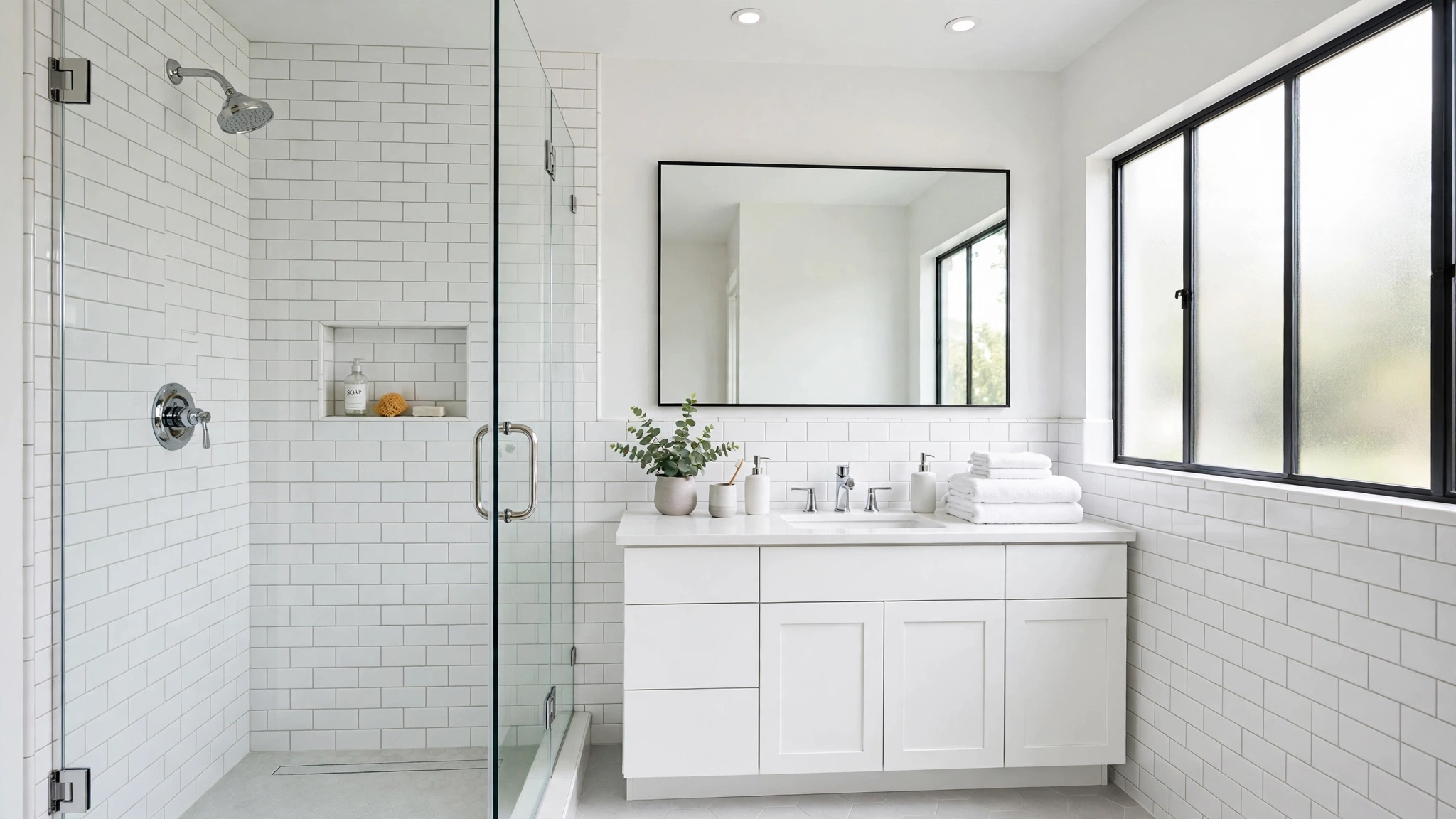

There is a particular kind of guilt that lives in bathrooms. You wipe down the sink on Sunday, spritz the mirror, swap out the hand towels, and the room looks perfectly fine. A guest could walk in right now and think you keep an immaculate house. But you know about the grout. You know about the pinkish film collecting around the tub drain and the faint mildew smell that rises when the shower runs for a few minutes. A real bathroom deep cleaning checklist is not the ten-minute tidy — it is the full 60 to 90 minute session that gets into every corner, every seam, and every spot your normal cleaning routine politely skips.
I have been deep cleaning bathrooms long enough to know the pattern: the quick weekly wipe keeps the visible surfaces decent, but the buildup in grout lines, behind the toilet, and inside the exhaust fan cover keeps quietly growing. This checklist is the one I use when a bathroom needs the full reset — the spring-clean, the pre-holiday, the “I am done pretending the fan cover is supposed to be that color” clean. Work through it top to bottom, in order, and nothing gets missed.
Before You Start: Prep and Supplies
Every professional cleaner I have ever watched works top to bottom. Dust, drips, and spray drift downward, so you always start with the ceiling, light fixtures, and the tops of cabinets and mirrors, and finish with the floors. It sounds obvious until you mop the floor first and then have to mop it again after scrubbing the shower. If your bathroom is just one stop in a bigger weekend push, our whole-home deep cleaning checklist covers the rest of the house in the same top-to-bottom order.
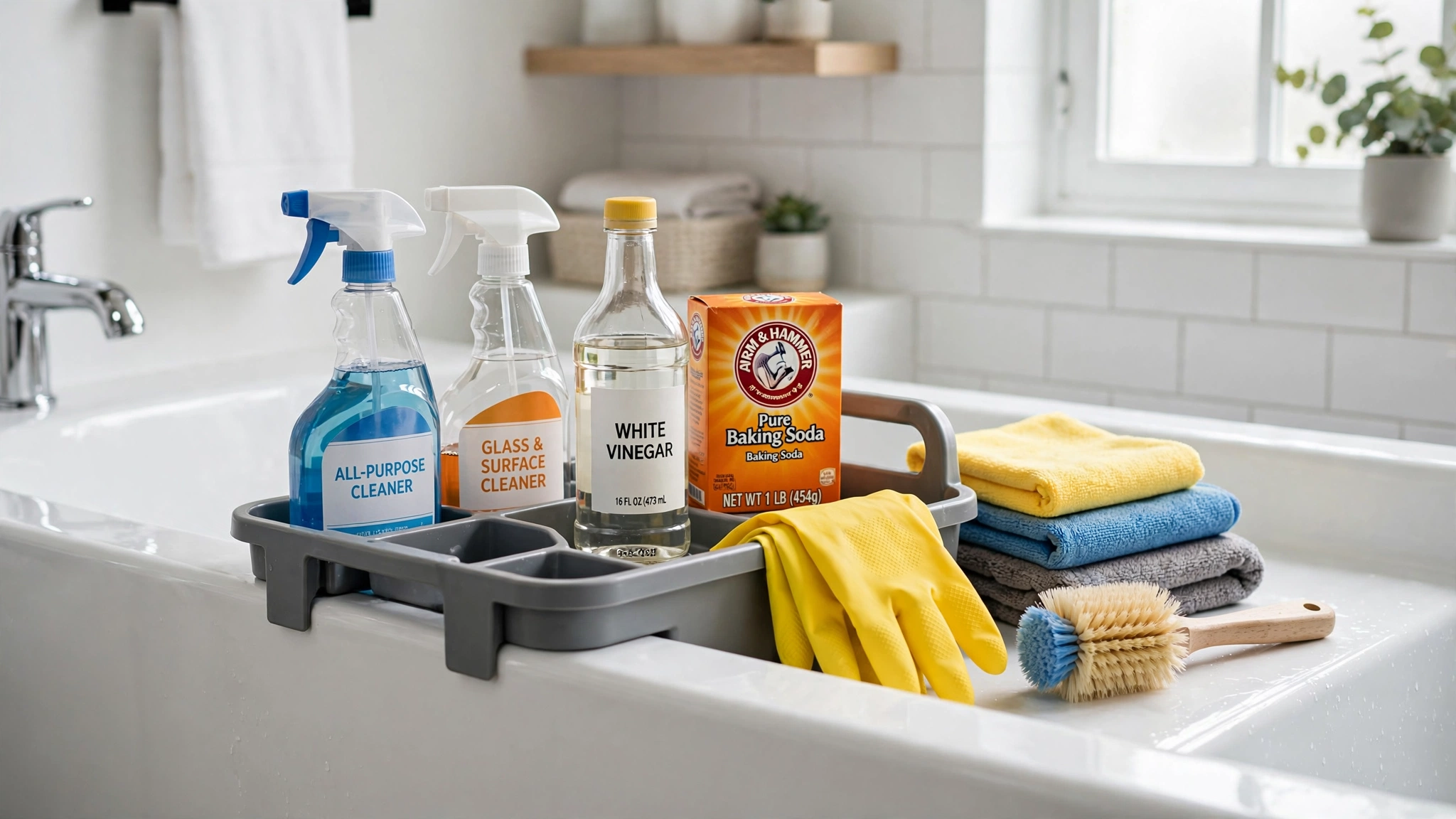
Gather everything before you start so you are not dripping through the house looking for the grout brush halfway through. You will need:
- A bathroom cleaner or a spray bottle of equal parts white vinegar and dish soap for soap scum
- Baking soda and a small bowl for making grout paste
- A dedicated grout brush or a stiff old toothbrush
- Toilet bowl cleaner and a toilet brush
- Rubber gloves, a microfiber cloth set, and a sponge with a scrubby side
- A mop or a microfiber floor pad, plus a bucket of warm water with a little all-purpose cleaner
- A plastic bag, white vinegar, and a rubber band for the showerhead
- A laundry basket for dirty towels, bath mats, and the shower curtain liner
Open a window or switch on the fan before you spray anything. Ventilation matters more in a small bathroom than anywhere else in the house, and the fan is actually going to be one of your cleaning targets later.
The Bathroom Deep Cleaning Checklist: Shower, Tub, and Tile
The shower takes the longest, so it goes first. Spray the walls, tub, and fixtures with your bathroom cleaner and let it sit while you work elsewhere — dwell time does half the job for you. While it works, tackle the showerhead: fill a sturdy plastic bag with white vinegar, pull it up over the head so it is fully submerged, and secure it with a rubber band. Leave it for an hour or two (overnight is even better for heavy mineral buildup). You will be amazed at the difference in water pressure and spray pattern afterward. Hard-water deposits genuinely choke off half the nozzles in most older showerheads.
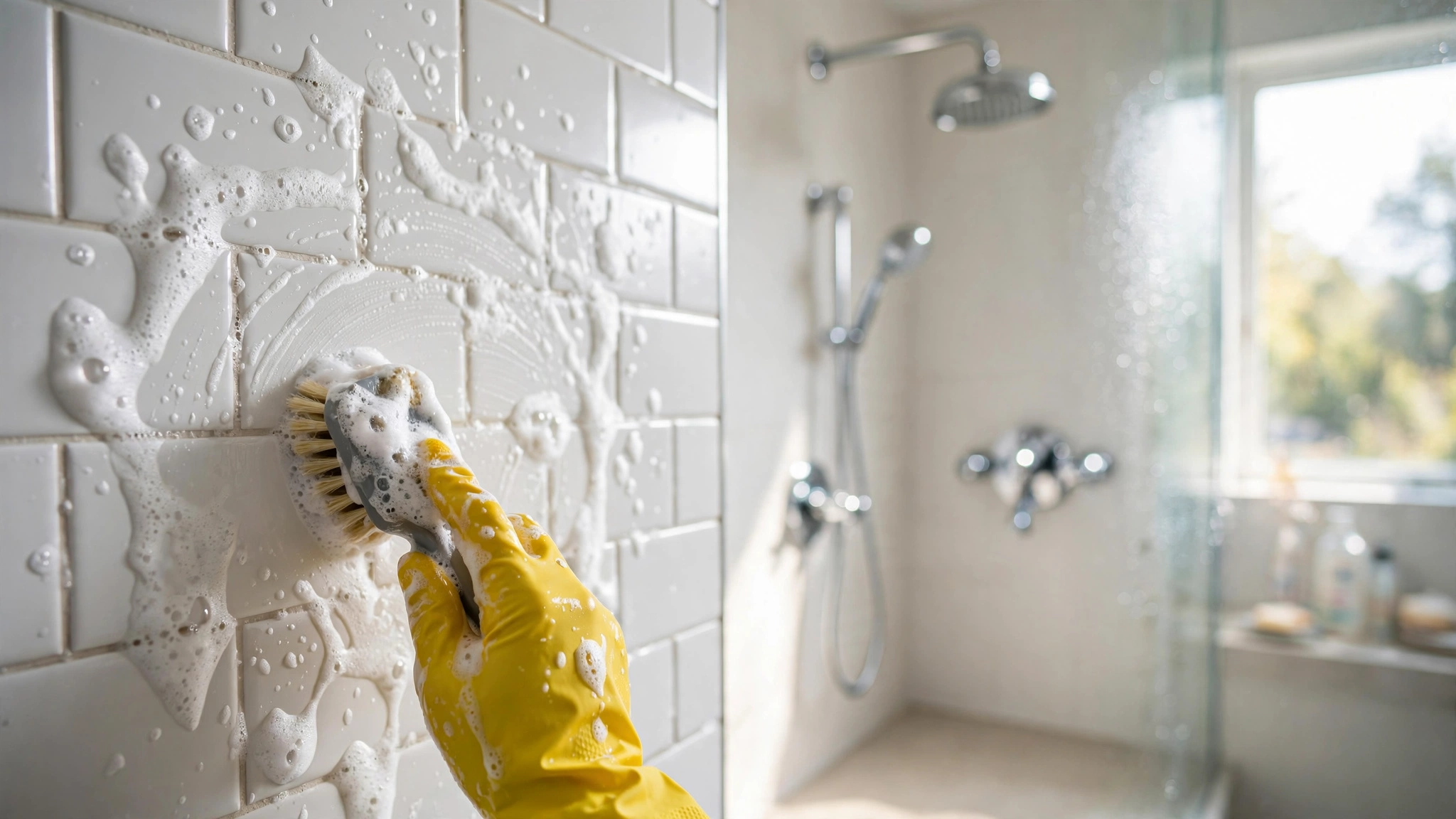
Now the grout — the thing everyone dreads. Grout is porous, which means it drinks in soap residue, mineral deposits, and mildew. A general surface cleaner will not touch it. Mix baking soda with just enough water (or hydrogen peroxide for stubborn stains) to form a thick paste, press it into the grout lines with the brush, and scrub in short sections. An old toothbrush is honestly perfect for the narrow lines between small tiles. Rinse thoroughly; leftover paste attracts new grime.
Glass shower doors deserve their own pass. Hard-water spots and soap film etch into glass over time if ignored, so scrub with a vinegar solution and buff dry with a microfiber cloth. A squeegee hung on the shower hook is the single best habit to pick up after this — one 20-second swipe after each shower keeps the glass clear for months. Do not forget the tub’s overflow plate and drain: run a toothbrush around both, and if the drain is slow, clear the hair before it becomes a plumbing call.
Checklist for this zone:
- Showerhead descaled in a vinegar bag
- Grout scrubbed with paste, not just surface cleaner
- Glass doors scrubbed and buffed dry
- Tub walls, floor, and caulk line cleaned
- Drain and overflow plate detailed
- Shower curtain liner washed or replaced
The Toilet: Inside, Outside, and Behind
Nobody loves this part, but a half-cleaned toilet is the fastest way to undo an otherwise spotless bathroom. Start inside the bowl: apply toilet bowl cleaner up under the rim — that is where the water jets hide and where stains form first — let it sit for ten minutes, then scrub with the brush and flush. A second application on a badly stained bowl is not a failure; mineral rings often need two passes.
The outside is where most people stop too early. Wipe down the entire tank, the flush handle or button, the lid (top and underside), the seat (both sides), and the base. Those little hinge bolts at the back of the seat collect grime in a ring you can see once you look for it — wrap a disinfectant wipe or cloth around a toothbrush and get into them.
And then, the behind. The strip of floor where the toilet meets the wall is one of the most skipped spots in the entire house, and it shows: dust, hair, and moisture collect there quietly. Get on your knees with your gloves on and clean the full perimeter of the base, plus the wall behind the tank. Finish by wiping the flush handle and light switch — the two highest-touch surfaces in the room.
Sink, Vanity, and Mirror: Where the Details Live
The sink area is where small, specific buildup hides. Pull everything off the countertop first — soap dispensers, toothbrush holders, trays — and clean under all of it. That sticky ring under the soap dispenser is nearly universal and takes ten seconds once you actually lift the bottle. Scrub the sink basin, especially the overflow drain hole near the top, which grows a surprising slime if never cleaned. The base of the faucet is another classic grime ring: wrap a cloth around a bit of dental floss and run it along the seam where the faucet meets the sink to pull out the crust.
Open the vanity doors and drawers while you are here. Wipe the interiors, toss anything expired (that sunscreen from three summers ago is not doing anyone favors), and wipe down the fronts and handles. If this turns into a bigger decluttering session than you planned, getting the area under the bathroom sink organized makes keeping it clean dramatically easier afterward.
For the mirror, skip the paper towels — they shed lint and just push streaks around. Spray glass cleaner or a 50/50 vinegar and water mix, and wipe with a microfiber cloth in an S-pattern rather than circles. Then polish the faucet until it shines; on hard-water faucets, a cloth dampened with vinegar lifts the cloudy mineral haze right off. Pair all of this with a quick daily cleaning routine for the sink area afterward, and you will rarely need to deep clean it again.
The Spots Everyone Forgets: Fan, Baseboards, and Floors
Now the finishing stretch — the unglamorous zone that separates a tidy bathroom from a truly deep-cleaned one. Start high: the exhaust fan cover. Switch the fan off, pop or unscrew the cover (most just clip off), and wash it in warm soapy water. Dust and lint coat the inside over time and quietly reduce airflow, which is why some bathrooms never quite air out. While the cover dries, vacuum or wipe the fan housing and the light fixtures, then dust the tops of the mirror frame, cabinets, and door trim.
Baseboards in a bathroom take a beating from splashed water and steam, so wipe them down fully — a damp microfiber cloth wrapped around a flat mop head works if bending is not your thing. Then the floors, always last: sweep or vacuum first (hair gathers in every corner and along the tub edge), then mop with your warm water solution. Pay special attention to the grout between floor tiles and the corner behind the door, where the mop rarely reaches.
- Exhaust fan cover removed and washed; housing dusted
- Light fixtures and tops of cabinets wiped
- Baseboards wiped the full perimeter
- Floors swept, then mopped, with corners and floor grout included
- Bath mats and rugs laundered; trash can emptied and wiped inside and out
- Fresh towels hung, products put back, soap restocked
Keeping It Clean After the Deep Clean
A deep clean buys you a head start, not permanent immunity. The habits that protect it are small: squeegee the shower after use, wipe the faucet and sink a few times a week, keep the exhaust fan running for 20 minutes after steamy showers, and never leave wet towels bunched on the floor. Fold those into a weekly cleaning schedule and the next deep clean — aim for every three to four months — will take half the time.
There is something genuinely satisfying about a bathroom where every surface is truly clean, not just visually tidy. Run your hand along the tub wall, look up at the fan cover, open the vanity — the whole room feels different. That is what this bathroom deep cleaning checklist is really for: not the illusion of clean, but the thing itself.
[…] anything past its date is stealing space from products that work. If you’re unsure what to toss, our bathroom deep cleaning checklist covers how to audit bathroom products while you’re at […]
[…] your oven look new. Deep-cleaning jobs still exist, and they still need their own time — a proper bathroom deep-cleaning checklist once a month will do more for your grout than a year of morning wipe-downs. What fifteen minutes […]
[…] minutes and gives you a genuinely fresh start. If you want to go deeper while you’re at it, our bathroom deep cleaning checklist covers this kind of reset in detail, since the linen closet usually serves the bathroom […]