
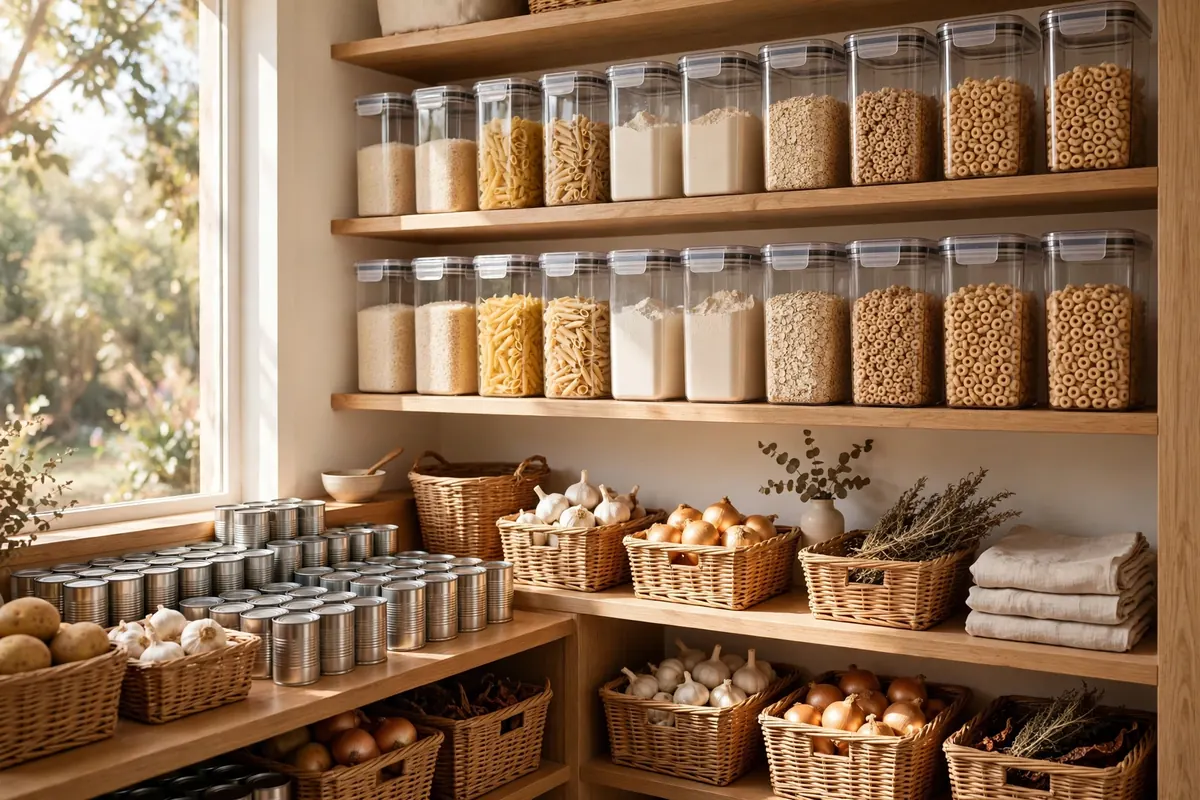

There is a special kind of chaos that only warehouse-club members truly understand. You run into Costco for milk and paper towels, and you walk out with a five-pound bag of jasmine rice, a two-gallon jug of olive oil, a 48-count box of granola bars, and three pounds of spinach that will absolutely go limp before you can finish it. You got a great deal — and now the deal is sitting on your kitchen counter, making your home feel like a loading dock.
Learning proper bulk food storage is what turns those money-saving hauls from stressful to genuinely smart. Buying in bulk only saves money if the food actually gets eaten — not if half of it goes stale or hides in the back of the pantry. I learned this the expensive way, after finding two unopened bags of the same coffee in my cabinet and one forgotten, weevil-y bag of flour. This guide is the system I wish someone had handed me before my first big haul: how to decant, which containers actually work, how to use your freezer like a pro, and where every bulk buy should live.
Why Bulk Buying Goes Wrong (Even in Tidy Kitchens)
Warehouse stores sell food in quantities designed for restaurants, not weeknight dinners, and our kitchens were not built for it. A standard pantry shelf holds maybe a dozen regular-size cans; suddenly you’re wedging in a 12-pack of crushed tomatoes and a bag of rice the size of a throw pillow. Without a plan, the bulk food lands wherever there’s space, and that randomness is where the savings quietly die.
The pattern is almost always the same. First comes the visibility problem: you cannot see what you have, so you buy it again. Half-open bags get rolled down and clipped, migrate to the back of the shelf, and three months later you own four partially used bags of brown sugar and none of them is fresh. Then the freshness problem: giant bags and jugs are not resealable in any meaningful way. Once opened, flour absorbs moisture and chips go stale. Then the overflow problem: the pantry is full, so extras land on top of the fridge or under the stairs — everywhere, which means nowhere is findable.
None of this means bulk buying is a bad idea. It means the buying is only half the job. The other half is storage, and it’s the half that decides whether that $18 bag of rice was a brilliant move or a pantry moths’ new apartment. If your shelves are starting from total chaos, pairing this system with a budget-friendly pantry organization reset first will make everything below ten times easier.
The Bulk Food Storage System: Decant, Label, Rotate
Every professional kitchen on earth manages bulk ingredients with the same three habits, and they work just as well in a home pantry. Once you set this up, it runs on autopilot — the whole routine adds maybe ten minutes to your post-haul unpacking.
1. Decant what you use daily
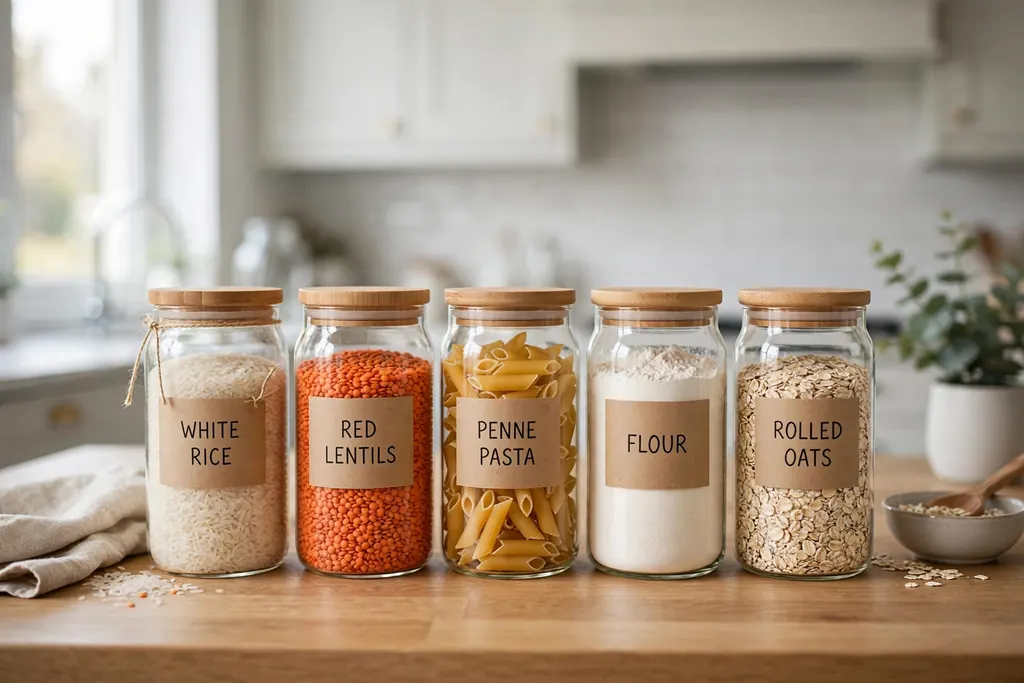
Decanting — pouring dry goods out of their original packaging into airtight containers — is the single biggest upgrade you can make. That five-pound bag of rice goes into two or three tall, clear canisters. Flour, sugar, oats, pasta, lentils, coffee beans, cereal: all of them last longer, pour easier, and look calmer in uniform containers. Keep the giant original bag as your refill station on a higher or lower shelf, and top up the canisters as they empty.
You don’t have to decant everything. Snacks in individual wrappers, canned goods, and anything you’ll finish within a week can stay as-is. Decant the staples you reach for daily — those are the ones where stale, spilled, or invisible costs you real money.
2. Label like your future self is forgetful (because they are)
Clear containers solve the “what is it” question but not the “when did I open it” question. A simple label with the item name and the date you decanted it ends the mystery. Painter’s tape and a marker work perfectly and cost almost nothing. I also jot the expiration date from the original package on the tape, since the box usually gets recycled the day you decant.
3. Rotate: first in, first out
Rotation is the habit that actually prevents waste. When you bring home a new giant bag of rice, the fresh bag goes behind the older one — or gets poured in only after the old canister is finished. For canned goods, slide new cans to the back of the organizer and pull from the front. It sounds fussy; in practice it takes five seconds, and it’s the reason restaurants almost never throw away pantry staples. Oldest in front, newest in back, always.
One more small habit ties it all together: keep a running “buy again” list on the fridge or your phone, and add to it when a canister gets low rather than when it’s empty. Running out mid-recipe is how impulse duplicate purchases happen.
The Best Containers for Bulk Food Storage
The right container depends on what you’re storing, but a few types cover nearly every bulk scenario. You don’t need a matched designer set — you need airtight, appropriately sized, and ideally clear or labeled.
- Airtight canisters for dry staples. Tall, stackable canisters with silicone-seal lids are the workhorses for rice, flour, sugar, pasta, oats, and cereal. Glass looks beautiful and doesn’t hold odors; good BPA-free plastic is lighter and fine for everyday use. Buy a few sizes rather than one matched set — bulk quantities are awkward, and one giant canister for everything never fits the shelf.
- Wide-mouth jars for medium quantities. Half-gallon mason jars are perfect for lentils, dried beans, nuts, and granola from big bags. They’re cheap, truly airtight, and you can see exactly how much is left.
- Can organizers and risers. Bulk packs of canned tomatoes, beans, and tuna need a system, not a pile. A simple can organizer that lets cans roll forward — first in, first out by design — or even sturdy shelf risers so the back row stays visible will end the avalanche problem.
- Clear bins for grouped items. Snack multipacks and granola bar boxes stay manageable in one open bin labeled “snacks” instead of scattered across three shelves. Bins also contain the crumbs and make wiping the shelf a two-second job.
- Vacuum-seal bags for the deep stash. If you buy meat, cheese, or coffee in true bulk, a vacuum sealer pays for itself fast. Removing the air can double freezer life, and flat-sealed bags stack like files instead of ballooning into unstackable lumps.
A word on buying containers: measure your shelves first, then shop. The prettiest canister set in the world is useless if it’s half an inch too tall for the shelf, and this is the number one reason container projects stall out. For taming the lid-and-container chaos that builds up alongside all this, my guide to organizing food storage containers pairs well with everything on this list.
Freezer First: The Secret Weapon for Warehouse Hauls
Your freezer is the reason bulk buying perishables can work at all. The trick is processing the haul the day you bring it home — not “later,” because later is when the spinach liquefies. Set a timer for twenty minutes after a big shop and do the freezer triage first, before anything goes in the pantry.
- Portion before you freeze. That family pack of chicken breasts, the giant tray of ground beef, the two-pound block of cheese — divide them into meal-sized portions now. Future you, staring into the freezer at 6 p.m., needs dinner-ready quantities, not a five-pound meat iceberg.
- Flatten everything. Press portioned meat, soups, and sauces flat in freezer bags and squeeze out the air. Flat bags freeze faster, thaw faster, and stack like books so you can actually find things.
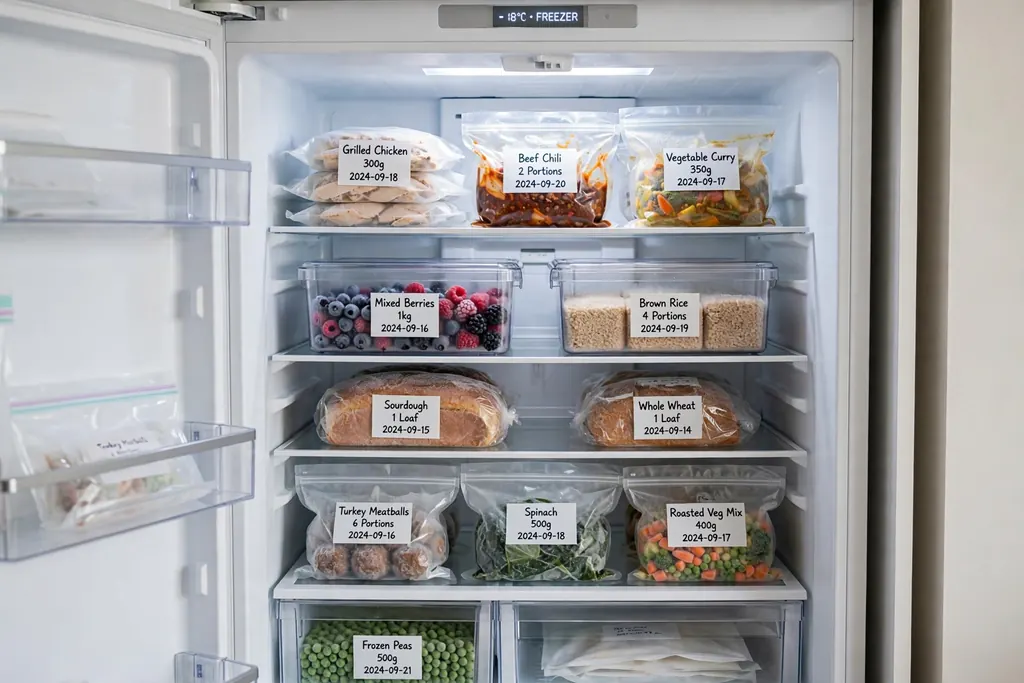
- Label with contents AND date. Every frozen mystery bag looks identical after a month. “Chili — Sept 2026” on painter’s tape takes three seconds and saves you from the sniff-and-guess game.
- Give the freezer zones too. One shelf or bin for meat, one for vegetables and fruit, one for bread and baked goods, one for ready-made meals. A chest freezer without zones is just a cold junk drawer.
- Bread and dairy freeze beautifully. Bulk muffins, bagels, tortillas, butter, and shredded cheese all freeze well. Slice bagels before freezing so you can toast them straight from frozen.
Produce is where most bulk hauls go to die, so be honest about what you’ll actually eat fresh. Wash and prep what you’ll use in the next three days; chop and freeze the rest for smoothies, soups, and stir-fries. Berries freeze in a single layer on a tray before bagging so they don’t clump, and greens you won’t finish get blanched and frozen for cooking. If fridge organization is part of your struggle, these fridge organization strategies that keep food fresh longer will protect the fresh half of every haul.
Give Every Bulk Buy a Zone
Once everything is decanted, labeled, and portioned, it needs a permanent address. Zones are shelf areas dedicated to one category, and they’re what keep a bulk system from drifting back into chaos after two weeks. You don’t need a walk-in pantry for this — a single cabinet works if the zones are clear. A setup that works in most kitchens:
- Everyday decant shelf (eye level): the canisters and jars you reach for daily — rice, pasta, oats, coffee, cooking oil in a smaller bottle.
- Bulk backup shelf (high or low): the giant refill bags and jugs, plus multipack boxes. This is your little warehouse; visit it only to refill the everyday shelf.
- Snack bin: one bin for granola bars, crackers, and multipack snacks. When it’s empty, you know it’s time to restock — no digging required.
- Canned goods row: all cans together, oldest in front, ideally in an organizer or on a riser.
- Baking zone: flour, sugar, baking soda, chocolate chips — everything for baking in one spot so you’re not hunting across three shelves mid-recipe.
- Freezer zones: meat, produce, bread, and ready meals in their own bins or shelf areas, as described above.
The magic of zones is that anyone in the house can put groceries away correctly without being told, and you can see at a glance what’s running low before you shop. If your cabinets themselves are fighting you — deep shelves where things vanish — it’s worth fixing the layout with some smart kitchen cabinet organization ideas so your zones have a fighting chance.
A Calmer Kitchen Starts With the Next Haul
You don’t need to overhaul your whole kitchen this weekend. Start with your very next warehouse run: bring the haul home, spend twenty minutes on freezer triage, decant the two or three staples you use most, and label them with today’s date. That’s it. The next haul, add the zones. The one after that, the can organizer.
Bulk food storage isn’t about a magazine-worthy pantry — though yours might end up looking like one. It’s about making the smart financial choice actually pay off: food that stays fresh, shelves you can read at a glance, and no more mystery bags in the back. Your wallet already did the smart part at the checkout. Now give those savings a proper home.