
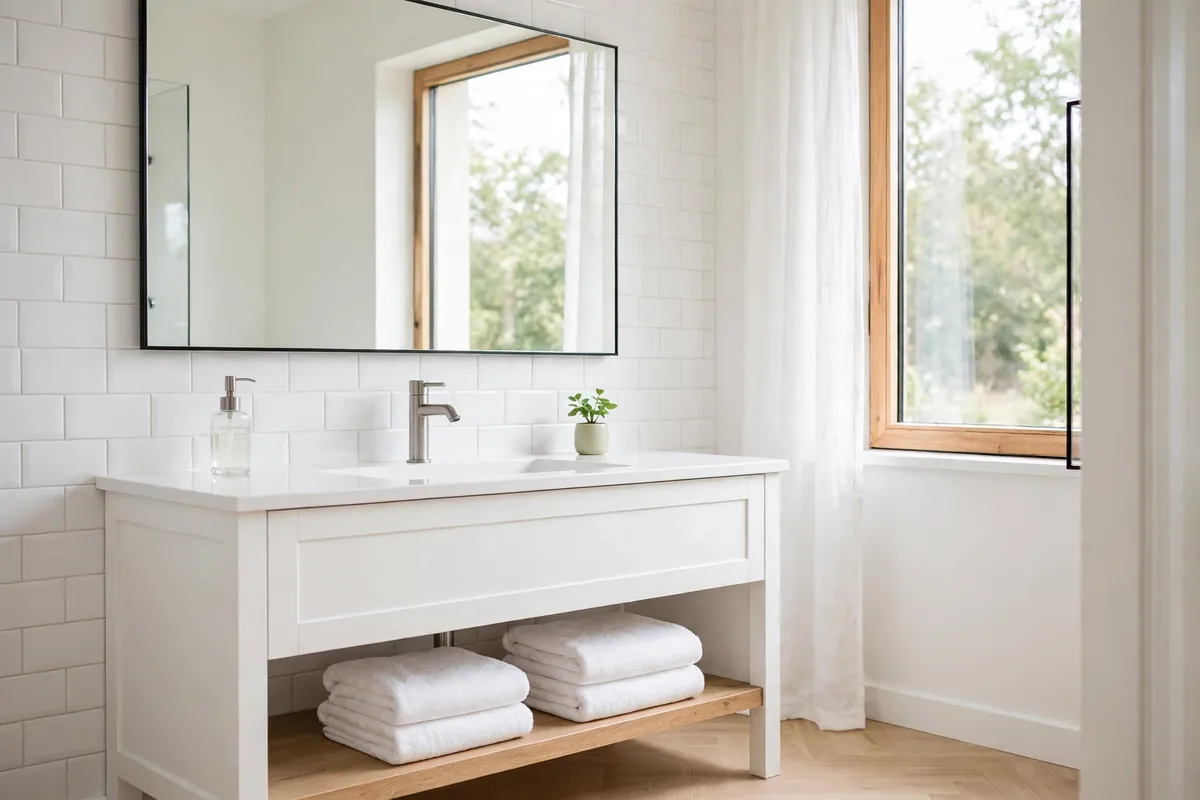

Learning how to declutter a bathroom is one of the fastest, most satisfying wins in home organization. The bathroom is small, so the job feels doable — yet somehow it is also the room where clutter multiplies fastest. A half-empty shampoo crowds the shower ledge, three half-used moisturizers jostle for space on the counter, and the drawer you open every morning has become a graveyard for expired medicines and hair ties that lost their stretch months ago. You are not messy. Bathrooms are simply hard-working rooms with very little storage, and without a system they fill up quietly, one small item at a time. The good news: in a single focused hour, you can turn a chaotic space into a calm one that makes your mornings easier — and keep it that way.
This guide walks you through the whole process, step by step, and finishes with a five-minute weekly routine that stops the clutter from creeping back. No fancy organizers required, no ruthless minimalism, and no guilt about the face cream you bought and never liked. Just a clear plan and an honest look at what you actually use.
How to Declutter a Bathroom: Start With a Realistic Plan
Before you pull a single bottle off a shelf, give yourself a proper setup. Pick a time when you will not be interrupted — about an hour for a standard family bathroom, a little longer if you share it with teenagers or it has been years since anyone tackled it. Gather a bin bag for rubbish, a bag for donations, a laundry basket for things that belong in other rooms, and a couple of cleaning cloths. Having the bags ready means you never have to leave the room mid-task to hunt for one, which is exactly how decluttering sessions quietly fall apart.
Next, decide your ground rules before you start touching things: the expiry rule and the honesty rule. The expiry rule is simple — anything past its date, anything that smells off, or anything that has changed colour or texture goes straight in the bin. Old medicines, sunscreens, and opened eye products can irritate your skin or stop working, so this is a health decision as much as a tidy one. The honesty rule is harder: if you have not used something in the past six months and cannot name a specific occasion when you will use it in the next month, it goes. Your bathroom is not a museum, and keeping things out of guilt only costs you space and peace of mind every morning.
Empty Everything — Yes, Every Single Drawer
The single most effective step in learning how to declutter a bathroom is also the one people resist most: take everything out. Not one shelf at a time — everything. Open every drawer, every cupboard, the medicine cabinet, and the shower caddy, and lay it all out on the floor or on a towel spread over the bed. It will look worse before it looks better, and that is exactly the point. When everything is visible in one place, you can finally see the true scale of what you own.
Working with a completely empty bathroom has a second benefit that is easy to underestimate: you can finally clean properly. Bathroom shelves collect a sticky film of spilled shampoo, toothpaste splatter, and dust that no amount of wiping around bottles ever removes. With the shelves bare, a hot cloth and a good all-purpose cleaner will make them look new in minutes.
While everything is out, check the storage itself. A drawer that sticks or a cabinet door that will not close is a small daily irritation worth fixing now — tighten a hinge or replace a cracked soap dish. You will never have a better moment than when the room is already empty.
Sort It All Into Four Honest Piles
Now comes the sorting, and the trick is to keep it ruthlessly simple. Four piles, no more, no maybe pile. A “maybe” pile is just clutter with a nicer name, and it always ends up back on the shelf.
- Keep — use daily or weekly: Your everyday essentials: toothbrush, toothpaste, deodorant, face wash, moisturizer, shampoo, conditioner, razor, and hairbrush. If you use it at least once a week, it earns a place.
- Keep — use occasionally: Things with a real, specific purpose: a hair treatment you use once a fortnight, a first-aid kit, nail clippers, and the face mask you use on Sundays. These stay, but they do not need prime real estate.
- Bin — expired, broken, or empty: Out-of-date medicines and sunscreens, dried-up mascara and nail polish, and empty bottles you meant to recycle. Many pharmacies take old medicines back for safe disposal, so pop them in a bag and drop them off on your next errand.
- Donate or relocate: Unopened toiletries you will never use make lovely donations to a shelter or food bank. Anything that belongs in another room — the sewing kit, the spare batteries, the reading glasses — goes in the basket to be returned to its proper home.
Work through your collection quickly and trust your first instinct. If you pick something up and hesitate, ask yourself three questions: Have I used this in the last six months? Would I buy it again today? Would I miss it if it were gone tomorrow? Two “no” answers and it leaves the bathroom. Most people throw away or donate a third of what they own in this step alone. Your bathroom only needs what you actually use — everything else was just taking up space and attention.
Clean the Empty Space Before Anything Goes Back
With the shelves bare and the decisions made, this is your moment to deep-clean — and it takes far less time than you think when there is nothing in the way. Start from the top and work down: wipe the inside of the medicine cabinet and the top of the mirror, then the shelves, then the counter, then the sink. Warm water and washing-up liquid handle most bathroom grime, while a paste of bicarbonate of soda and water shifts stubborn limescale around taps. Do not forget the spots that hide dirt: the groove where the mirror meets the wall and the base of the taps, where toothpaste and soap scum love to collect.
Give the floor the same treatment. Move the bath mat, the scales, and the bin out of the way, and mop properly into the corners. A quick wipe of the shower head and the sealant around the bath now prevents mould and grime from building up later — it is much easier to keep a clean bathroom clean than to rescue a neglected one. Leave the room for ten minutes while everything dries. Coming back to a spotless, empty bathroom is a small reward in itself, and it makes you think twice before putting anything unnecessary back.
Put Back Only What Earns Its Place
Now the satisfying part: rebuilding your bathroom around what you actually use. The guiding principle is simple — the things you reach for every morning live within easy reach, and everything else lives further away. Start with the countertop, because it sets the tone for the whole room. A clear counter instantly makes a bathroom feel calmer and bigger, so keep it almost bare: a soap dispenser, your toothbrush, and perhaps one small plant. If your mornings feel rushed, read our guide to bathroom countertop organization ideas for a calm, clutter-free morning — it shows how a clear surface can change the whole feel of your day.
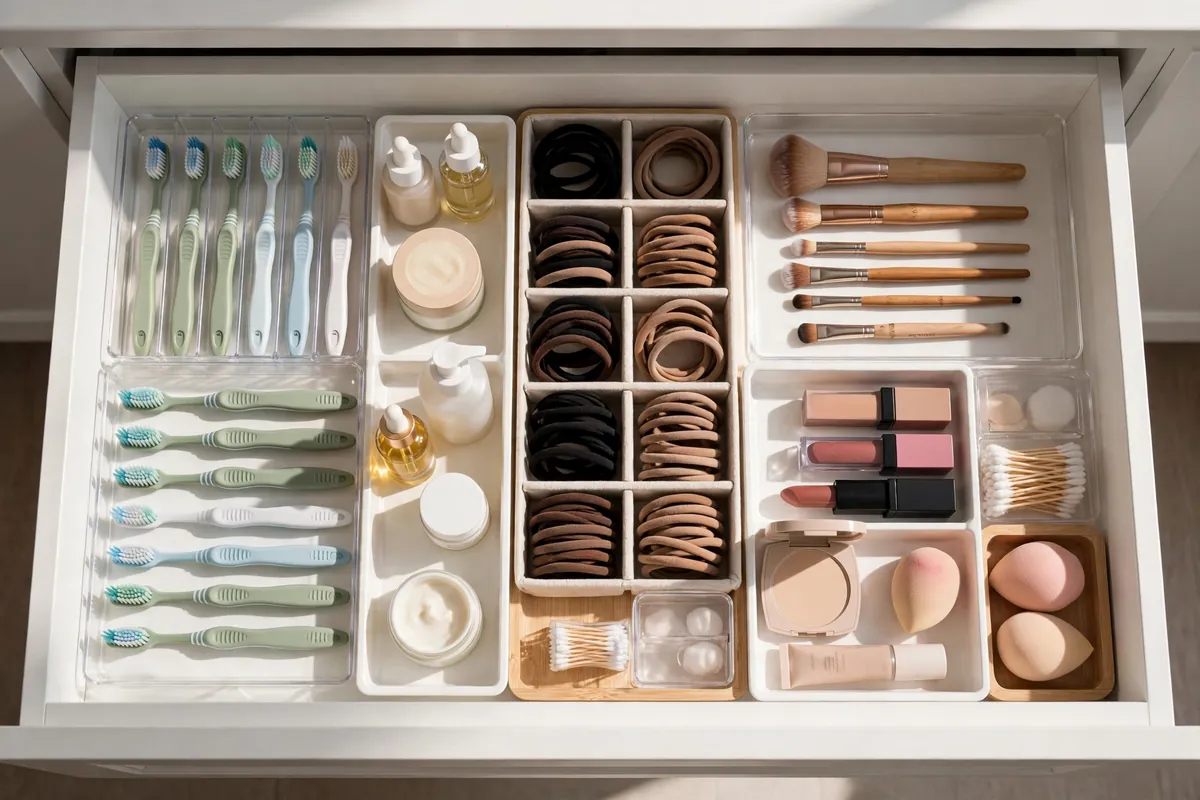
Next, tackle the drawers. This is where most bathroom clutter hides, because a closed drawer makes mess invisible — until you open it and cannot find anything. Small dividers, or even repurposed jam jars and small boxes, turn one chaotic drawer into neat zones: dental care in one section, hair tools in another, skincare in a third. Our bathroom drawer organization ideas walk through simple layouts that work in shallow and deep drawers alike, using containers you probably already own. The rule for drawers is one layer only: if you have to dig through one thing to reach another, the drawer is still too full.
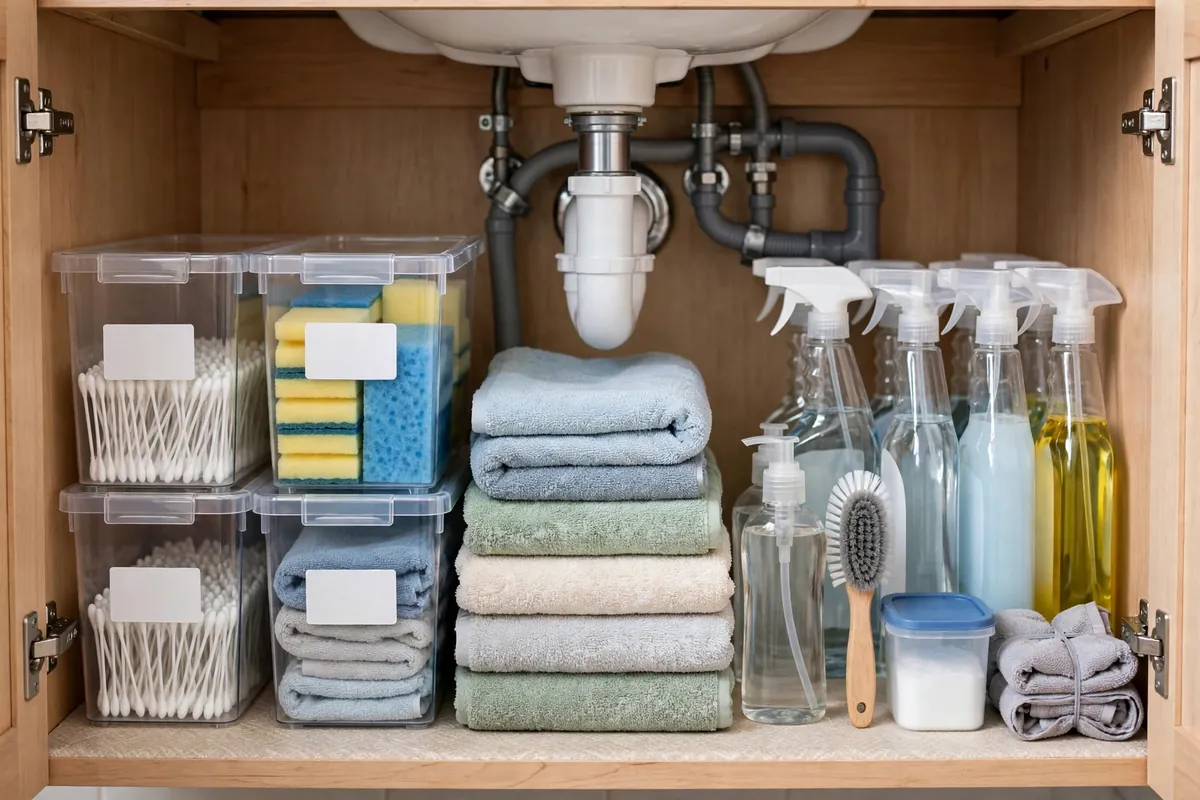
The cabinet under the sink is the workhorse of bathroom storage, and it deserves a proper system rather than a jumble of bottles. Keep cleaning supplies together in one caddy so you can lift them out in one go, and store spare toilet rolls and towels in a basket. Our under-sink bathroom storage ideas show how to make the most of this awkward, pipe-filled space without spending a fortune. And do not forget the medicine cabinet: medicines and first-aid supplies should live there, organized so you can see every label at a glance. These medicine cabinet organization ideas that end the morning scramble are a great starting point if yours has become a jumble of half-empty boxes.
As you put things back, apply the “one in, one out” test. The hair dryer you use daily stays; the curling iron you use twice a year could live in a bedroom drawer instead, freeing up valuable space. Your bathroom should hold your current routine, not your entire stockpile — a little breathing room on every shelf is the sign you have done it right.
How to Declutter a Bathroom for Good: The Five-Minute Weekly Reset
A decluttered bathroom stays decluttered only if you give it a tiny bit of regular attention. The good news is that the maintenance routine is almost comically short: five minutes, once a week, and the clutter never gets a chance to rebuild. Pick a regular slot — Sunday evening works well, or the night before bin day — and run through the same quick routine each time.
- Toss the finished and the expired: Bin any empty bottles, dried-out products, or used-up items, and check for anything past its date.
- Return strays to their homes: Put the hairbrush back in its drawer, the towel back on its rail, and anything that wandered in from another room back where it belongs.
- Wipe the counter and mirror: A quick spray and wipe keeps toothpaste splatter and water marks from building up into a proper cleaning job.
- Check what is running low: Notice what you will need soon — shampoo, toothpaste, plasters — and add it to the shopping list now, so you never buy a panic duplicate that sits unopened for months.
- Enforce one in, one out: Every time a new product enters the bathroom, an old one leaves. This single habit is the most powerful clutter-prevention tool there is.
Two more habits are worth building in. First, keep a small bag near the bathroom door for donations: unopened products you decide you do not like and spare hotel toiletries can go straight in, and the bag goes to the charity shop when it is full. Second, do a quick seasonal review every three or four months — a fifteen-minute version of today’s clear-out, checking expiry dates and asking the honest questions again. A short seasonal reset keeps your bathroom matched to your actual routine all year round.
A Calmer Bathroom, A Calmer Morning
That is really all there is to it. An hour of honest sorting, a good clean, and a simple system for putting things back — and your bathroom becomes a room that works for you instead of against you. Mornings get easier when you can find what you need without digging, and the small daily friction of clutter simply disappears. The best part is that you do not need to buy anything to get there: most of the work is deciding what leaves, not what arrives. So pick an hour this week, put on your favourite playlist, and give your bathroom the fresh start it deserves.