
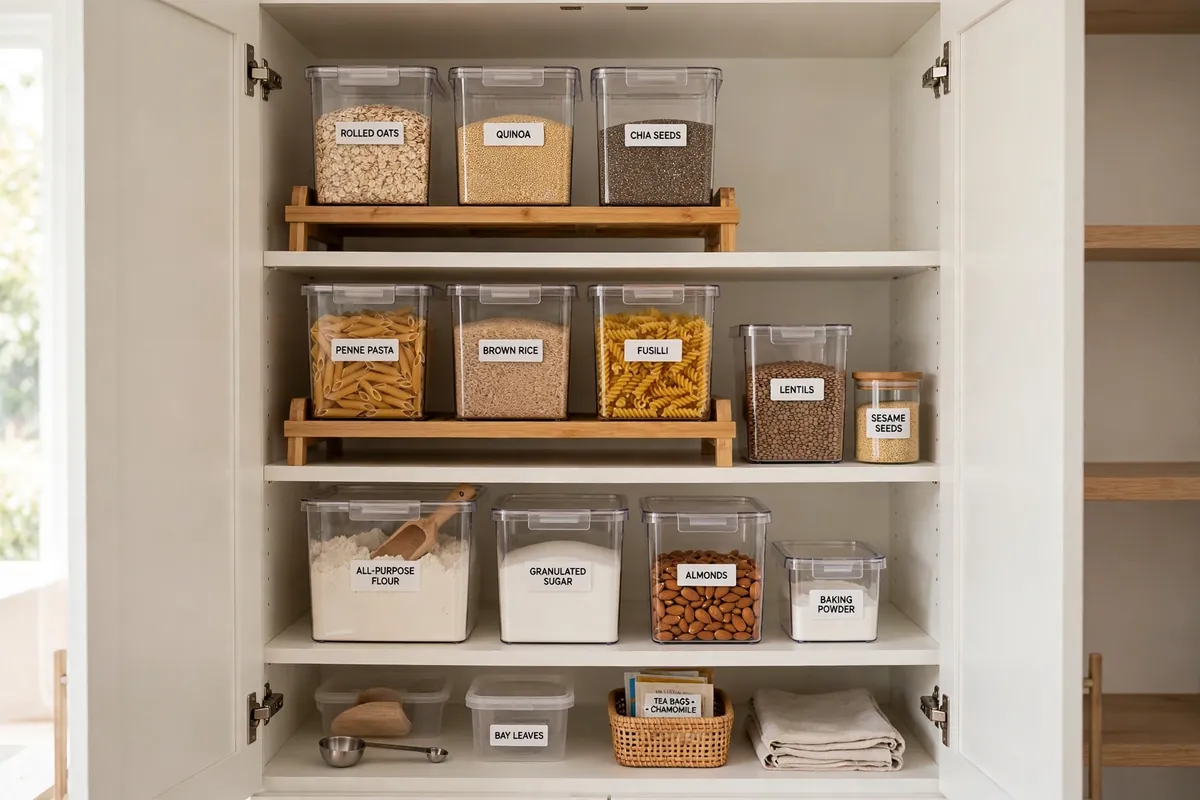

When Maya moved into her first rented flat in Manchester, her attempt at renter-friendly pantry organization went wrong fast. The pantry was a single cupboard above the fridge, a deep dark hole where bags of rice went to disappear. She lost a bag of flour to a weevil infestation, discovered three half-empty boxes of pasta she had forgotten she owned, and, worst of all, drilled a spice rack into the kitchen wall on her second weekend — a decision that cost her £60 of her deposit when she moved out two years later. Her story is a familiar one for renters everywhere, and it is exactly why getting this right matters so much. You deserve a kitchen that works properly, but not at the price of your deposit.
The good news is that a rented kitchen can be just as organized as an owned one. You do not need to drill, glue, paint, or permanently alter a single surface. With a handful of clever, removable tools and a little planning, you can turn even one chaotic cupboard into a pantry that saves you time, money, and food waste — and hand the keys back with everything exactly as you found it.
Start With Your Lease: The Renter-Friendly Pantry Organization Rules
Before you buy a single bin, spend ten minutes with your tenancy agreement. Most leases are surprisingly specific about what you may and may not do to the property. Look for clauses about fixtures, adhesive hooks, and damage to walls and cabinetry. Some landlords are relaxed about small screw holes; others will charge for every mark. If anything is unclear, a quick email to your landlord or letting agent is worth it — get the answer in writing, and keep that email somewhere safe.
A useful rule of thumb is this: if removing it leaves no trace, it is renter-safe. Tension rods, freestanding shelves, over-door racks, stackable bins, and rolling carts all pass that test. Screws, nails, heavy-duty adhesive strips on painted walls, and anything that requires drilling into tiles do not. Be especially careful with adhesive hooks inside cabinets: they can peel paint or laminate when removed, and a damaged cabinet door is a surprisingly expensive repair.
Take dated photos of your pantry on move-in day, inside every cupboard and on the doors. If a shelf is already scratched or a door hinge is loose, you want proof it was like that before you arrived. Store the photos in a folder with your lease. When you move out, take the same photos again. This five-minute habit is the single best protection for your deposit, and it costs nothing.
Tension Rods and Shelf Risers: Small Tools, Big Difference
If you buy only two things for a rental pantry, make them tension rods and shelf risers. A tension rod wedged vertically inside a cupboard creates an instant divider: slide baking trays, chopping boards, and muffin tins upright between the rod and the wall, and they stop toppling over every time you reach for one. A rod placed horizontally near the front of a deep shelf acts as a guard rail, keeping bottles from sliding out when you open the door.
Shelf risers solve the other classic rental problem — the tall, empty cupboard with one shelf and a mountain of wasted vertical space. A simple wire or bamboo riser doubles your usable surface overnight. Put everyday items like oats, coffee, and tea on the riser, and keep heavier or less-used things underneath. Suddenly you can see everything at a glance instead of digging through a pile.
Both tools share the quality renters need most: they leave no mark whatsoever. When you move, you lift them out, wipe the shelf, and the cupboard looks untouched. They are also cheap enough to replace for each new home, and they fit in a moving box without a second thought. For a deeper look at making a cramped pantry work harder, see these small pantry organization ideas for big function in a tiny space, which pair beautifully with the tricks in this guide.
Over-Door Racks and Under-Shelf Baskets
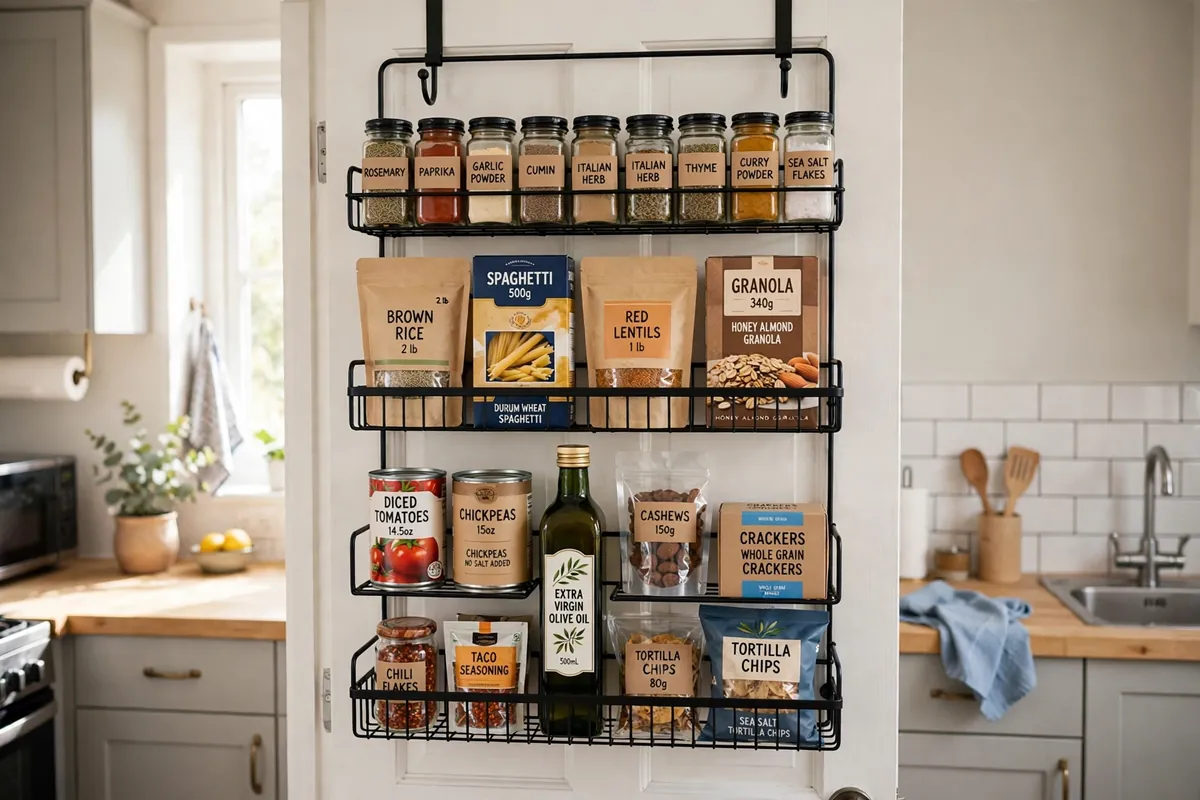
The inside of a pantry door is free real estate that most renters ignore. An over-door rack hooks over the top of the door — no screws, no adhesive — and instantly gives you two or three extra shelves for spices, small jars, and packets. In a small rental kitchen, this alone can free up an entire cupboard shelf. Check the gap above your door first: most racks fit standard doors, but a tight frame can stop the door closing properly, so measure before you order.
Under-shelf baskets work the same way inside the cupboard. They slide onto an existing shelf and hang beneath it, creating a shallow basket for cling film, foil, sandwich bags, or spice packets. They cost very little, they come with you when you move, and they turn dead air into storage. One caution: do not overload them. A basket stuffed with heavy jars will sag and can scratch the shelf below, so keep them for light items only.
Between the door rack and the under-shelf baskets, you have effectively added two or three shelves to your pantry without touching a drill. In Maya’s case, the over-door rack became her spice station — twenty jars, alphabetized, visible at a glance — and the cupboard shelf it freed up finally had room for her baking supplies. If your pantry door is wide and sturdy, you might also like these pantry door organization ideas for getting even more from that overlooked surface.
Stackable Clear Bins and Zones in a Single Cabinet
Clear bins are the backbone of any organized pantry, and they suit renters particularly well because they are completely portable. Decant rice, pasta, flour, and cereals into stackable, airtight containers, and two things happen at once: your food stays fresh far longer, and you can see exactly what you have. No more buying a fourth bag of basmati because the other three are hiding behind the soup.
Label everything, even if the container is clear. A simple label — “rice,” “oats,” “plain flour” — saves you from opening six identical tubs to find the sugar. Chalk labels or removable stickers are ideal for renters because they peel off cleanly when you repurpose a container. Keep a consistent system: same-size containers stack neatly, and square containers waste far less space than round ones.
Now organize the bins into zones, even if your whole pantry is a single cabinet. A practical layout looks like this:
- Everyday zone: breakfast items, coffee, tea, and the cooking oil you reach for daily — front and centre, at eye level.
- Cooking zone: rice, pasta, tinned tomatoes, stock cubes, and sauces grouped together so dinner comes together without hunting.
- Baking zone: flour, sugar, baking powder, and chocolate chips in one bin or on one shelf section.
- Snacks and lunchbox zone: a single bin the whole household can grab from without disturbing the rest.
Zones matter because they stop the slow drift back into chaos. When every item has a home zone, putting the shopping away takes two minutes instead of ten, and anyone in the household can find things and put them back. If your cabinet is deep rather than wide, these deep pantry shelf organization ideas will help you reach the back without emptying the front every time.
Rolling Carts and Freestanding Shelves That Move With You
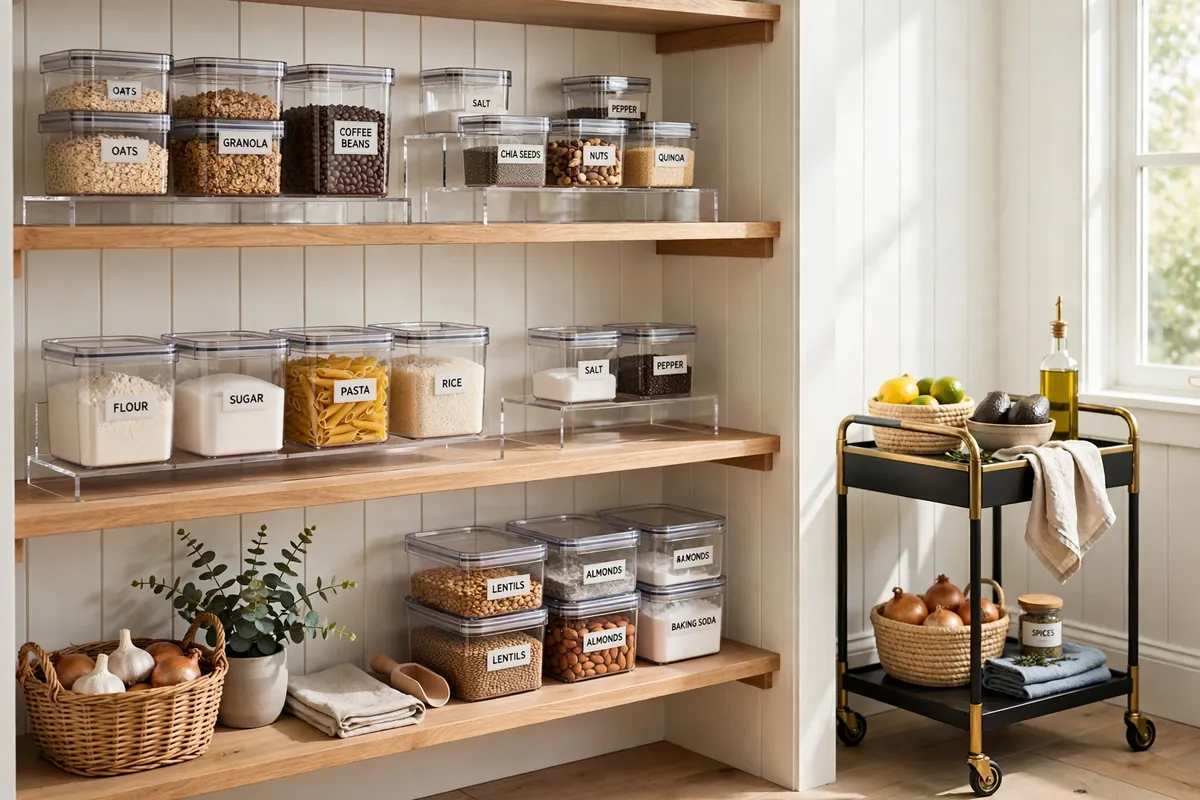
Some rental kitchens barely have a pantry at all — just a gap between the fridge and the wall, or an awkward corner that fits nothing. That is where rolling carts earn their keep. A narrow three-tier cart slides into gaps as slim as 20 centimetres and rolls out when you need it, giving you a mobile pantry for oils, spices, tinned goods, or cleaning supplies. When you move, it rolls straight into the removal van and straight into your next kitchen.
Freestanding shelving works the same way on a bigger scale. A small metal or bamboo shelving unit placed against a kitchen wall creates a pantry where none existed, and because it is furniture rather than a fixture, your landlord has no reason to object. Style it like part of the room — matching bins, a plant on top — and it looks intentional rather than improvised. If you do go bigger, a walk-in pantry organization guide still has useful zone and labelling principles, even if your version is a single freestanding unit rather than a room.
One practical tip: measure your doorways and your car before buying anything large. A shelving unit that fits your current kitchen beautifully is no good if it cannot get out of the flat on moving day. Flat-pack or easily disassembled units are the renter’s friend, and they also make cleaning behind them far easier — a detail landlords notice at inspection.
It is also worth thinking about weight and stability before you load a cart or a freestanding unit. Keep the heaviest items — big bags of rice, tins, bottles of oil — on the lowest tier, where they lower the centre of gravity and stop the unit wobbling when you roll it. A top-heavy cart is a spilled jar of pasta sauce waiting to happen, and a wobbly shelf in a rental is doubly annoying because you cannot simply screw it to the wall to steady it. If a unit feels unsteady on your kitchen floor, a couple of small adhesive felt pads under the feet will level it without leaving any trace, and a non-slip liner on each shelf stops jars creeping every time you pull the cart out. These are tiny, cheap fixes, but they are the difference between a system you enjoy using and one you quietly abandon after a month. The best rental pantry is one that survives real daily use: doors opening and closing, shopping being dumped in a hurry on a Friday evening, and a tired cook grabbing ingredients with one hand while stirring with the other.
The Move-Out Reset: Leaving the Pantry Better Than You Found It
When moving day approaches, your renter-friendly system pays for itself. Work through this short reset, ideally a week before your final inspection:
- Lift out every bin, riser, rack, and cart, and wipe down all shelves and door interiors.
- Remove labels, hooks, and any adhesive residue with warm soapy water — never a scraper on laminate.
- Check hinges and shelf supports, and tighten anything that has loosened during your stay.
- Compare your cupboards with your move-in photos, and fix anything that differs.
- Pack your organizers last, so you can set up the new kitchen on day one.
There is a satisfying symmetry to it: the same bins that organized your food for two years now pack it for the move, and the cupboard you hand back looks exactly as it did when you arrived — or better, because you cleaned it. Landlords remember tenants who leave a place in good shape, and that goodwill is worth real money when references and deposits are on the line.
A well-organized rental pantry is not about perfection. It is about a kitchen that makes your daily life easier without risking your deposit, using tools that travel with you from one home to the next. Start with your lease, add a tension rod and a riser, claim the back of the door, sort everything into clear zones, and let a rolling cart fill the gaps. Your future self — standing in a spotless kitchen on moving day, deposit intact — will be glad you did.