
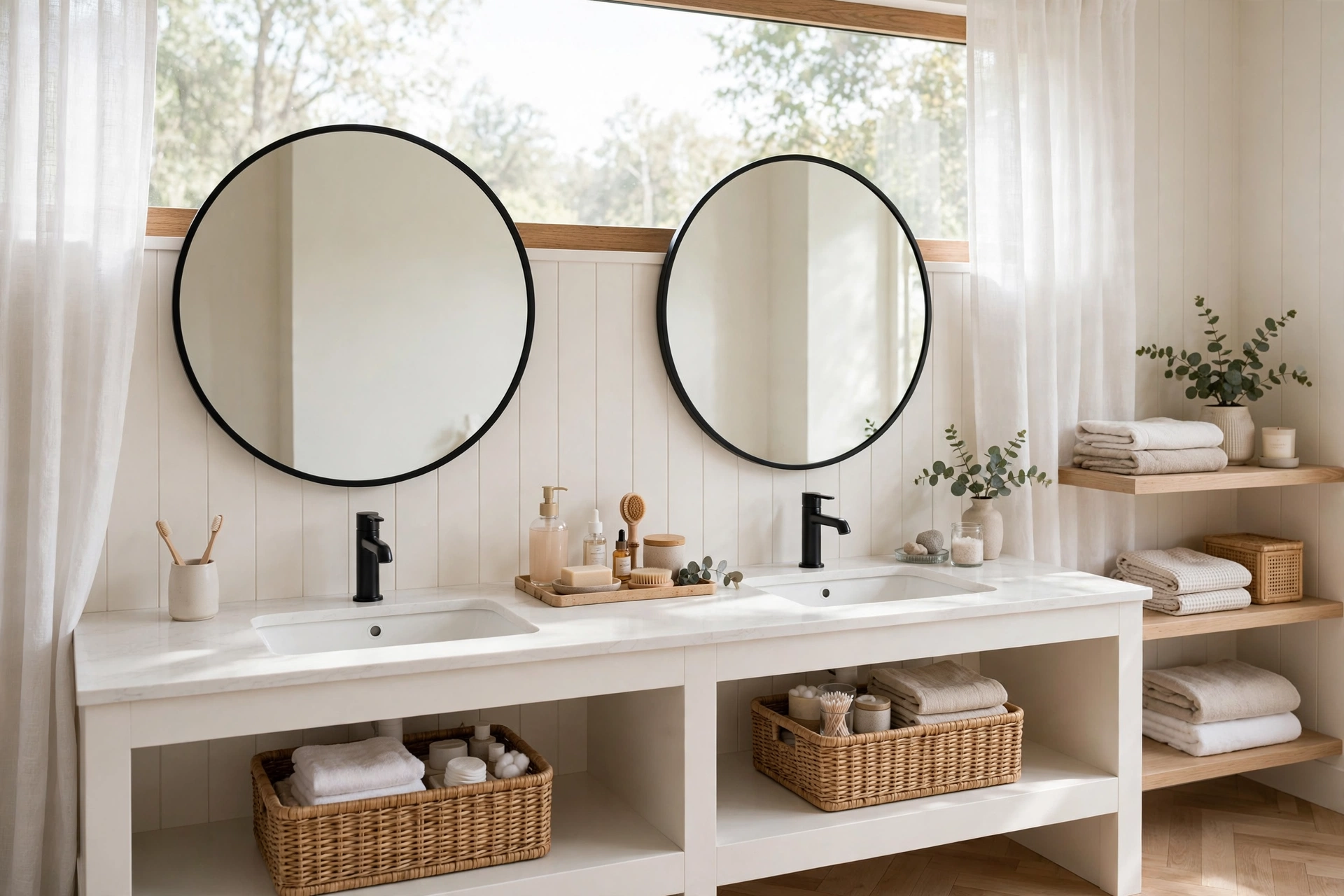

Picture 7:40 on a Tuesday morning: you’re brushing your teeth with one elbow out to keep your partner’s hair dryer from sliding off the counter, someone’s knocking on the door asking if you’ll be long, and the deodorant has vanished again. If that scene feels familiar, here’s the good news — decent shared bathroom organization is not a renovation project. It’s a handful of boundaries — zones, bins, hooks, and five small rules — that turn one crowded bathroom into a space four people can use without a daily negotiation. This guide walks you through the whole system, whether you share with a spouse, roommates, kids, or all three at once. No remodeling required, no big budget needed — just a Saturday afternoon and a few baskets.
Start With Zones, Not Products
Most shared-bathroom chaos has a single root cause: everyone’s stuff lives everywhere. Your moisturizer is on the counter, your sister’s is in the shower, the shaver lives on the windowsill, and the contact lens solution belongs to whoever finds it first. Nobody is messy on purpose — there’s just no map.
So before buying a single bin, map the bathroom’s five zones. Every item you own should live in exactly one of them:
- The counter zone — daily essentials only: toothbrushes, one soap dispenser, the skincare used every single morning. Nothing else earns counter space.
- The under-sink zone — bulk and backup: spare toilet paper, extra toothpaste, cleaning supplies. The things you need weekly, not hourly.
- The shower zone — current-use bathing products only, not the body wash you didn’t like.
- The towel zone — hooks or a rack for in-use towels, plus a slim hamper for the wet stuff.
- The personal zone — one drawer, shelf, or basket per person for everything that’s uniquely theirs. The most important zone in the whole room.
Stick this list inside a cabinet door for the first week. It turns “put it back” from a vague complaint into a specific instruction — and when everyone knows where things belong, tidying takes seconds instead of becoming a negotiation.
The One-Bin Rule: Give Every Person a Home Base
Ask any household that shares a bathroom peacefully what their secret is, and it’s some version of this: each person has their own container, and their stuff goes in the container. Not on the counter. Not balanced on the edge of the sink. In the container.
For couples, split the vanity down the middle — his drawer, her drawer; left shelf, right shelf. For roommates, go portable: a sturdy handled basket or shower caddy that lives in your bedroom and travels in for your routine. In a four-person apartment the bathroom physically cannot hold everyone’s full routine at once, and portable caddies keep it neutral territory — everything arrives and leaves in one trip.
With kids, keep it low and simple: one basket or drawer per child with a toothbrush, toothpaste, brush, and washcloth, reachable without climbing. Color-code them — Maya’s is blue, Leo’s is green — and the “whose toothbrush is this” argument ends forever.
Four rules make the system stick:
- Size the bin to the routine. A teenager with a twelve-step skincare ritual needs a bigger basket than a toothpaste-and-deodorant person. Unfair bins get ignored.
- Keep it washable. Bathroom bins get grimy; plastic or waterproof fabric beats cute wicker every time.
- Label it. A strip of washi tape or a label-maker tag ends the mystery of whose retainer case is whose.
- Purge monthly, ten minutes. Dump each bin, toss the expired sunscreen and the third lip balm, refill. The cheapest reset in the house.
Here’s why this matters more than it sounds: the shared-bathroom fight is never really about stuff. It’s about the feeling that your things get touched or borrowed without permission. Clearly marked personal territory dissolves that friction — and the bathroom feels bigger without changing a thing.

The shower is where shared-bathroom diplomacy goes to die: bottles on every ledge, someone else’s conditioner blocking yours, a razor doing something mysterious on the tub rim. The fix is blunt — the shower holds only what’s currently in use, and every person gets their own tier or basket.
A three-tier corner caddy gives a two-person household an instant split: your tier, my tier, and a shared middle tier for the soap everyone uses. For three or more people, hang one narrow caddy per person on the wall with suction or adhesive hooks — no drilling, renter-friendly — each holding just that person’s three or four products. Labeled slots end bottle-Tetris for good.
Two moves that multiply the effect:
- Decant the shared stuff. If everyone uses the same shampoo or body wash, pour it into one pump bottle instead of keeping four half-empty bottles from three brands. One bottle, one spot, zero confusion. (If you want to rebuild the whole setup properly, our shower organization ideas that actually work covers caddies, corners, and keeping mildew out of the picture.)
- Ban the bottle graveyard. The nearly-empty bottles everyone keeps “just in case” get finished, combined, or recycled this weekend. A shared shower has no room for inventory.
For households with kids: one mesh bag on a suction hook for bath toys, not the whole tub ledge. It dries fast, the tub stops looking like a splash park, and the drain stops clogging.
Counters, Cabinets, and Towels: The Storage Triangle
Counter space in a shared bathroom is earned, not assumed. Whatever stays out should be something someone touches daily — the soap dispenser, a toothbrush holder, maybe a small tray with the two or three products that genuinely get used morning and night. Everything else moves into a personal bin or onto a shelf.
The tray is the unsung hero here: corral the daily items on one tray and the counter looks intentional instead of invaded — plus, wiping the counter means lifting one tray, not relocating twelve bottles. In a family bathroom, give each person their own small tray in their color, and the tray doubles as their morning home base.
Under the sink is your bulk-storage goldmine, and it deserves better than a dark jumble. A two-tier organizer or a couple of clear bins creates real departments: backstock toilet paper and toothpaste in one, cleaning supplies in another, everyone’s backup products in a third. Clear bins matter because a shared household can’t rely on one person’s memory of where the spare hand soap lives. No cabinet at all — say, a pedestal sink? A slim rolling cart beside the sink or a small shelf above the toilet does the same job. More rental-friendly options are in our under-sink bathroom storage ideas guide.
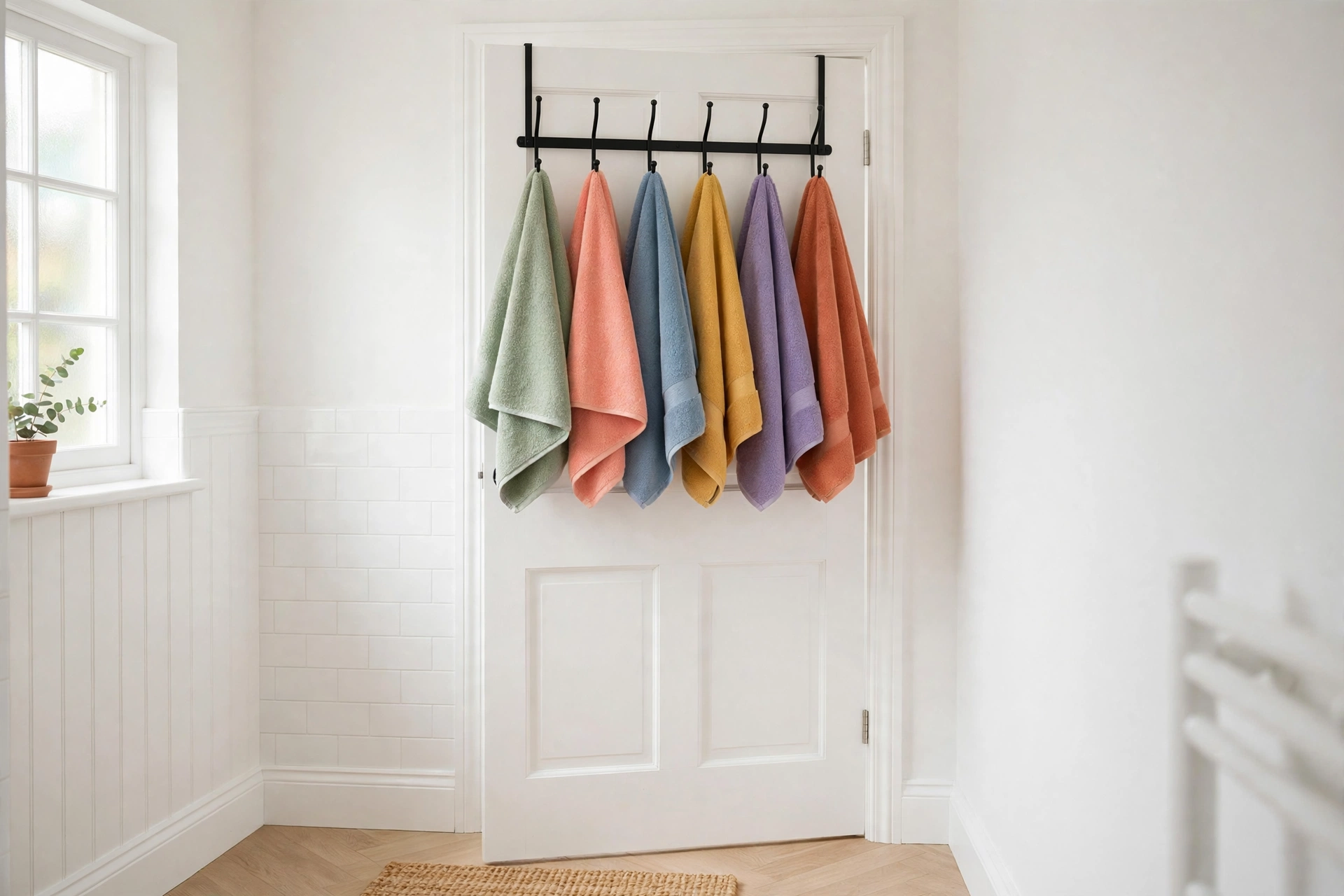
Then there’s the question most households never actually discuss: how many towels per person, and where do they go between washes? Unanswered, that question becomes a mildewy heap on the floor. The math is simple once you say it out loud — one hook or bar section per person. And hooks beat towel bars in shared bathrooms: they take a fraction of the wall, each one clearly belongs to one person, and towels dry faster on hooks than folded over a bar. The back of the door is the most underused towel real estate in the house; an over-the-door hook rack adds four or five personal spots in minutes. Color-code the towels while you’re at it — everyone gets their own color, laundry day becomes obvious, and nobody has to sniff-test anything. For ladder racks, roll-and-stack shelves, and no-wall-space solutions, see our bathroom towel storage ideas that actually work in real bathrooms.
One last linen decision: the bathroom only needs to hold the towels currently in rotation. Everyone’s clean spares can live in the hallway closet or a bedroom shelf — wherever the household’s linen supply lives. If that supply is currently a leaning tower of mismatched sheets, our how to organize a linen closet walkthrough will sort the whole chain, bathroom towels included. And put a slim hamper inside the bathroom — or just outside the door — so wet things have somewhere to go besides the floor. Wet things on the floor are how bathrooms start smelling like a locker room.
Five House Rules That Do the Heavy Lifting
Systems run on habits, and shared bathrooms run on tiny ones. Agree on these five together — over coffee, not mid-argument in the hallway — and post them inside the cabinet door for the first month:
- The 30-second reset. After your routine: things back in your bin, towel on your hook, counter wiped if there are splashes. Thirty seconds per person is the difference between calm and chaos.
- Nothing lives on the counter except the tray. This one rule prevents ninety percent of counter creep.
- Empty bottles go in the recycling, not back on the shelf. Whoever finishes something drops it in the recycling and adds it to the shopping list.
- The last shower squeegees. Whoever showers last — or everyone after their own shower, your call — runs the squeegee down the glass. Twenty seconds, and the single biggest factor in a clean-looking shared shower.
- Sunday night, two minutes. Trash out, towel situation checked, strays returned to their zones. Rotate who does it, or make it whoever notices first.
The secret to rules that stick: keep them small enough that nobody resents them. Nobody follows a twelve-point bathroom constitution. Everybody can manage thirty seconds.
One Quick Note for Different Households
Couples mostly fight about habits, not strangers — split storage fifty-fifty, but be honest about who needs more. If one routine takes six products and the other takes twenty, “equal” isn’t fair; give the twenty-product partner the bigger drawer. Also agree on what you’ll share — hand soap, toilet paper, the shampoo you both like — so the shower stops hosting duplicates.
Roommates need firmer boundaries and less shared stuff. Portable caddies kept in bedrooms are the gold standard; the bathroom itself holds only genuinely shared items plus each person’s towel on their own hook. Put the cleaning rotation on the fridge, not in the bathroom — roommates who split the scrubbing never fight about mildew.
Families with kids should organize around the morning rush: kids’ stuff low and simple, adults’ stuff high or in divided drawers, a step stool if the sink is too tall. Build in margin for chaos — the thirty-second reset becomes a two-minute family reset before bedtime, and that’s fine.
And give guests a small basket too — a spare toothbrush, toothpaste, a clean towel, and a “help yourself” note turns the shared bathroom from a stress point into a genuinely welcoming space.
Nobody’s shared bathroom will ever look like a spa brochure, and that’s not the goal. The goal is walking in at 7:40 in the morning and finding your stuff where you left it, the counter clear enough for your coffee, and a dry towel on your own hook. That version of the bathroom doesn’t need a bigger room or a bigger budget — just zones, one bin per person, and five small rules everyone agreed to.
Start this weekend with the easiest win: a caddy for each person, personal tiers in the shower, and a hook on the back of the door for every towel. One afternoon covers eighty percent of what matters. Then live with it for two weeks and adjust — move a shelf, resize a bin, swap a rule that isn’t working. Shared bathroom organization isn’t a one-time project; it’s a living arrangement, in every sense. Get the boundaries right, and the calm follows.