
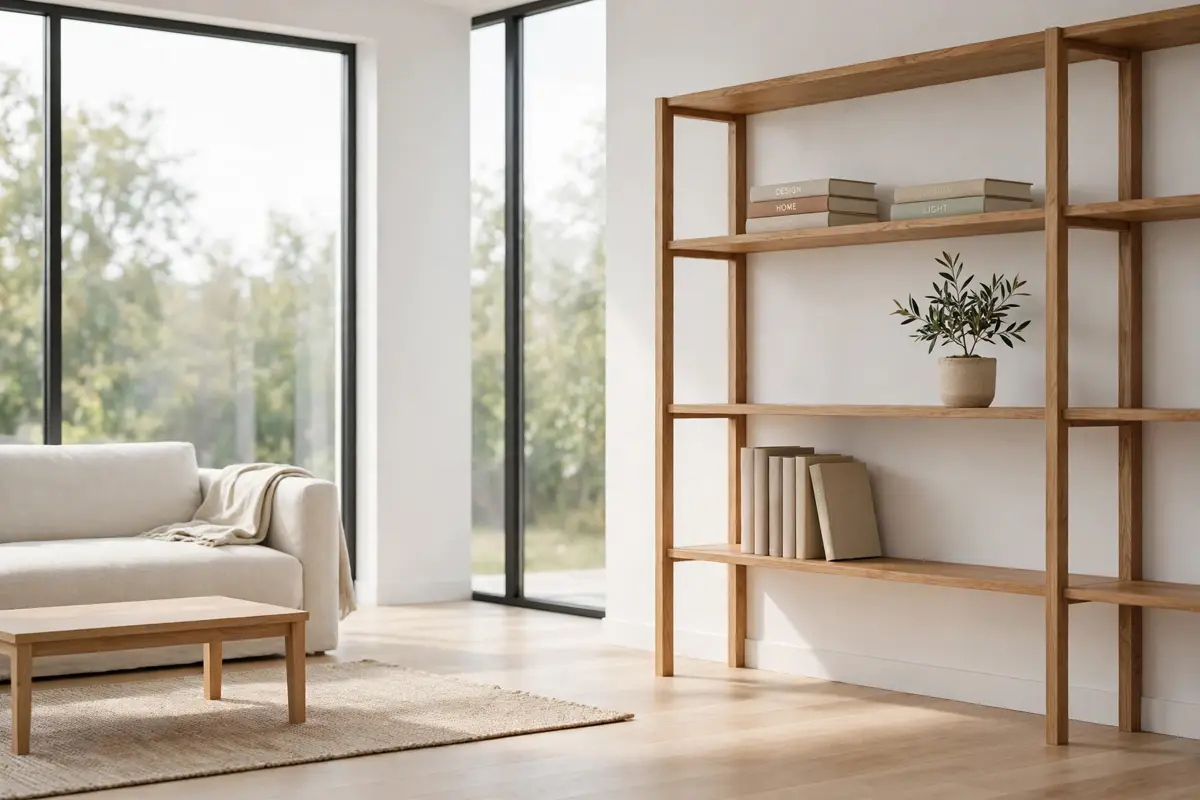

The one in one out rule might be the simplest habit in all of minimalism — and honestly, the one that keeps my house sane. Here’s the whole idea: every time something new comes into your home, something old has to leave. New pair of jeans? An old pair goes to the donation bag. New mug from a holiday market? One of the chipped ones from the cabinet gets retired. That’s it. No spreadsheets, no weekend-long purges, no KonMari folding sessions at midnight.
I used to declutter in dramatic waves. Twice a year I’d spend an entire Saturday dragging boxes to the charity shop, feeling like a new person by Sunday. Then three months later the closets would be full again and I’d wonder what on earth had happened. The problem was never that I couldn’t declutter — it was that I had no system for what came in between purges. Stuff flows into a house the way water flows downhill: birthday gifts, “it was on sale,” free samples. Without a gate on the entrance, no amount of purging ever holds.
This rule is that gate. And unlike a giant decluttering project, it takes about sixty seconds per item. If you’re drawn to slowing down how much stuff enters your home in the first place, the one in one out rule is the natural next step — the everyday habit that makes everything else stick.
What the One In One Out Rule Actually Means
At its core, the rule is a balance equation. For every item that enters your home, one item in a similar category exits it. It doesn’t have to be the exact same category — buying a new candle doesn’t legally obligate you to give away a candle — but keeping the trade within the same zone (clothes for clothes, kitchen for kitchen) makes the habit far easier to practice and measure.
Let’s make it concrete with real-life examples:
- You buy a new winter coat → you donate the old coat with the broken zipper you’ve been meaning to fix since 2023.
- Your child gets a birthday gift → together you pick a toy they’ve outgrown to pass along to a younger cousin.
- You upgrade your phone → the old one goes to a recycling or trade-in program, not a drawer.
- A new book lands on your shelf → one you’ve finished and won’t reread goes to a little free library.
- You fall for a cute storage basket → the cracked plastic bin in the pantry gets recycled.
The key word is balance. The goal isn’t to own as little as possible — it’s to keep your inventory roughly constant so clutter never gets the chance to rebuild. Think of your home as having a set number of “slots.” A new item doesn’t get a new slot; it has to earn an existing one by replacing something that no longer deserves it.
Why This Rule Works When Big Decluttering Projects Fail
Big decluttering sessions fail for one very human reason: they depend on motivation, which is nowhere to be found on a rainy Tuesday in February. The one in one out rule asks for almost none at all:
- One tiny decision at a time. You’re not facing 400 items in your wardrobe — you’re deciding about two items, the new one and the old one. That’s a decision your tired brain can actually make.
- It interrupts impulse buying. Knowing you’ll have to let something go changes how a purchase feels in the store. “Do I want this candle enough to give up one of my others?” is a much better question than “Is this candle cute?”
- It becomes automatic. After a few weeks of practicing, you start scanning for the outgoing item before you even get home from the shops. The habit runs on autopilot, which is exactly what you want from a maintenance system.
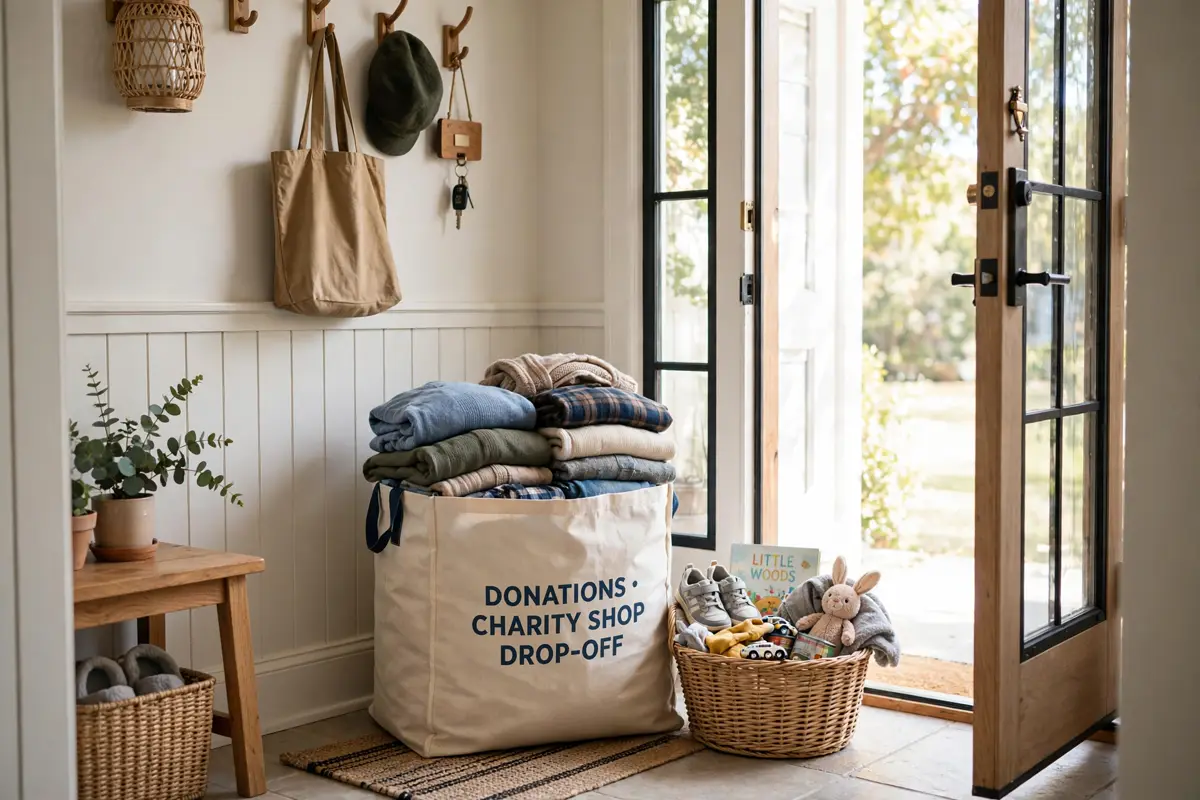
- It turns donation into a routine. Every purchase becomes a small act of generosity. Keep a donation bag in the closet or by the front door, and the outflows collect themselves.
Research into habit formation consistently shows that small, immediate behaviors stick far better than large, occasional ones. If you’ve ever read about maintaining a clutter-free home long term, you’ll recognize the pattern: the systems that last are the ones that feel nearly effortless.
Where to Apply the One In One Out Rule in Your Home
You can apply the rule everywhere, but you’ll have the most success if you start with the categories that accumulate the fastest. Here’s how it plays out room by room.
The wardrobe: your easiest starting line
Clothing is where most people should begin. Closets are finite, visual, and emotionally lower-stakes than most categories. The mechanic is simple: when a new shirt, pair of shoes, or jacket comes home, one item you’re no longer wearing leaves.
Not sure which one goes? Ask yourself three questions: Have I worn this in the past year? Would I buy it again today if I saw it in a shop? Is someone else more likely to enjoy it than I am? If the answers lean toward no, into the donation bag it goes. Don’t move it to a guest-room closet “just in case” — half-measures are how clutter relocates instead of leaving.
A practical tip that works beautifully here: the moment you hang the new item in the closet, take the old one off the hanger in the same motion. Physically linking the two actions makes the habit nearly impossible to skip.
The kitchen: end the gadget creep
Kitchens are masters of quiet accumulation. The third garlic press, the novelty mug from the office party, the “as seen on TV” avocado slicer that gets used twice. Apply the rule strictly to gadgets, dishes, and small appliances. New set of mixing bowls? The warped plastic ones go to recycling. Gifted a fancy olive oil? Finish or give away the half-used bottle hogging the pantry shelf.
Be honest about the “upgrade trap” — that’s when you buy the new version of something and keep the old one “as a backup.” Unless you genuinely use two of something (two sheet pans for batch cooking), the old one leaves the day the new one arrives.
Kids’ toys and books: make it a family ritual
Toy clutter is its own special weather system, but kids take to this rule faster than you’d expect — especially if you frame it as a ritual rather than a restriction. When a birthday brings new toys, pick together which ones are ready for a new home. Kids are surprisingly generous once the framing is “someone else gets to enjoy this now.”
The same goes for books. A new book earns its spot on the shelf by replacing one the child has outgrown — donate finished books to a classroom, a library, or a little free library in the neighborhood.
Sentimental and gift items: handle with care
Gifts deserve a gentler touch. The rule bends for genuinely meaningful items — the point is stopping thoughtless accumulation, not punishing sentiment. If you love a gift, let it replace something you feel neutral about in the same category.
The Digital Version: One In One Out for Your Screens
Physical clutter is only half the story. Your phone, laptop, and inbox follow the same physics: things arrive constantly, nothing ever leaves, and eventually the whole system feels heavy. The rule translates beautifully.
- Apps: download a new one, delete one you haven’t opened in a month. Your home screen should fit on one or two pages.
- Photos: after a trip, keep the best shots and delete the near-duplicates. Twenty versions of the same sunset serve no one.
- Subscriptions and newsletters: subscribe to one, unsubscribe from one. Your inbox has square footage too.
- Files and downloads: every month, clear the downloads folder with the same energy you’d bring to a junk drawer.
Digital minimalism matters more than most people realize — a cluttered phone creates the same low-grade mental noise as a cluttered counter. If your digital life feels as crowded as your closets, a dedicated digital declutter pairs perfectly with this habit.
Common Mistakes That Break the Rule (and How to Fix Them)
The rule is simple, which means the failure modes are few — but they’re sneaky. Here are the ones I see most often.
Mistake one: “in” without the “out.” You buy the new sweater and tell yourself you’ll choose something to donate “this weekend.” The weekend comes and the donation never happens. The fix: make the exit happen at the moment of entry. New item in hand? Old item in the donation bag before you put the new one away.
Mistake two: applying it to the wrong partner. You buy new jeans and donate a pair of socks. Technically an out, but your jeans collection still grew. Keep the trade in the same category — especially with clothes, shoes, and kitchenware. If you’re also working on getting rid of duplicate items, same-category swaps do double duty.
Mistake three: the quarantine pile. Outgoing items get staged “temporarily” in the garage or the trunk of the car — and then live there for six months. An item isn’t “out” until it’s out of your home. Schedule a donation drop-off the same day you fill the bag. The trunk of your car is not a donation center.
Mistake four: forgetting that gifts count. Birthday presents, free conference swag, hand-me-downs — these all take up the same physical space as purchased items. The rule applies to everything that crosses your threshold, however it got there.
Mistake five: being too rigid about timing. If you’re replacing something broken — a shattered screen protector, worn-out running shoes — there’s no agonizing required. The spirit of the rule is about net inventory, not punishing yourself for living your life.
How to Start Today: A 15-Minute Setup
You don’t need a free weekend to begin. Here’s the entire onboarding process:
- Minute 1–3: Pick your starting category. Clothing is the easiest win for most people. Kitchen gadgets are second.
- Minute 4–6: Place a sturdy donation bag somewhere you can’t ignore — inside the closet door, by the front entrance, next to the washing machine. The bag should be visible and reachable.
- Minute 7–10: Set a phone reminder for a biweekly donation drop-off, or look up your nearest charity shop’s opening hours right now and save them.
- Minute 11–15: Tell the people in your household. The rule works best as a shared language. “One in, one out — which one are you swapping?” should be as normal as “Did you feed the dog?”
Then, the next time something new comes home — that’s your first rep. You’ll feel the tiny friction of choosing what goes. That friction is the entire point: it’s mindfulness, delivered in a thirty-second package, exactly when you need it.
Some people like to level up the rule over time. Once one-in-one-out feels automatic, try one-in-two-out for your worst categories — it’s a gentle way to shrink your inventory rather than just holding it steady. Or pair the rule with a seasonal reset, clearing one category at a time as the months turn. Systems stack nicely when each one is small.
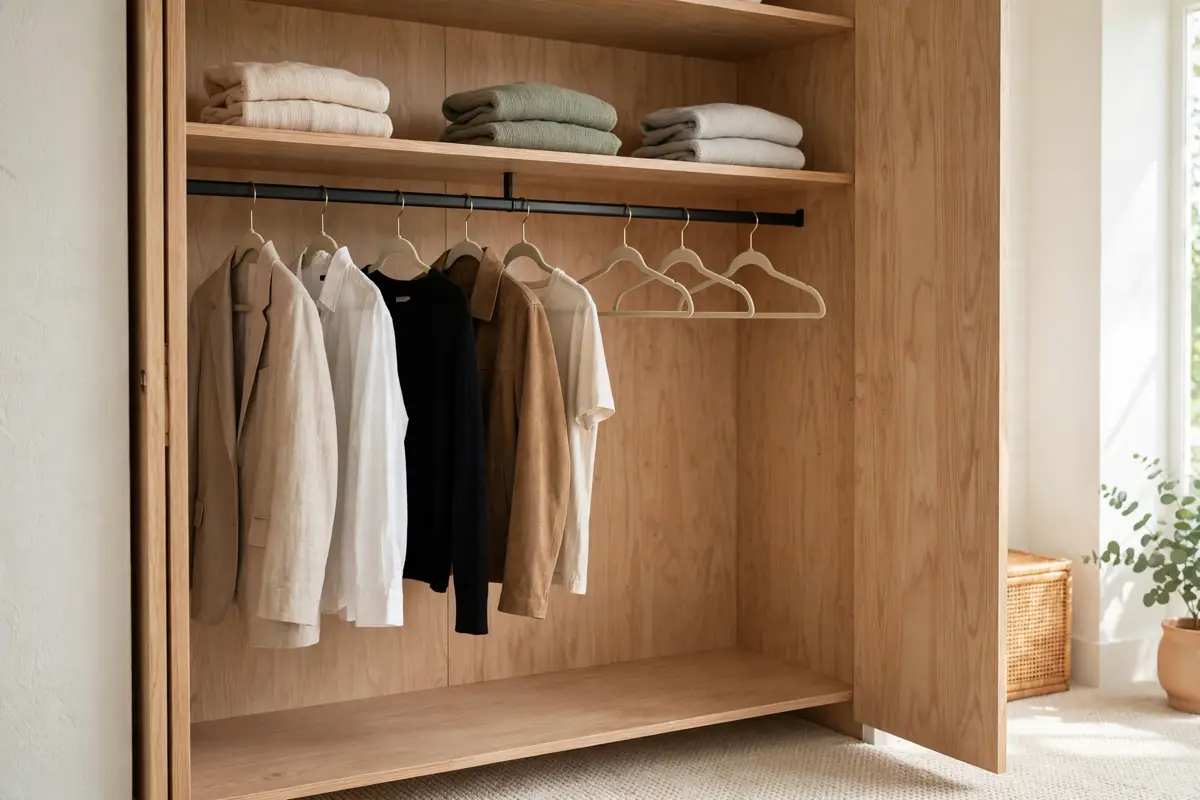
After a few months of living with this rule, something subtle happens. Your closets stop growing. Your drawers stay at the level you left them after your last big purge. The house doesn’t just look tidier — it stays tidier, without another exhausting weekend project.
Minimalism, at the end of the day, isn’t about owning as little as possible. It’s about deciding — deliberately, repeatedly, in small moments — what earns a place in your life. The one in one out rule is simply the smallest possible version of that decision, repeated until it becomes who you are. Start with the next thing that comes through your front door. You’ll know exactly what to do.
[…] more rule worth borrowing: apply the one-in-one-out rule to condiments and sauces. If a new hot sauce comes in, an old one goes out. Kitchens do not need […]