
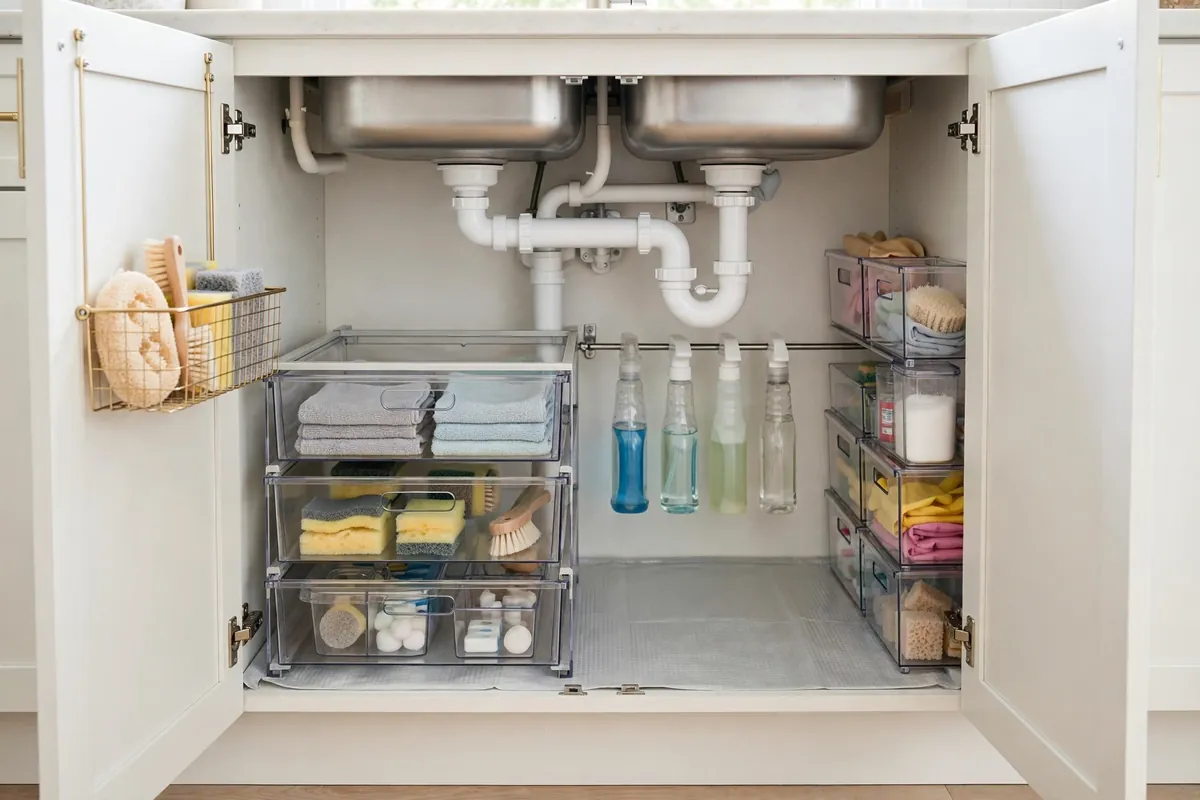

Last spring I bent down to grab the dish soap, and my under-sink cabinet staged a small rebellion. A half-empty bottle of all-purpose spray tumbled out, then a tangled knot of trash bags, then — with a sad little thud — a bottle of drain cleaner I am fairly sure I bought in 2022. Somewhere behind the pipes sat an unopened twelve-pack of sponges and at least three scrub brushes I had completely forgotten existed. Nobody ever sees this cabinet, which is exactly why my under kitchen sink organization had become a graveyard of good intentions. If that sounds familiar, you’re in the right place. For years I treated under kitchen sink organization as a problem for Future Me, until Present Me got tired of digging through the avalanche every single day. The fix took one Saturday afternoon, cost less than a takeaway dinner, and honestly changed how my whole kitchen feels.
Here’s the thing: the cabinet under your kitchen sink is one of the most-used, least-seen spaces in your home. You open it every day — sometimes ten times a day. And unlike a pretty pantry shelf, it comes with plumbing, a garbage disposal, and the occasional mystery drip working against you. But with the right approach, it can go from chaotic to genuinely calm. Here’s exactly how I did it, and how you can too.
The First Rule: Pull Everything Out
I know, I know. It’s the advice everyone gives, and it’s the advice everyone skips. But there is no shortcut here. You cannot organize a space you can’t see, and you definitely can’t see your under-sink cabinet with all that stuff still in it. Grab a trash bag, a box for donations, and a laundry basket for “this belongs somewhere else entirely,” then pull out every single item.
Once it was all on my kitchen floor, I sorted mine into four piles: trash, donate, relocate, and keep. The trash pile was embarrassing — two dried-out sponges, a cracked spray bottle, a bottle of stainless steel cleaner for appliances I don’t own. The relocate pile was even more telling: a hammer (why?), a packet of plant food, and half a roll of paper towels that had gone soft from the damp air. This is one of those classic decluttering mistakes we all make — the cabinet becomes a dumping ground for things that have no other home, and then the things that actually belong there get buried.
Here’s what I learned during the sort: I owned four bottles of the same all-purpose cleaner, three of them open. We do this because we can’t see what we have, so we buy it again. Be ruthless with duplicates and anything expired. A good rule: if you haven’t reached for it in six months and it’s not a seasonal essential, it doesn’t get to stay. Under the sink, real estate is precious — reserve it for cleaning and dishwashing supplies only.
Measure Twice, Buy Once
Before you buy a single organizer, measure your cabinet: width, height, and depth. Note where the pipes run, whether there’s a garbage disposal hogging the middle, and how far the doors swing. I mapped my obstacles with painter’s tape on the cabinet floor, which sounds fussy but saved me from buying a beautiful pull-out drawer that would never have fit around my P-trap. Knowing your exact space is what separates organizers that work from organizers that become expensive clutter.
Protect the Cabinet First (Your Future Self Says Thanks)
With the cabinet empty, give it a proper clean. Wipe down every surface — mine had a sticky ring I chose not to investigate too closely — and check carefully for leaks. Run the tap, feel around the pipe joints and the base of the disposal, and look for water stains or swollen wood. A slow drip can do quiet damage for months, and this empty-cabinet moment is the perfect time to catch it. If you spot anything damp, fix the plumbing before you organize a single thing.
Then line the base of the cabinet with a waterproof, wipeable liner or a shallow drip tray. I learned this the hard way: in my old apartment, an unnoticed slow leak from a spray bottle left a mustard-colored stain and a musty smell that never fully left. A simple plastic boot tray or a cut-to-fit waterproof mat costs very little and catches the inevitable drips from wet sponges, leaky bottles, and condensation. For the mustiness, a small open box of baking soda tucked in the back works as a quiet little deodorizer.
Under Kitchen Sink Organization Ideas That Actually Fit Around the Pipes
This is where the fun starts. The pipes are not going anywhere, so the trick is choosing storage that works around them instead of fighting them. Flexible, modular pieces beat one big organizer every time, because every cabinet’s plumbing layout is different. Here are the ideas that earned their place in mine:
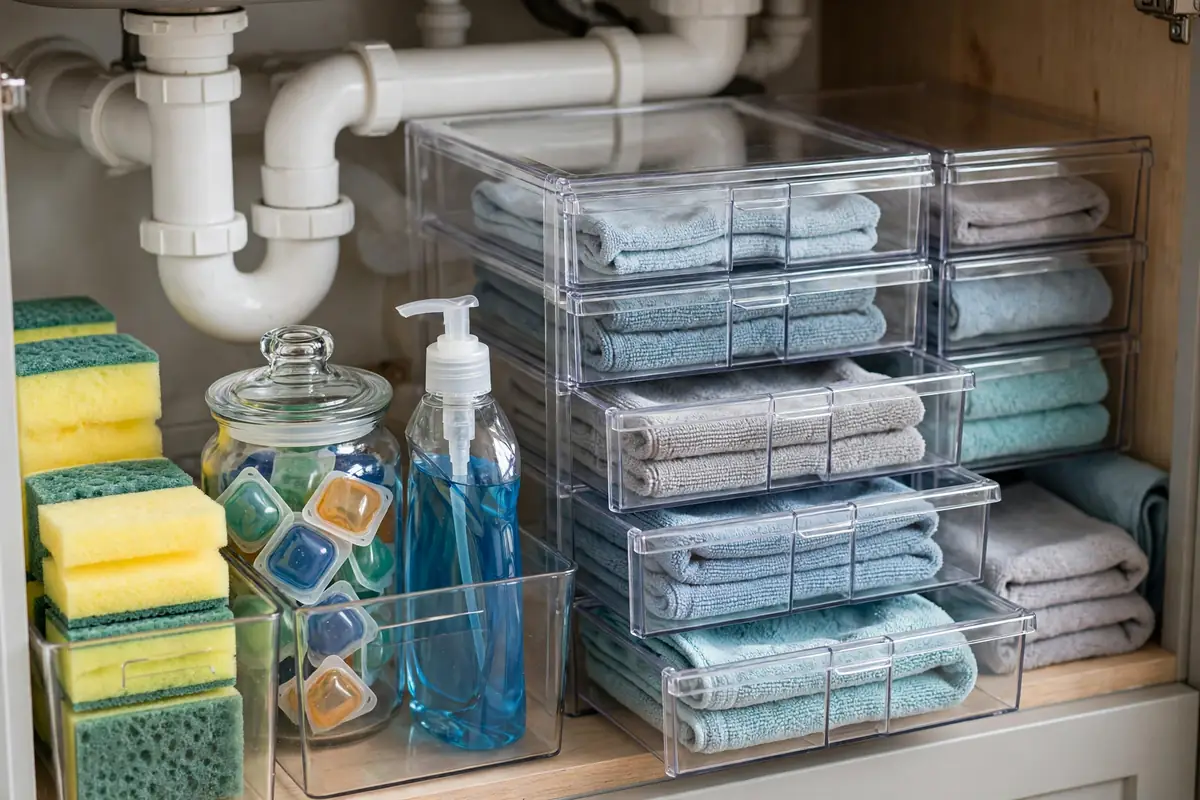
- Stackable clear drawers. My single best purchase. Six small stackable drawers now hold dishwasher pods, sponges, magic erasers, gloves, and microfiber cloths in the space where one bulky box used to sit. Clear matters — you can see inventory at a glance, which means you stop buying duplicates.
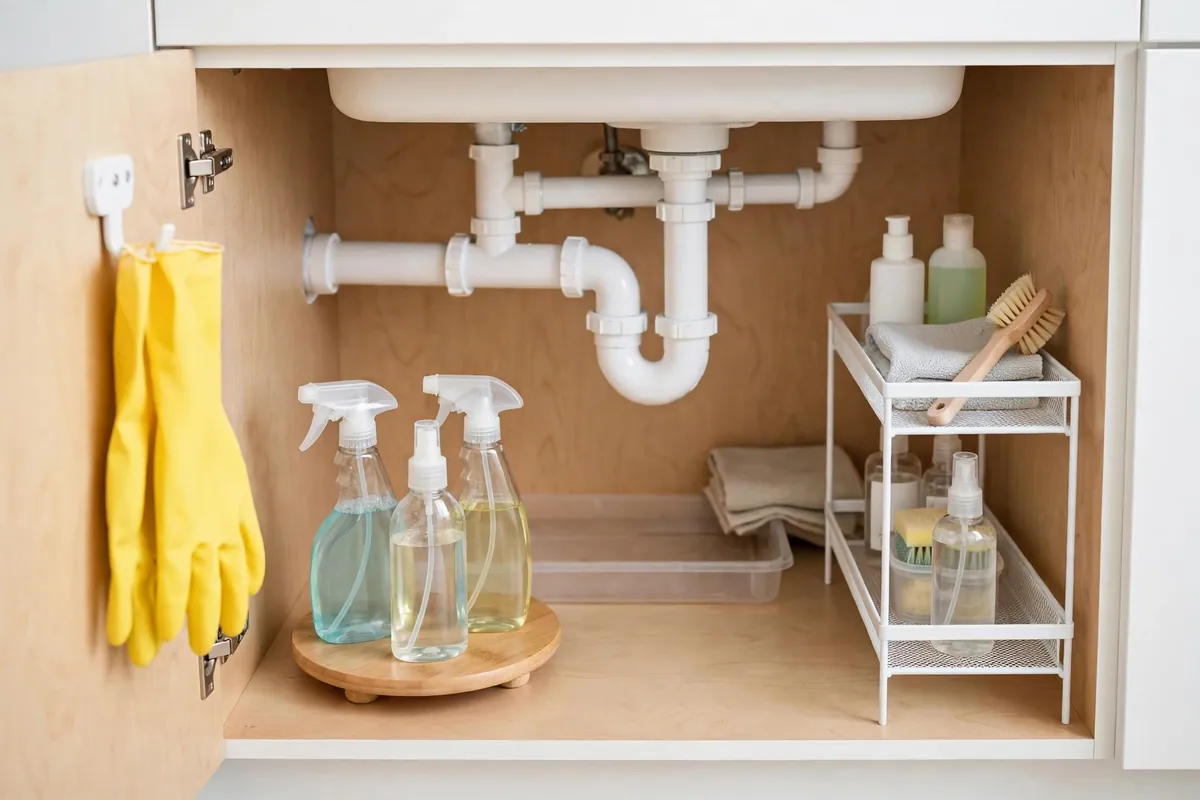
- A two-tier shelf riser. The sides of the cabinet usually have dead air above the pipes. A small tiered shelf turns that vertical space into two usable layers for spray bottles and taller cleaners.
- A tension rod for spray bottles. A six-dollar tension rod mounted high across the cabinet lets you hang spray bottles by their triggers, freeing up the entire floor below. This one trick felt like magic the day I installed it.
- Door-mounted baskets or hooks. The inside of the cabinet doors is free real estate. A couple of adhesive hooks hold my dish brush and gloves; a small wire basket catches sponges and scrub pads right where I need them.
- A small turntable. For the deep corners where things go to be forgotten, a lazy Susan means one spin brings everything to the front. No more kneeling and squinting into the dark.
- A U-shaped under-sink organizer. If you want one purpose-built piece, the U-shaped shelves designed specifically to wrap around plumbing are genuinely clever — they create shelving where the pipes are instead of pretending they aren’t there.
- A labeled cleaning caddy. Keep your everyday deep-cleaning kit — all-purpose spray, glass cleaner, a couple of cloths — in one portable caddy so you can grab it and go. More on this below.
One more pro tip I now swear by: put your most-used items on the side of the cabinet that matches your dominant hand. I’m right-handed, so dish soap, the sponge, and dishwasher pods all live on the right. It sounds tiny, but ten reaches a day add up to a kitchen that feels like it was designed around you.
Create Zones, Decant, and Label: The System That Stays Put
Organizers are just containers. What keeps the cabinet calm long-term is a system — and the simplest one is zones. I divided my cabinet into three: daily dish duty (soap, sponge, dishwasher pods, front and center), weekly cleaning (all-purpose sprays, glass cleaner, the grab-and-go caddy), and occasional (trash bags, drain cleaner, the plumbing tools) pushed to the back and sides. Every item has a zone, and every zone has a home. When you finish the dishes, the soap goes back to its zone without a single decision.
Then decant. Bulky packaging is the enemy of small cabinets — it wastes space, hides what’s inside, and cardboard packaging slowly decomposes in the damp air under a sink. I moved dishwasher pods into a clear airtight jar and trash bags into a small bin, and tossed the boxes. Suddenly I could see exactly what I had. This is the same approach I use for my kitchen cabinets, and it works even harder in this little cabinet because every inch counts.
And label everything, even the bins that seem obvious. You know what’s in the “Sponges” bin. Your partner, your teenager, your mother-in-law visiting for the weekend? They do not. A label maker — or honestly just masking tape and a marker — turns your system into something the whole household can maintain. It’s the difference between an organized cabinet and an organized cabinet that stays organized.
Build a Grab-and-Go Cleaning Caddy
If you take one idea from this article, make it the caddy. One portable tote with your all-purpose spray, glass cleaner, two microfiber cloths, and a scrub brush lives under the sink and travels with you when you clean the bathroom, the living room, wherever. When you get back, the whole kit goes back in one motion — no six separate trips, no bottles migrating to other rooms and never returning. My caddy has single-handedly ended the “where did the glass cleaner go?” mystery in my house.
Safety, Moisture, and the Five-Minute Habit
A quick word on safety, because this cabinet holds the most hazardous stuff in your kitchen. If you have kids or pets, install a child-safety latch on these doors — it takes two minutes and it’s non-negotiable. Keep chemicals in their original labeled containers once decanted into clearly marked jars, never mix products, and store everything upright so lids stay sealed.
Also, be picky about what earns a spot here. Because of the moisture, don’t store food (not even pet food), paper towels, or anything that would be ruined by a leak. And once the cabinet is organized, give it a five-minute check each month: wipe the liner, toss anything expired or nearly empty, and make sure nothing has wandered in from another room. I fold this into my monthly cleaning checklist, and it’s how I once caught a slow drip from a pipe joint before it became a real problem. If you enjoyed this project, the under-bathroom-sink organization is its natural companion — same pipes, same tricks, smaller bottles.
Here’s my last honest confession: my under-sink cabinet is not a magazine photo. There’s a slightly dented spray bottle and a sponge I keep meaning to replace. But it’s calm. I can reach the dish soap without moving three things. I know exactly what I own, so I don’t buy a fifth bottle of all-purpose cleaner. And on the days when the rest of the kitchen is chaos — and let’s be real, those days happen — opening that one tidy little cabinet feels like a deep breath. Start with the pull-out this weekend. Future You is already grateful.