
I used to start every day the same way: digging through a chair piled with half-clean clothes, looking for one matching sock, stepping on something sharp, and leaving the house already annoyed. Then I read somewhere that people sleep better in tidy bedrooms — and honestly, I didn’t believe it until I tried it.
Your bedroom is the first room you see in the morning and the last one at night. When it’s cluttered, your brain never quite switches off. When it’s calm, everything else gets easier: falling asleep, waking up, getting dressed, starting the day on time. These are the organization ideas that made the biggest difference in my own bedroom.
Why the Bedroom Deserves Special Attention
You can have a spotless kitchen and still feel frazzled if your bedroom is chaos. That’s because the bedroom affects you during your most vulnerable hours — falling asleep and waking up. Visual clutter keeps your mind in “unfinished business” mode, which is exactly the opposite of what you want at 11 PM.
The goal here isn’t a showroom. It’s a room where every surface is mostly clear, everything has a home, and nothing makes you think about chores. Let’s build that.
Start With Surfaces (The Fastest Win)
Bedroom clutter lives on flat surfaces: the nightstand, the dresser top, the floor around the bed. Clear all of them completely, wipe them down, and put back only what earns the spot.
Nightstand: A lamp, your book or e-reader, a glass of water, and a small tray or dish for your phone and glasses. That’s it. If your nightstand has a drawer, it gets one small organizer for the essentials — charger, lip balm, reading glasses. The drawer is not a second junk drawer; treat it like prime real estate.
Dresser top: This is where random items go to die. Clear it entirely. Put back only daily-use items or a couple of decorative pieces you genuinely love. Everything else needs a home inside a drawer, on a shelf, or in another room.
The floor: Nothing lives on the bedroom floor. Not the laundry basket (get a lidded hamper that lives in the closet or corner), not the pile of “I’ll deal with it” stuff. Clear floors change the whole feel of a room overnight.
Tame the Dreaded Chair
Every bedroom has a chair — or a corner, or the foot of the bed — where clothes accumulate. The chairdrobe. Here’s the truth: it’s not a laundry problem, it’s a decision problem. Every item on that chair is something you weren’t sure was clean or dirty.
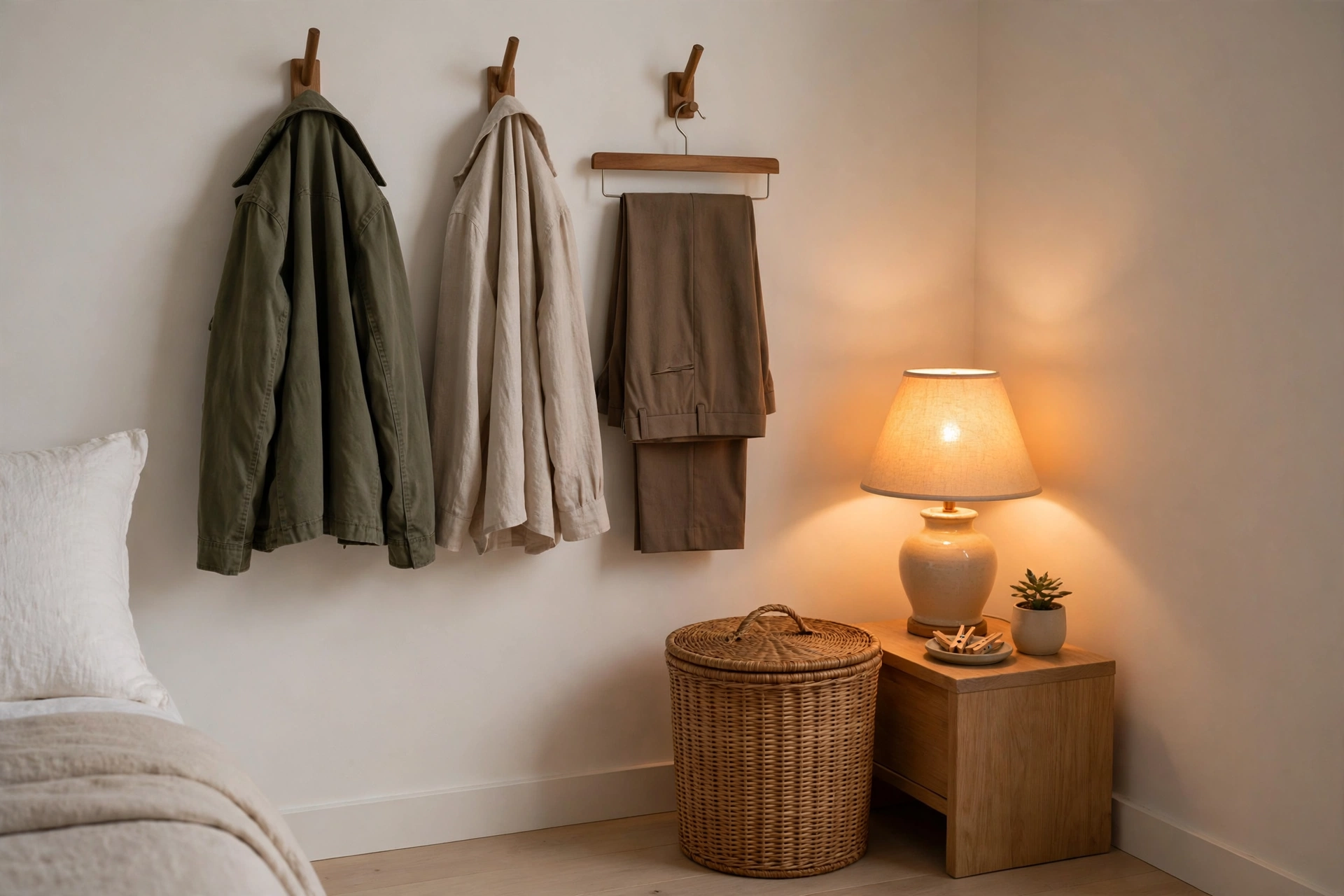
Fix it with a two-hook system: one hook for “worn once, still clean” (jeans, sweaters, jackets) and a hamper for actually dirty clothes. That kills 90% of chair piles. The remaining 10% is clothes that need putting away — and that takes four minutes once you stop avoiding it.
If the chair is truly beyond saving as furniture, replace it with a small valet stand or wall hooks. Sometimes the furniture enables the habit.
Organize the Closet for Mornings That Run Themselves
Your closet should make getting dressed effortless, not overwhelming.
Edit first. Pull everything out and be honest: keep what fits, flatters, and gets worn. The “someday” clothes and the guilt clothes (expensive but unwearable) are stealing space from the clothes that actually serve you. (Our How to Declutter Your Wardrobe: The Keep-Toss-Donate System walks you through this properly.)
Organize by category, then by color. All shirts together, all pants together — then light to dark within each group. It looks beautiful and you can find anything in seconds.
Use the full height. Most closets waste the top shelf and the floor. Top shelf: labeled bins for off-season clothes, bags, and accessories. Floor: a shoe rack or clear shoe boxes. The middle rod stays for daily clothes at eye level.
One small upgrade with a big payoff: matching hangers. Slim velvet hangers take up half the space of bulky plastic ones, clothes don’t slide off, and the closet instantly looks calmer. It’s the cheapest transformation in home organization.
Nightstand and Drawer Systems That Stick
Drawers are where organization goes to quietly die — unless you give them structure.
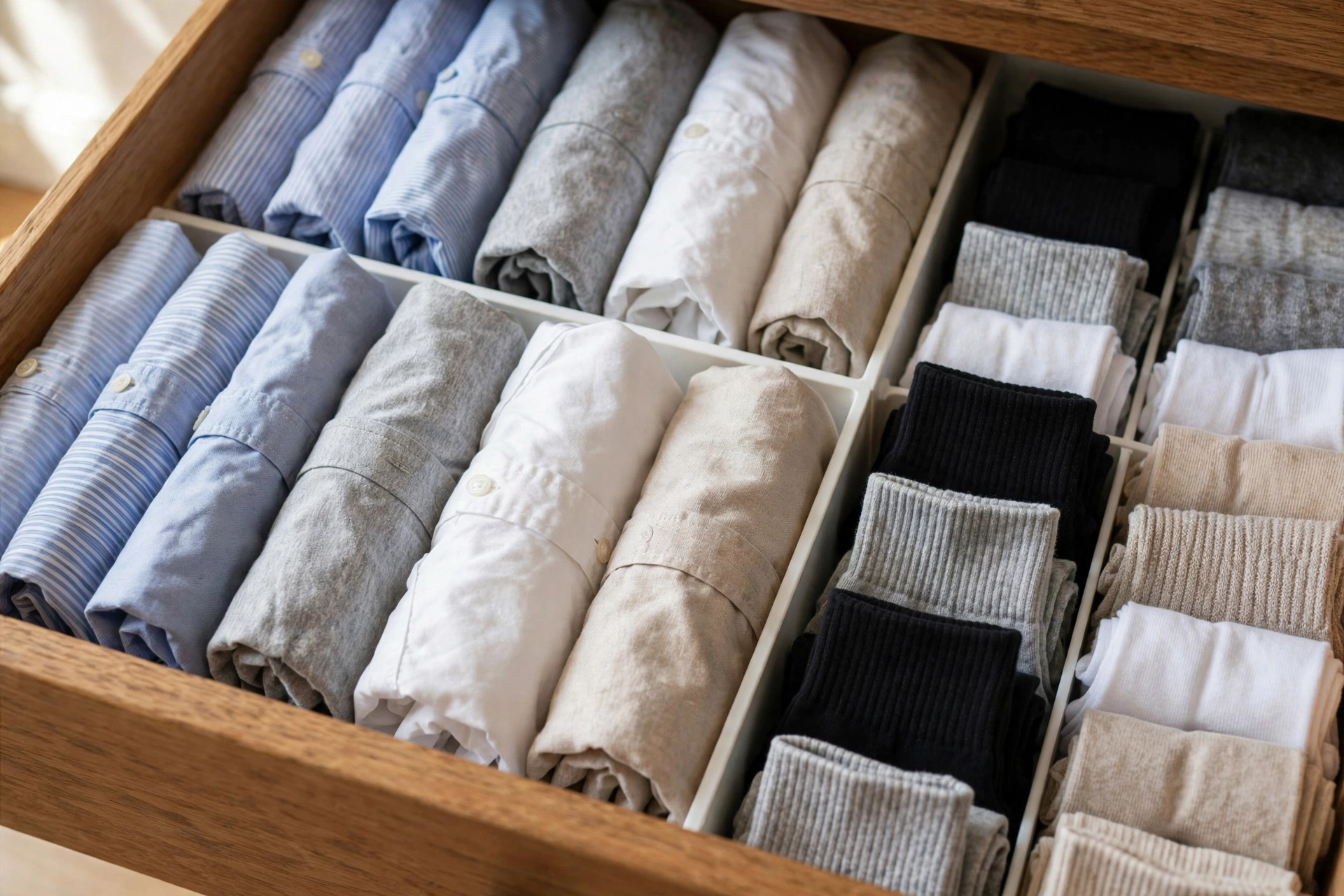
Use drawer dividers or small boxes inside every bedroom drawer: one section for socks, one for underwear, one for sleepwear. The file-fold method (folding clothes so they stand upright like files) lets you see everything at once — no more digging through stacks and ruining them.
Keep a small “donate” bag in the closet. When you find a shirt with a stretched collar or pants that don’t fit, it goes straight in the bag. No “decide later” pile. When the bag’s full, it goes to the donation center. This one habit keeps the closet from slowly refilling.
Create a Calm, Sleep-Friendly Environment
Organization isn’t just about storage — it’s about what the room feels like.
Reduce visual noise. Fewer items on display means less for your brain to process. Corral the remaining items into trays and baskets so they read as one object instead of twelve.
Manage the cords. A tangle of chargers beside the bed is ugly and stressful. One small charging station — a box or dock that hides the power strip — keeps phones, watches, and earbuds in one tidy spot.
Keep work out. If you can, don’t keep a desk, laptop, or paperwork in the bedroom. Your brain associates spaces with activities; a bedroom that doubles as an office never fully feels like rest. If space forces it, use a room divider or at least close the laptop and stash it in a drawer at night.
Soften the light. Harsh overhead lighting kills the calm. A warm bedside lamp, or even just a lower-wattage bulb, makes the whole room feel more restful — and somehow makes the organization look even better.
The 5-Minute Morning and Evening Resets
The secret to a permanently organized bedroom isn’t a big overhaul — it’s two tiny habits.
Evening reset (5 minutes): Before bed, do a quick lap. Clothes to hooks or hamper, surfaces cleared, phone on the charger. You wake up to a calm room instead of yesterday’s mess.
Morning reset (2 minutes): Make the bed. I know, I know — but a made bed makes the entire room look 70% more organized, and it takes ninety seconds. It’s the highest-return habit in home organization.
Frequently Asked Questions
How can I organize a small bedroom with no closet?
Use a freestanding wardrobe or garment rack for hanging clothes, under-bed boxes for off-season items, and wall hooks for daily wear. A small dresser with drawer dividers handles the rest. (See our 10 Best Storage Ideas for Small Apartments and Tiny Homes for more small-space tricks.)
What’s the best way to organize clothes in drawers?
File-folding plus dividers. Fold items so they stand upright in rows, grouped by type. You see everything, nothing gets buried, and drawers hold 30–40% more.
How do I keep my nightstand from getting cluttered again?
Give it a strict inventory: lamp, book, water, phone dish. Anything else gets a 24-hour grace period, then it moves to its real home. A small tray corrals the essentials so they read as one tidy unit.
Does a tidy bedroom really help you sleep better?
Research on sleep environments consistently finds that people report sleeping better in cleaner, less cluttered bedrooms. Even setting the studies aside, most people feel the difference within a few nights — less visual noise, less mental noise.
Your bedroom should be the calmest room in your home, not another source of stress. Pick one idea from this list tonight — clear the nightstand, hang two hooks, make the bed — and notice how the room feels tomorrow morning. Small changes, big calm.
Struggling with the closet specifically? Read Closet Organization Ideas for Small Closets (No Renovation Needed) next.
[…] For the bedroom half of the equation: Bedroom Organization Ideas for Better Sleep and Calmer Mornings. […]