


There is a particular kind of spring morning that makes you notice everything at once. The light comes in stronger, the windows show every smudge, and suddenly the dust on the bookshelf, the crumbs in the cutlery drawer, and the winter blanket still folded on the sofa all seem to be asking for attention. A good spring cleaning checklist does not turn that feeling into a frantic, all-day marathon. It turns it into a plan you can actually finish, one room at a time, without living among half-empty cupboards for a week.
That is the whole idea behind this guide. Instead of trying to deep-clean your entire home in one heroic Saturday, you will work through it room by room, with clear tasks, realistic time blocks, and a simple way to keep the results once the last room is done. Whether you live in a small flat or a four-bedroom house, the same approach works: make a plan, gather your supplies once, and finish each room properly before moving on.
Think of spring cleaning less as a punishment for a messy winter and more as a reset: fresh air back in, things that no longer earn their space gone, and everyday cleaning lighter for months ahead. Follow this checklist in order and you will end the weekend with a home that feels brighter, calmer, and easier to look after.
How to Pace Your Spring Cleaning Checklist
The number one reason spring cleaning fails is not laziness. It is over-ambition. People block out one day, start in the kitchen, get distracted by a drawer that needs reorganising, open three other jobs at once, and by lunchtime the whole house looks worse than it did at breakfast. The fix is simple: one room at a time, start to finish, door closed behind you.
Here is a weekend plan that works for most homes. Keep the order, so you never track dirt from a half-cleaned room into one you have just finished.
- Friday evening (30 minutes): Gather supplies, start a load of laundry, and do a quick whole-home tidy so Saturday begins with clear floors and surfaces.
- Saturday morning (2–3 hours): Kitchen — usually the hardest-working room and the most satisfying to finish first.
- Saturday afternoon (2 hours): Bathrooms. They are small, contained, and quick wins once you have a routine.
- Sunday morning (2–3 hours): Bedrooms, including bedding changes and a wardrobe edit.
- Sunday afternoon (2 hours): Living areas, hallway, and entry, finishing with whole-home tasks like windows and baseboards.
If you only have one day, do the kitchen, one bathroom, and the bedroom you sleep in. That covers the rooms you use most, and you can schedule the rest across the following evenings. A spring clean that is 80 percent done and actually finished beats a perfect plan that collapses by noon. If you are heading into the colder months instead, this fall deep cleaning checklist follows the same room-by-room logic for a pre-holiday reset.
Build Your Spring Cleaning Kit First
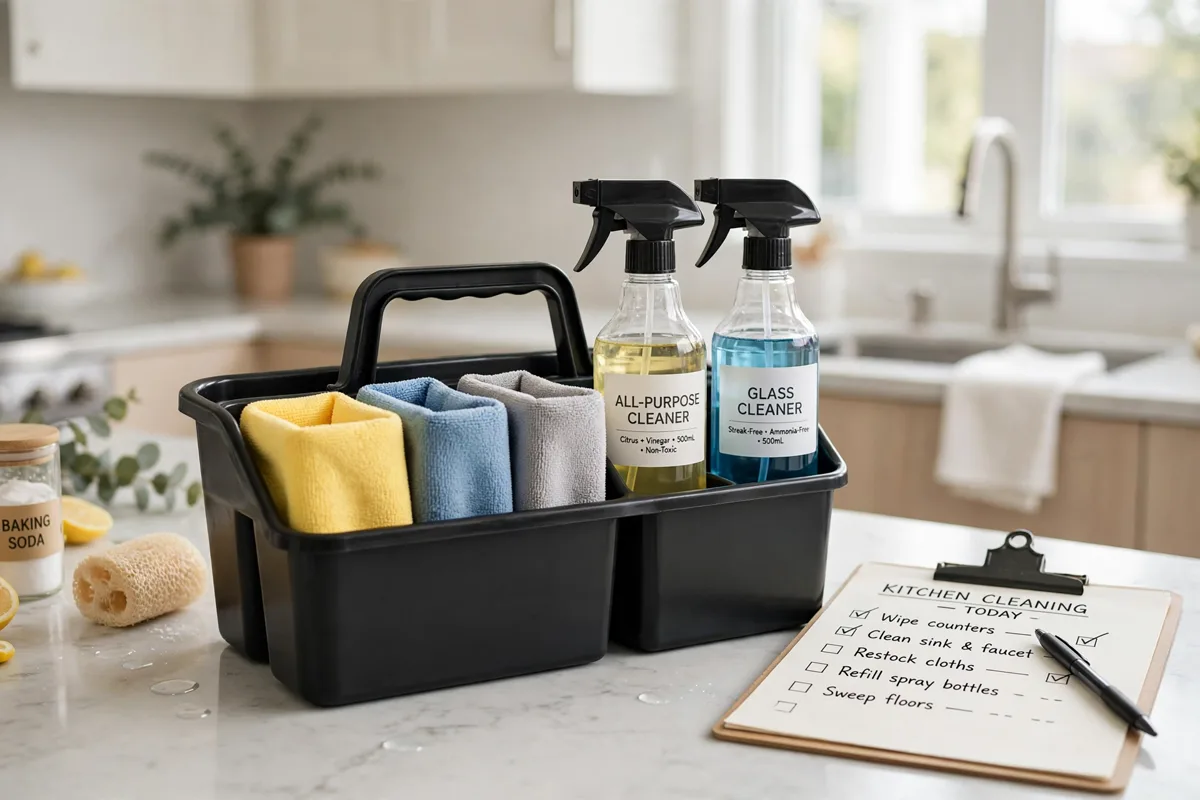
Nothing slows a session down like hunting for supplies mid-task. Before you start, put everything in one caddy you can carry from room to room. A small kit covers almost everything: all-purpose, bathroom, and glass cleaner; microfibre cloths; a scrub brush and an old toothbrush for grout; rubber gloves, a duster, a broom and dustpan; a vacuum with upholstery and crevice attachments; a mop and bucket; bin bags, a laundry basket, and a donation box.
Keep the donation box with you as you go. Spring cleaning always turns up forgotten things — the chipped mug, the single glove, the charger for a phone you replaced two years ago. If you have not used it in a year and it has no real sentimental value, let it go now.
The Kitchen: The Heart of the Spring Clean
Start at the top and work down, so dust and drips fall onto surfaces you have not cleaned yet. Wipe light fittings and cabinet tops first, then cupboards, appliances, and finally floors. Open a window if you can.
- Cupboards and drawers: Take everything out of one cupboard at a time. Wipe the shelves, throw away anything out of date, and put back only what you actually use. Give the cutlery drawer the same treatment.
- Fridge and freezer: Remove shelves and drawers, wash them in warm soapy water, and wipe the interior before restocking. Check use-by dates as you go, and wipe handles and the top.
- Oven and hob: Clean the oven as its instructions direct, wipe the hob and extractor hood, and wash greasy filters. Do not forget knobs and the ledge behind the hob where splashes collect.
- Small appliances: Descale the kettle, wipe the microwave inside and out, empty the toaster crumb tray, and run the dishwasher empty on a hot cycle with a cup of vinegar on the top rack.
- Sink and worktops: Scrub the sink, polish taps, wipe worktops and the backsplash, then mop the floor, moving the bin out first so you can clean underneath it.
Kitchens accumulate duplicates as well as crumbs: three wooden spoons, two cheese graters, takeaway menus from restaurants that closed years ago. Be honest about what earns its place. For a deeper routine later in the year, this kitchen deep cleaning checklist breaks the same jobs down in even more detail.
Bathrooms: Small Rooms, Big Payoff
Bathrooms reward a systematic approach. Spray the shower, bath, and toilet first and let the cleaner sit while you tackle mirrors and cabinets; by the time you scrub, the product has done much of the work.
- Shower and bath: Scrub tiles and grout, clean the showerhead (soak it in vinegar if limescale has built up), and replace a tired shower curtain liner. Check sealant for mould and refresh it if it is stained.
- Toilet and sink: Clean inside and out, including the base, hinges, and the area behind the toilet. Polish the mirror and wipe light switches and door handles.
- Cabinets and drawers: Empty them, wipe the shelves, and throw away empty bottles, dried-out products, and medicines past their expiry date. Keep only what you use weekly in easy reach.
- Towels and mats: Wash bath mats, hand towels, and the shower curtain if it is machine-washable. Fresh towels alone can make a bathroom feel newly cleaned.
- Floors: Mop the floor, including behind the door and around the pedestal, and finish with a clean bin and a fresh hand towel.
Keep a small caddy of bathroom basics under the sink afterwards. When the cleaner, cloth, and brush live in the room itself, a five-minute weekly wipe-down stops feeling like a chore.
Bedrooms and Living Areas
Bedrooms: Sleep Better in a Fresh Room
Start by stripping the bed completely — sheets, mattress protector, and pillow protectors. While those wash, clean everything else without the bed in the way. Wash the duvet cover too, or air the duvet outside for a few hours, and vacuum the mattress.
Then edit the wardrobe: take out anything you did not wear last season and try on anything you are unsure about. Dust bedside tables, lampshades, and picture frames, clear the bedside drawer of old receipts and dead batteries, and pull out under-bed storage to vacuum thoroughly. Wash window interiors, wipe sills, and vacuum or mop the floor.

Living Areas: Where the Whole Home Shows
Work top to bottom again: ceiling corners and light fittings first, then shelves, seating, and floors. Use a damp microfibre cloth rather than a dry duster, which mostly moves dust around, and dust electronics with the power off.
- Soft furnishings: Vacuum sofas and armchairs, including under cushions and down the sides where crumbs hide. Wash cushion covers and throws if they are machine-washable, and shake rugs out outside.
- Books and media: Take books off one shelf at a time, dust the shelf, and return only what you want to keep. Start a donation pile for books you will not reread.
- Windows and curtains: Wash windows inside, wipe sills and tracks, and wash or vacuum curtains. Clean glass transforms a living room more than almost any other single job.
- Floors: Vacuum carpets slowly, mop hard floors, and move rugs to clean underneath. Wipe skirting boards while you are at floor level.
If your living room doubles as a workspace or playroom, give each zone a five-minute reset at the end: cables tidied, toys in their basket, papers filed or recycled.
Laundry Room, Entry, and Whole-Home Tasks
Two small spaces punch above their weight. In the laundry room, wipe down the washer and dryer, clean the lint filter housing and detergent drawer, and run an empty hot wash to freshen the drum. Sort the shelf above the machines, where half-empty bottles and single socks gather.
In the entry, empty coat hooks and the shoe rack completely. Unworn winter coats, shoes with holes, and bags you never carry can go to donation or recycling. Wipe hooks, shelves, and the front door, sweep or mop the floor, and shake out the doormat. Put back only what your household wears week to week.
- Air filters and vents: Replace or clean HVAC filters, vacuum vent covers, and wipe extractor fans. Clean air makes the whole house smell fresher.
- Windows throughout: Wash the inside of every window, wipe frames and sills, and clean tracks where dust collects. If you have time, wash ground-floor windows outside too.
- Baseboards and doors: Wipe all baseboards with a damp cloth, clean door handles and light switches, and touch up scuff marks.
- Safety checks: Test smoke and carbon monoxide alarms, replace batteries, and note expiry dates. Spring cleaning is the perfect reminder for this check.
- Lights: Replace blown bulbs and dust light fittings, ceiling fans, and lampshades. Brighter rooms need surprisingly little else to feel new.
These tasks are also a good moment to notice bigger maintenance issues — a sticking window, a dripping tap, damp behind furniture. Write them down; you need not fix everything this weekend, but a short list means nothing is forgotten until it becomes an emergency.
How to Keep It Done Afterwards
The hardest part is not the cleaning itself. It is the slow slide back over the following weeks, when surfaces fill up again. The answer is not more willpower, but a smaller, steadier routine that protects what you have just done.
Start with a daily ten-minute reset: make beds, wipe kitchen worktops after dinner, and put things back before bed. Add a weekly clean of bathrooms and floors, and a monthly rotation of one deeper job — one month the fridge, the next the oven, the next the windows. If daily routines tend to fall apart, this daily cleaning routine that actually sticks is built on the same idea: small, repeatable habits instead of heroic efforts.
Keep your donation box accessible and drop things in it all year; when it fills up, take it to a charity shop. That single habit prevents the slow re-accumulation that undoes so many spring cleans. Keep the caddy stocked too, so a quick clean is a five-minute job, not a reason to put it off.
Finally, be kind to yourself about the result. A lived-in home will never look like a show home, and it should not have to. The goal is a home that feels fresh, works well, and is easy to keep that way — not perfection. So pick your weekend, gather your kit, and start with the kitchen. Work room by room and enjoy Sunday evening, walking through a home that feels entirely reset. And if a move is on the horizon, this move-in cleaning checklist applies the same method to a brand-new space.