
The average household throws away a shocking amount of food every year — and most of it isn’t food people chose to waste. It’s the lettuce that turned to soup in the back of the fridge, the leftovers nobody could see, the yogurt hidden behind the milk. I used to find science experiments in my fridge monthly. Then I reorganized it properly, and my grocery bill dropped noticeably.
Here’s the truth: an organized fridge isn’t about aesthetics. It’s about visibility. When you can see what you have, you use what you have — food lasts longer, you shop smarter, and you stop throwing money in the trash. Here’s the zone-by-zone system.
Step 1: Empty, Toss, and Clean
Take everything out. Check every date, sniff the suspicious, and be ruthless: expired dairy, wilted greens, leftovers older than 4 days, condiments from another era. The “I’ll use it” jar of something you bought for one recipe two years ago? It’s done.
Pull out the shelves and drawers and wash them properly — warm soapy water, dried fully. Wipe the interior walls. This takes 20 minutes and it’s the foundation everything else builds on. A clean fridge also runs more efficiently and smells better, which makes you more likely to keep it organized.
The Zones: Where Everything Lives
Fridges have temperature variations — colder at the back and bottom, warmer on the door and top front. Storing food in the right zone genuinely extends its life.
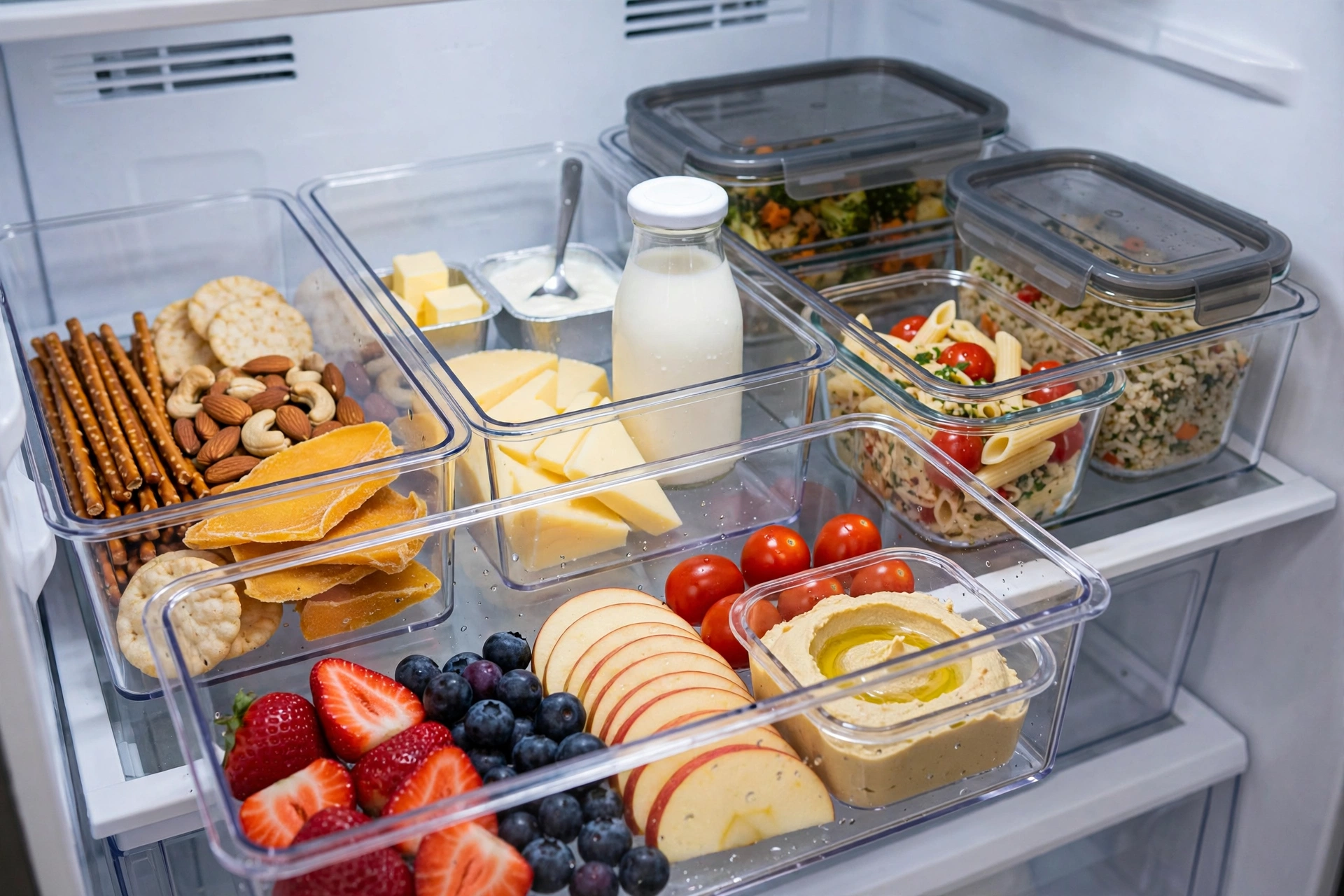
Top shelf: Ready-to-eat and leftovers
The most visible spot goes to what needs eating soonest: leftovers, drinks, ready-to-eat snacks, yogurt, hummus. Label leftovers with the date (masking tape + marker) — “if you can’t date it, you won’t eat it” is painfully true. Eat-me-first items live front and center, never in the back.
Middle shelf: Dairy and eggs
Milk, cheese, butter, eggs, and deli items belong here, where the temperature is most consistent. Keep milk away from the door (temperature swings shorten its life). Store eggs in their original carton — not the door egg tray — for the same reason.
Bottom shelf: Raw meat and fish
The coldest part of the fridge. Raw meat, poultry, and fish go here — and on the bottom specifically so they can’t drip onto anything else. Keep them in sealed containers or on a tray. Use or freeze within 1–2 days.
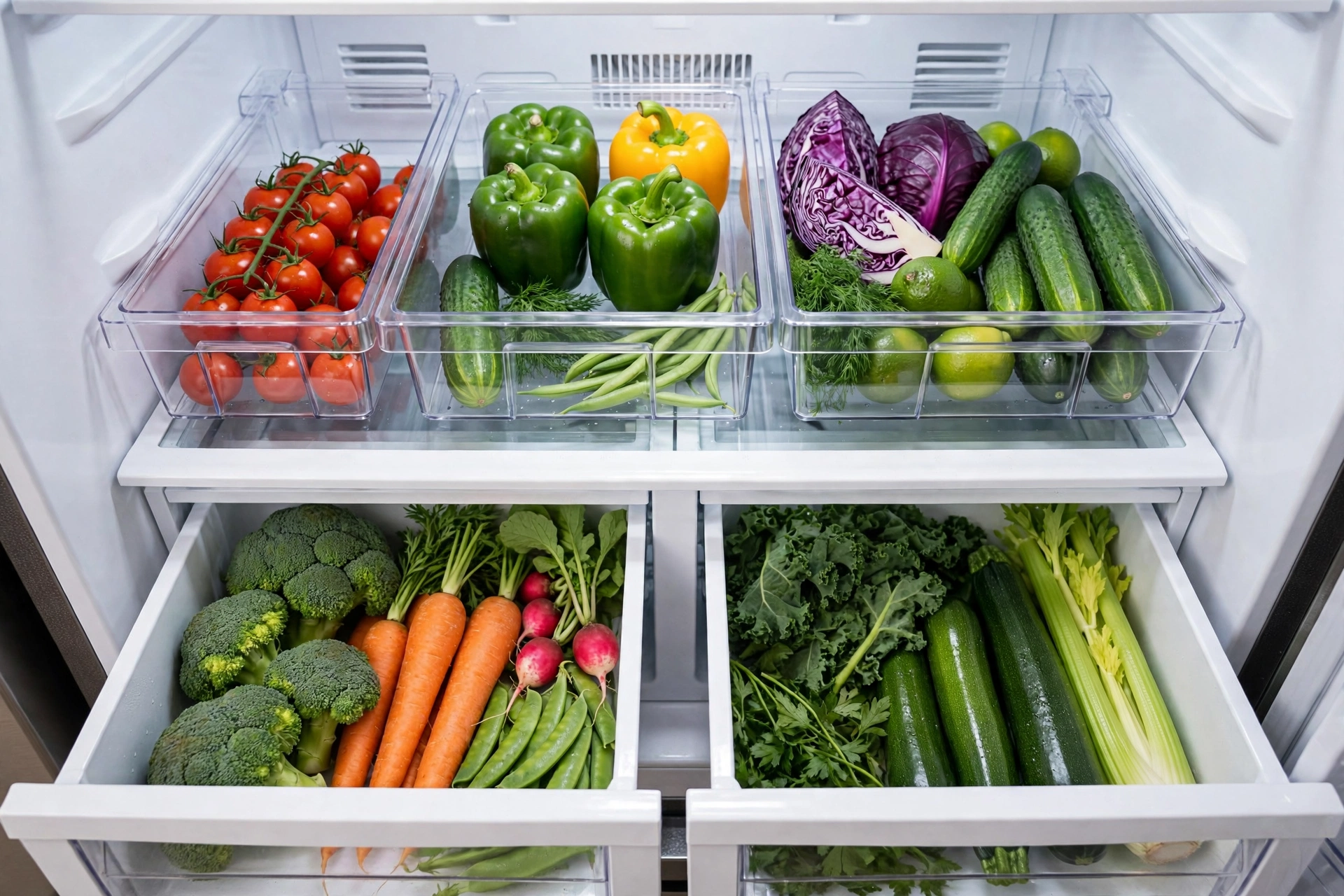
Crisper drawers: Fruits and vegetables (separated)
Use both drawers properly: vegetables in one, fruits in the other. Many fruits (apples, bananas, avocados, tomatoes) release ethylene gas that makes vegetables spoil faster — separating them genuinely extends freshness. If your drawers have humidity controls, set one high (vegetables) and one low (fruits).
Keep greens dry-ish: wash lettuce when you’re ready to eat it, not before storing, or dry it thoroughly. A paper towel in the container absorbs excess moisture that causes sliminess.
The door: Condiments only
The door is the warmest spot with the most temperature fluctuation. It gets: condiments, jams, pickles, sauces — things with enough vinegar, salt, or sugar to be stable. It does NOT get: milk, eggs, or anything dairy. Move those to the middle shelf and watch them last days longer.
Step 2: Contain Everything in Clear Bins
This is the highest-impact upgrade. Clear bins and containers turn a chaotic fridge into a visible inventory:
- One bin per category: snacks, condiments overflow, deli/cheese, fruits, “eat me first”
- Clear containers for leftovers so you can see what’s inside without opening
- An “eat me first” bin front and center on the top shelf — anything nearing its date goes here
- Small turntable for condiments or jars — spin instead of digging
When everything is in a bin, cleaning the fridge becomes lifting out six bins and wiping, instead of moving forty individual items. It also stops the slow migration where things drift to the back and die.
The Habits That Make Food Last
FIFO: First in, first out. New groceries go behind existing items. This one habit, borrowed from every professional kitchen, prevents most “forgotten in the back” waste.
Shop your fridge before you shop the store. Check what’s there before writing the grocery list. Plan one meal around what needs using — “use-it-up” dinners (stir-fries, soups, frittatas) are perfect for odds and ends.
Date your leftovers. A small piece of masking tape with the date takes three seconds and removes all guessing. The 4-day rule: most cooked leftovers are good for 3–4 days refrigerated. When in doubt, freeze on day 2 — future you will be grateful.
Keep it 70% full, not 100%. An overstuffed fridge blocks airflow, creates warm spots, and hides food. If you can’t see it, you won’t eat it. A slightly emptier fridge wastes less food than a packed one — counterintuitive but true.
Weekly 5-minute check. Before grocery day, scan every shelf: toss what’s done, move “eat soon” items to the front, wipe any spills. This tiny ritual prevents the slow slide back to chaos.
What NOT to Refrigerate (Common Mistakes)
Storing these in the fridge shortens their life or ruins texture:
- Tomatoes — cold kills flavor and makes them mealy (unless fully ripe and you’re preserving them a day or two)
- Potatoes and onions — cold turns potato starch to sugar; onions need dry air. Keep separate in a cool dark place (together they spoil faster)
- Bread — refrigerating makes it go stale faster; freeze instead
- Honey — crystallizes in the fridge; room temperature forever
- Bananas — cold blackens the peel (fine if you’re baking with them, bad for eating fresh)
- Garlic — needs dry air; fridge moisture makes it sprout and mold
Freezer Basics (Because It Matters Too)
The freezer is the fridge’s partner in waste prevention:
- Freeze flat: Soups, sauces, and ground meat freeze flat in bags — they thaw faster and stack like files
- Label everything with contents and date; mystery bags get thrown away uneaten
- Use within 3–6 months for best quality (it’s safe longer, but quality drops)
- Keep an inventory list on the door — check off what you use, add what you freeze
Frequently Asked Questions
Where should milk go in the fridge?
The middle shelf, toward the back — where temperature is coldest and most stable. Never the door; the temperature swings there shorten milk’s life significantly.
How do I stop food from getting lost in the back of the fridge?
Clear bins per category, an “eat me first” bin at the front, FIFO stocking (new behind old), and a weekly 5-minute check. Visibility is everything.
How long do leftovers last in the fridge?
Most cooked leftovers: 3–4 days. Raw ground meat: 1–2 days. When in doubt, freeze on day 2. Date everything so there’s no guessing.
Why do my vegetables go bad so fast?
Usually three causes: stored wet (dry greens before storing), stored with ethylene-producing fruits (separate the drawers), or buried where you can’t see them (use clear bins at eye level).
An organized fridge pays for itself — in longer-lasting food, smaller grocery bills, and the end of the “mystery container” era. Empty it, zone it, bin it, and adopt the eat-me-first habit. Your wallet and your weeknight dinners will both improve.
The pantry deserves the same treatment: Pantry Organization Ideas on a Budget: A Practical Walkthrough.
[…] Once the pantry’s done, the fridge is next: How to Organize Your Fridge So Food Lasts Longer. […]