
Here’s my old cleaning routine: ignore the house all week, panic on Saturday, spend four miserable hours cleaning, and swear I’d “keep up with it this time.” I never did. By Wednesday the bathrooms were gross again and the whole cycle reset.
Then I switched to a weekly schedule — small tasks spread across the days — and it changed everything. My house stays consistently clean, I never spend more than half an hour on cleaning in a day, and the dreaded Saturday marathon is gone. This is the exact schedule I use, built for people who work full-time and don’t want cleaning to eat their weekends.
The Philosophy: A Little Every Day Beats a Lot Once a Week
Dirt and clutter accumulate daily, so fighting them daily — in tiny doses — is simply more efficient. Twenty minutes of maintenance cleaning prevents the buildup that makes Saturday sessions take four hours.
The other secret: assign tasks to days so you never have to think. Decision fatigue kills cleaning routines faster than laziness does. When Monday means bathrooms, you just do bathrooms. No planning, no negotiating with yourself.
Total time: about 20–30 minutes a day on weekdays, a bit more on one weekend day. That’s it.
Daily Tasks (10–15 Minutes Total)
Do these every day, ideally at consistent times. They prevent 80% of mess:
- Make the beds (2 minutes) — the single highest-impact habit
- One load of laundry — wash, and fold the previous day’s load (5 minutes of active time)
- Wipe kitchen counters and stovetop after dinner (3 minutes)
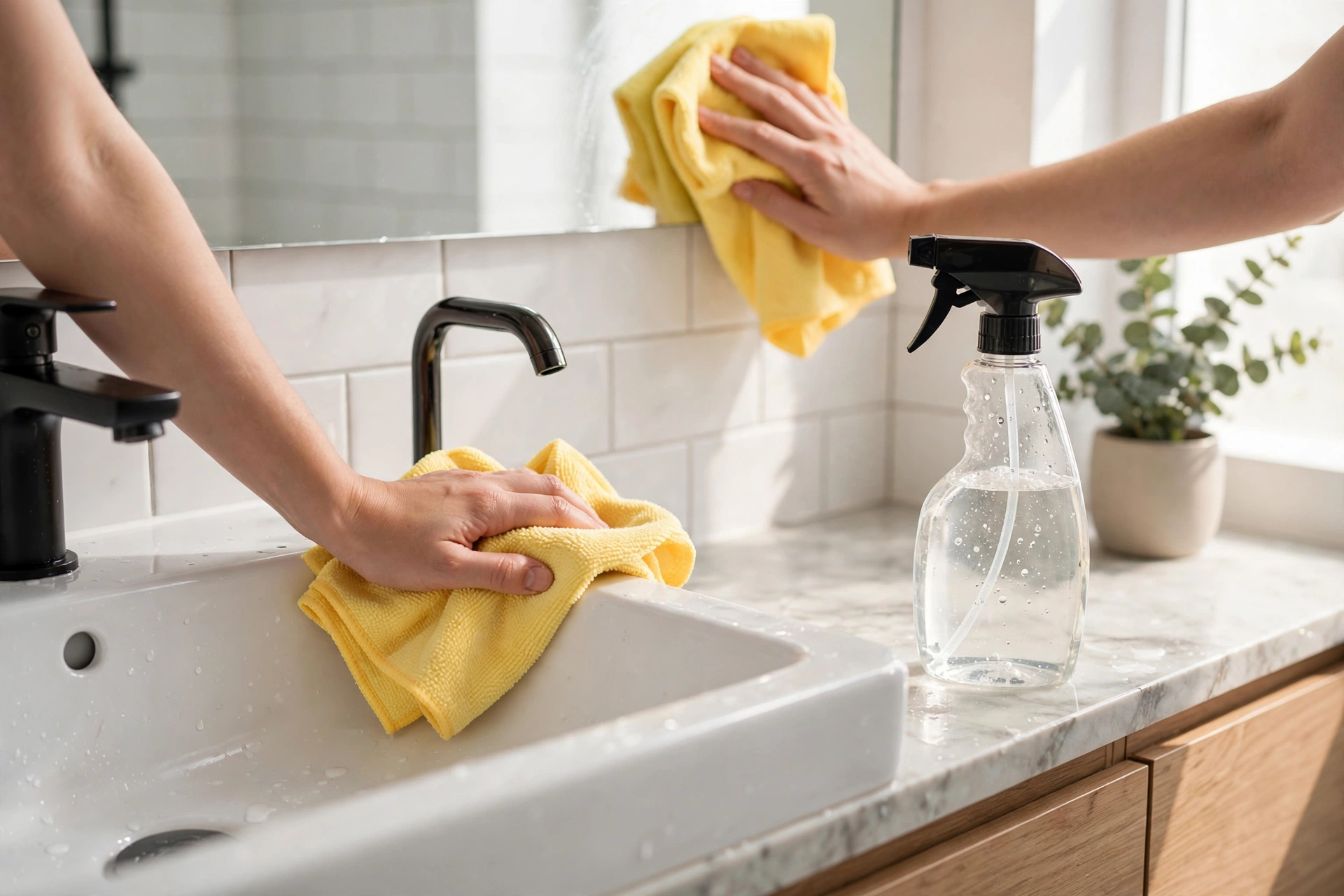
- Quick bathroom wipe — sink and mirror with a daily cleaner (2 minutes)
- 10-minute evening reset — walk through main rooms putting things back where they belong
- Take out trash as needed, and empty small bins before they overflow
Do the reset right after dinner, not “later.” Later never comes.
The Weekly Schedule: Day by Day
Monday: Bathrooms (20–25 minutes)
Clean all bathrooms in one go — it’s efficient because you’re already in cleaning mode with the supplies out.
- Scrub toilets, inside and out
- Clean sinks, mirrors, and counters
- Wipe down shower/tub surfaces
- Shake out or replace bath mats
- Restock toilet paper and hand soap
- Empty bathroom trash bins
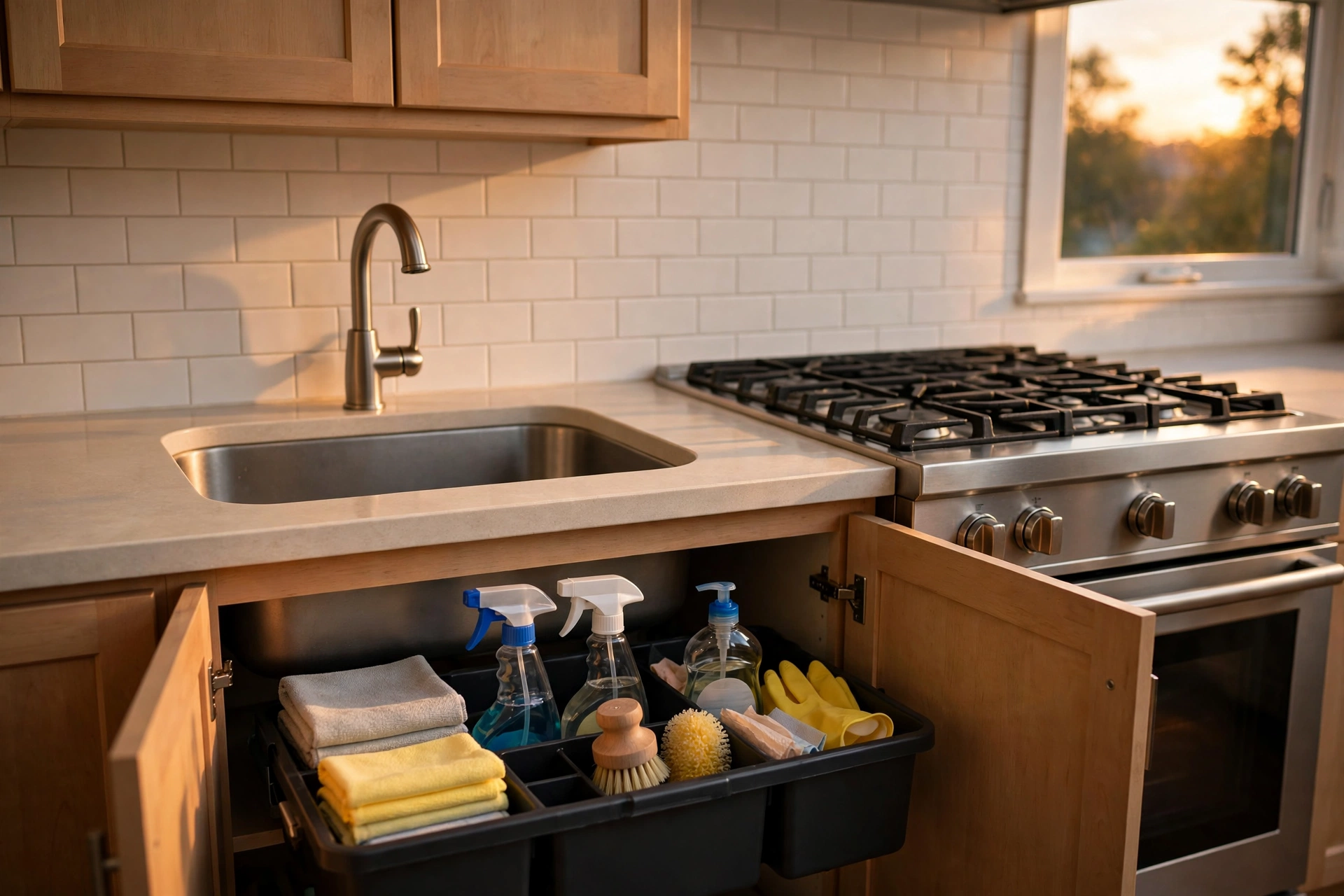
Keep a caddy of bathroom supplies in each bathroom (or one caddy you carry). Hunting for supplies doubles the time.
Tuesday: Dusting and Surfaces (20 minutes)
Top-to-bottom, one floor at a time — dust falls downward, so start high.
- Dust shelves, picture frames, baseboards, and electronics
- Wipe light switches and doorknobs (germ hotspots nobody thinks about)
- Clean mirrors and glass surfaces
- Straighten bookshelves and decorative items
A microfiber cloth slightly dampened beats any spray for most dusting. Work clockwise around each room so you don’t miss spots.
Wednesday: Floors — Vacuum (20–30 minutes)
Vacuum all carpeted areas and rugs, plus hard floors if you prefer vacuuming to sweeping.
- Move light furniture; vacuum under beds and sofas (dust bunnies breed there)
- Vacuum upholstered furniture with the attachment
- Shake out small rugs outside
If you have a robot vacuum, run it on Wednesdays and use your time for the spots it misses — edges, stairs, under furniture.
Thursday: Floors — Mop and Kitchen Deep-Clean (25–30 minutes)
- Mop hard floors (kitchen, bathrooms, entryway)
- Clean the microwave inside and out
- Wipe down kitchen appliances (toaster, coffee maker exterior)
- Clean the stovetop thoroughly
- Take out all trash and recycling; wipe the bins if needed
Thursday kitchen work means you head into the weekend with the heart of the house clean.
Friday: Catch-Up and Laundry (20 minutes)
Friday is the flex day. Finish whatever slipped during the week, and get laundry fully done so the weekend starts clean.
- Fold and put away any remaining laundry
- Change bed sheets (or move this to whatever day suits you — just keep it weekly)
- Quick declutter: one drawer, one shelf, or one “hot spot”
- Restock anything running low (cleaning supplies, paper goods)
Saturday: One Focus Area (30–45 minutes)
Pick one deeper task each Saturday and rotate. This is how the whole house gets deep-cleaned over time without marathon sessions:
- Week 1: Windows and window sills
- Week 2: Baseboards and doors throughout
- Week 3: Inside the fridge (toss expired, wipe shelves)
- Week 4: Closet or pantry tidy-up
Sunday: Rest (Or a 10-Minute Reset)
Sunday is sacred. Do the evening reset if you feel like it, and nothing else. A schedule you can’t sustain is worse than no schedule — rest is part of the system.
Monthly Tasks (Spread Across Saturdays)
These don’t fit weekly, but they matter. Fold them into your Saturday focus rotation:
- Wash windows inside (outside twice a year is fine)
- Clean oven and dishwasher filter
- Vacuum mattress and wash pillows
- Wipe down washing machine (gasket, dispenser, drum)
- Dust ceiling fans and light fixtures
- Clean under and behind large appliances
Making It Work With Kids, Pets, and Roommates
Kids: Give each child one age-appropriate daily task (putting toys in the bin, wiping the table) and make it a game with a timer. Kids as young as three can do the evening reset alongside you.
Pets: Add a 2-minute daily pet-hair sweep of the main living areas — a rubber broom on hard floors works miracles. Wash pet bedding weekly with your sheets day.
Roommates/partners: Split the days, not the tasks within a day. “You do Mondays and Wednesdays, I do Tuesdays and Thursdays” is clearer than splitting every task in half. Post the schedule on the fridge so it’s visible, not debatable.
When You Fall Off (You Will)
Life happens — a busy week, travel, illness. When you fall off the schedule, don’t try to “catch up” on everything. That leads straight back to the four-hour marathon and quitting.
Instead: do today’s tasks only, plus the 10-minute reset. The schedule is self-healing — within a week, you’re back to baseline. Missing days isn’t failure; abandoning the system is. The system survives as long as you restart it.
Frequently Asked Questions
How long should weekly cleaning take?
About 20–30 minutes a day on this schedule, plus one longer Saturday session (30–45 minutes). If it’s taking much longer, you’re probably deep-cleaning during maintenance time — separate the two.
What order should I clean my house in?
Top to bottom (dust before floors), and dry before wet (dust before mopping). Room order matters less, but doing all bathrooms together and all floors together is most efficient.
How do I stick to a cleaning schedule with a full-time job?
Keep sessions under 30 minutes, tie them to existing habits (reset right after dinner), and give yourself a true day off. The schedule works because it’s small enough to do tired.
Should I clean a little daily or all at once weekly?
Daily-in-small-doses wins for busy people. Weekly marathons create dread, take longer (buildup is harder to clean), and collapse the first time life gets busy.
Print this schedule, stick it on the fridge, and try it for two weeks. That’s all I ask — two weeks. By the second Friday, you’ll feel the difference: a house that’s just… clean. Not perfect, not showroom, but consistently, livably clean, without losing your weekends.
Want to go deeper once a season? Our Deep Cleaning Checklist Room by Room (A Realistic Routine) covers the full top-to-bottom overhaul.